Delhi Social
Delhi Social occupies a neighbourhood slot in Twickenham that the wider London Indian dining scene has rarely given much attention to, a suburb-to-city dynamic that shapes what the restaurant does and who it does it for. The cooking draws on north Indian social-eating traditions, where sharing formats and spice-forward plates define the register rather than the tasting-menu formalism that dominates central London's fine-dining corridor.
Pearl is the En Primeur Club membership app — saves, bookings, and concierge access live there. Same editors, same standards.
- Address
- 65 Richmond Rd, Twickenham TW1 3AW, United Kingdom
- Phone
- +44 20 8404 4440
- Website
- delhisocial.co.uk
- Directions
- Get directions
 Saves & bookings on Pearl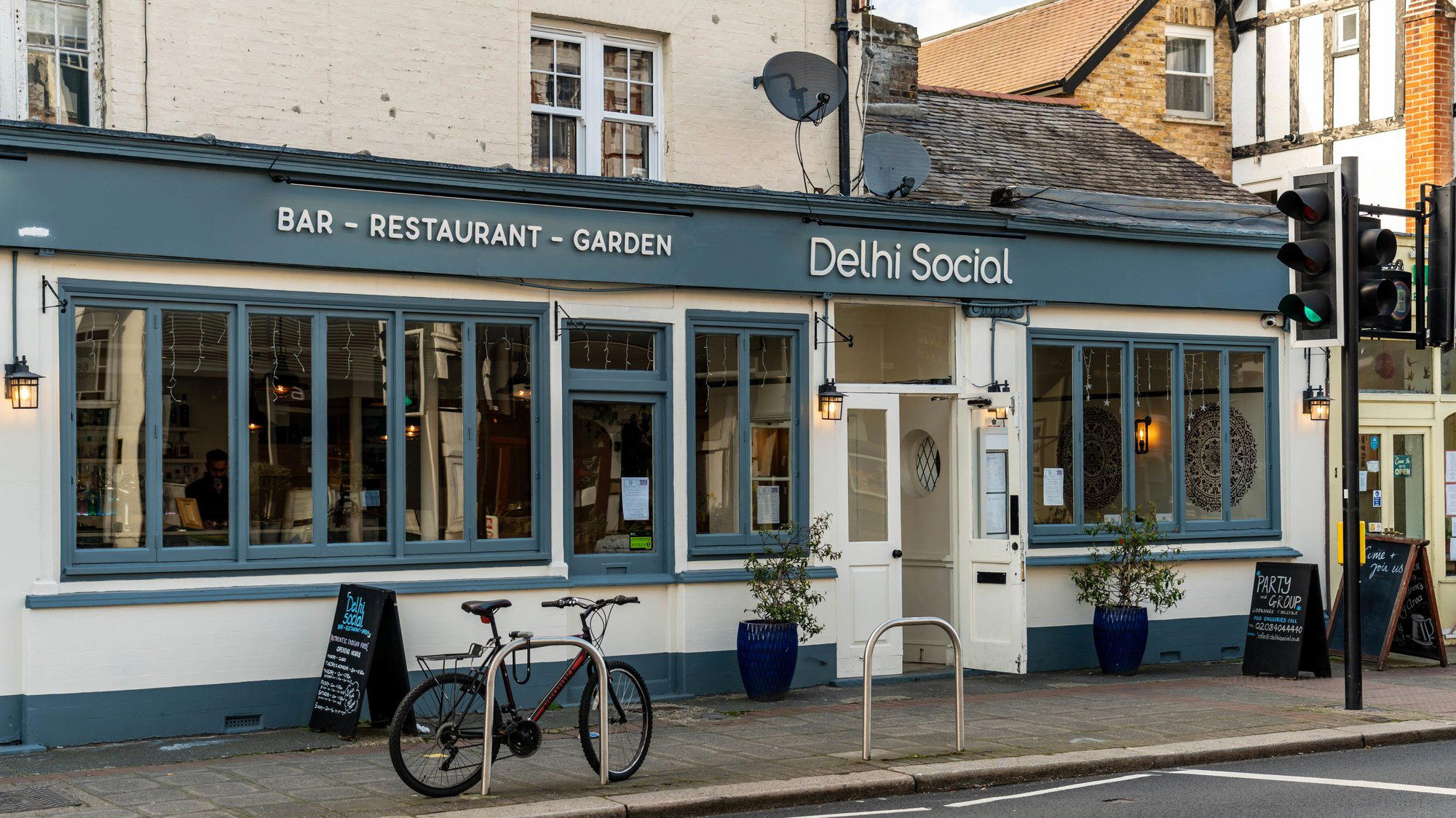
Indian Dining at the London Periphery
London's Indian restaurant conversation tends to collapse into two poles: the destination fine-dining tier, anchored by a handful of Mayfair and Marylebone addresses with Michelin recognition, and the high-volume, mid-market chains that cover the commuter zones. Twickenham sits outside both. The borough has a substantial South Asian residential community and a long-established habit of neighbourhood eating, casual, repeated, local, that sits at a cultural remove from the tasting-menu formalism that defines how central London talks about Indian food. Delhi Social, an Authentic Delhi Indian restaurant at 65 Richmond Rd, Twickenham, operates inside that neighbourhood dynamic. It is not positioned against the city-centre fine-dining set. Its peer group is the suburban Indian social-eating format: shared plates, north Indian spice registers, and a room designed for groups rather than for critics.
That positioning matters editorially because it reflects a broader tension in how Indian cuisine gets evaluated in British restaurant culture. The Michelin-starred cohort, addresses like Gymkhana or Jamavar, occupies the prestige column, but the volume of Indian eating in London happens in rooms like this one, where the social function of the meal is at least as important as the technical execution. Delhi Social's name signals the format explicitly. The word 'social' does real work here: it describes a mode of eating, a pace, a posture at the table.
What the Room Communicates
The sensory register of an Indian social-eating venue in suburban London follows a recognisable grammar. The colour palette tends toward warm ambers and deep reds, spice-rack chromatics that are less interior design choice than cultural shorthand. The smell is layered and cumulative: cumin-tempered oil, charred bread from a tandoor, the low smoke of meat cooked at high heat. Sound runs at a social pitch, conversation-level loud, with the kitchen audible when the room thins. Delhi Social on Richmond Road fits within that tradition. The dining room is configured for groups; the format is designed to generate a table of shared dishes rather than a sequence of individual plates.
This sensory architecture, warm, busy, fragrant, communal, is the opposite of the hushed, minimalist precision that defines the fine-dining end of London's restaurant spectrum. Compare the stripped-back seriousness of CORE by Clare Smyth or the formality of Restaurant Gordon Ramsay and the distance is not just price or accolade, it is a fundamentally different theory of what a meal is for. That contrast is not a criticism of either end. It is a description of how London's dining range actually works.
North Indian Social Eating as a Format
The social-eating format that restaurant operates within has deep roots. North Indian meal culture, particularly the Punjabi and Delhi-region traditions, is structured around abundance and simultaneity: several dishes arriving together, bread as the constant, protein and vegetable courses chosen to balance heat, richness, and acid. The dal, the kebab, the saag, the biryani are not courses in a sequence; they are components of a shared spread. This is a meal architecture that resists the European tasting-menu logic and, in suburban British Indian restaurants, it has remained largely intact even as the Michelin-chasing tier has adopted plating conventions borrowed from French kitchens.
Understanding that format helps calibrate expectations. A room like Delhi Social is not trying to do what Sketch's Lecture Room and Library does, any more than The Ledbury is trying to do what a neighbourhood tapas bar does. The value proposition is different: generosity of portion, familiarity of flavour, the ease of a room that knows its regulars. Those are real qualities, even if they sit outside the awards ecosystem.
Twickenham as a Dining Context
Twickenham's dining identity is shaped by several overlapping factors. The Richmond corridor, running from Richmond town centre through Twickenham to Teddington, has a relatively affluent residential base, a strong sports-day economy driven by Twickenham Stadium, and a local food culture that trends toward neighbourhood reliability over destination dining. Independent restaurants here are not competing for footfall from hotel guests or theatre-goers; they are competing for the repeat custom of people who live within fifteen minutes. That changes the commercial logic: consistency and value retention matter more than a single high-impact experience.
For a restaurant like Delhi Social, this means the measure of success is whether people come back the following Thursday, not whether they travel from Shoreditch for a special occasion. It is a different but no less demanding standard.
Planning a Visit
Getting to 65 Richmond Road from central London is direct: Twickenham station is on the South Western Railway line from London Waterloo, and the journey runs around 30 minutes. The address is walkable from the station. Given the neighbourhood character of the restaurant and its suburban location, booking a table for groups in advance is sensible, particularly on weekends when the Twickenham Stadium calendar can compress local restaurant availability significantly. For a broader picture of where the restaurant sits within the wider London dining map, including the three-Michelin-star tier at Dinner by Heston Blumenthal and the destination restaurants covered in our full London restaurants guide, the range is considerable. The London bars guide, hotels guide, and experiences guide provide further context for planning time in the wider city.
For those building a broader UK dining itinerary, the contrast with destination restaurants outside London is also instructive. The technical intensity of The Fat Duck in Bray or the produce-led seriousness of L'Enclume in Cartmel represents a different register entirely from the suburban social-eating format. Moor Hall in Aughton, Gidleigh Park in Chagford, Hand and Flowers in Marlow, and hide and fox in Saltwood each sit in distinct regional tiers of the UK dining conversation. Internationally, the Korean tasting-menu precision of Atomix in New York City and the seafood rigour of Le Bernardin in New York City illustrate how far the spectrum runs. The London wineries guide rounds out the broader picture for those interested in the city's drinks scene alongside its food.
Budget and Context
Comparable venues nearby, for context on price, style, and recognition.
| Venue | Cuisine | Price | Notes |
|---|---|---|---|
| Delhi SocialThis venue — the venue you are viewing | Not listed | $$ | Not listed |
| Indian Moment | Battersea, Authentic Indian Curry House | $$ | Not listed |
| OMNOM | Not listed | $$ | Islington, Authentic Indian Vegetarian & Vegan |
| SPARSH | Forest Hill, Indian and Nepalese Cuisine | $$ | Not listed |
| Postbox | Not listed | $$ | Castelnau, Modern Indian with Goan influences |
| The India - Monument | Not listed | $$ | Monument, Indian with Bangladeshi influences |
Continue exploring
More in London
Restaurants in London
Browse all →
Bars in London
Browse all →
Hotels in London
Browse all →



At a Glance
- Trendy
- Lively
- Cozy
- Date Night
- Group Dining
- Casual Hangout
- Open Kitchen
- Courtyard
- Craft Cocktails
Current opening hours
- Monday
- Closed
- Tuesday
- 5–10 PM
- Wednesday
- 5–10 PM
- Thursday
- 12–10 PM
- Friday
- 12–11 PM
- Saturday
- 12–11 PM
- Sunday
- 12–9 PM
Hours can change for holidays and private events. Last verified .
Light, bright, and airy with old Delhi decor, botanical elements, and a cozy courtyard; some note lighting could be more subtle