Michelin Plate
Our verdict
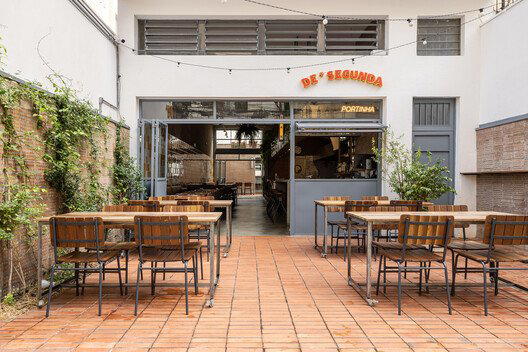
A Michelin Plate-recognised Brazilian address in Itaim Bibi, De Segunda earns consistent praise from a 687-review Google audience averaging 4.4 stars. Priced at the accessible end of the neighbourhood's dining spectrum, it represents the kind of everyday Brazilian cooking that São Paulo does better than almost anywhere else in the country.

Pearl is the En Primeur Club membership app, where members save venues, book tables and use the concierge.
The menu
What to order
- Oyster and Pineapple Appetizer
- Pork Rib with Hummus
- Hump of Beef with Sweet Potato Purée
Itaim Bibi and the Everyday Brazilian Table
There is a version of São Paulo dining that fills the glossy international press: the modernist tasting menus, the imported-technique kitchens, the four-figure bills. Then there is the version that the city actually runs on, the neighbourhood restaurants where Brazilian cooking is treated as a living tradition rather than a concept to be deconstructed. Itaim Bibi, one of the city's most affluent and restaurant-dense districts, contains both registers. De Segunda sits firmly in the second, and its two consecutive Michelin Plate recognitions (2024 and 2025) confirm that assessors noticed the quality even at a price point marked well below the starred tier.
The Michelin Plate is not a star, but it is not nothing. It signals that inspectors found the cooking honest, consistent, and worth recommending, criteria that become harder to meet, not easier, when a kitchen is working within accessible price brackets. At De Segunda's $$ positioning, the margin for technical error is narrow in a different way than at a $$$$ table: there is no elaborate theatre to absorb an off night.
What Brazilian Cuisine Looks Like at This Register
Brazilian cooking at the mid-range is where the country's culinary identity is most legibly expressed. The fine-dining tier, represented in São Paulo by addresses like the two-starred D.O.M. at $$$$ or Maní at $$$, tends to reframe Brazilian ingredients through a contemporary lens. What an accessible restaurant like De Segunda offers is something the starred houses cannot: proximity to the source material without editorial distance.
The Brazilian table at this level draws from a deep well. Rice and beans in their regional configurations, proteins cooked with the char and patience that define churrasco and its derivatives, moquecas built on dendê oil and coconut milk from the Bahian tradition, dishes that carry the demographic layering of Indigenous, Portuguese, and African foodways that shaped the national cuisine. In São Paulo specifically, the immigrant influence from Italy, Japan, and Lebanon adds further texture, the city's food culture is less a single tradition than a compression of many. Restaurants operating at De Segunda's register tend to navigate this complexity by anchoring in one regional identity or by cooking in the broadly national vernacular. The Michelin Plate recognition across two consecutive years suggests the kitchen has found a consistent point of view within that space.
For further context on how this register sits within São Paulo's broader scene, A Baianeira offers a useful Bahian comparison point, while AE! Café & Cozinha and Balaio IMS represent the café-adjacent end of thoughtful everyday cooking in the city. Casa Rios and Banzeiro extend the map into Amazonian and regional territory.
, a sample size large enough to be meaningful rather than curated. At this volume, a score in the mid-4s reflects genuine repeat visitation and consistent execution rather than a spike from a press moment. The pattern is common to São Paulo restaurants that serve a loyal neighbourhood clientele: the rating climbs slowly and holds because the kitchen is not attempting to impress strangers on a single occasion but to keep regulars coming back. That dynamic shapes everything from portion logic to pricing discipline.
The address on Rua Prof. Tamandaré Toledo, 160, in Itaim Bibi, places De Segunda within one of the city's most walkable restaurant corridors. Itaim Bibi draws a professional lunch crowd during the week and a neighbourhood-dinner crowd on evenings and weekends, and restaurants here tend to develop dual rhythms: efficient at midday, more relaxed after dark. De Segunda's name, Portuguese for "on Mondays," or more loosely "from Monday", carries a suggestion of the weekly routine, of a place built for the regular calendar rather than the special occasion.
De Segunda in the Wider Brazilian Context
São Paulo is the obvious comparison city for Brazilian dining at scale, but the traditions that feed into a restaurant like De Segunda travel across the country. Lasai in Rio de Janeiro and Rudä, also in Rio, operate at a higher price tier but draw from overlapping Brazilian ingredient traditions. Aconchego Carioca in Rio is a closer analogue in spirit, a neighbourhood institution working the national vernacular at accessible prices. Further afield, Manga in Salvador and Orixás | North Restaurant in Itacaré anchor the Bahian and Northeastern strands that inform so much of Brazilian cooking. Manu in Curitiba and Mina in Campos do Jordão represent the Southern and mountain registers. Castelo Saint Andrews in Gramado is a different category entirely but part of the same national conversation about what Brazilian hospitality looks like across its regions. Taken together, these addresses trace a country-wide picture that any single São Paulo restaurant can only partially represent, which is precisely why De Segunda's consistent, grounded approach to the local register matters.
Planning a Visit
De Segunda is located at Rua Prof. Tamandaré Toledo, 160 in Itaim Bibi, one of São Paulo's most accessible upscale neighbourhoods by taxi and rideshare from the city centre and Jardins. The $$ price point makes it one of the more accessible Michelin-recognised addresses in the city, A Casa do Porco, operating at the same price bracket with a longer recognition history, is the obvious peer comparison for São Paulo diners already familiar with that register. Booking details and current hours are best confirmed directly before visiting, as both are subject to change. For a broader map of where De Segunda sits among the city's options, our full São Paulo restaurants guide covers the range from neighbourhood tables to the starred tier. If you are building a longer itinerary, our São Paulo hotels guide, bars guide, wineries guide, and experiences guide cover the rest of the city's offer at the same editorial standard.
Frequently asked questions
Is De Segunda a family-friendly restaurant?
De Segunda's mid-range price point ($$) and Brazilian comfort-food orientation place it squarely in the kind of neighbourhood spot that works across generations. Itaim Bibi is a residential and commercial district, and the local clientele at restaurants in this register tends to span families and solo diners alike. The Michelin Plate recognition in both 2024 and 2025 signals cooking taken seriously without the formality that makes fine-dining rooms uncomfortable for younger guests.
What's the vibe at De Segunda?
The address on Rua Prof. Tamandaré Toledo, 160 puts De Segunda in Itaim Bibi, one of São Paulo's more polished mid-city neighbourhoods, though the $$ pricing signals a room built for repeat visits rather than occasion dining. Think weekday lunch energy and a kitchen focused on Brazilian cooking at the everyday register.
What awards or recognition does De Segunda have?
De Segunda has received recognition including: Michelin Plate (2025); Michelin Plate (2024).
What do regulars order at De Segunda?
The Michelin Plate in 2024 and 2025 suggests the kitchen has at least one or two preparations that clear a quality threshold worth noting.
How would you describe the cuisine at De Segunda?
Accolades, Compared
| Venue | Cuisine | Price | Awards | Notes |
|---|---|---|---|---|
| De SegundaThis venue (the venue you are viewing) | Modern Brazilian Contemporary | Not listed | Michelin Plate | Not listed |
| Evvai | Modern Italian-Brazilian Fusion | $200–300 | 3 Michelin Stars · World's 50 Best #95 | Contemporary Italian, Modern Cuisine |
| D.O.M. | Modern Brazilian Amazonian Fine Dining | $150–200 | 2 Michelin Stars · World's 50 Best #74 | Modern Brazilian, Creative |
| Maní | Modern Creative Brazilian | $50–100 | 1 Michelin Star · World's 50 Best #67 | Brazilian - International, Creative |
| Jun Sakamoto | Japanese Omakase | $100–150 | 1 Michelin Star · La Liste Top Restaurants | Sushi, Japanese |
| A Casa do Porco | Modern Brazilian Pork-Centric | $30–50 | Michelin Bib Gourmand · World's 50 Best #25 | Regional Brazilian, Brazilian |
Recognition history
Dated appearances from independent guides and award organizations, with the underlying list record or original source where available.
Michelin Plate
Michelin
Full recognition history (3 entries)
Michelin Plate
Michelin
Michelin Plate
Michelin