De Fakkels
.png)

De Fakkels has anchored Hasseltsesteenweg for over three decades, earning consecutive Michelin Plates in 2024 and 2025 for its farm-to-table approach in the Flemish Hesbaye region. A generational handover to chef Seppe and Liese Bleus, with founding couple Nicole and Paul-Luc Meesen staying on in an advisory role, makes this a rare moment of continuity and renewal in Sint-Truiden dining. Rated 4.8 from 426 Google reviews.
 Discover on Pearl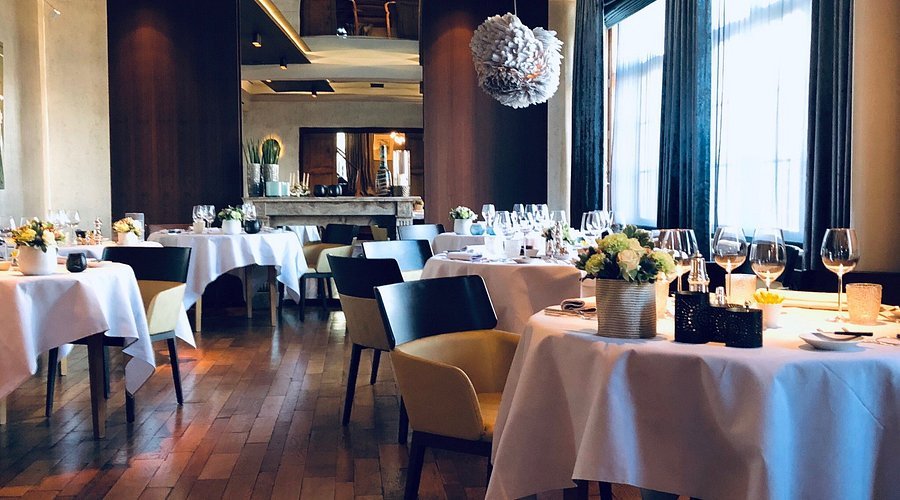
A Hesbaye Kitchen in Transition
Driving along the Hasseltsesteenweg into Sint-Truiden, the flat agricultural plain of the Belgian Hesbaye stretches on either side — fruit orchards, beet fields, and market gardens that define one of the country's most productive farming corridors. De Fakkels sits on this road not by coincidence but by conviction. For more than 33 years, the restaurant has taken its cue from what the surrounding land produces, treating the Hesbaye not as a postcard backdrop but as a working larder. Arriving here, the weight of that history is palpable before you even step through the door.
Belgium's farm-to-table movement has, in recent years, tilted toward urban restaurants sourcing selectively from rural producers. De Fakkels operates on an older, more embedded model: the sourcing logic is not a menu note or a marketing position, it is the kitchen's foundational grammar. That approach has kept the restaurant earning Michelin recognition consecutively — a Michelin Plate in both 2024 and 2025 , while dining rooms in larger Belgian cities chase a rotating cast of concepts. For context on how the broader Belgian fine dining circuit is structured, Zilte in Antwerp, Boury in Roeselare, and Hof van Cleve in Kruishoutem represent the upper tier of destination dining; De Fakkels occupies a different register , quieter, regional, and deliberately grounded in its immediate geography.
The shortlist, unlocked.
Hard-to-book tables, cellar releases, and concierge-planned trips.
Get Exclusive Access →Where the Food Comes From, and Why That Matters Here
The Hesbaye's agricultural identity is not incidental to the cooking at De Fakkels , it is the argument the kitchen makes every service. This is a region where the soil is loamy and deep, producing vegetables with a density and sweetness that differ markedly from hydroponic or greenhouse equivalents. Kitchens that build menus around this kind of terroir are working with produce that changes meaningfully across the growing calendar: asparagus in late spring, soft fruit through summer, root vegetables and brassicas as the season turns. The cooking that results is inherently seasonal in a structural sense, not in the contemporary sense of printing a seasonal menu that rotates quarterly.
This distinction matters when assessing what the generational handover at De Fakkels actually represents. Chef Seppe Bleus, who takes the kitchen alongside Liese Bleus, arrives with a reputation built specifically around vegetable cookery. In Belgian fine dining circles, genuine vegetable-forward technique at this level is relatively rare outside Brussels; most regional kitchens still treat produce as accompaniment rather than architecture. The fact that the incoming chef's particular competency aligns precisely with the restaurant's sourcing philosophy is the most credible signal that the transition has been thought through rather than simply inherited. Comparable farm-anchored approaches, framed differently, are visible at Willem Hiele in Oudenburg and BOK in Münster, both of which have built sustained recognition around produce-driven discipline.
Nicole and Paul-Luc Meesen's decision to remain active for approximately two years post-handover is a structural support that most restaurant transitions forgo. In practice, this means the sourcing relationships, seasonal rhythms, and supplier trust built over more than three decades remain intact during the period when the new kitchen team is establishing its own voice. For a restaurant whose value proposition rests so heavily on where the ingredients come from, that continuity is not sentimental , it is operationally significant.
De Fakkels Within Sint-Truiden's Dining Context
Sint-Truiden punches above its size in Belgian dining. A town of roughly 40,000 in the Limburg province, it supports a range of credentialed restaurants across price tiers. De Stadt van Luijck occupies the upper price bracket with its Modern Flemish format at €€€€, while De Gebrande Winning offers modern cuisine at the more accessible €€ tier. Kasteel van Ordingen draws on Belgian cuisine tradition, and L'Angelo Rosso provides a considered Italian option at €€€. De Fakkels, priced at €€€, sits in the middle-upper bracket , accessible enough to serve as a regular table for serious local diners, serious enough to warrant the 4.8 Google rating across 426 reviews.
That rating, accumulated over a long operational history, reflects something that newer restaurants cannot manufacture: a pattern of consistent execution across many years and many services. A score at that level, sustained at that volume, points to a kitchen that manages the gap between intention and plate more reliably than most. For anyone building a broader Sint-Truiden itinerary, our full Sint-Truiden restaurants guide maps the full range of options across cuisine types and price points. Information on hotels, bars, wineries, and experiences in the area is also available for trip planning.
For a broader frame of reference, the farm-anchored restaurant model has found rigorous expression at Clostermanns Le Gourmet in Niederkassel and in the produce-driven cooking at Bartholomeus in Heist and d'Eugénie à Emilie in Baudour. Bozar Restaurant in Brussels offers a different register of the same sourcing-led conversation in a capital city context.
Planning a Visit
De Fakkels is located at Hasseltsesteenweg 61, 3800 Sint-Truiden, placing it on the main arterial road into town from Hasselt , accessible by car from both Liège and Brussels, with Sint-Truiden rail station a short drive away. At €€€ pricing, a full dinner for two will sit in a range typical of this Michelin-recognised tier in provincial Belgium. Given the restaurant's 4.8 score across a substantial number of reviews and its current position as a transition-era kitchen drawing local and regional attention, booking in advance is advisable. Hours and booking method are not confirmed in our current data; contacting the restaurant directly through local directories is the most reliable approach until their web presence is updated.
The transition period makes this a particularly interesting moment to visit. The founding generation's continued presence means the kitchen is not in reset mode, but the incoming team's vegetable-forward ambitions represent a genuine development in the restaurant's culinary direction. In Belgian regional dining, that combination of deep-rooted sourcing and a technically refined incoming chef is uncommon enough to pay attention to.
Frequently Asked Questions
- What's the leading thing to order at De Fakkels?
- Without confirmed current menu data, we won't speculate on specific dishes. What the available evidence does support: the incoming chef Seppe Bleus has built his reputation around vegetable cookery, and the kitchen's three-decade sourcing relationship with Hesbaye producers means seasonal produce arrives at a quality level that makes vegetable-driven dishes the most honest expression of what this kitchen does. The consecutive Michelin Plates in 2024 and 2025 confirm consistent execution across the menu. For the most current dish information, contacting the restaurant directly before your reservation is the practical route.
- How hard is it to get a table at De Fakkels?
- De Fakkels' current transition period, combined with its Michelin Plate recognition and a 4.8 Google rating from over 426 reviews, means the restaurant is drawing more attention than a typical provincial €€€ table in a town of Sint-Truiden's size. Sint-Truiden is not a high-traffic tourist city, which historically gave De Fakkels a more manageable reservation window than comparable Michelin-recognised restaurants in Bruges or Brussels. However, the generational handover has generated local and regional interest, and last-minute tables on prime evenings are likely limited. Planning a week or more ahead is a reasonable baseline; weekend bookings during the fruit blossom season, when Hesbaye sees increased visitor numbers, warrant earlier planning still.
Quick Comparison
These are the closest comparables we have in our database for quick context.
| Venue | Cuisine | Price | Awards | Notes |
|---|---|---|---|---|
| De Fakkels | Farm to table | €€€ | Chef Seppe & Liese Bleus have taken over the "Torch(s)" after 33 y… | This venue |
| De Stadt van Luijck | Modern Flemish, Modern Cuisine | €€€€ | Modern Flemish, Modern Cuisine, €€€€ | |
| De Gebrande Winning | Modern Cuisine | €€ | Modern Cuisine, €€ | |
| Kasteel van Ordingen | Belgian Cuisine | Belgian Cuisine | ||
| L'Angelo Rosso | Italian | €€€ | Italian, €€€ |
Need a table?
Our members enjoy priority alerts and concierge-led booking support for the world's most difficult tables.
Get Exclusive AccessThe shortlist, unlocked.
Hard-to-book tables, cellar releases, and concierge-planned trips.
Get Exclusive Access →