Cutlery Works
Cutlery Works occupies a converted industrial space on Neepsend Lane, Sheffield's regenerating northern quarter, and operates as one of the city's most concentrated food hall formats. Multiple independent vendors share a single roof, making it a practical read on where Sheffield's independent food scene is pointing. The format rewards grazing across cuisines and price points rather than committing to a single kitchen.
Pearl is the En Primeur Club membership app — saves, bookings, and concierge access live there. Same editors, same standards.
- Address
- 73 – 101 Neepsend Ln, Neepsend, Sheffield S3 8AT, United Kingdom
- Website
- cutleryworks.co.uk
- Directions
- Get directions
 Saves & bookings on Pearl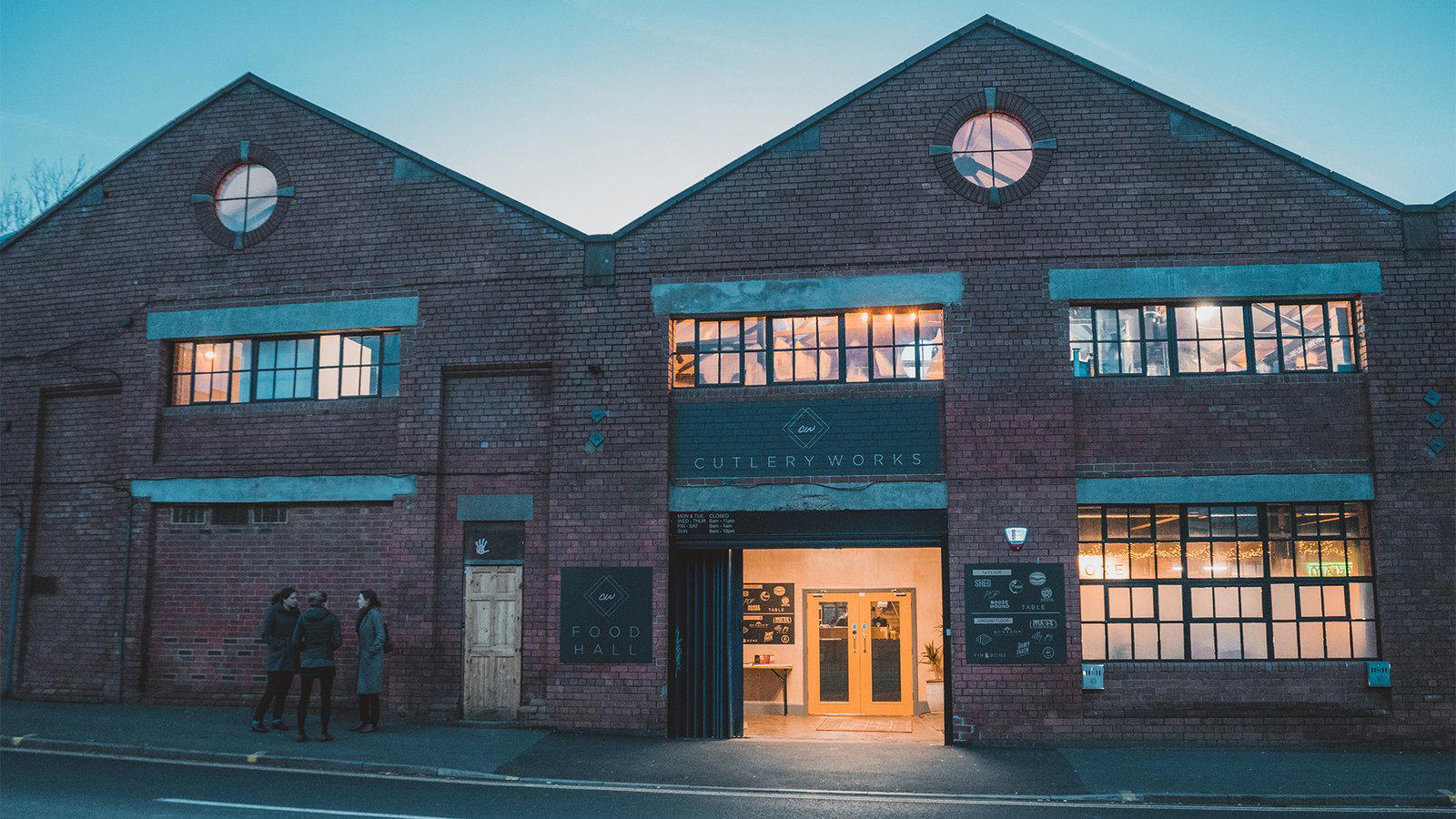
Sheffield's Industrial North and the Food Hall Turn
Neepsend has been quietly recomposing itself for years. The stretch of canal-side warehouses and cutlery workshops north of the city centre that once defined Sheffield's manufacturing identity now accommodates recording studios, craft breweries, and independent retail. Cutlery Works, at 73–101 Neepsend Lane, sits inside that transition and gives it a culinary shape. The address is deliberate: the building's name nods directly to the steel and blade trade that put Sheffield on the map globally, and the decision to house a food hall here rather than, say, a chain restaurant group, says something about how the city's independent operators are choosing to cluster.
Food halls of this format, multiple independent vendors operating under shared infrastructure, have become a recognisable feature of post-industrial urban regeneration across the United Kingdom. What distinguishes the stronger examples from mere market imitations is vendor curation and the quality of sourcing each kitchen brings to a relatively informal setting. The format pressures every operator to justify their place: with competitors visible across the room, the supply chain and the cooking have nowhere to hide.
The Sourcing Argument for the Multi-Vendor Format
The ingredient sourcing angle matters more in a food hall than in a single-concept restaurant. In a conventional dining room, provenance claims live on a menu that customers read once. In a multi-vendor environment, the story of where food comes from becomes part of the ambient conversation, visible in how vendors present their offer, talk to customers, and respond to what is in season. Sheffield has geographic advantages here: the Peak District begins effectively at the city's western edge, and the agricultural counties of Derbyshire and Yorkshire supply lamb, game, dairy, and produce within relatively short supply chains. Independent food vendors embedded in that regional food economy can move faster on seasonal produce than larger operations beholden to national distribution agreements.
This matters when you compare Cutlery Works to the single-restaurant end of Sheffield's dining scene. Places like JÖRO (Modern Cuisine) operate at the £££ and above price point with tasting menus that give a kitchen months to develop relationships with specific suppliers. A food hall vendor works in a different register: faster turnover, broader public accessibility, and sourcing decisions that have to stay commercially viable at a lower price per cover. The two models are not competing so much as serving different moments in a diner's week. What they share, when both are functioning at their better end, is an awareness of where the food comes from and why that matters to the final plate.
What the Setting Delivers
Approaching along Neepsend Lane, the building reads as the kind of repurposed industrial shell that characterises this part of Sheffield: brick, steel framing, wide openings that suggest former loading access. Inside, the shared dining infrastructure, communal tables, a bar, overhead signage identifying each vendor, creates a rhythm that is deliberately informal. You do not commit to a cuisine or a kitchen before you arrive; you commit to an afternoon or evening of considered grazing. The pace is self-determined in a way that a tasting menu format, such as those at Le Manoir aux Quat'Saisons in Oxford or L'Enclume in Cartmel, deliberately is not.
That informality is a feature, not a compromise. The food hall format works because it reduces friction between the diner and the food. You can arrive with a group that has divergent preferences and solve that problem in the room rather than in a booking system three weeks earlier. Sheffield's hospitality sector has several operators who handle the formal end with care, including Bench and the Italian-leaning Bragazzis, and Domo at the more accessible end. Cutlery Works addresses a different use case: groups, impromptu visits, and the kind of evening where the plan is the exploration itself.
Sheffield's Food Scene in Wider Context
Sheffield does not carry the Michelin density of Manchester or Leeds, but it has built a credible independent food culture across a wider price range than either of those cities might suggest is possible outside the major metropolitan centres. The northern England dining circuit increasingly runs through Sheffield precisely because operators here have not tried to replicate what the larger cities do. Instead, the city's leading independents, including Miller and Carter Sheffield City at the steak house end, have found their own register.
At the more technically ambitious end of British cooking nationally, the conversation is dominated by destinations: Moor Hall in Aughton, Midsummer House in Cambridge, CORE by Clare Smyth in London, Opheem in Birmingham. Those restaurants operate on long booking windows, high price points, and a model where every element is controlled by a single creative vision. Cutlery Works operates at the opposite structural pole: multiple visions, lower price point, walk-in accessibility. Both poles serve a function in a healthy food culture, and the presence of a well-run food hall in a regenerating industrial quarter is as much a signal of civic food confidence as a Michelin star in the same postcode. For context on how this compares internationally to high-format tasting experiences, see Le Bernardin in New York City or Atomix in New York City, where the contrast in format ambition is sharpest.
For a broader orientation on where Cutlery Works fits within the city's full dining offer, the full Sheffield restaurants guide maps the scene across price tiers and cuisines. Restaurants like Gidleigh Park in Chagford, Hand and Flowers in Marlow, hide and fox in Saltwood, and Waterside Inn in Bray represent the structured fine dining end of British hospitality where Cutlery Works deliberately does not compete.
Planning a Visit
Cutlery Works is located at 73–101 Neepsend Lane, Sheffield S3 8AT, in the Neepsend district north of the city centre. The area is accessible from Sheffield city centre on foot in approximately 20 minutes or a short taxi ride. Because the food hall format generally supports walk-in visits across its vendors, advance booking requirements are lower than at single-concept restaurants, though peak weekend evenings can fill communal seating. Checking directly with individual vendors for any reservation options is advisable if your group is larger. Allergy queries are leading directed to each vendor separately, as kitchens and menus operate independently within the shared space. Given the vendor-by-vendor variation in ingredients and preparation, confirming dietary requirements at the point of ordering, rather than on arrival, is the practical approach.
Continue exploring
More in Sheffield
Restaurants in Sheffield
Browse all →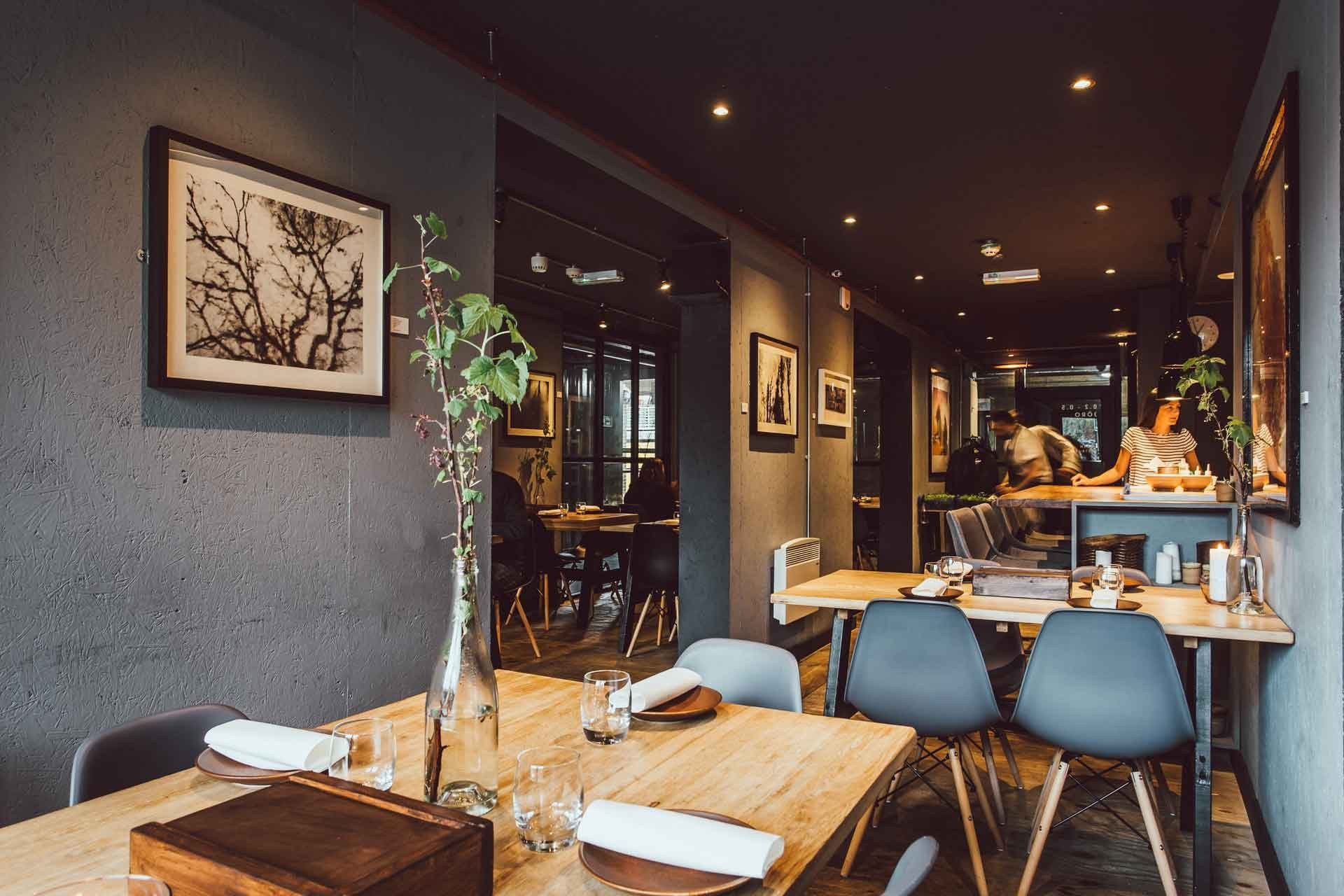
Bars in Sheffield
Browse all →


At a Glance
- Lively
- Trendy
- Industrial
- Modern
- Group Dining
- Casual Hangout
- After Work
- Brunch
- Open Kitchen
- Courtyard
- Historic Building
- Beer Program
Current opening hours
- Monday
- 9 AM–9 PM
- Tuesday
- 9 AM–9 PM
- Wednesday
- 9 AM–9 PM
- Thursday
- 9 AM–9 PM
- Friday
- 9 AM–11 PM
- Saturday
- 10 AM–11 PM
- Sunday
- 10 AM–9 PM
Hours can change for holidays and private events. Last verified .
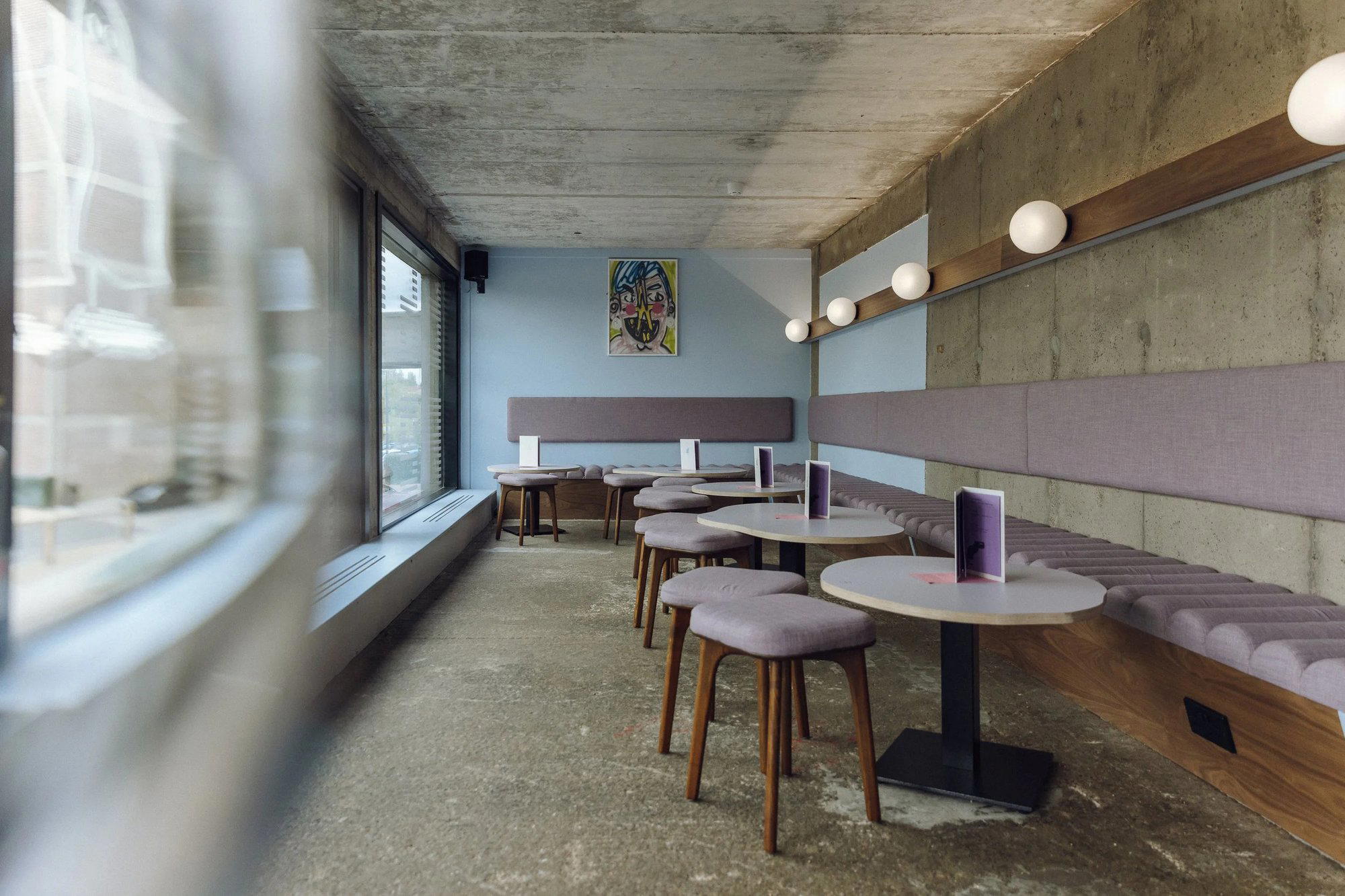
Industrial-chic converted factory setting with a lively, social atmosphere; bright and energetic communal dining spaces designed for group dining and social interaction.
Know Before You Go
- Getting there
- 73 – 101 Neepsend Ln, Neepsend, Sheffield S3 8AT, United Kingdom