
Tabelog 100 #34
Our verdict
Curry Notoriko is a seven-seat counter in Kanda, recognised in Tabelog Curry TOKYO 100 for 2024, with earlier selections in 2023, 2022, and 2018. It belongs to Tokyo’s serious curry culture: compact, quick-moving, technically focused, and closer to everyday urban ritual than luxury dining theatre.

Pearl is the En Primeur Club membership app, where members save venues, book tables and use the concierge.
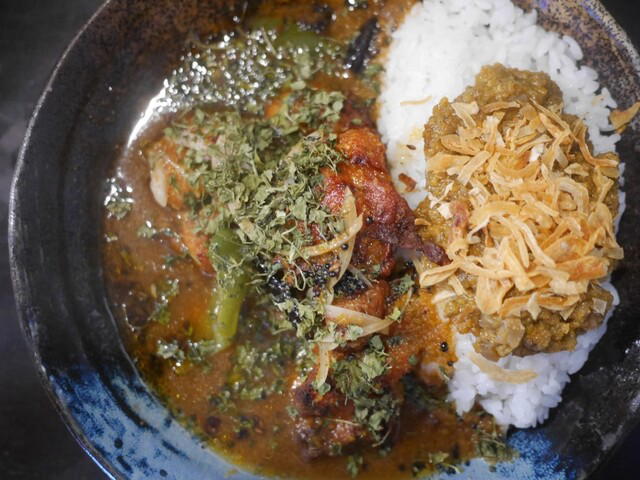
In Tokyo, curry is not a side note to the workday; it is part of the daily machinery. Around the city, office workers, students, small bars, bookshops, noodle counters, and lunch queues set the pace. Curry Notoriko fits that city rhythm as a Tokyo curry address with a focused listing profile: recognized by Tabelog Hyakumeiten in 2024, categorized as curry and Indian curry, and priced in an everyday range.
Tokyo’s curry culture rewards specialists. The city treats curry as a local language, absorbing Indian spice logic, Japanese rice-plate structure, kissaten comfort, and lunch-counter speed into something distinctly urban. Tokyo is especially important because it has become one of the world’s densest curry landscapes, where small shops compete on spice balance, sauce texture, rice, heat, and repeat value rather than dining-room polish.
Tokyo curry culture, stripped down to a focused listing
Read Curry Notoriko not as a luxury destination restaurant, but as a high-signal example of Tokyo’s specialist curry economy. Tabelog Hyakumeiten recognition in 2024 gives it context in a crowded field ranging from everyday plates to higher-spend spice counters, where attention follows places with a clear point of view rather than broad, unfocused menus.
The listing says as much as the recognition. Curry Notoriko is presented in the curry and Indian curry category, with both lunch and dinner budgeted at JPY 1,000 - JPY 1,999. That places it closer to practical Tokyo eating than to the long arc of a tasting menu. In Tokyo, this matters: serious food can be quick, direct, and modestly priced without being treated as minor.
The comparison is less with grand dining rooms than with other compact Tokyo specialists and everyday food stops. Fukuo Shoten and KAMAYOSHI can sit on the same planning map, while Nemurian offers another way to read focused local dining; Curry Notoriko’s appeal is the place where craft and routine overlap. For travellers mapping the city through small-format meals, it belongs beside focused Tokyo entries rather than the broader all-day café circuit.
Why Tokyo curry rewards repetition, not spectacle
Japanese curry is often described too casually abroad, as if it were only mild comfort food. Tokyo complicates that reading. Its serious curry shops are frequently obsessive, but the obsession is structural: how spice opens, how sweetness is controlled, how rice carries sauce, and how heat behaves after the first bites. The genre can be quick without being simple. Its discipline lies in compression.
Curry Notoriko sits in the curry and Indian curry category, a useful label because Tokyo’s curry scene often moves between Japanese and South Asian references without treating them as fixed borders. The city’s strongest curry addresses are hybrids in practice: some emphasize roux depth, some spice aroma, some dry-style intensity, some rice and topping architecture. The point is not museum-style authenticity, but whether the plate has internal logic.
Tokyo gives that logic a specific setting. Unlike the city’s more formal high-end counters, which can price themselves against international visitors and expense accounts, this kind of food culture stays closer to workday appetite. A curry address in this price band must satisfy repeat diners as much as list-chasing visitors. That is why Tabelog Hyakumeiten recognition carries weight: it reflects attention in a city with many credible alternatives and little patience for weak execution.
This is not the same planning category as occasion dining. It favors diners who value the directness of a specialist curry stop and who understand the pace of Tokyo’s casual food culture. In a broader Tokyo itinerary, it can sit between heavier reservations and neighbourhood wandering: lunch or early evening curry in Tokyo, followed later by other casual or more formal dining elsewhere in the city.
How to place it in a Tokyo food day
The case for Curry Notoriko is editorial rather than ornamental: it shows how Tokyo turns everyday categories into specialist disciplines. The city’s acclaimed dining is often associated with omakase counters, French technique, and high-end kappo, but curry reveals another side of the same culture. Precision does not require linen. A short meal can carry as much local information as a long reservation when the category is taken seriously.
For visitors, treat this as a Tokyo curry stop, not a relaxed group dinner by default. The city setting makes it easy to combine the shop with bookstores, shopping, station-area wandering, or a second stop later in the day. Payment and seating conventions at small Tokyo restaurants can be narrower than at hotel restaurants, so arrive prepared for an efficient meal rather than a flexible hospitality format.
It also pairs with a wider Tokyo dining map. Other parts of the city have their own late-night gravity; Curry Notoriko’s appeal is more workday and specialist. Travellers extending beyond Tokyo can compare how casual Japanese formats shift by region through unnamed curry shops, cafés, noodle counters, and grilled-food specialists across the country, while keeping Curry Notoriko as a Tokyo reference point.
For broader planning, use EP Club’s Tokyo restaurants coverage alongside its Tokyo hotels, bars, wineries, and experiences coverage. For a wider Japanese and diaspora food lens, EP Club also tracks casual, specialist, and counter-led dining beyond Tokyo. Curry Notoriko earns its place in that map by showing how much Tokyo can say through one curry listing and one deeply local category.
Frequently asked questions
Would Curry Notoriko be comfortable with kids?
It is best approached as a practical Tokyo curry stop rather than a long-form family meal. With lunch and dinner priced at JPY 1,000 - JPY 1,999, it may suit families looking for a straightforward meal in that budget range.
What's the overall feel of Curry Notoriko?
It reads as focused and curry-led rather than formal. Tabelog Hyakumeiten recognition in 2024 gives it clear context in Tokyo’s curry scene, and the Tokyo setting keeps it in a brisk urban rhythm.
How much does it cost to eat at Curry Notoriko?
Pricing at Curry Notoriko is listed as JPY 1,000 - JPY 1,999 JPY 1,000 - JPY 1,999.
What part of town is Curry Notoriko in?
Tokyo.
Cost Snapshot
Comparable venues at a similar level for quick context.
| Venue | Cuisine | Price | Awards | Notes |
|---|---|---|---|---|
| Curry NotorikoThis venue (the venue you are viewing) | Japanese–Indian Curry House | $10–20 | Tabelog 100 #34 | Not listed |
| Pork Vindaloo Taberu Fukudaitoryo | Pork vindaloo curry shop | $10–20 | Tabelog 100 #56 | Shibuya, Pork vindaloo curry shop |
| Ethiopia Curry Kitchen Ochanomizu soracity ten | Curry House | $10–20 | Tabelog 100 #77 | Chiyoda, Curry House |
| Tokyo Bombay Ebisu honten | Indian Curry House | Not listed | Tabelog 100 #90 | Shibuya, Indian Curry House |
| Indian Fu Curry Rice Supaisu | Indian-style Japanese Curry | $10–20 | Tabelog 100 #65 | Suginami, Indian-style Japanese Curry |
| NANDHINI Toranomon ten | Authentic South Indian (Halal) Restaurant | $20–30 | Tabelog 100 #35 | Minato, Authentic South Indian (Halal) Restaurant |
Recognition history
Dated appearances from independent guides and award organizations, with the underlying list record or original source where available.
Tabelog 100 #34 · No. 34
Tabelog · Tabelog 100 - Curry - TOKYO - 2024
Continue exploring
More in Tokyo
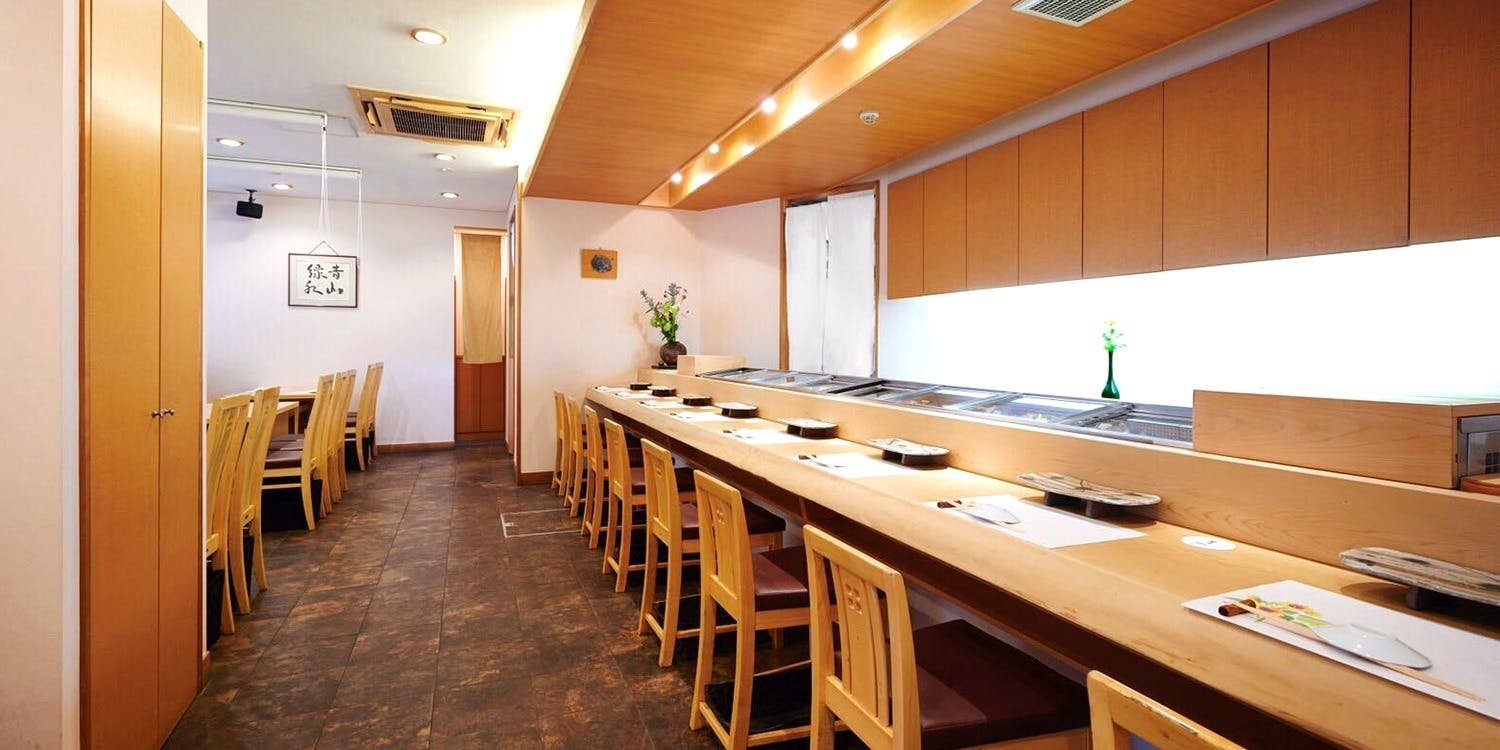
Restaurants in Tokyo
All restaurants in Tokyo →



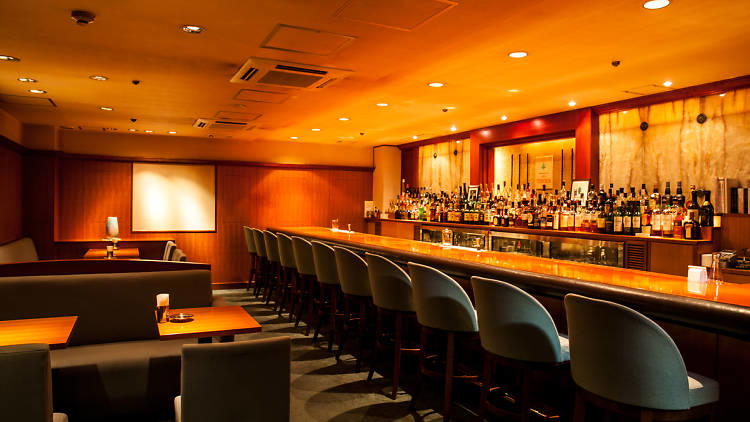
Bars in Tokyo
All bars in Tokyo →







Details
- Cozy
- Intimate
- Solo
- After Work
- Casual Hangout
- Chefs Counter
- Standalone
- A La Carte
- Counter Dining
A compact, non-smoking counter with just seven seats, creating a casual, bustling atmosphere typical of a popular curry specialist near a busy station.