Convi Sandwich Shop
Convi Sandwich Shop sits inside Los Angeles’s broad casual-dining register, where a sandwich menu can signal more than convenience: bread choice, fillings, heat, and portability all shape the meal. With no formal awards or chef-led tasting structure attached, the useful read is menu architecture rather than ceremony, placing it closer to everyday city eating than destination dining theater.
Pearl is the En Primeur Club membership app — saves, bookings, and concierge access live there. Same editors, same standards.
- Address
- 1867 S Mansfield Ave, Los Angeles, CA 90019
- Phone
- (323) 879-9522
- Website
- convicorner.com
- Directions
- Get directions
 Saves & bookings on Pearl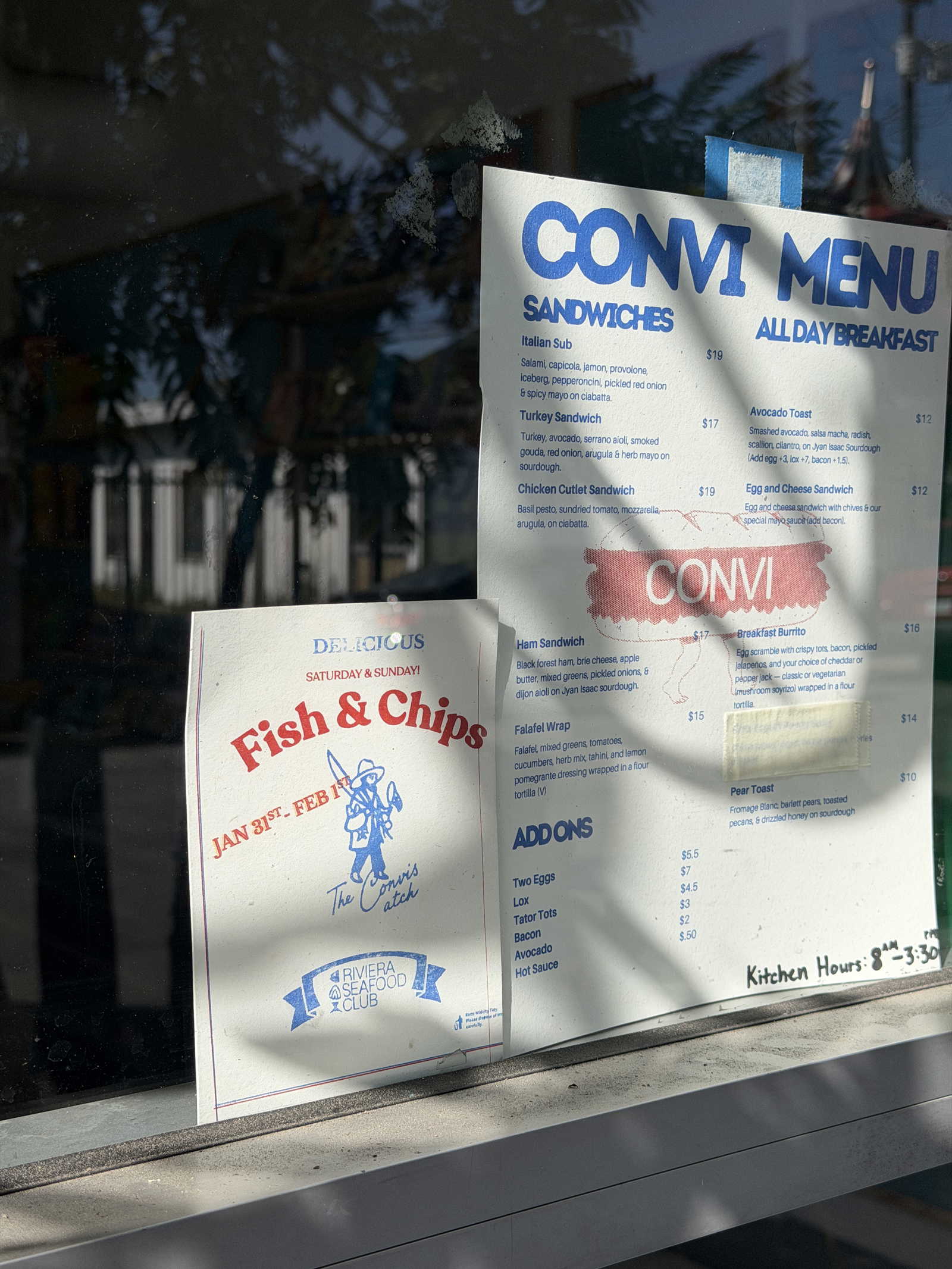
The first read on a sandwich shop is usually physical rather than formal: the counter, the menu board, the rhythm of orders, the brief pause while bread and fillings become lunch. In Los Angeles, that format carries more weight than it might in a denser, older restaurant city. The sandwich is a commuter meal, a between-errands meal, a workday-break meal, and a neighborhood habit. Convi Sandwich Shop belongs to that register, where the question is less about ceremony and more about how clearly the menu organizes hunger.
Los Angeles sandwich culture rewards structure over spectacle
Los Angeles has never treated casual food as a lesser category. The city’s dining identity is built as much from counters, takeout windows, compact rooms, and lunch formats as from more formal meals. A sandwich shop in this context has to do several jobs at once: move quickly, read clearly, satisfy different appetites, and make the case for why this combination of bread, filling, sauce, and texture deserves attention over the dozens of other fast-casual choices nearby.
That is where menu architecture matters. A tight sandwich menu usually tells the reader what kind of place it wants to be before a single order is placed. If the list leans classic, the pleasure comes from proportion and execution. If it moves broader, the risk is clutter: too many sauces, too many fillings, too little editorial discipline. The stronger version of the format lets each sandwich occupy a clear role, from lighter midday order to heavier meal, without making the guest decode a long catalogue.
Convi Sandwich Shop is therefore better understood through category logic than through chef biography or awards language. The available venue signal here is its Los Angeles place record rather than a tasting-menu apparatus to interpret. The relevant frame is Los Angeles’s appetite for high-function casual food: places that fit into the day rather than ask the day to reorganize around them.
What the menu format reveals about the meal
Sandwich menus live or die by hierarchy. The first decision is usually temperature: cold construction, hot press, toasted bread, or something built around melted elements and warm fillings. The second is weight: lunch that can be eaten quickly versus a full plate disguised as handheld food. The third is identity: familiar counter logic, produce-minded logic, comfort-food logic, or a cross-category approach that borrows from several traditions without becoming vague.
For a reader deciding whether to prioritize Convi Sandwich Shop, the useful question is not whether Los Angeles needs another sandwich counter. It is whether the format fits the occasion. This is the kind of restaurant category that works when the brief is focused: a quick meal, a casual meet-up, or a low-ceremony stop folded into a wider day in the city. It is not a natural substitute for a long dinner, a drinks-led evening, or a reservation-dependent restaurant plan.
That distinction matters in Los Angeles because distance shapes dining decisions. A casual meal can be excellent and still make little sense if it requires an awkward cross-city drive at the wrong hour. Sandwich shops reward proximity, timing, and appetite alignment. They are strongest when they solve the day cleanly rather than compete with the city’s more formal restaurant calendar.
Where it fits in a Los Angeles itinerary
Use Convi Sandwich Shop as a casual-food marker, not as the anchor of a full dining trip. Los Angeles has enough range that a day can move from a sandwich counter to other dining rooms, drinks, hotel dining, or another low-key food stop without forcing one venue to carry every mood. For broader planning, EP Club’s city coverage includes our full Los Angeles restaurants guide, our full Los Angeles hotels guide, our full Los Angeles bars guide, our full Los Angeles wineries guide, and Our full Los Angeles experiences guide.
Within the restaurant map, the city’s range runs from polished rooms to counter-service staples, compact dining rooms, high-view settings, and fast casual food. Other useful counterpoints in the wider EP Club archive include unnamed casual counters, compact bar-led rooms, neighborhood lunch stops, destination dining rooms, and city-specific specialists that show how differently a quick meal can read depending on context.
The verdict is practical rather than grand: Convi Sandwich Shop is a Los Angeles casual-dining play, and the interest lies in how its menu handles the sandwich as architecture. Go when the meal calls for clarity, speed, and a focused handheld format, not when the evening needs ceremony.
Continue exploring
More in Los Angeles
Restaurants in Los Angeles
Browse all →
Bars in Los Angeles
Browse all →
Hotels in Los Angeles
Browse all →

Wineries in Los Angeles
Browse all →
At a Glance
- Trendy
- Cozy
- Modern
- Casual Hangout
- Solo
- After Work
- Family
- Standalone
- Design Destination
- Local Sourcing
Current opening hours
- Monday
- 7 AM–2 PM
- Tuesday
- 7 AM–2 PM
- Wednesday
- 7 AM–2 PM
- Thursday
- 7 AM–2 PM
- Friday
- 7 AM–2 PM
- Saturday
- 7 AM–2 PM
- Sunday
- 7 AM–2 PM
Hours can change for holidays and private events. Last verified .
Bright, minimal, and modern with a small, cozy footprint; it feels like a stylish corner convenience store crossed with a Japanese/NOLA-inspired deli, geared toward quick bites and takeaway rather than long sit-down meals.
Know Before You Go
- Reservations
- Walk in friendly
- Dress code
- Casual