Colettes at The Grove
Colettes at The Grove occupies a country house hotel setting in Chandler's Cross, Hertfordshire, a short drive from northwest London. The restaurant draws on the estate's grounds and the surrounding Home Counties agricultural belt, positioning itself within a broader tradition of British hotel dining where sourcing proximity shapes the menu. It sits in the same regional conversation as other destination dining rooms that treat the countryside as larder rather than backdrop.
 Discover on Pearl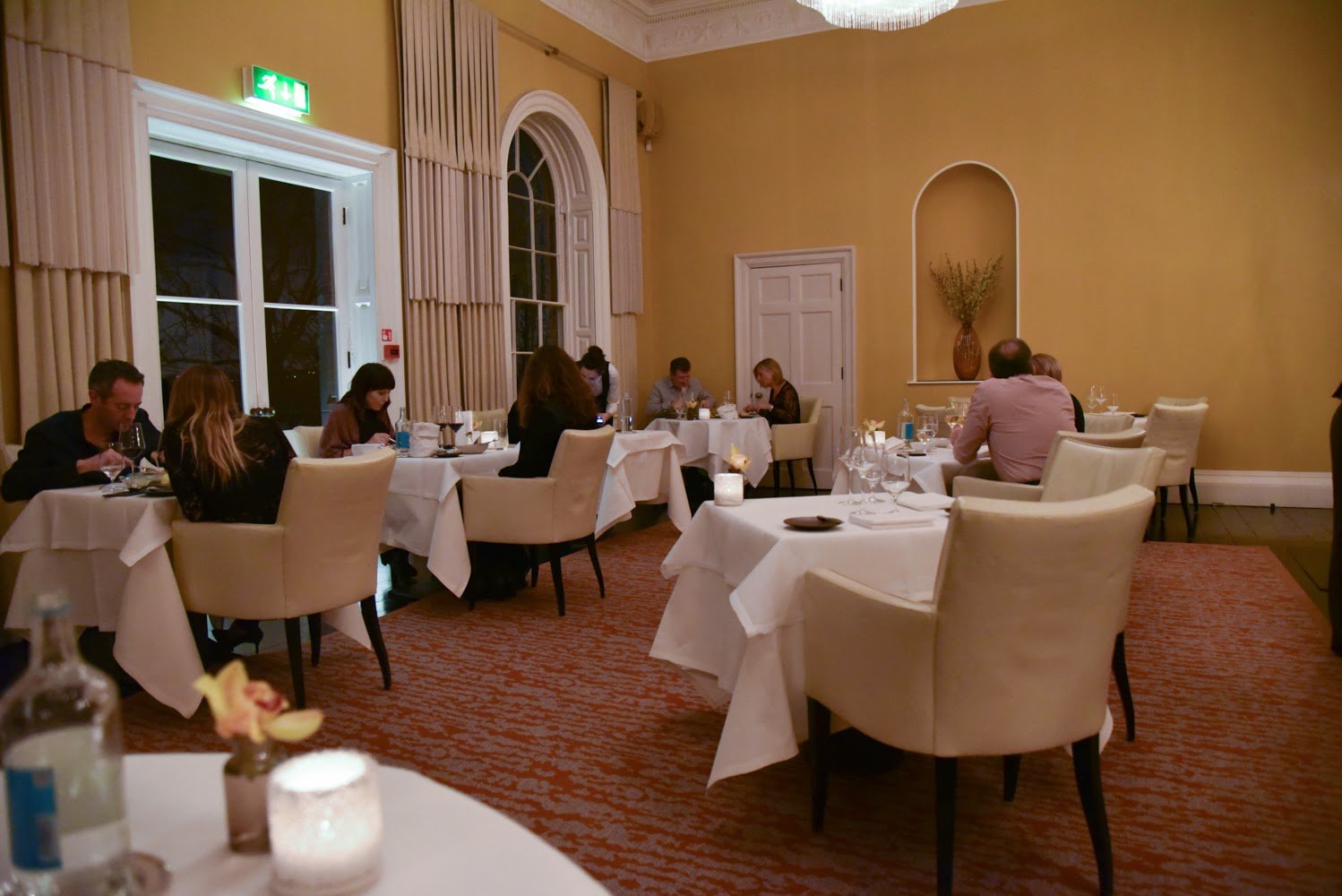
Country House Dining and the Sourcing Argument
British hotel restaurants have spent the last two decades sorting themselves into two distinct camps: those that treat the kitchen as an amenity for hotel guests, and those that build a case for the destination visit. Colettes at The Grove, set within the Grove Hotel in Chandler's Cross, Hertfordshire, belongs to a tradition that takes the second position seriously. The country house hotel dining room, long a fixture of English leisure culture, has been reinvented at its leading end by a commitment to sourcing from the land immediately surrounding it. The Home Counties, with their market gardens, estate farms, and proximity to both the Thames Valley and the Hertfordshire countryside, give kitchens in this corridor genuine raw material to work with, not just a postcode to name-drop on a menu.
The Grove itself sits on a substantial estate, and that physical reality matters when discussing what ends up on the plate. In the British country house tradition, from Le Manoir aux Quat' Saisons in Great Milton to Gidleigh Park in Chagford, the most credible dining propositions are those where the grounds, the kitchen garden, or the regional network of producers becomes traceable in the cooking. That connection between land and plate is the measure by which these rooms are assessed, not their room counts or leisure facilities.
The shortlist, unlocked.
Hard-to-book tables, cellar releases, and concierge-planned trips.
Get Exclusive Access →The Setting: What You Encounter Before Sitting Down
Arriving at The Grove from the M25 corridor feels like a shift in register. The driveway approach through parkland, the Georgian manor house, the managed grounds: all of it signals a deliberate departure from the urban dining format. Colettes operates within this environment, which means the dining experience begins before any food arrives. The room draws on the hotel's country house architecture while providing enough formality to frame a serious meal. This kind of setting is neither accidental nor purely decorative; it shapes expectation and pacing in ways that a city restaurant cannot replicate. The unhurried tempo of country house dining is one of its defining functional properties, and Colettes is positioned to deliver that rhythm.
For readers planning a visit, the location between Rickmansworth and Watford places it roughly thirty minutes from central London by road, and Watford Junction provides a rail connection for those approaching from the city without a car. The hotel's scale means that Colettes serves a mixed audience: resort guests combining dining with a stay, and destination diners making the journey specifically for the restaurant. Both patterns are normal in this category, as seen at comparable properties across the British country hotel circuit.
Where Colettes Sits in the British Country Dining Conversation
The British country restaurant tier has developed considerable depth over the past twenty years. At its most decorated end sit rooms like L'Enclume in Cartmel, where Simon Rogan's farm-to-table model has become a reference point for the entire category, or Moor Hall in Aughton, which combines strong Michelin recognition with a kitchen garden programme that directly supplies the pass. Further south, Hand and Flowers in Marlow has built its reputation on produce-led cooking at a more accessible price point, while hide and fox in Saltwood represents the newer generation of focused regional rooms operating outside London's gravitational pull.
Colettes operates within this broader ecosystem. The Home Counties, despite their suburban reputation, supply some of England's most consistent seasonal produce, and a kitchen that reads its region carefully has access to asparagus, game, soft fruit, and root vegetables across a well-defined seasonal calendar. The question any serious country house kitchen must answer is whether that access becomes a genuine organising principle for the menu, or whether it remains a marketing statement. The leading rooms in this tier, including those with Michelin recognition and those building towards it, treat the sourcing argument as a discipline, not a descriptor.
London's highest-achieving kitchens, including CORE by Clare Smyth, have demonstrated that British produce, handled with technical precision, competes at the same level as any European culinary tradition. That standard now exerts pressure on country house rooms within the London orbit: proximity to the capital means proximity to critics, to well-travelled diners, and to the comparison set that includes internationally recognised rooms. Midsummer House in Cambridge and Restaurant Andrew Fairlie in Auchterarder show how hotel dining rooms within major resort properties can hold serious culinary identities alongside their leisure functions.
Ingredient Sourcing as Editorial Frame
Across the country house dining category, the kitchens that sustain both critical and commercial momentum are those with a coherent sourcing story. That means named suppliers, seasonal rotation, and a willingness to let the produce set the menu's pace rather than the other way around. Hertfordshire and the wider Home Counties belt supports a network of farms, market gardens, and specialist producers that a well-connected kitchen can draw on year-round. Heritage vegetable varieties, rare-breed meat from nearby estates, and direct relationships with growers are the currency of this category, replacing the imported luxury ingredients that defined hotel restaurant cooking two decades ago.
This shift in ingredient philosophy aligns with what has happened across ambitious British cooking more broadly. The Fat Duck in Bray sits barely twenty miles from Chandler's Cross, and the Thames Valley corridor has long supported a density of serious kitchens that has pushed sourcing standards upward across the region. Internationally, rooms like Le Bernardin in New York City and Atomix have demonstrated that a clear sourcing philosophy, combined with technical rigour, produces a dining identity that outlasts individual menu cycles. The same logic applies at the country house level: the most durable reputations in this tier are built on knowing where the food comes from and making that knowledge audible in the cooking.
For those planning around the region more broadly, our full Chandler's Cross restaurants guide covers the dining options across the area. The Chandler's Cross hotels guide covers accommodation, and our guides to bars, wineries, and experiences in the area round out the picture for a longer visit. The Grove's position as a full-service resort means that a stay built around Colettes is a coherent proposition, combining the dining room with the hotel's other facilities and the Hertfordshire countryside beyond.
For diners approaching Colettes as a specific destination rather than a hotel amenity, the practical calculus is direct: a country house room of this type, set within a major estate property with access to regional produce, occupies a tier where the expectation is serious cooking delivered in a setting that takes the unhurried pace of the meal as a given. Booking ahead is advisable for weekend visits, as the combination of hotel guests and destination diners creates consistent demand pressure on weekend covers. Midweek visits, as is typical across this category, tend to offer a quieter room and more attentive pacing. Also referenced in context: Opheem in Birmingham demonstrates how hotel-adjacent fine dining outside London continues to build critical credibility on the strength of a consistent produce and sourcing philosophy.
Frequently Asked Questions
- Can I bring kids to Colettes at The Grove?
- Country house hotel dining rooms in this price bracket and setting typically accommodate families, particularly during lunch service, though the formal atmosphere of an evening dinner at a property like The Grove suits older children more comfortably. Chandler's Cross and the Grove estate offer enough complementary activities to make a family visit to the wider property viable. Checking directly with the restaurant regarding specific service formats and any minimum age considerations is the sensible step before booking.
- What kind of setting is Colettes at The Grove?
- Colettes operates within the Grove Hotel, a Georgian country house estate in Chandler's Cross, Hertfordshire. The setting is formal country house, positioned for destination dining as well as hotel guests. In the context of Chandler's Cross and the wider Home Counties, it represents the established country house dining format, comparable in setting character to other estate-based rooms in the region, though without the specific award credentials of a Michelin-starred room at this stage of its public record.
- What should I eat at Colettes at The Grove?
- Specific dish recommendations require verified menu data, which is not available in this record. As a general principle for this category of British country house restaurant, seasonal produce from the surrounding region forms the kitchen's strongest argument, and dishes built around locally sourced ingredients reflect both the estate's context and the broader direction of serious British cooking. Consulting the restaurant's current menu or a recent review before visiting will give the clearest picture of what the kitchen is prioritising.
- Is Colettes at The Grove reservation-only?
- Booking policy specifics are not confirmed in the available data. For a country house hotel restaurant of this type in Chandler's Cross, advance reservations are standard practice, particularly for weekend dinner service. Walk-in availability is more plausible at lunch on weekdays, but a room operating within a resort hotel of The Grove's scale will have structured service periods that reward advance planning.
- How does Colettes at The Grove compare to other destination dining rooms within an hour of London?
- The Home Counties and Thames Valley corridor contains several well-regarded destination rooms, including properties with Michelin recognition, within comparable driving distance of central London. Colettes sits within that regional conversation as the primary restaurant of a major estate hotel, a position that gives it both a captive hotel audience and the infrastructure to attract destination diners. The comparison set includes other country house dining rooms that have built reputations on regional sourcing and estate settings, and Colettes occupies that tier by geography and context, with its specific critical standing a matter for current restaurant coverage rather than historical record.
How It Stacks Up
These are the closest comparables we have in our database for quick context.
| Venue | Cuisine | Price | Awards | Notes |
|---|---|---|---|---|
| Colettes at The Grove | This venue | |||
| The Ledbury | Modern European, Modern Cuisine | ££££ | Michelin 3 Star | Modern European, Modern Cuisine, ££££ |
| Sketch, The Lecture Room and Library | Modern French | ££££ | Michelin 3 Star | Modern French, ££££ |
| CORE by Clare Smyth | Modern British | ££££ | Michelin 3 Star | Modern British, ££££ |
| Restaurant Gordon Ramsay | Contemporary European, French | ££££ | Michelin 3 Star | Contemporary European, French, ££££ |
| Dinner by Heston Blumenthal | Modern British, Traditional British | ££££ | Michelin 2 Star | Modern British, Traditional British, ££££ |
Need a table?
Our members enjoy priority alerts and concierge-led booking support for the world's most difficult tables.
Get Exclusive AccessThe shortlist, unlocked.
Hard-to-book tables, cellar releases, and concierge-planned trips.
Get Exclusive Access →