Clay's

Clay's sits on Prospect Street in Reading's Caversham quarter, occupying a mid-terrace address that belies the seriousness of what happens inside. The kitchen draws from a sourcing-led approach that positions it clearly above the town's casual dining mainstream. For anyone tracking where regional English restaurant cooking is heading, it merits attention.
Pearl is the En Primeur Club membership app — saves, bookings, and concierge access live there. Same editors, same standards.
- Address
- 22-24 Prospect St, Reading RG4 8JG, United Kingdom
- Phone
- +44 118 947 6060
- Website
- clayskitchen.co.uk
- Directions
- Get directions
 Saves & bookings on Pearl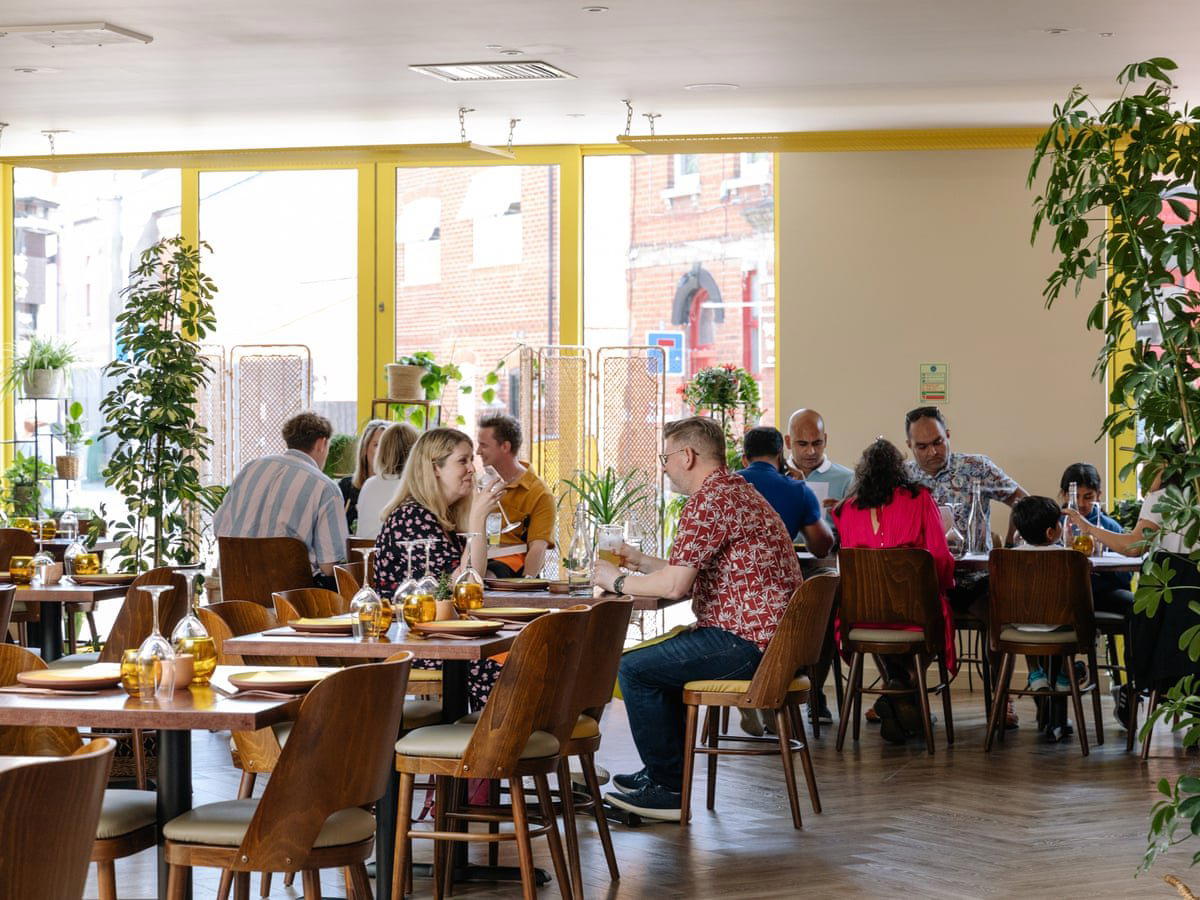
Prospect Street and the Shift in Reading's Dining Register
Caversham's Prospect Street is not a dining destination in the way that, say, a central London postcode announces itself. The terrace is residential in scale, the approach modest. What has changed over the past few years is the expectation diners bring to addresses like this one: the assumption that serious, sourcing-led cooking belongs only to city-centre flagship rooms has eroded steadily across the UK, and Reading has been part of that shift. Clay's at 22-24 Prospect St sits within that recalibration, a neighbourhood address operating with the procurement discipline more often associated with rooms carrying formal recognition. For a broader sense of where Reading's restaurant scene sits within the region, our full Reading restaurants guide maps the field.
Where the Food Comes From: The Sourcing Frame
Across the Thames Valley and into the counties framing it, the ingredient supply infrastructure has improved substantially. Berkshire and Oxfordshire producers, including market gardeners, small-scale livestock operations, and artisan cheesemakers, now supply restaurants at multiple price points rather than exclusively to trophy rooms. The result is that a kitchen committed to short supply chains no longer has to pay a penalty in either quality or consistency. Clay's operates in this environment, and the address in Caversham places it close to that supply network rather than at a logistical remove from it.
This matters because ingredient provenance is increasingly the differentiating variable in regional British cooking. At the top of the national register, kitchens like CORE by Clare Smyth in London have made the named British producer a formal part of the menu language. Farther west, Le Manoir aux Quat' Saisons in Great Milton has long maintained kitchen gardens as a structural commitment rather than a decorative gesture. The principle filters down: diners at every tier have grown accustomed to asking where a dish starts, not just how it is finished. A kitchen that answers that question seriously, regardless of its price point or formal accolade status, occupies a different competitive position than one that does not.
Reading in the Regional Dining Conversation
The UK's most-discussed regional restaurants currently cluster in places like Cartmel, where L'Enclume has redefined what a village address can mean for fine dining, or in Aughton, where Moor Hall operates at the intersection of estate-scale produce and technical ambition. Closer to Reading's geography, Hand and Flowers in Marlow has spent over a decade demonstrating that the Thames corridor can sustain serious cooking with national standing. That corridor now extends further, and Reading is part of it.
For comparison, the kind of sourcing commitment that defined early-wave farm-to-table cooking in the UK has moved from a point of novelty to a baseline expectation in any room operating above the mid-market. Kitchens like hide and fox in Saltwood and Midsummer House in Cambridge demonstrate how regional English kitchens can carry genuine weight without relying on metropolitan proximity. Clay's sits in a town well-connected to London by rail but with a dining identity that does not simply replicate the capital.
The Room and How to Read It
Mid-terrace addresses of this type in English market towns tend toward one of two formats: stripped-back bistro minimalism or warmer, textured interiors that signal a longer stay. The Prospect Street address, a converted townhouse footprint at numbers 22-24, suggests a room that has been shaped over time rather than specified from scratch. This is not the clean-slate design of a city-centre opening with a significant fit-out budget. The character of the space belongs to a tradition of British neighbourhood restaurants where the cooking has outpaced the room's ambitions rather than the other way around.
That asymmetry is often a reliable quality signal. Some of the most consistent regional kitchens in the UK operate in rooms that would attract no particular attention on their own. Restaurant Andrew Fairlie in Auchterarder occupies a basement at Gleneagles, and Gidleigh Park in Chagford makes its case through food and grounds rather than through an architectural statement. The physical container, in other words, is rarely where regional ambition announces itself first.
Reading Beyond the Restaurant: Planning the Trip
Reading functions well as a base for the wider Thames Valley, and the rail connection to London Paddington runs to under 30 minutes on fast services, which means Prospect Street is accessible from the capital without requiring an overnight stay. Those who do stay will find the town's accommodation offer covered in our full Reading hotels guide. The bar and drinks scene is mapped in our full Reading bars guide, with further context on wine specifically in our full Reading wineries guide and broader programming in our full Reading experiences guide.
For those building a wider regional itinerary, The Fat Duck in Bray sits within easy reach to the east. Opheem in Birmingham represents another data point for how serious regional cooking is being reframed across England's mid-tier cities. Internationally, the sourcing-led model that Clay's appears to represent has parallels in kitchens far beyond the UK: Le Bernardin in New York City and Atomix in New York City both demonstrate, in very different register, how provenance and precision reinforce each other at the table.
How Clay's Reading compares with similar nearby venues.
| Venue | Cuisine | Price |
|---|---|---|
| Orwells | Modern British | £££ |
Recognition history
Dated appearances from independent guides and award organizations, with the underlying list record or original source where available.
The Good Food Guide Good Food Guide Best Local Restaurant
The Good Food Guide
Continue exploring
More in Reading
Restaurants in Reading
Browse all →
Bars in Reading
Browse all →
Hotels in Reading
Browse all →



At a Glance
- Elegant
- Modern
- Cozy
- Date Night
- Special Occasion
- Group Dining
- Open Kitchen
Current opening hours
- Monday
- Closed
- Tuesday
- 5–10:30 PM
- Wednesday
- 5–11 PM
- Thursday
- 5–11 PM
- Friday
- 5–11 PM
- Saturday
- 1–3 PM, 5–11:30 PM
- Sunday
- Closed
Hours can change for holidays and private events. Last verified .
Relaxing vibe with well-spaced tables for privacy, though hard surfaces create high echo levels and noise during busy periods.
Know Before You Go
- Getting there
- 22-24 Prospect St, Reading RG4 8JG, United Kingdom