Chez Alain
Our verdict
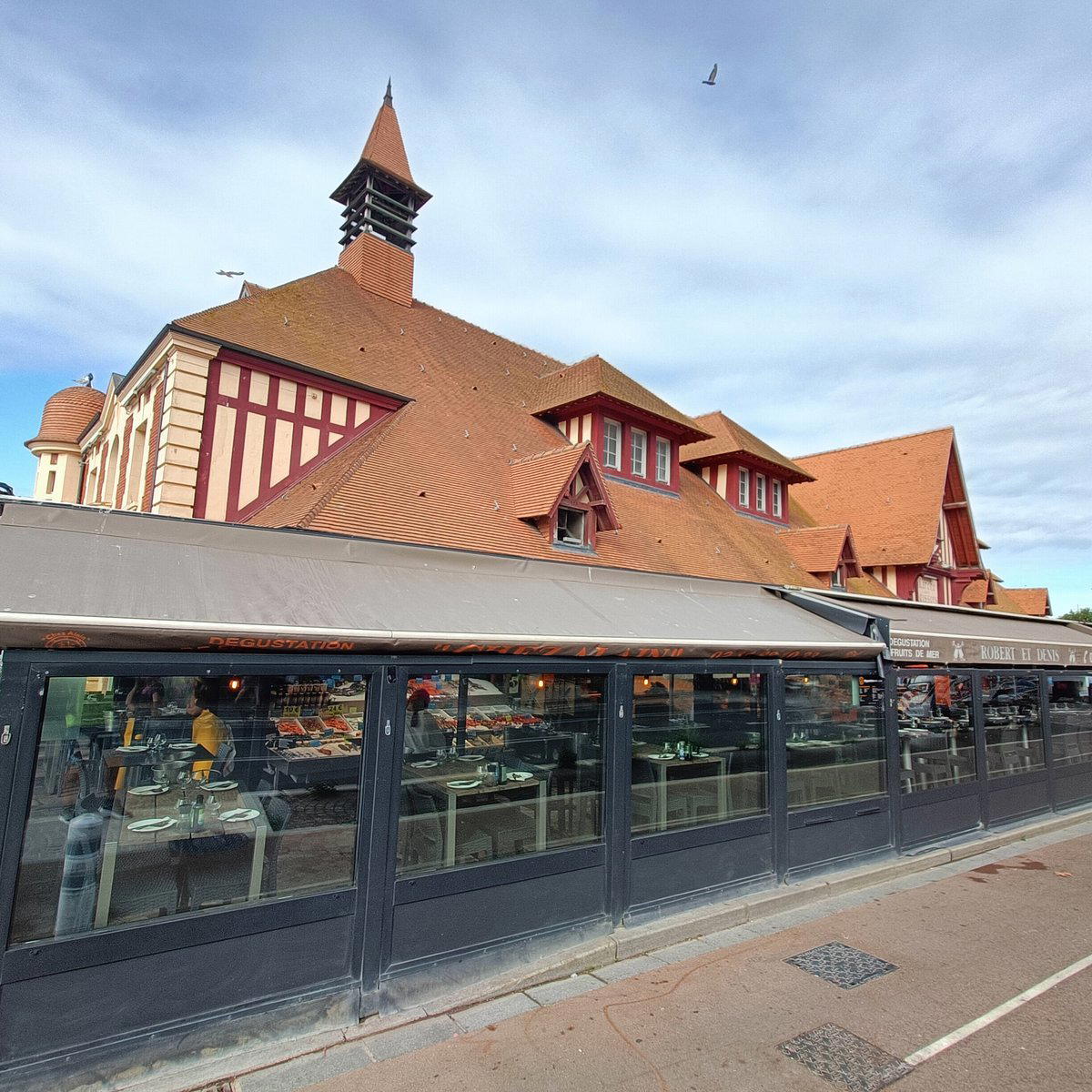
On Trouville-sur-Mer's working quayside, Chez Alain occupies a position shaped by one of Normandy's most direct relationships between fishing boat and kitchen table. The address on Quai Fernand Moureaux places it inside the town's daily fish market circuit, where the catch dictates the menu rather than the other way around. For visitors to the Côte Fleurie, it represents the coastal bistro format at its most honest.

Pearl is the En Primeur Club membership app, where members save venues, book tables and use the concierge.
The menu
What to order
- Plateaux de fruits de mer
- Huîtres
- Langoustines
The Quayside Tradition That Shapes Trouville's Table
Trouville-sur-Mer has maintained a distinction that its more fashionable neighbour Deauville has largely surrendered: it remains a working fishing port. The morning activity along Quai Fernand Moureaux, where trawlers unload directly opposite the restaurant terraces, is not staged for tourists. The fish market that runs along this quay is one of the most active in Calvados, and the restaurants clustered here are positioned to take advantage of that supply chain in a way that inland dining simply cannot replicate. Chez Alain sits on this quay, which means the editorial question is not whether the seafood is fresh but rather how the kitchen interprets a tradition that runs deep through Norman coastal culture.
That tradition deserves context. Normandy's coastal cooking is not the cream-and-butter maximalism often exported as a regional shorthand. Along the Channel coast specifically, the dominant register is restraint: sole meunière finished simply, moules prepared with local cider rather than white wine, plateaux de fruits de mer assembled with precision rather than drama. The logic is direct, when the oysters come from beds a few kilometres away and the turbot was caught the same morning, the chef's primary obligation is to not obscure what is already excellent. This is a different culinary philosophy from the tasting-menu elaboration you find at destinations like Flocons de Sel in Megève or Mirazur in Menton, and it operates by different criteria.
What the Quai Format Means in Practice
Restaurants on Quai Fernand Moureaux occupy a specific competitive tier within Trouville. They are not the town's formal dining rooms, nor are they the crêperies and fast-casual operations that serve the summer beach crowd. They occupy the middle register that defines French coastal bistro culture: tablecloth service, a focused carte built around the day's catch, and a wine list weighted toward Muscadet, Chablis, and the drier expressions of Normandy cider. The audience is a mix of local regulars, Parisian weekenders who have been coming to the Côte Fleurie for decades, and international visitors who have done enough research to get off the beachfront promenade and onto the working quay.
These are not abstract qualities. In a town where a plateau de fruits de mer is both an everyday lunch and a ritual occasion, the difference between a kitchen that sources from the quay market and one that takes delivery from a regional wholesaler is immediately perceptible on the plate.
Norman Seafood in Its Proper Frame
The broader French coastal dining tradition provides useful comparison points. The plateau de fruits de mer as a format reached its most rigorous expression in Brittany and Normandy, where the combination of cold Atlantic waters, tidal oyster beds, and a culture of eating at the source produced a style of restaurant entirely organised around raw and simply cooked shellfish. Venues along this coastline are evaluated differently from their counterparts in Paris or Lyon, the hierarchy here runs through supply transparency and technical precision on simple preparations rather than through the kind of kitchen elaboration that earns recognition at addresses like Alléno Paris au Pavillon Ledoyen or Troisgros in Ouches.
That does not make the quayside bistro a lesser category. It makes it a different one, with its own internal standards. The sole meunière at a serious Trouville address is as technically demanding in its own register as the composed plate at a destination restaurant, the margin for error is simply different. There is nowhere to hide a fish that is a day past its leading, and no sauce complex enough to compensate for poor sourcing. This is the discipline that Norman coastal cooking imposes, and it is why the leading addresses on this quay maintain loyal followings that span generations.
The Côte Fleurie in Wider Context
Trouville-sur-Mer occupies a particular position in French seaside dining. Unlike the more formal resort towns of the Riviera, and unlike the self-consciously rustic fishing villages of Brittany, it operates as a town that has preserved genuine commercial fishing alongside its tourism economy. This dual identity shapes what restaurants here can and cannot claim. The proximity to Paris, roughly two hours by road, means the clientele is sophisticated and has clear reference points. A Parisian who lunches at Paul Bocuse's Auberge du Pont de Collonges or dinner at Auberge de l'Ill in Illhaeusern arrives at a Trouville quayside table with calibrated expectations, and the leading addresses here know how to satisfy them within a deliberately different register.
For visitors exploring the full range of what the Côte Fleurie offers, Chez Alain represents one end of a local spectrum. The town's dining options range from the more ambitious cooking at Bistrot Marcele to the relaxed format of Les Bains, each occupying a distinct position in the local hierarchy. A full reading of what this town offers at the table is mapped in our full Trouville-sur-Mer restaurants guide.
The quayside bistro tradition in Normandy has parallels in other fishing port cultures. Le Bernardin in New York built its identity on the same principle, the fish as protagonist, the kitchen as careful editor, though at a very different scale and price point. Even in formats as far removed as Lazy Bear in San Francisco, the idea that the sourcing narrative should be legible on the plate traces back to the same discipline that coastal Norman cooking embodies at its most direct. The quay address is not incidental; it is the argument.
Planning Your Visit
Chez Alain is located at Quai Fernand Moureaux in Trouville-sur-Mer, directly on the working harbour. The quay is most atmospheric during the summer months when the fish market is at its most active, typically from early morning through midday, which informs the freshness of the lunch service in particular. Trouville is accessible from Paris via the A13 autoroute in approximately two hours, or by train to Deauville-Trouville station, which sits within walking distance of the quay. Given the seasonal demand on the Côte Fleurie, particularly in July and August, securing a table in advance is advisable. Contact details are not currently listed; visiting in person or checking local booking platforms will confirm availability. For a thorough orientation to the town's dining options before you arrive, the Trouville-sur-Mer guide covers the full range alongside Les Prés d'Eugénie in Eugénie-les-Bains, Bras in Laguiole, La Table du Castellet, and Georges Blanc in Vonnas for those building a wider French itinerary.
Frequently asked questions
How would you describe the vibe at Chez Alain?
The address says most of it: Quai Fernand Moureaux puts Chez Alain on the same waterfront strip where fishing boats still unload their catch in Trouville-sur-Mer, one of the few towns on the Côte Fleurie that has held onto its working-port identity rather than rebranding entirely for tourism. The atmosphere follows from that, harbour-front, unpretentious, shaped by the rhythm of the quay rather than the resort calendar of neighbouring Deauville.
Is Chez Alain worth visiting if you're coming from Deauville for the day?
Trouville-sur-Mer and Deauville are separated by the Touques river, making Chez Alain on Quai Fernand Moureaux a short crossing from Deauville's resort centre. The two towns offer a deliberate contrast: Deauville's dining scene skews formal and resort-oriented, while Trouville's quayside restaurants remain tied to the working harbour. For anyone in Deauville seeking Norman seafood in a less curated setting, the quay at Trouville is the logical destination.
What dish is Chez Alain famous for?
No specific signature dish is formally documented for Chez Alain, but the context is instructive. Restaurants on Quai Fernand Moureaux in Trouville-sur-Mer operate within a Norman coastal tradition where the plateau de fruits de mer, oysters, langoustines, whelks, and seasonal shellfish arranged on ice, is the reference format. Given Trouville's status as a working fishing port, the draw is the provenance of the catch rather than any single constructed dish.
Budget and Context
Comparable venues nearby, for context on price, style, and recognition.
| Venue | Cuisine | Price | Notes |
|---|---|---|---|
| Chez AlainThis venue (the venue you are viewing) | Fresh Seafood Platters | $20–30 | Not listed |
| La Régence | Traditional French Seafood | $50–100 | Trouville-sur-Mer, Traditional French Seafood |
| Les Mouettes | Traditional Norman French Bistro | $20–30 | Port, Traditional Norman French Bistro |
| Le Noroit | Traditional Norman Seafood Brasserie | $30–50 | Trouville-sur-Mer, Traditional Norman Seafood Brasserie |
| Les Etiquettes | French Bistrot with Southern Accents | $30–50 | Rue des Bains, French Bistrot with Southern Accents |
| Les Quatre Chats | Traditional French Bistro | $50–100 | Trouville-sur-Mer, Traditional French Bistro |
Continue exploring
More in Trouville-sur-Mer
Restaurants in Trouville-sur-Mer
All restaurants in Trouville-sur-Mer →
Bars in Trouville-sur-Mer
Browse all →
Details
- Rustic
- Cozy
- Casual Hangout
- Family
- Terrace
- Waterfront
- Local Sourcing
- Waterfront
- A La Carte
Current opening hours
- Monday
- 7 AM–7 PM
- Tuesday
- 7 AM–7 PM
- Wednesday
- 7 AM–7 PM
- Thursday
- 7 AM–7 PM
- Friday
- 7 AM–7 PM
- Saturday
- 7 AM–7 PM
- Sunday
- 7 AM–7 PM
Hours can change for holidays and private events. Hours as of .
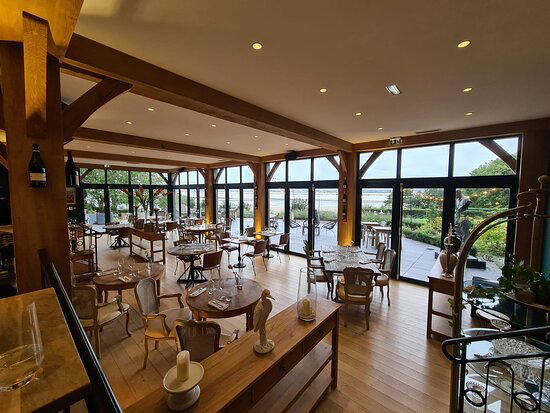
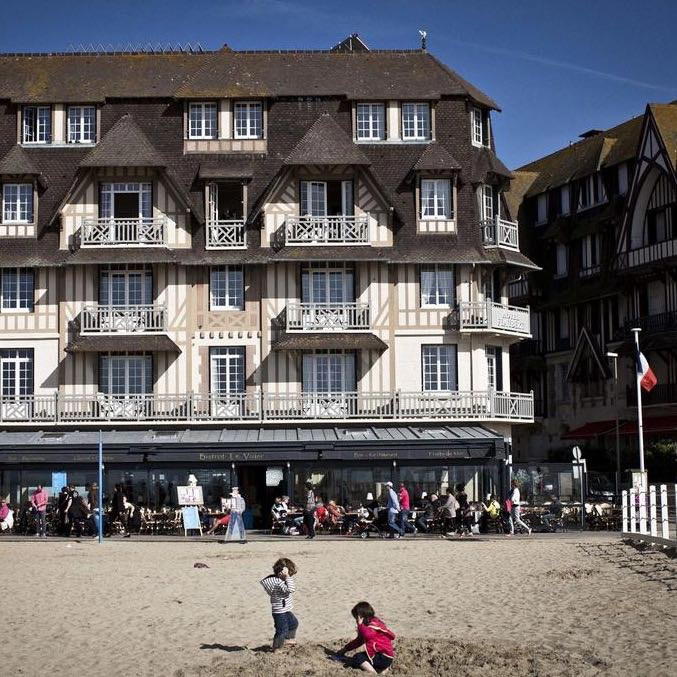
Casual and cozy outdoor terrace setting by the quai with a welcoming, unpretentious atmosphere.