Carib Sushi
Our verdict
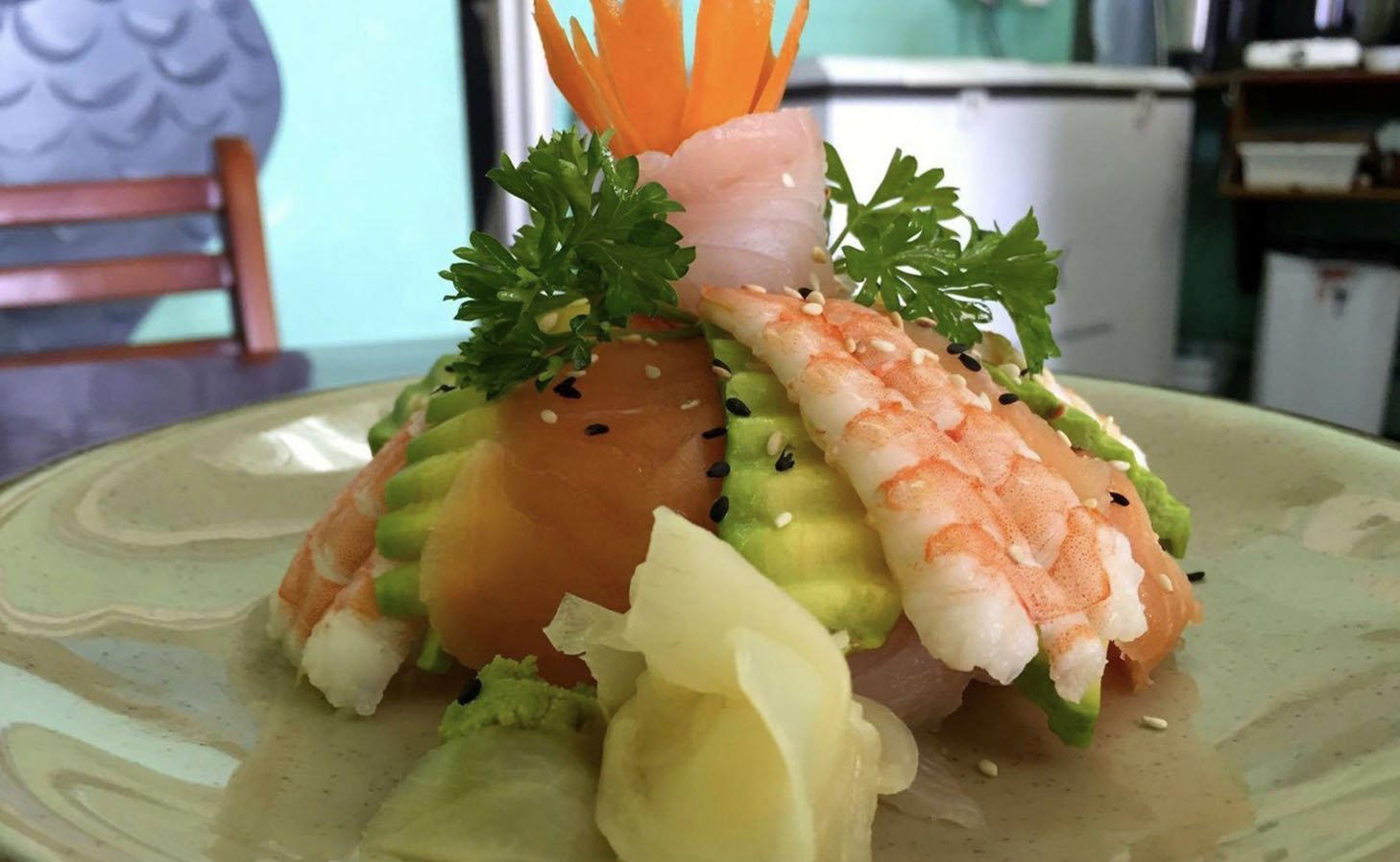
Sushi in the Caribbean raises a question that goes beyond novelty: where does the fish actually come from? At Carib Sushi on Grand Anse's Wall Street strip in St. George's, Grenada, the answer matters more than the genre label. The venue sits at the intersection of island sourcing and Japanese technique, making it an interesting case study in what Caribbean waters can put on a counter.

Pearl is the En Primeur Club membership app — saves, bookings, and concierge access live there. Same editors, same standards.
- Address
- Grand Anse (Wall Street), St. George's
- Directions
- Get directions
The menu
What to order
- Bridge roll
Sushi Where the Source Is the Point
Grand Anse is not where most people expect to find a sushi counter. Grenada's most-visited beach strip, with its informal rum shacks and grill spots drawing both cruise arrivals and long-stay visitors, doesn't announce itself as a place for raw fish and precision knife work. And yet that tension — between a culinary form associated with Japan's cold northern waters and an island whose fishing boats bring in yellowfin, mahi-mahi, and kingfish from the warm Caribbean — is exactly what makes Carib Sushi worth examining as a dining proposition. The story here is not about transplanting a Japanese restaurant to an unlikely postcode. It's about what happens when a technically demanding cuisine meets genuinely local ingredient sourcing.
Across the Caribbean, the question of sourcing defines serious restaurants more than any other single factor. An island that controls its own supply chain, where the fish pulled from local waters reaches the kitchen the same morning, operates at a structural advantage that no amount of imported product can replicate. Grenada's fishing community works the waters around the island and the wider Windward Islands corridor, targeting pelagic species that run fast and fat through the Atlantic and Caribbean confluence. That catch profile, when handled correctly, translates well to preparations that depend on freshness above all else. Sushi, more than almost any other cuisine, punishes a gap between ocean and plate.
What Caribbean Waters Actually Offer a Sushi Counter
The editorial case for Caribbean sushi rests on a specific argument: the region's warm-water species have qualities that cold-water sushi staples lack, and vice versa. Atlantic bluefin and Pacific yellowfin are different fish with different fat distributions and textures, and building a sushi program around what the local fleet actually lands, rather than importing species to replicate a Tokyo counter, is a more honest approach and, in practice, a more interesting one. Venues doing this well in Caribbean and Latin American contexts have moved away from the apologetic positioning of sushi-as-novelty and toward a confident assertion that local species deserve to be treated with the same technique and respect applied to their Japanese counterparts.
This framing connects to a broader pattern visible in how serious kitchens across the world now approach ingredient provenance. From Uliassi in Senigallia, where Adriatic catch drives the menu's logic, to Quattro Passi in Marina del Cantone, where the Campanian coastline shapes what appears on the plate, the leading seafood-forward kitchens treat geography as a menu constraint rather than a limitation. Jordnær in Gentofte does the same with Nordic waters. The principle scales: when a kitchen commits to what its surrounding waters produce, the resulting menu has a coherence that sourced-from-everywhere programs rarely achieve.
Grand Anse as a Dining Address
The Wall Street section of Grand Anse sits within reach of the beach itself and serves a mixed crowd: visitors staying along the strip, Grenadians eating out mid-week, and the kind of traveler who looks for something more considered than a beach bar but doesn't want the formality of St. George's town centre. That commercial mix shapes what a restaurant here needs to deliver: accessible enough to draw walk-ins, specific enough to give regulars a reason to return. In that context, a sushi proposition offers genuine differentiation from the grilled seafood and Creole cooking that dominates most of the strip. For anyone building a broader picture of what St. George's dining looks like at this tier, our full St George S restaurants guide maps the range across cuisine types and price points.
The neighbourhood itself rewards exploration. Grenada's food culture carries real depth beyond its tourist-facing strip: Belmont Estate in Tivoli offers a window into the island's agricultural interior, where cocoa and spice farming define the landscape's productive identity. Rhodes Restaurant in St. George's represents the Rhodesian Fusion tier of the local fine-dining conversation. Carib Sushi operates in a different register from both, leaning into a specific technical tradition rather than a fusion proposition.
Sourcing, Technique, and What Makes This Format Work
Logic behind sushi in a fishing island context is more durable than it might appear from a distance. Japan's own sushi culture is, at its root, a preservation and preparation technique built around what coastal waters provide, the omakase tradition that now commands premium prices in cities like New York at counters such as Atomix or in the disciplined seafood programs at Le Bernardin in New York City started from the same premise: proximity to source, minimal interference, technical precision. Transporting that logic to Caribbean waters is not a category error; it's an application of the same reasoning to a different geography.
Where the format becomes genuinely interesting is in how it handles species substitution. Replacing tuna with locally landed yellowfin, or adapting nigiri formats to accommodate the texture profiles of Caribbean reef fish, requires both technique and editorial confidence, a willingness to let the fish dictate the menu rather than force local product into inherited Japanese categories. The most credible sushi operations outside Japan make this decision explicitly. Those that hedge, importing product to maintain familiarity, tend to produce menus that feel neither authentically Japanese nor locally rooted.
For reference points on how kitchens handle the sourcing-first discipline at high levels of execution, HAJIME in Osaka and Atelier Moessmer Norbert Niederkofler in Brunico both illustrate how geographic commitment shapes a menu's identity. Closer in spirit to the Caribbean coastal format, Waterside Inn in Bray and Dal Pescatore in Runate demonstrate how riverine and coastal sourcing can anchor a kitchen's identity across decades. The ambition may differ in scale, but the underlying principle holds at every tier.
Planning a Visit
Carib Sushi is located on Grand Anse's Wall Street in St. George's, Grenada, a short drive or taxi ride from the main cruise pier and accessible from most accommodation along the Grand Anse beach corridor. As a venue on a tourism-dependent strip, it draws busier traffic during peak winter season (December through April) when visitor numbers on the island are highest; arriving outside peak meal times tends to mean shorter waits. For anyone building a multi-day dining itinerary across Grenada, pairing this with an estate visit and a broader tour of the island's seafood-forward options gives a more complete picture of what the destination produces.
Frequently asked questions
Is Carib Sushi okay with children?
Nothing in the venue's setup at Grand Anse's Wall Street suggests it operates as a strict adult-only space. A sushi counter format can vary in pace and seating style, so families with younger children should factor that in when planning. Calling ahead to confirm seating arrangements is advisable before bringing a group.
What's the vibe at Carib Sushi?
Carib Sushi sits on the Wall Street section of Grand Anse in St. George's, a strip that draws a mixed crowd of visitors off the nearby beach and local Grenadians. The setting leans casual rather than formal, fitting the beach-adjacent context of Grand Anse rather than a white-tablecloth room. Expect a relaxed pace consistent with the neighbourhood.
Is Carib Sushi the only sushi restaurant in Grenada?
Carib Sushi on Grand Anse's Wall Street in St. George's occupies a format — a dedicated sushi counter — that has no obvious parallel in Grenada's restaurant scene, where the dining culture runs heavily toward grilled local catch and Caribbean staples. Whether it is the sole sushi-focused venue on the island is not formally documented, but its position in the market is specific enough to make it a reference point for anyone seeking that format in Grenada.
What do people recommend at Carib Sushi?
The editorial argument for Carib Sushi centres on warm-water Caribbean species rather than imported cold-water staples — so the locally sourced fish is the starting point for any order. Without a published menu on record, the safest approach is to ask what came in that day, which aligns with the counter's sourcing logic.
How do I find Carib Sushi?
Carib Sushi is located at Grand Anse (Wall Street), St. George's, St George S.
Can I walk in to Carib Sushi?
Carib Sushi is located on Grand Anse's Wall Street in St. George's, accessible from the main beach strip and a short drive from the cruise pier. No booking platform or reservation policy is publicly documented. Given its position in a high-traffic beach area, walk-ins appear to be part of the operating model, though timing around peak tourist periods could affect wait times.
What is Carib Sushi known for?
Carib Sushi is the sushi counter on Grand Anse's Wall Street in St. George's — a format that is genuinely uncommon in Grenada's dining scene, where grills and rum shacks set the dominant tone. The premise is a locally grounded one: applying sushi technique to Caribbean-caught fish rather than relying on imported species. That sourcing-first approach is what distinguishes the concept from generic sushi imports.
Continue exploring
More in St. George's
Restaurants in St. George's
Browse all →
Bars in St. George's
Browse all →
Details
- Lively
- Cozy
- Date Night
- Casual Hangout
- Open Kitchen
- Local Sourcing
- A La Carte
- Vegetarian Friendly
- Gluten Free Options
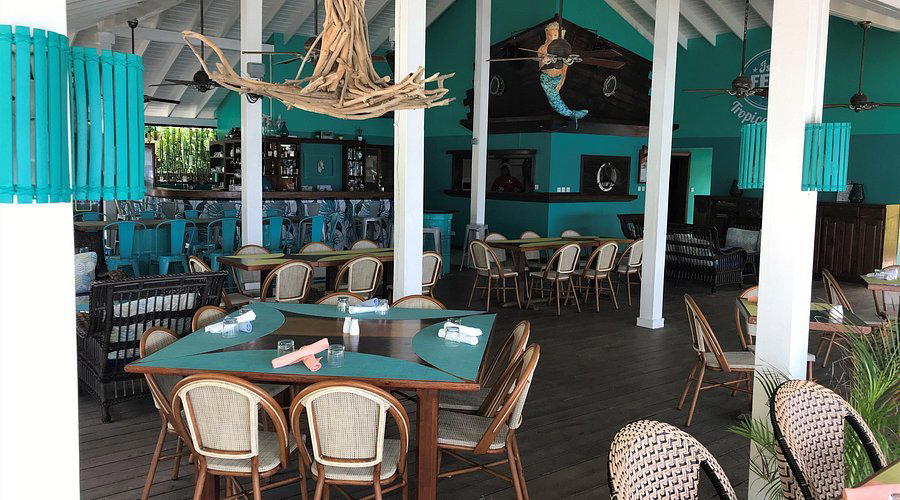
Air-conditioned indoor sushi bar for watching chefs or lively open-air outdoor patio seating.