
Gambero Rosso 3 Spicchi
Our verdict
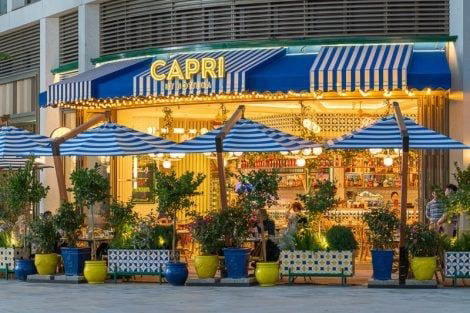
Capri By Bottega brings certified Italian pizza culture into Shanghai’s Xintiandi orbit, with a Gambero Rosso three-slice pizzeria designation giving it a clear credential in a city crowded with casual Italian rooms. The appeal is less about novelty than calibration: dough, heat, sourcing discipline, and a room suited to Shanghai’s polished all-day dining habits.

Pearl is the En Primeur Club membership app, where members save venues, book tables and use the concierge.
The menu
What to order
- Margherita Provola e Pepe
- Diavola Calabrese
- Tubettoni Patate e Cozze
- Mozzarella in Carrozza
- Tiramisu
Approaching the Xintiandi Galleria, the dining mood shifts from Shanghai’s street-level rush into the controlled brightness of a mall restaurant zone: glass, polished stone, families crossing paths with office diners, and the steady choreography of tables turning without the ceremony of a tasting-menu room. In that setting, pizza carries a different job. It has to read as casual enough for a weekday meal, precise enough to justify attention, and culturally legible to diners who know the difference between generic Italian comfort food and a pizzeria working within a stricter tradition.
Shanghai has long absorbed European dining formats quickly, but Italian food in the city often splits into two lanes: broad international hotel dining on one side, ingredient-led neighborhood restaurants on the other. Pizza occupies the middle ground. It is familiar, fast to understand, and easy to flatten into cliché. A Gambero Rosso three-slice pizzeria designation matters because it signals a narrower standard: dough handling, bake, balance, and fidelity to Italian pizzeria craft rather than a general claim to Italian style.
Italian pizza culture, translated for Xintiandi rather than softened for it
Capri By Bottega sits inside a part of Shanghai built for polished consumption. Xintiandi’s appeal has never been only food; it is the controlled mix of retail, restored shikumen texture nearby, international dining, and evening foot traffic. That context shapes expectations. Diners do not arrive for rustic theatre. They arrive for a room that can handle dates, small groups, family meals, and business-adjacent dinners without forcing the occasion into formality.
Within that frame, the pizzeria designation is the useful fact. Gambero Rosso’s three-slice rating places the restaurant in a specifically Italian assessment system rather than a general lifestyle ranking. For Shanghai, that distinction is valuable. The city has deep Cantonese, Shanghainese, Japanese, French, and steakhouse circuits, and Italian restaurants compete not only with each other but with every other polished mid-to-premium dining format. Pizza has to prove seriousness through structure rather than ceremony.
The broader cultural point is that pizza abroad succeeds when it resists becoming only a topping platform. Italian pizzeria craft is built around restraint: fermentation, heat management, proportion, and the relationship between crust and center. Those elements are not visible in the same way as luxury seafood or carved tableside meat, but they decide whether the meal feels coherent. In Shanghai, where diners can move from regional Chinese banquet cooking to high-floor steakhouse dining in the same week, that kind of discipline gives Italian casual dining a sharper place in the city’s hierarchy.
A polished casual room in a city that takes format seriously
The useful way to read Capri By Bottega is not as a destination that asks the city to orbit around it, but as a specialist format placed in a high-traffic district. Shanghai rewards restaurants that understand occasion. A counter tasting menu, a Cantonese dining room, a hotel steakhouse, and a pizzeria each solve different social problems. Here, the strength is format clarity: Italian pizza culture presented in a room that fits Xintiandi’s mixed rhythm rather than a hushed fine-dining script.
That matters because the city’s dining scene is unusually fluent in category switching. A group might compare the night against Cantonese rooms such as 100 Century Avenue Cantonese, private-room Chinese dining like 102 House (Cantonese), or steakhouse formats such as 1515 West Chophouse (Steakhouse). Those are not culinary equivalents; they show how Shanghai diners sort meals by occasion, service expectation, and group composition. A Gambero Rosso-recognized pizzeria enters that conversation by offering precision without the weight of a formal meal.
For visitors building a wider dining map, the comparison should stay practical rather than hierarchical. Shanghai’s restaurant culture runs across regional Chinese kitchens, hotel dining rooms, international casual formats, and bar-led nights. Use Our full Shanghai restaurants guide for the broader dining circuit, then cross-reference Our full Shanghai hotels guide, Our full Shanghai bars guide, Our full Shanghai wineries guide, and Our full Shanghai experiences guide if the meal sits inside a larger itinerary.
Where this fits in a China dining itinerary
Across China, serious dining is rarely defined by one cuisine alone. A Shanghai trip can place Italian pizza beside regional Chinese cooking, Beijing duck, Fujian seafood traditions, and Jiangnan refinement without contradiction. That is the point of contemporary urban dining here: imported formats are judged by how cleanly they execute their own grammar while fitting local habits of sharing, timing, and group dining.
For a broader national frame, restaurants such as #8 in Chengdu, 167 Shan Hai Li in Fuzhou, 1913 in Hangzhou, 1927 Dong Yuan Si Chu in Xiamen, 1949 - Duck de Chine in Beijing, and 1980烧肉粽 in 厦门市 show how regional specificity anchors meals elsewhere. Internationally, compact specialist formats such as Jōdo Saké Bar in Los Angeles and Onigiri Time in Pasadena make the same point in different culinary languages: small-format dining earns credibility when the category is tightly understood.
The verdict is simple: Capri By Bottega is for diners who want Italian pizza treated as a craft category, not as a filler meal between larger reservations. The Gambero Rosso three-slice designation supplies the trust signal; the Xintiandi setting explains the use case. It belongs in a Shanghai plan when the night calls for polished casual dining with a clear Italian standard rather than another formal room.
Frequently asked questions
Can I bring kids to Capri By Bottega?
Its Xintiandi Galleria address in Shanghai points to a casual, public-facing pizzeria rather than a formal dining room, which generally makes it an easy fit for families. The Gambero Rosso three-slice pizzeria designation suggests a serious pizza format, but not a stiff one.
How would you describe the vibe at Capri By Bottega?
Think polished casual rather than hushed and ceremonial. Capri By Bottega sits at Bldg A, 1/F, Xintiandi Galleria in Shanghai, and the Gambero Rosso three-slice pizzeria designation places the focus on pizza craft, not theatrics.
What's Capri By Bottega known for in terms of accolades?
Capri By Bottega has received recognition including: Gambero Rosso three-slice pizzeria designation.
What part of town is Capri By Bottega in?
Capri By Bottega is located in Shanghai.
What's the best way to book Capri By Bottega?
Plan ahead, especially if your visit is tied to a day in Xintiandi, Shanghai. With no phone or website listed for Capri By Bottega, the practical approach is to confirm access and table arrangements directly before heading to Bldg A, 1/F, Xintiandi Galleria.
Comparable Venues Nearby
Comparable venues nearby, for context on price, style, and recognition.
| Venue | Cuisine | Price | Awards | Notes |
|---|---|---|---|---|
| Capri By BottegaThis venue (the venue you are viewing) | Italian Pizza & Southern Italian | $20–30 | Gambero Rosso 3 Spicchi | Not listed |
| Trattoria Palatino | Traditional Roman Italian Trattoria | $30–50 | Gambero Rosso 1 Forchetta | Huangpu |
| 扬州饭店 | Ningbo Cuisine | Not listed | Not listed | Huangpu |
| Canton 8 | Cantonese | $30–50 | Not listed | Huangpu |
| 8 1/2 Otto E Mezzo | Modern Italian Fine Dining | $150–200 | 2 Michelin Stars · La Liste Top Restaurants | Hongkou |
Recognition history
Dated appearances from independent guides and award organizations, with the underlying list record or original source where available.
Gambero Rosso 3 Spicchi
Gambero Rosso
Continue exploring
More in Shanghai
Restaurants in Shanghai
All restaurants in Shanghai →
Bars in Shanghai
All bars in Shanghai →
Details
- Modern
- Trendy
- Scenic
- Cozy
- Lively
- Casual Hangout
- Group Dining
- Family
- After Work
- Terrace
- Open Kitchen
- Design Destination
- Standalone
- Craft Cocktails
- Beer Program
- Street Scene
- A La Carte
- Small Plates
- Spritz
- Negroni
- Wine
- Beer
- Vegetarian Friendly
- Pescatarian Friendly
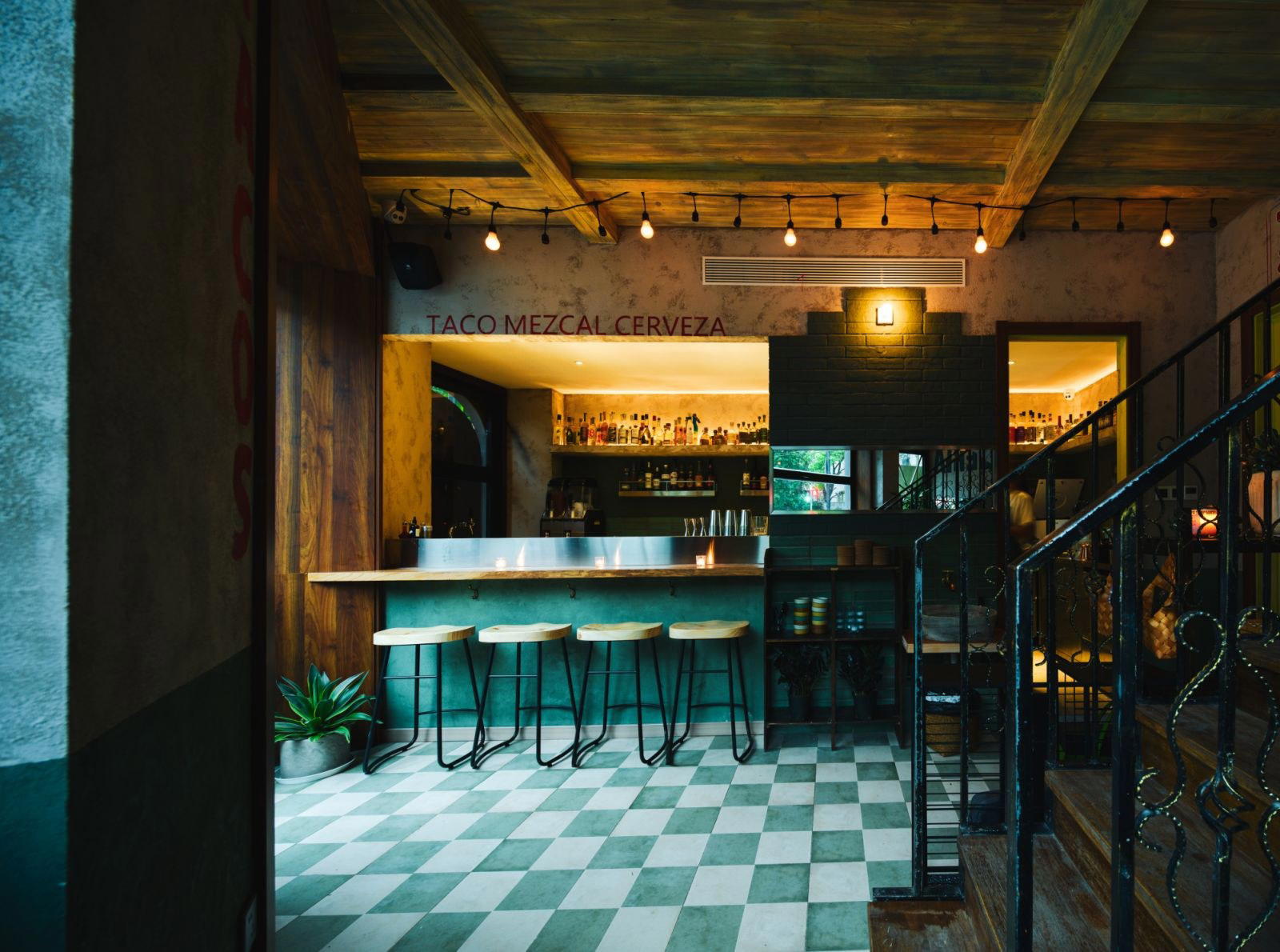
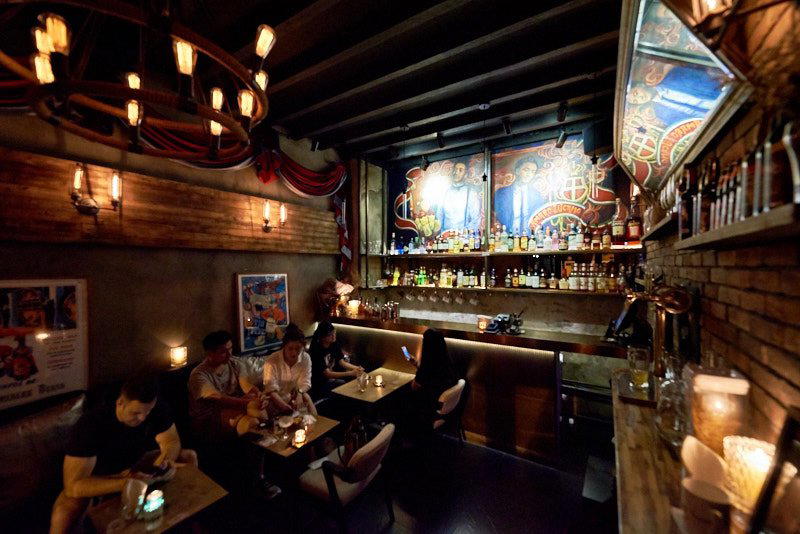
Bright and lively with warm lighting, Mediterranean touches, traditional tiles, and a semi-outdoor terrace that creates a sun-drenched piazza feel.