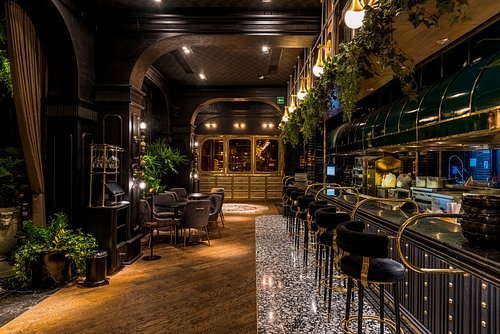
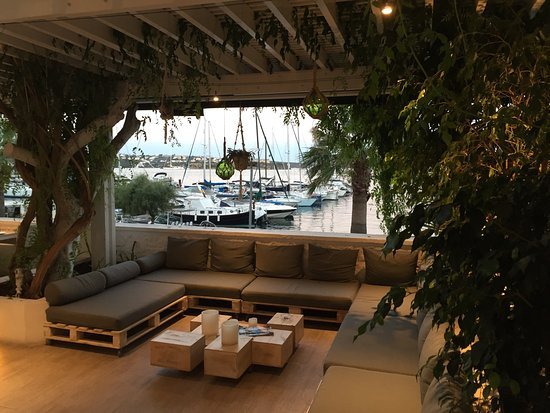
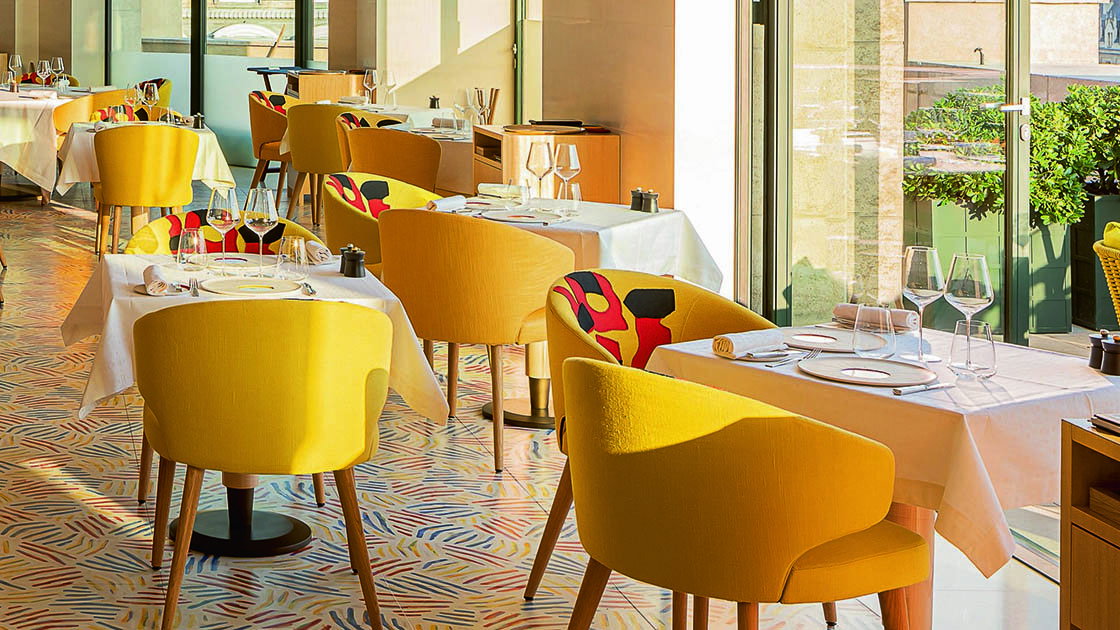
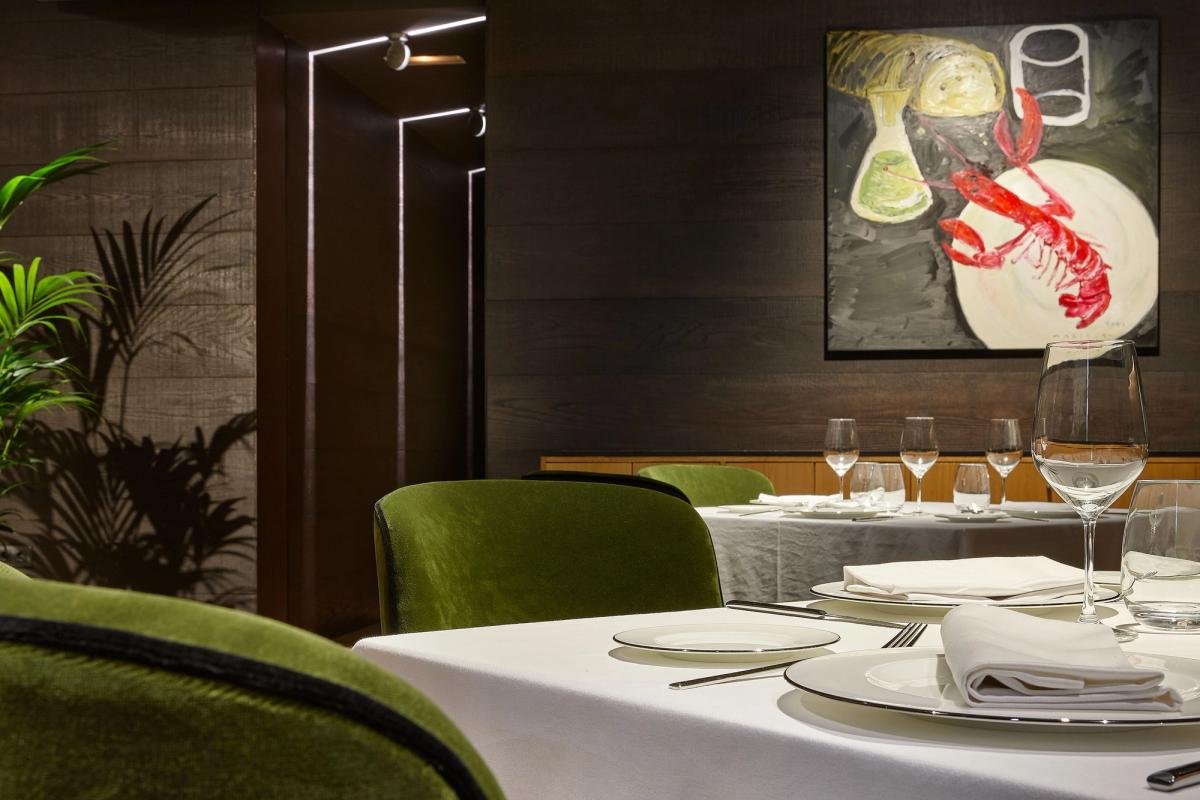
.png)
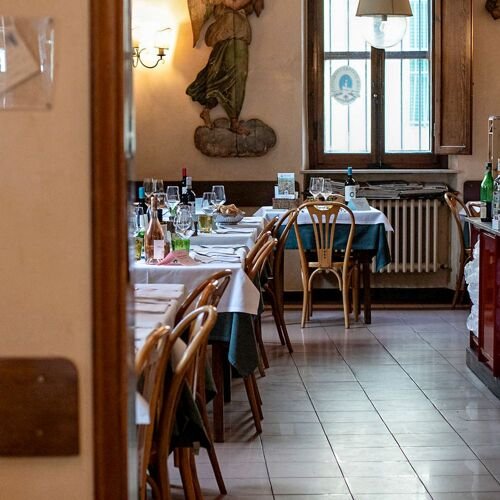
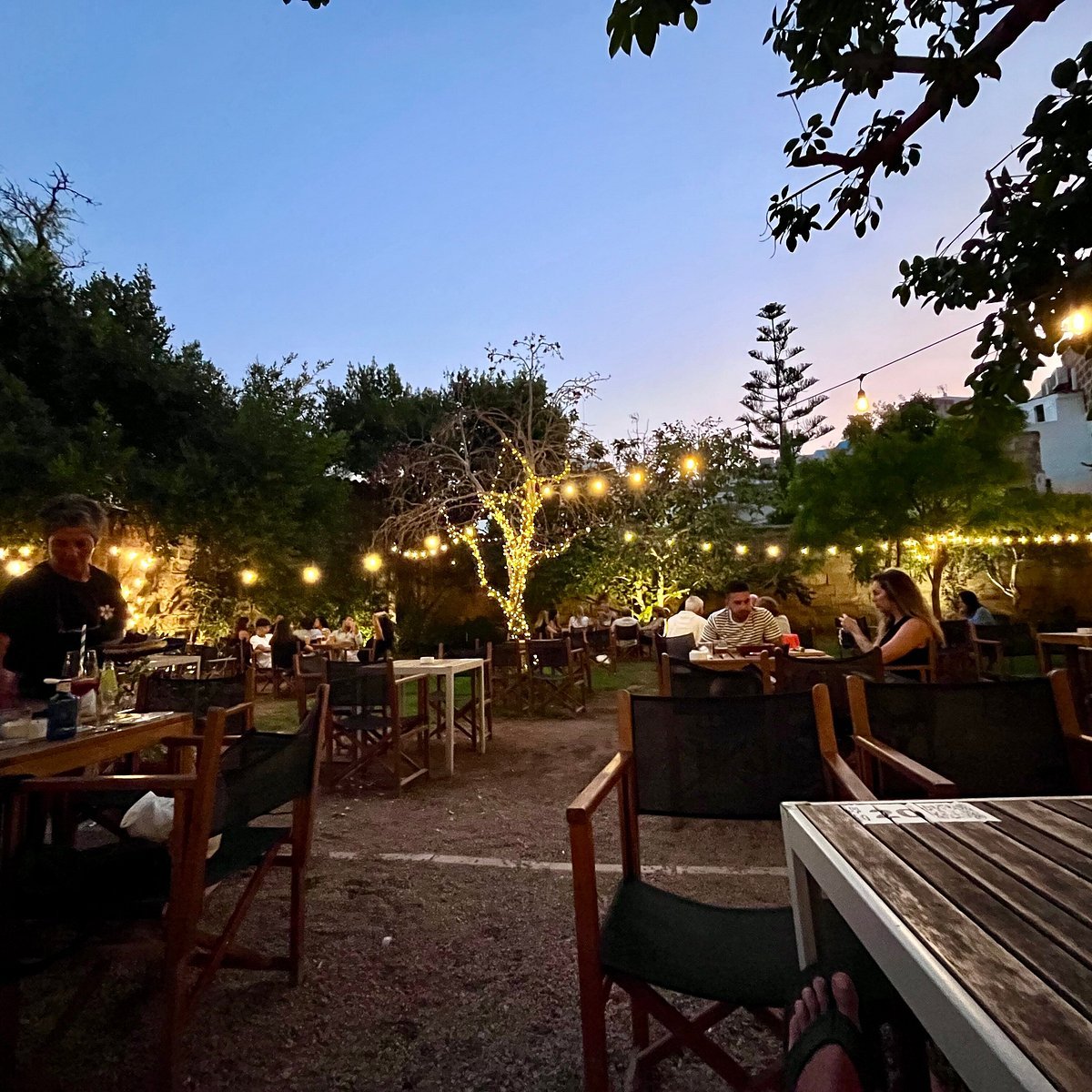
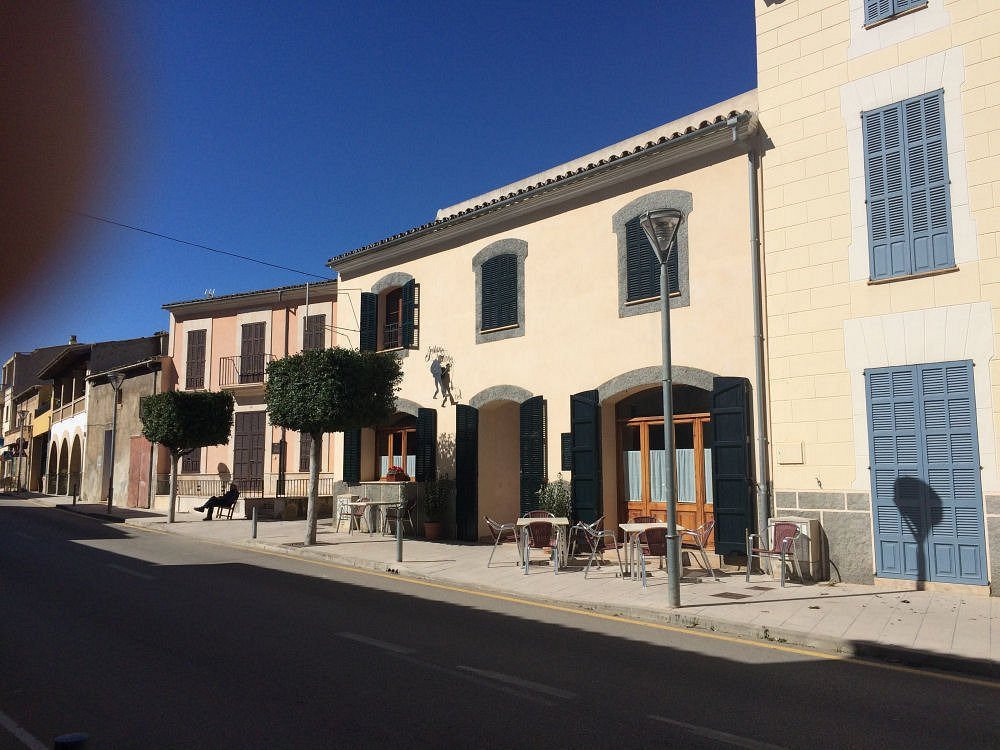
Opposite Mahón's fish market, Candela operates as a pared-back bistro where Mediterranean market cooking meets carefully placed international inflections. The kitchen leans on whatever the Mercat des Peix is moving that morning, producing dishes like escarole buñuelos and a hazelnut praline cannelé that sit between Menorcan tradition and contemporary technique. It shares a terrace with tapas bar Augustín next door.
 Discover on Pearl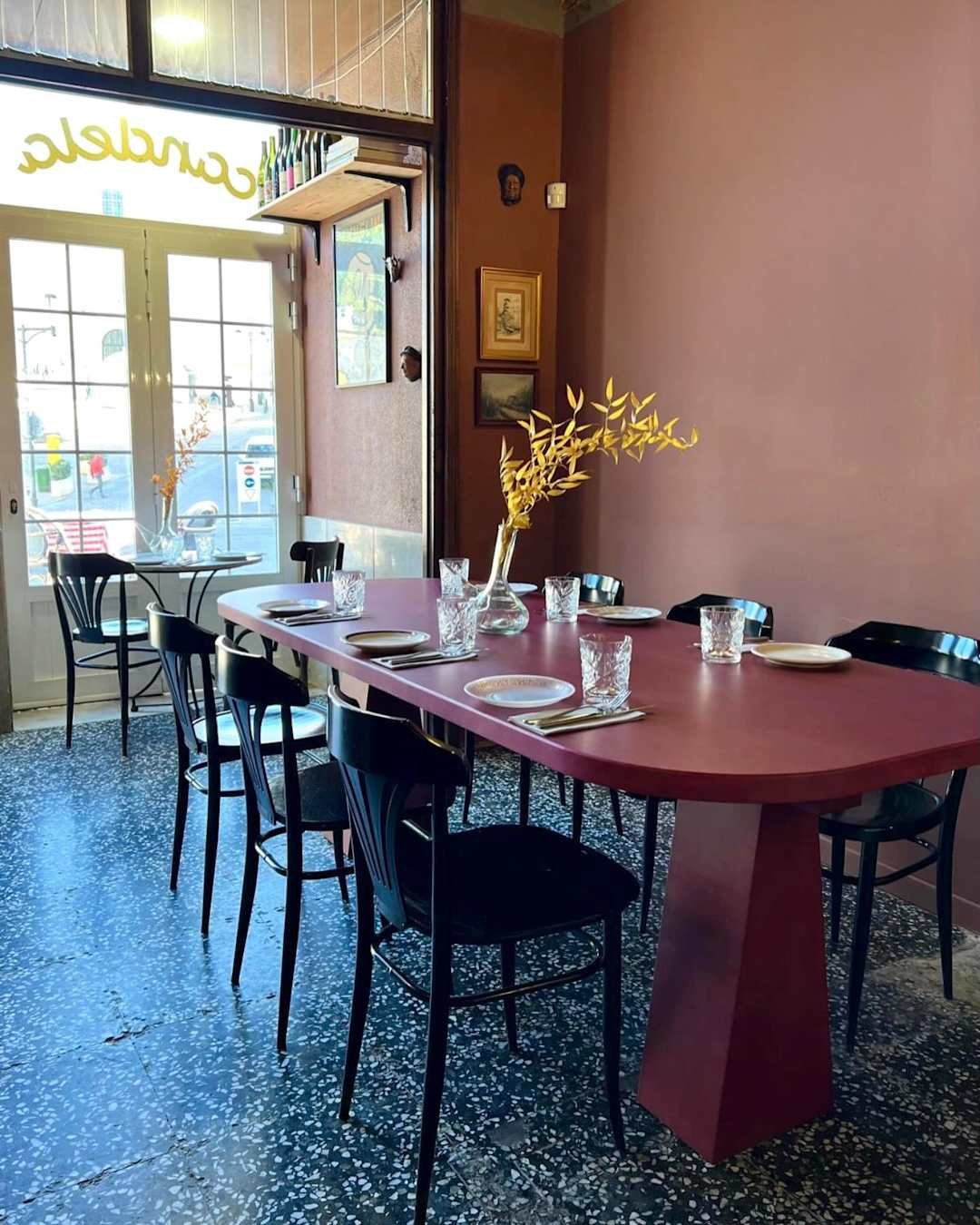
The Market Square Approach to Eating in Mahón
Plaza de España sits at the gravitational centre of Mahón's food life, and the building directly opposite the Mercat des Peix sets the terms for how a certain kind of eating works here. The fish market — always busy, as anyone who has tried to find parking nearby on a weekday morning will confirm — acts as an informal supply chain for the kitchens around it. Candela is the clearest expression of that relationship: a simple bistro format built around whatever the market is moving, with daily recommendations that shift when the sourcing does.
This is not Menorca's fine-dining tier. Restaurants like El Rais and El Romero operate at a farm-to-table price point and presentation register that places them in a different conversation. Candela operates below that bracket, in a register closer to the French neighbourhood bistro model , unpretentious room, focused short menu, cooking that earns its place through technique rather than ceremony. On the same terrace sits Augustín, a tapas bar that shares the outdoor space and offers a leaner, faster format for those who want to eat standing or at the bar rather than settling into a full meal.
What the Market Actually Provides
The Mercat des Peix in Mahón is one of the more functional fish markets still operating as a genuine supply point in the Balearics. Menorca's geographic position , further east than Ibiza and Mallorca, less covered by mass tourism infrastructure , means its fishing fleet retains a working character that has been largely redesigned out of the other islands. Langoustines, gamba roja, dentex, and seasonal small fish move through the market in quantities that reflect actual daily catch rather than wholesale import schedules.
For a kitchen positioned directly opposite, sourcing from that market is a practical advantage as much as a philosophical stance. The daily recommendations at Candela are leading understood in this context: they are not a marketing device but a direct reflection of what the market had that morning. The discipline of writing a menu around availability rather than around a fixed identity is more demanding than it looks , it requires a kitchen that can adapt to the catch rather than the catch adapting to the kitchen.
Menorcan cooking has always had this quality, to a degree. The island's relative isolation historically , and its more modest tourist economy compared to Mallorca , kept local cuisine tethered to what the land and sea produced rather than what visitors expected. That foundation shows in the bones of what Candela does, even when the kitchen reaches toward international technique.
Where the International Touches Land
The description of Candela's cooking as Mediterranean market cuisine with international inflections is specific enough to be useful. The escarole buñuelos are the clearest example of that tension: buñuelos are a deeply embedded Balearic form, traditionally a sweet fritter, here redirected toward a bitter green that grounds the dish in something more savoury and less expected. The reinterpretation of Raoles , a traditional Menorcan preparation , follows a similar logic, taking a known reference point and applying a contemporary lens without erasing what made the original legible.
The cannelé with hazelnut praline chantilly is the dish that steps furthest from local idiom. The cannelé is a Bordelais form requiring precise temperature control and a copper mould to achieve its characteristic lacquered crust and custardy interior. That it appears here signals a kitchen with technical ambitions that reach past the island's own canon, while the hazelnut praline grounds it in something accessible rather than austere. These are not the flourishes of a kitchen trying to signal sophistication for its own sake; they read more as evidence of cooks who have eaten and trained beyond Menorca and chosen, selectively, what to bring back.
For a broader frame of reference on how Spanish kitchens at various scales handle the relationship between regional tradition and contemporary technique, the contrast is instructive: restaurants like Arzak in San Sebastián, Azurmendi in Larrabetzu, or El Celler de Can Roca in Girona resolve that tension at three-Michelin-star scale. Quique Dacosta in Dénia does it with a Mediterranean coastal ingredient focus not entirely unlike Candela's, albeit at a radically different register. DiverXO in Madrid, Martín Berasategui in Lasarte-Oria, Cocina Hermanos Torres in Barcelona, and Aponiente in El Puerto de Santa María each represent a distinct answer to the same question. Candela is working in the same tradition, at a neighbourhood scale, with a terrace on a market square rather than a tasting-menu dining room.
That contrast is not a criticism. The bistro format exists because not every meal needs to be an event. Candela's value is in its consistency of sourcing logic and its willingness to let a reinterpreted buñuelo or a precisely made cannelé carry the argument for the kitchen's seriousness, without building a theatrical frame around either.
Planning Your Visit
Candela sits at Plaça de España 29, directly across from the Mercat des Peix in the centre of Mahón. Given its location and compact size, it draws a mix of locals running errands at the market and visitors who have figured out that Plaza de España is where the functional eating life of the city concentrates. Arriving at lunch on a weekday gives you the fullest picture of what the kitchen is doing with the morning's market sourcing; the daily recommendations board is worth reading before defaulting to the fixed menu. The shared terrace with Augustín means the outdoor seating is also available to tapas-bar customers , if the dining room is full, the tapas format next door is not a consolation but a legitimate alternative with its own logic.
For more places to eat nearby, the La Cocina de Cristine offers another angle on Mahón's mid-tier dining. Our full Mahón restaurants guide covers the wider picture, and if you're planning a longer stay, the Mahón hotels guide, bars guide, wineries guide, and experiences guide map out the rest of the city's offer.
Fast Comparison
A quick look at comparable venues, using the data we have on file.
| Venue | Cuisine | Price | Awards | Notes |
|---|---|---|---|---|
| Candela | An informal place to eat in the centre of Mahón? Opposite the always-busy Mercat… | This venue | ||
| El Rais | Farm to table | €€€ | Farm to table, €€€ | |
| La Cocina de Cristine | ||||
| El Romero | Farm to table | €€€ | Farm to table, €€€ |