
World Best Burgers World's 101 Best Burgers #3
Our verdict
Cafe Margaret sits inside Double Bay’s daytime dining culture, where harbourside wealth meets a neighbourhood appetite for produce-led, polished casual food. With no public awards or chef-led mythology to lean on, the case rests on context: ingredient quality, the rhythm of the room, and how it fits a suburb that treats lunch and coffee as serious social infrastructure.

Pearl is the En Primeur Club membership app, where members save venues, book tables and use the concierge.
The menu
What to order
- American cheeseburger
- Bacon and egg roll
- Gochujang fish burger
- Caramelised onion smashburger
- Steak sandwich with café de Paris butter
Double Bay announces its dining mood before a menu is opened: polished shopfronts, shaded footpaths, coffee carried between appointments, and a lunchtime crowd that reads produce quality as quickly as it reads a wine label. Cafe Margaret belongs to that register. The point is not spectacle; it is the suburb’s preference for food that looks composed without feeling ceremonial, where breakfast, lunch, and the late-morning table all carry social weight.
In this part of Sydney, the cafe is not a minor category. It is where the day is negotiated: school runs, local walks, business catch-ups, and long lunches that begin earlier than they do in the CBD. Double Bay’s dining scene has grown more varied, from casual neighbourhood rooms to more polished dining formats. Against that spread, Cafe Margaret fits the all-day, ingredient-facing lane rather than the destination tasting-menu lane.
Double Bay's all-day table depends on produce, not theatre
The stronger cafes in Sydney now compete less on decoration and more on sourcing discipline: bread with structure, eggs handled with care, greens that taste recently handled rather than refrigerated into anonymity, and produce treated as a main event rather than menu padding. That matters in Double Bay because the audience is unusually fluent in quality signals. This is a suburb where a casual plate can be judged with the same severity as a dinner booking.
Cafe Margaret is easier to understand through that lens than through awards language alone. Its public profile includes coverage in Good Food’s reporting on the restaurant “flip” trend, so the useful measure is both recognition and category fit. It sits in the neighbourhood bracket where freshness, pacing, and consistency carry as much force as biography. That makes ingredient sourcing the core editorial question: whether the kitchen reads Sydney’s cafe tradition as convenience food or as a produce-led format with enough care to justify repeat use.
The broader Australian cafe tradition gives the category unusual range. A morning table can mean espresso and toast; by midday, the same room may need to support salads, composed plates, or a glass of wine. Sydney has pushed that format further than many cities, treating cafes as informal restaurants rather than waiting rooms for dinner. Cafe Margaret’s relevance in Double Bay comes from occupying that flexible middle ground, where the room has to work for several tempos without becoming shapeless.
A neighbourhood room in a suburb that prizes daytime polish
Double Bay is not a neutral setting. Its restaurants serve residents, office-adjacent regulars, visitors moving through the suburb, and hotel guests looking beyond room service. That mix rewards venues with polish but punishes fuss. The room needs to feel composed enough for a business lunch and relaxed enough for a pram at the edge of the table. Cafe Margaret’s category places it in that daily-use tier, where the test is not ceremony but whether the experience holds its shape across breakfast, lunch, and afternoon drift.
For a fuller read of the suburb, Our full Double Bay restaurants guide maps the wider dining field, while Our full Double Bay hotels guide, Our full Double Bay bars guide, Our full Double Bay wineries guide, and Our full Double Bay experiences guide show how the area functions beyond the table. That context matters: Double Bay dining is tied closely to lifestyle infrastructure, and Cafe Margaret reads as part of that daily circuit rather than a standalone occasion restaurant.
The comparison point is not another named venue in the same lane, but the national cafe standard. Australian diners now expect more than competent coffee and a safe brunch plate. A city-by-city scan across specialised casual formats shows how focused operators have raised expectations across categories. Even casual venues are judged by clarity: what they source, what they cook, and what they leave alone.
How to read Cafe Margaret before choosing the table
The sensible approach is to treat Cafe Margaret as a daytime Double Bay address rather than a trophy booking. It suits readers who value ingredient-led cooking, a polished local setting, and the flexibility of a cafe format in a suburb where lunch can be social, transactional, or both. Those seeking a heavily formal structure should look elsewhere in Sydney’s broader dining field.
That does not make the venue minor. In Double Bay, daily-use restaurants often reveal more about the neighbourhood than occasion rooms do. A cafe that earns regular traffic in this suburb has to satisfy a demanding local rhythm: coffee early, composed plates later, and service that can handle families, solo diners, and meetings without turning the room into a stage. Cafe Margaret’s value lies in that practical cultural role.
For readers building a wider Australian itinerary, the useful exercise is category contrast. Compare the precision expected in tightly run city dining rooms, the coastal ease of casual resort-town venues, the hybrid mood of rooftop restaurants, the regional confidence of neighbourhood kitchens, and the discipline of tightly focused casual formats. Across these formats, the same rule applies: casual does not excuse vagueness.
Internationally, specialist casual dining has moved in a similar direction. Unnamed venues built around narrow formats show how repetition and sourcing can create authority without ceremony. Cafe Margaret operates in a broader cafe idiom, but the reader’s question is related: does the room make everyday dining feel properly considered? In Double Bay, that is the standard that counts.
Frequently asked questions
Is Cafe Margaret child-friendly?
As a cafe in Double Bay, Cafe Margaret reads as a practical daytime choice for families rather than a formal dining room. Cafes in this part of Sydney are generally easier for children than dinner-only venues, especially at lunch and earlier service.
Is Cafe Margaret better for a quiet night or a lively one?
Cafe Margaret is positioned as a daytime Double Bay cafe, so it suits a quieter lunch or coffee stop more naturally than a late-night scene. Double Bay itself tends to skew polished and daytime-focused rather than rowdy.
Do I need a reservation for Cafe Margaret?
For a cafe in Double Bay, reservations are usually less essential than at a set-menu restaurant, but they can still help during peak brunch periods. Cafe Margaret's appeal is its daytime format, which often means casual walk-ins are part of the rhythm.
What's Cafe Margaret best at?
Cafe Margaret is best read as a Double Bay address for straightforward daytime dining rather than formal occasion eating. The format suggests coffee, breakfast, lunch, and an easy-going pace that suits the suburb.
Is Cafe Margaret good for vegetarians?
A cafe setting in Double Bay usually gives vegetarian diners more flexibility than a narrower-format room. Cafe Margaret may suit that pattern, with the kind of daytime structure that often makes meat-free ordering easier.
Comparable Venues Nearby
Comparable venues nearby, for context on price, style, and recognition.
| Venue | Cuisine | Price | Awards | Notes |
|---|---|---|---|---|
| Cafe MargaretThis venue (the venue you are viewing) | All-day American & Modern Australian café-bistro | $30–50 | World Best Burgers World's 101 Best Burgers #3 | Not listed |
| Twenty-One Espresso | Authentic Hungarian & European | $20–30 | Not listed | Double Bay |
| Saké Restaurant & Bar Double Bay | Modern Japanese Fine Dining | $100–150 | Not listed | Double Bay |
| Basement Brewhouse | American Gastropub with Burgers and Craft Beer | $20–30 | Not listed | Bankstown |
| Happyfield | American Diner Cafe | $20–30 | Not listed | Haberfield |
Recognition history
Dated appearances from independent guides and award organizations, with the underlying list record or original source where available.
World Best Burgers World's 101 Best Burgers #3
World Best Burgers
Continue exploring
More in Sydney
Restaurants in Sydney
All restaurants in Sydney →
Bars in Sydney
All bars in Sydney →
Hotels in Sydney
All hotels in Sydney →
Wineries in Sydney
All wineries in Sydney →
Details
- Modern
- Cozy
- Trendy
- Lively
- Casual Hangout
- After Work
- Group Dining
- Solo
- Family
- Standalone
- Design Destination
- Local Sourcing
- Sustainable Seafood
- Street Scene
- A La Carte
- Beer
- Wine
- Cocktails
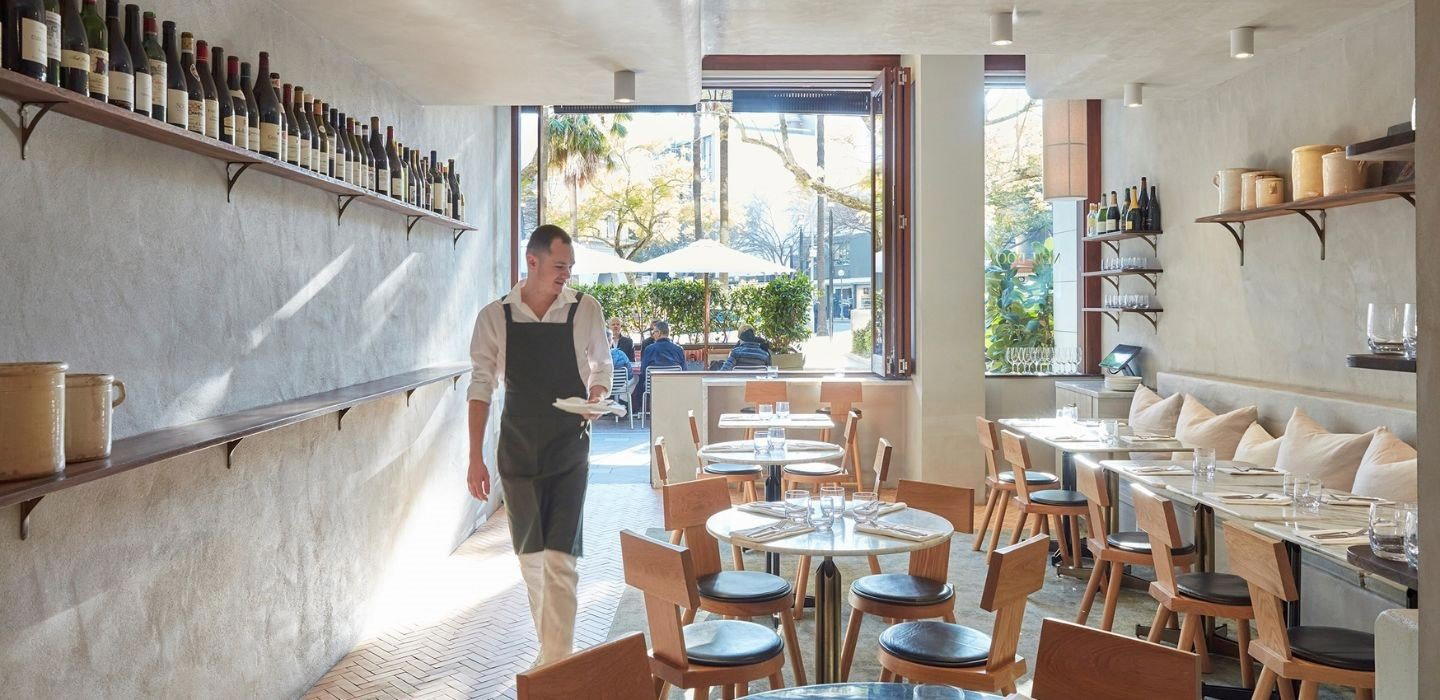
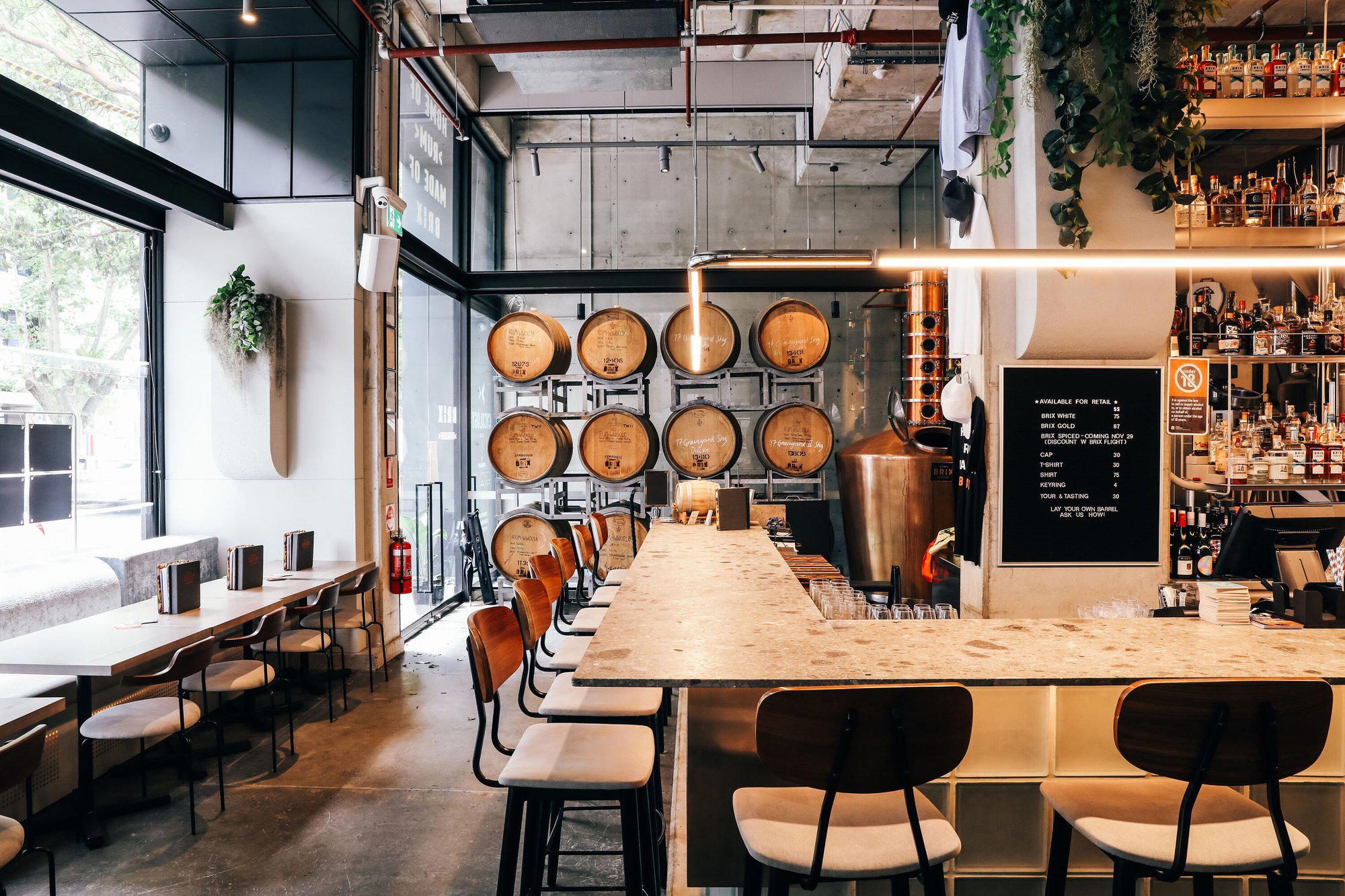
An airy, softly decorated corner café with light wood, marble and rattan that feels like a relaxed neighborhood bistro humming from breakfast through dinner.