
Michelin Plate
Our verdict
A two-time Michelin Plate recipient on Lê Hồng Phong, Bún Chả Cá Bà Hoa holds one of the most specific mandates in Da Nang street dining: fish cake noodle soup, executed with the consistency that earns repeat Michelin recognition. At the lowest price tier in the city, it occupies a rare position where institutional credibility and everyday accessibility coexist.

Pearl is the En Primeur Club membership app, where members save venues, book tables and use the concierge.
Fish Cake Noodles and the Street-Level Standard They Set
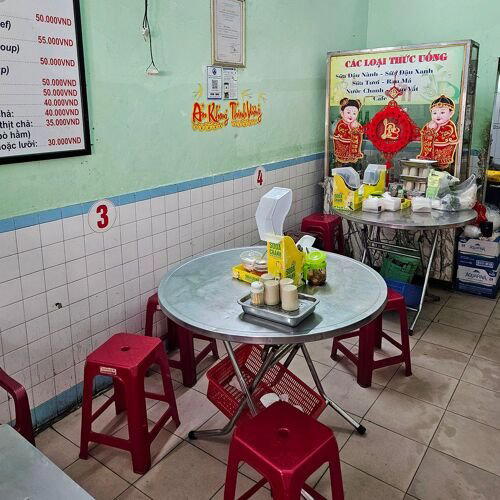
On Lê Hồng Phong, a street in the Phước Ninh ward of Hải Châu district that functions as a working residential corridor rather than a tourist row, the bowl arrives with little ceremony. That is precisely the point. Da Nang's street noodle tradition operates at a register that is difficult to appreciate through the lens of formal dining: the discipline here is repetition, consistency, and an almost total absence of distraction. Bún Chả Cá Bà Hoa, holding a Michelin Plate in both 2024 and 2025, exists inside that tradition rather than apart from it.
Michelin's Plate designation, introduced as the guide expanded into Southeast Asia, marks restaurants where cooking quality clears a threshold of technical reliability without necessarily reaching star-level complexity. For a noodle house operating at Vietnam's lowest price tier, the designation is significant not as an elevation marker but as an external confirmation of what regular customers already know: this is a kitchen running the same dish day after day at a standard that holds. That kind of consistency in a single-dish format is harder to sustain than it appears.
Where This Sits in Da Nang's Noodle Hierarchy
Da Nang's noodle offer splits broadly into two lines. The first is bún bò Huế, the spiced beef noodle soup with Central Vietnamese roots, represented in the city by spots like Bún Bò Huế Bà Thương and Bún Bò Bà Rơi (Hai Chau). The second, and more specifically local to the city, is bún chả cá: rice vermicelli in a lightly fermented fish broth, topped with fried or steamed fish cake. This is a dish the city claims as its own, and the range of kitchens serving it creates a genuine competitive set in which reputation is earned through the broth's depth and the fish cake's texture, not through décor or positioning.
Within that set, Bún Chả Cá Bà Hoa competes in the tier occupied by long-running family operations that have accumulated neighbourhood loyalty over years. Bún Chả Cá 109 is another address in that bracket. The Michelin recognition separates Bà Hoa from most of its peers, but it does not change the format: open hours, a simple menu, communal or close-packed seating, and a price point that sits at the floor of what dining in Da Nang costs.
What the Dish Requires
Bún chả cá is a more technically demanding dish than its street-food presentation suggests. The broth relies on fish stock built from local catch, typically from the South China Sea, and the fermentation element, usually from mắm, the fermented fish paste central to Central Vietnamese cooking, must be calibrated to add depth without overwhelming the bowl. The fish cake itself, chả cá, is shaped and fried or steamed from minced white fish, often mixed with turmeric and dill in the northern Vietnamese register, though Da Nang versions tend toward a firmer, plainer texture that holds its shape in hot broth.
This is a dish where the margin for error in the fish cake is visible immediately: too much filler, and it turns spongy and flavourless; too little binding, and it falls apart on contact with the noodles. The broth tells a parallel story, either clear and restrained or muddied by shortcuts. Michelin's inspectors, working across multiple visits in the standard methodology, would have assessed both elements across those variables. Two consecutive Plate awards suggest the kitchen passes that test with regularity.
The Broader Context: Street Noodles and the Michelin Question
Across Asia, Michelin's engagement with street-level noodle formats has been one of the more contested decisions in contemporary food criticism. In Singapore, hawker stalls hold stars. In Bangkok, noodle shops carry Plates. The argument in favour is direct: technical cooking is technical cooking regardless of format, and a guide that ignores price-tier diversity misrepresents the actual eating of a city. Da Nang's 2024 and 2025 Michelin selections reflect that philosophy applied to a Central Vietnamese city whose culinary identity is built substantially on bowl formats rather than plated cuisine.
Bún Chả Cá Bà Hoa's inclusion places it alongside higher-priced Da Nang addresses like Bà Diệu (Tran Tong Street) and Bà Đông in the record of the city's recognised kitchens. The contrast is instructive: recognition at the ₫ tier and at the ₫₫₫₫ tier held by La Maison 1888 measure entirely different things, but both appear in the same guide. For a reader building an itinerary, that spread matters. Da Nang's Michelin-recognised dining is not a single price-band experience.
Across Vietnam, the restaurant scene has attracted sustained critical attention in recent years. Akuna in Ho Chi Minh City and Gia in Hanoi represent the more formal end of Vietnamese dining recognition, while addresses like Bà Hoa anchor the opposite end of the spectrum. Both matter to understanding how Vietnamese food is currently being assessed internationally.
Planning a Visit
The address is 27 Lê Hồng Phong, in the Phước Ninh ward of Hải Châu district, within the central city. The ₫ price point means the bowl will cost a fraction of what any comparable meal runs at Da Nang's mid-tier restaurants. No booking infrastructure exists for a kitchen at this level; the format is walk-in, and timing around peak local meal hours, generally breakfast through mid-morning for noodle formats in Vietnam, will determine how long you wait.
There is no dress code, no wine list to consider, and no tasting menu format. The drink that accompanies bún chả cá in Da Nang is typically trà đá, iced tea, served freely or at negligible cost alongside the bowl. If your interest lies in the full range of Da Nang's food scene, the full Da Nang restaurants guide maps the city's kitchens across formats and price tiers, while the Da Nang hotels guide, bars guide, and experiences guide cover the wider picture. For readers whose interest in noodle formats extends beyond Vietnam, comparable single-dish specialists earning critical recognition include A Bing Bao Shan Mian in Hangzhou, A Kun Mian in Taichung, A Niang Mian Guan in Shanghai, A Xin Xian Lao in Fuzhou, Ajisai in Taichung, and Baan Chik Pork Noodles in Udon Thani. For the Da Nang wineries guide, coverage there reflects the city's limited but growing interest in wine retail and hospitality contexts rather than production.
Frequently asked questions
What does dinner at Bún Chả Cá Bà Hoa typically cost?
Pricing at Bún Chả Cá Bà Hoa is listed as ₫.
What awards or recognition does Bún Chả Cá Bà Hoa have?
Bún Chả Cá Bà Hoa has received recognition including: Michelin Plate (2025); Michelin Plate (2024).
What's the must-try dish at Bún Chả Cá Bà Hoa?
The kitchen focuses on bún chả cá, the Central Vietnamese rice vermicelli soup built around fish cake and fish-based broth. This is the dish Michelin's inspectors recognised across both the 2024 and 2025 Plate awards. At a ₫ price point, a bowl costs a fraction of what comparable Michelin-recognised cooking runs elsewhere in the region. Order it and nothing else, the menu is not the point; the execution of one dish is.
Where It Fits
A quick peer check to anchor this venue’s price and recognition.
| Venue | Cuisine | Price | Awards | Notes |
|---|---|---|---|---|
| Bún Chả Cá Bà HoaThis venue (the venue you are viewing) | Traditional Vietnamese Fishcake Noodle Soup | $1–10 | Michelin Plate | Not listed |
| La Maison 1888 | Michelin-Starred French Contemporary | $150–200 | 1 Michelin Star · La Liste Top Restaurants | French Contemporary, ₫₫₫₫ |
| Ăn Thôi | Authentic Vietnamese | $10–20 | Michelin Bib Gourmand | Vietnamese, ₫ |
| Bé Ni 2 | Fresh Local Seafood | $10–20 | Michelin Bib Gourmand | Seafood, ₫₫ |
| Bún Bò Bà Rơi (Hai Chau) | Huế-Style Bún Bò | $1–10 | Michelin Bib Gourmand | Noodles, ₫ |
| Cô Chủ Nhỏ | Vietnamese Duck Street Food | $1–10 | Michelin Bib Gourmand | Street Food, ₫ |
Recognition history
Dated appearances from independent guides and award organizations, with the underlying list record or original source where available.
Michelin Plate
Michelin
Full recognition history (3 entries)
Michelin Plate
Michelin
Michelin Plate
Michelin
Continue exploring
More in Da Nang
Restaurants in Da Nang
All restaurants in Da Nang →
Bars in Da Nang
All bars in Da Nang →
Details
- Cozy
- Rustic
- Well Known
- Solo
- Family
- Group Dining
- Casual Hangout
- Open Kitchen
- Standalone
- Local Sourcing
- A La Carte
- Pescatarian Friendly
Current opening hours
- Monday
- 6 AM–9 PM
- Tuesday
- 6 AM–9 PM
- Wednesday
- 6 AM–9 PM
- Thursday
- 6 AM–9 PM
- Friday
- 6 AM–9 PM
- Saturday
- 6 AM–9 PM
- Sunday
- 6 AM–9 PM
Hours can change for holidays and private events. Hours as of .
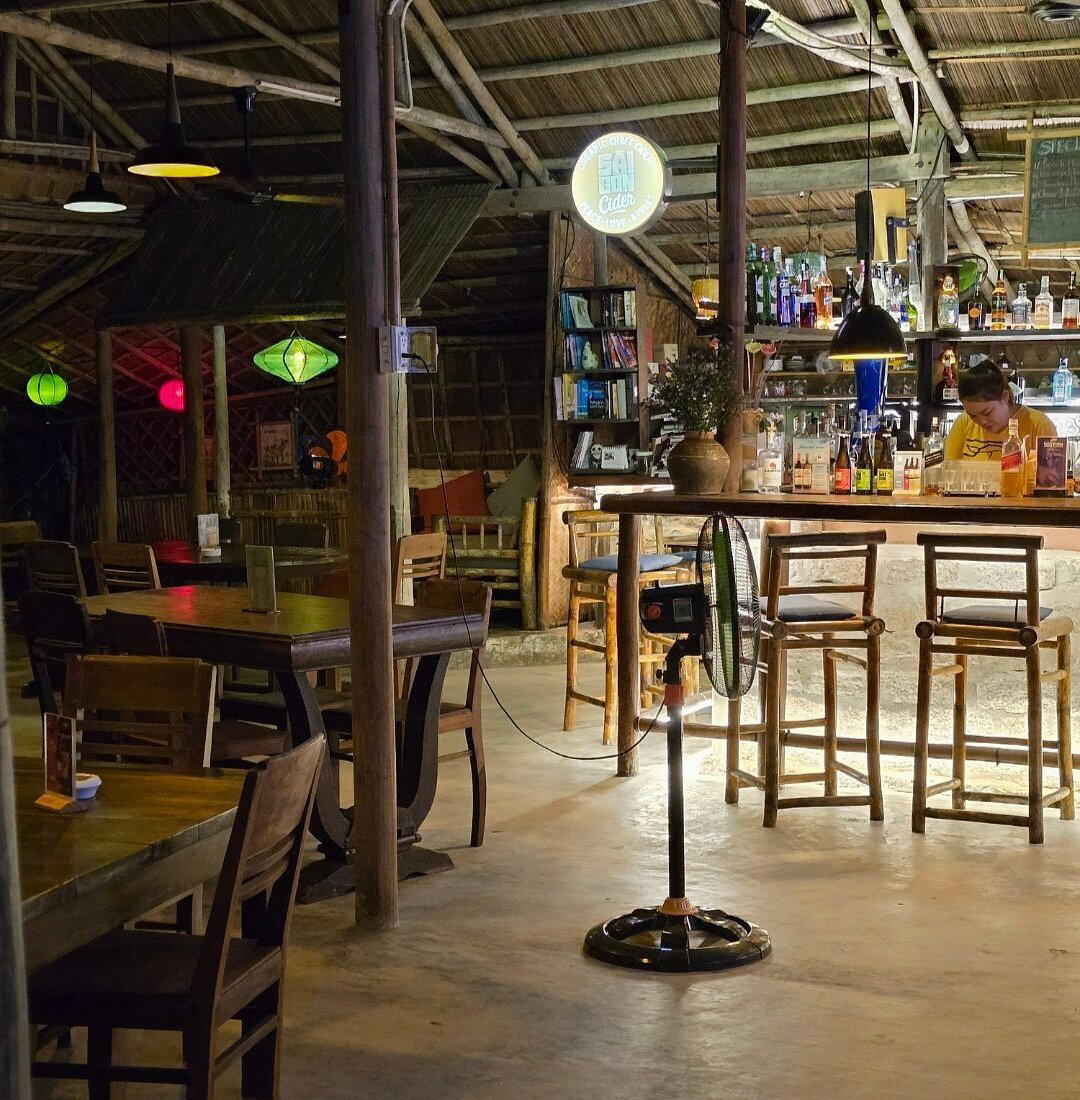
Simple, clean, and welcoming atmosphere with warm hospitality from the lady chef; no-frills, authentic local dining experience with basic decor that reflects genuine Vietnamese comfort food culture.