
Michelin Plate
Our verdict
A two-time Michelin Plate recipient (2024 and 2025), Bà Diệu on Trần Tống street in Da Nang's Thanh Khê district serves noodles at street-level prices in a neighbourhood well removed from the tourist circuit. At the ₫ price tier, this is where Da Nang's noodle tradition shows its most direct form.

Pearl is the En Primeur Club membership app — saves, bookings, and concierge access live there. Same editors, same standards.
- Address
- 17 Trần Tống, Thạc Gián, Thanh Khê, Đà Nẵng 550000, Vietnam
- Phone
- +84 236 3652 323
- Hours
- Daily 1–8 PM
- Website
- foody.vn
- Directions
- Get directions
Da Nang's Noodle Culture and the Thanh Khê Address
Vietnam's central coast has long maintained a distinct noodle identity, separate from the pho-dominated north and the herb-laden broths of the south. Da Nang sits at the hinge point of that geography, and its street-level noodle shops are among the clearest expressions of how central Vietnamese cooking differs from the country's other culinary poles. The city's working districts, away from the Han River promenade and the beach hotels, are where that tradition holds most consistently. Thanh Khê is one of those districts, and Trần Tống is one of its unassuming residential streets.
Bà Diệu operates from number 17 on that street, in a neighbourhood that draws almost no tourist traffic. That geography is part of its identity. The Michelin Guide's recognition of this address with a Plate award in both 2024 and 2025 is, in effect, a statement about where Da Nang's most direct cooking is found: not in the riverside dining rooms or the resort strips of Mỹ Khê, but in the kind of district where regulars arrive early and the pace is set by the kitchen, not the reservation system.
What the Michelin Plate Signals at This Price Point
The Michelin Plate sits below star level in the Guide's hierarchy, but it carries a specific meaning: the inspectors found cooking worth noting, at whatever price and format the kitchen operates in. At the ₫ tier, which in Da Nang terms means a bowl priced for daily local consumption, that recognition is harder to earn in some respects than it is in a white-tablecloth room. The inspectors are assessing quality on its own terms, not filtered through service ritual or interior design.
Consecutive Plate awards in 2024 and 2025 indicate consistency, not just a single strong visit. For a noodle shop in a residential district, consistency across two Michelin cycles means the kitchen is holding a standard that the Guide considers repeatable and verifiable. That matters to anyone planning a visit: the cooking that earned recognition is, by that logic, the cooking you are likely to encounter. For broader context on how Michelin recognition translates across Da Nang's dining scene, see our full Da Nang restaurants guide.
Central Vietnamese Noodles: The Tradition Behind the Bowl
Central Vietnam's noodle repertoire is narrower in some ways than Hanoi's or Saigon's, but it is more intensely regional. The broths here tend to carry lemongrass, shrimp paste, and dried shrimp in proportions that would read as aggressive in northern Vietnamese cooking. Bún bò Huế, which originates two hours north in the old imperial capital, is the dominant format in this part of the country: a spiced beef and pork broth served over thick round rice noodles, with a heat level and fermented depth that sets it apart from pho's cleaner profile.
Da Nang has absorbed that Huế influence while developing its own local variants, including bún chả cá, the city's fish cake noodle soup that has no real equivalent elsewhere in the country. Shops like Bún Chả Cá 109 and Bún Chả Cá Bà Hoa represent that local strand, while Bún Bò Bà Rơi (Hai Chau) and Bún Bò Huế Bà Thương hold the Huế-origin spiced beef broth tradition in the city.
Across the region, Michelin has increasingly turned its attention to this format. In other Asian cities, noodle houses have entered the Plate tier and beyond in numbers that reflect a broader critical acknowledgment that bowl-format cooking deserves the same scrutiny as tasting menus. A Bing Bao Shan Mian in Hangzhou, A Kun Mian in Taichung, A Niang Mian Guan in Shanghai, A Xin Xian Lao in Fuzhou, Ajisai in Taichung, and Baan Chik Pork Noodles in Udon Thani all sit in this same Michelin-recognised noodle tier across Asia. Bà Diệu belongs to that broader pattern.
The Local Review Record
The volume indicates a genuinely active local customer base, not a trickle of tourist visits inflating or deflating the score. The gap between local Google consensus and Michelin recognition is narrow here, which tends to indicate that the quality is not an inspectors' anomaly but something the neighbourhood has understood for longer.
Placing Bà Diệu in Da Nang's Wider Dining Context
Da Nang's dining scene covers a significant price and format range. At the leading end, La Maison 1888 holds a Michelin Star and operates at the ₫₫₫₫ tier inside a French colonial hotel setting, representing a completely different competitive set. The city's street-level and single-dish specialists occupy the opposite end of that spectrum, and the Michelin Guide has recognised both ends. Bà Đông sits in the same neighbourhood-restaurant register, as does the seafood-focused Bún Chả Cá Bà Hoa.
For Vietnamese cooking at broader scale elsewhere in the country, Gia in Hanoi and Akuna in Ho Chi Minh City represent what contemporary Vietnamese fine dining looks like in the two major cities. Bà Diệu operates at the other pole: no tasting menu, no wine list, no reservation format. The product is a single category of dish, executed at a standard the Michelin Guide has now twice confirmed.
Planning a Visit
Bà Diệu is at 17 Trần Tống in the Thạc Gián ward of Thanh Khê district, around 3 kilometres from the Han River waterfront. The address sits in a residential grid that is not walkable from the main hotel zones; a motorbike taxi or ride-hailing app is the practical route. Thanh Khê is a working district with no particular tourist infrastructure, so arriving, ordering, and eating follow the rhythm of the local regulars rather than any visitor-facing service format. The ₫ price tier means a meal here costs a fraction of what the same Michelin recognition commands in a formal setting. Hours and booking information are not listed, but noodle shops at this tier in Da Nang typically operate morning sessions that can end before midday when the broth runs out. Arriving early is the correct approach.
For further reading on where to eat, drink, stay, and what to do across the city, see our full Da Nang hotels guide, our full Da Nang bars guide, our full Da Nang wineries guide, and our full Da Nang experiences guide.
Frequently asked questions
What's Bà Diệu (Tran Tong Street) known for in terms of accolades?
Bà Diệu (Tran Tong Street) has received recognition including: Michelin Plate (2025); Michelin Plate (2024).
What's the best thing to order at Bà Diệu (Tran Tong Street)?
The kitchen is listed under noodles, which in central Vietnam typically means a focused menu built around one or two regional bowl formats rather than a broad à la carte spread. Given the Michelin Plate recognition in both 2024 and 2025, the inspectors found the core offering worth flagging — so ordering whatever the house noodle is, rather than branching out, is the logical move. No specific dish names are published for this address.
Is Bà Diệu (Tran Tong Street) more mid-range or high-end?
Pricing at Bà Diệu (Tran Tong Street) is listed as ₫.
What part of town is Bà Diệu (Tran Tong Street) in?
Bà Diệu (Tran Tong Street) is located at 17 Trần Tống, Thạc Gián, Thanh Khê, Đà Nẵng 550000, Vietnam, Da Nang.
Do they take walk-ins at Bà Diệu (Tran Tong Street)?
No reservation system is recorded for this address. At the ₫ price tier, noodle shops in Da Nang operate almost exclusively as walk-in counters, with turnover-driven seating rather than booked tables. Arriving early in the morning or at the start of a lunch service gives the best chance of a short wait.
Booking and Cost Snapshot
| Venue | Cuisine | Price | Awards | Notes |
|---|---|---|---|---|
| Bà Diệu (Tran Tong Street)This venue — the venue you are viewing | Vietnamese Bún Bò / Noodle Soup | Not listed | Michelin Plate | Not listed |
| La Maison 1888 | Michelin-Starred French Contemporary | $150–200 | 1 Michelin Star · La Liste Top Restaurants | French Contemporary, ₫₫₫₫ |
| Ăn Thôi | Authentic Vietnamese | $10–20 | Michelin Bib Gourmand | Not listed |
| Bé Ni 2 | Fresh Local Seafood | $10–20 | Michelin Bib Gourmand | Not listed |
| Bún Bò Bà Rơi (Hai Chau) | Not listed | Not listed | Noodles, ₫ | Not listed |
| Cô Chủ Nhỏ | Vietnamese Duck Street Food | $1–10 | Michelin Bib Gourmand | Not listed |
Recognition history
Dated appearances from independent guides and award organizations, with the underlying list record or original source where available.
Michelin Plate
Michelin
Full recognition history (3 entries)
Michelin Plate
Michelin
Michelin Plate
Michelin
Details
- Well Known
- Cozy
- Solo
- Family
- Casual Hangout
- Standalone
- Organic
- Local Sourcing
- Street Scene
- A La Carte
- Organic Focus
Current opening hours
- Monday
- 1–8 PM
- Tuesday
- 1–8 PM
- Wednesday
- 1–8 PM
- Thursday
- 1–8 PM
- Friday
- 1–8 PM
- Saturday
- 1–8 PM
- Sunday
- 1–8 PM
Hours can change for holidays and private events. Last verified .
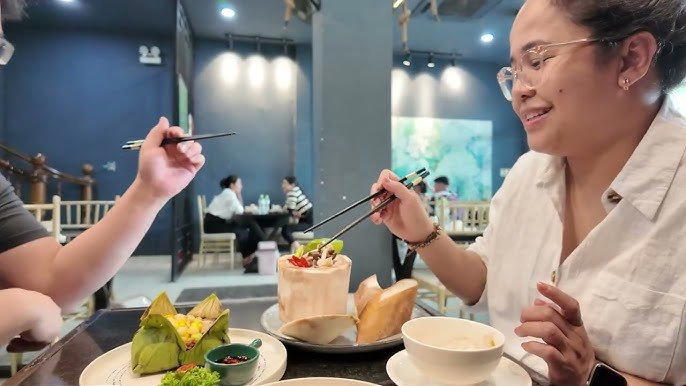
Small, simple, no-frills, and often crowded, with a clean, airy feel noted in guest reviews and enough fans to keep it comfortable.