
A Michelin Bib Gourmand recipient in Tainan's Qigu District, Black-faced Spoonbill Canteen sits on a working fish farm where sustainably raised milkfish and clams move from pond to plate. Between September and May, the same ponds attract endangered black-faced spoonbills on their annual migration, making this one of the few places in Taiwan where a meal doubles as a wildlife encounter.
Pearl is the En Primeur Club membership app — saves, bookings, and concierge access live there. Same editors, same standards.
- Address
- 724, Taiwan, Tainan City, Qigu District, 十份里海埔17之18號
- Phone
- +886 928 300 155
- Website
- facebook.com
- Directions
- Get directions
 Saves & bookings on Pearl
Where the Farm, the Wild, and the Kitchen Converge
Qigu District occupies the outer edge of Tainan's coastal wetland system, a stretch of aquaculture ponds, salt flats, and tidal channels that sits some distance from the city's old temple-dense centre. Arriving here, the visual grammar shifts entirely: the horizon flattens, the smell of brine thickens in the air, and the working infrastructure of Taiwan's seafood economy becomes immediately visible in the form of earthen pond banks and low-slung farm sheds. It is in this setting that Black-faced Spoonbill Canteen operates.
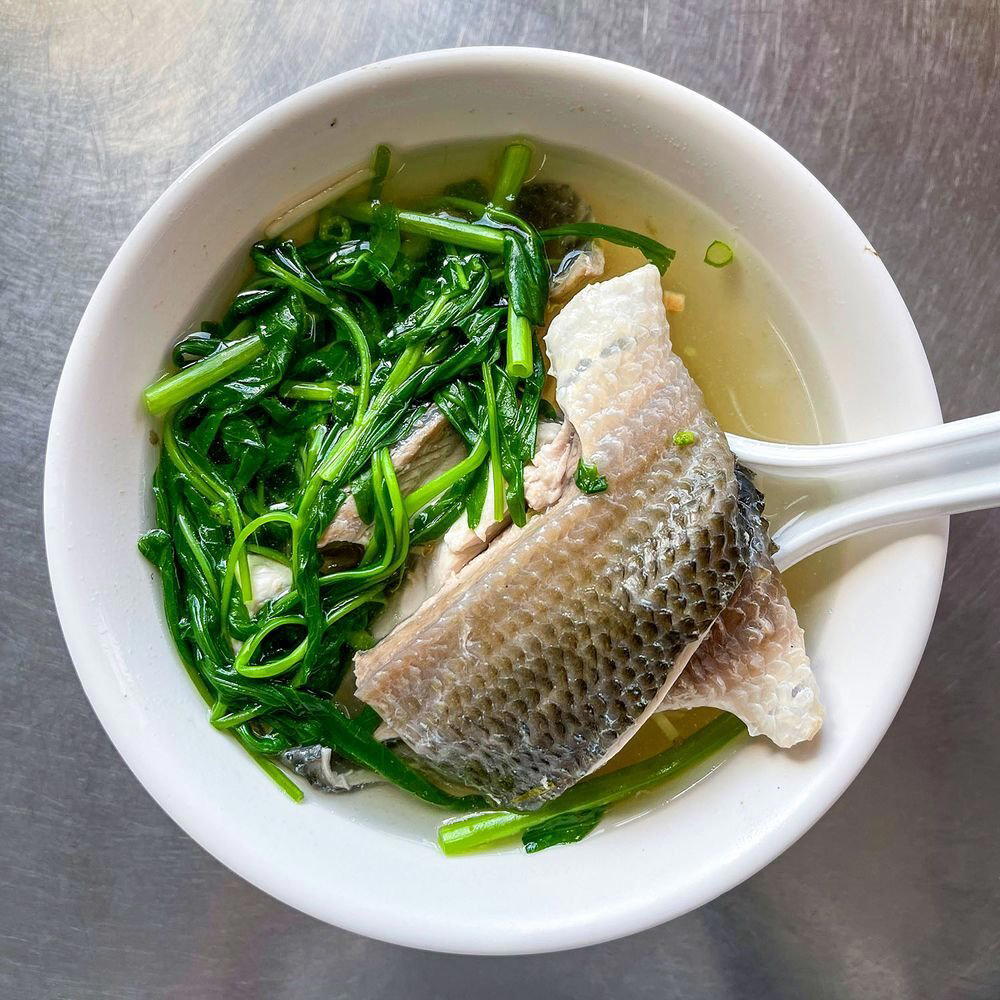
The canteen is run alongside a working fish farm, and the milkfish and clams on the menu are sourced from the owner's own ponds. That supply chain compression, from water to kitchen without intermediary, is the structural fact that gives the cooking here its authority. In Taiwan's seafood dining tradition, freshness has always been the primary credential, and few places in the country make that claim with quite this degree of literal proximity.
The Migration Factor: A Seasonal Dining Window Unlike Most
From September through to the following May, the ponds surrounding the canteen become feeding grounds for black-faced spoonbills, among the more endangered migratory birds in the world. Taiwan's southwest coast, and Qigu in particular, is one of a small number of wintering sites these birds use along their East Asian flyway, and the population that feeds here each season represents a significant share of the global count. The restaurant owner's ponds are part of that ecosystem: the fish farmed there attract the birds, and the birds have in turn become central to the canteen's identity.
This creates a dining calendar with genuine seasonal stakes. The window between September and May is not merely the period when the weather is cooler or the fishing is more productive, it is the period when the place operates at its fullest register, with the spoonbills present in the surrounding water. Outside that window, the seafood remains, but the wider environmental theatre that makes the experience specific to this location is absent. If the migration is part of what draws you here, timing matters.
Tradition, Technique, and the Milkfish Question
Milkfish occupies a particular position in Taiwanese culinary history. It has been farmed along the island's southwestern coast for centuries, and Tainan is considered its cultural home. The fish is bony, which has historically been either an obstacle or a point of craft depending on who is preparing it: skilled deboning is a kitchen credential in itself, and the quality of milkfish preparation has long functioned as a proxy for a kitchen's overall seriousness.
The canteen's milkfish comes from the farm immediately adjacent, which means the gap between harvest and cooking is minimal. The approach here sits at the intersection the editorial angle of this piece is concerned with: classic preparations that reflect accumulated local technique, applied to fish that is as close to its living state as farmed product can be. This is not a kitchen chasing modernist credentials. The register is direct and ingredient-led, in the tradition of Taiwanese seafood cooking that trusts the material over transformation.
Alongside the milkfish, deep-fried squid in salted egg yolk sauce appears on the menu, a preparation that belongs to a more recent wave of Taiwanese cooking, where salted egg yolk became a widely used coating and glaze technique across seafood and snack formats over the past decade. Its presence here alongside more classically framed dishes is representative of how Tainan's broader seafood scene has absorbed newer techniques without displacing older ones. For comparison, the more formally structured seafood dining available at Feng No Seafood in Tainan shows how the city's seafood tradition scales upward in formality, while the canteen operates at the more accessible, produce-driven end of the same continuum.
The Michelin Bib Gourmand recognition positions the canteen within a specific recognition tier: good cooking at prices that do not require significant financial commitment. The price point here is about $15 per person, and the award reflects a judgment about value and quality in combination rather than technical ambition alone. That places it in a different comparable set from Tainan's higher-end addresses like Di Yi Ding, and in a different register from the kind of Taiwanese fine dining being practised at logy in Taipei or JL Studio in Taichung. Internationally, the farm-to-table seafood model has equivalents at places like Gambero Rosso in Marina di Gioiosa Ionica and Alici on the Amalfi Coast, where proximity to source is similarly central to the proposition, or at Angler in London, where the sourcing ethos is applied at a higher price point. The canteen's version of that model is grounded in the economics and traditions of Taiwanese aquaculture rather than Mediterranean fishing culture, but the logic is recognisable.
Placing the Canteen in Tainan's Wider Food Map
Tainan has a strong claim to being Taiwan's most historically layered food city, with a street-food and small-eats culture that stretches back through centuries of settlement and trade. The canteen sits outside the city's urban food core geographically, but it connects to the same underlying logic: direct sourcing, cooking that respects the material, prices that reflect local production costs rather than hospitality markup. That sensibility runs through much of what makes Tainan distinctive, from the beef soup at A Cun Beef Soup on Baoan Road to the oden at A Hai Taiwanese Oden and the congee at A Hsing Congee.
For visitors combining the canteen with other coastal or nature-focused experiences in the south, Akame in Wutai Township offers a different model of place-specific dining grounded in Indigenous ingredients and mountain terrain, while GEN in Kaohsiung and Volando Urai Spring Spa and Resort in Wulai District represent other ways Taiwan's dining scene uses landscape and environment as integral to the proposition.
Planning a Visit
The canteen is located at 十份里海埔17之18號 in Qigu District, Tainan City. The address places it well outside the urban core, and visitors should account for the drive when planning. The migration season runs from September through May, and visiting within that window is the practical condition for experiencing the full convergence of seafood and wildlife the place is known for.
A Minimal comparable set
Comparable venues nearby, for context on price, style, and recognition.
| Venue | Cuisine | Price | Notes |
|---|---|---|---|
| Black-faced Spoonbill CanteenThis venue — the venue you are viewing | Seafood | $$ | Not listed |
| Chang Ying Seafood House | Beimen District, Milkfish Seafood House | $$ | Not listed |
| Feng No Seafood | Not listed | $$ | Jiangjun District, Fresh Taiwanese Seafood |
| Shang Hao Chih Beef Soup | North District, Tainanese Beef Soup | $ | Not listed |
| BUĒ MI. LAB | Not listed | $$ | West Central District, Fusion Taiwanese Noodles |
| Yi Wei Pin | Chinese | $ | Not listed |
Recognition history
Dated appearances from independent guides and award organizations, with the underlying list record or original source where available.
Michelin Plate
Michelin
Michelin Bib Gourmand
Michelin
Michelin Bib Gourmand
Michelin


At a Glance
- Scenic
- Cozy
- Rustic
- Family
- Group Dining
- Casual Hangout
- Waterfront
- Open Kitchen
- Local Sourcing
- Sustainable Seafood
- Waterfront
Current opening hours
- Monday
- 11 AM–2:30 PM, 4:30–8 PM
- Tuesday
- 11 AM–2:30 PM, 4:30–8 PM
- Wednesday
- 11 AM–2:30 PM, 4:30–8 PM
- Thursday
- 11 AM–2:30 PM, 4:30–8 PM
- Friday
- 11 AM–2:30 PM, 4:30–8 PM
- Saturday
- 11 AM–2:30 PM, 4:30–8 PM
- Sunday
- 11 AM–2:30 PM, 4:30–8 PM
Hours can change for holidays and private events. Last verified .
Clean, comfortable, and welcoming like a local diner with windows framing pond views for relaxed, observant dining.