Battambang brings Cambodian and Khmer cooking into Sydney’s broader dining conversation, a category still less visible than the city’s Thai, Vietnamese, Cantonese and Japanese mainstays. The appeal is cultural as much as culinary: rice, herbs, fermented depth and sweet-sour balance give Khmer food its own grammar rather than a borrowed regional shorthand.

Pearl is the En Primeur Club membership app — saves, bookings, and concierge access live there. Same editors, same standards.
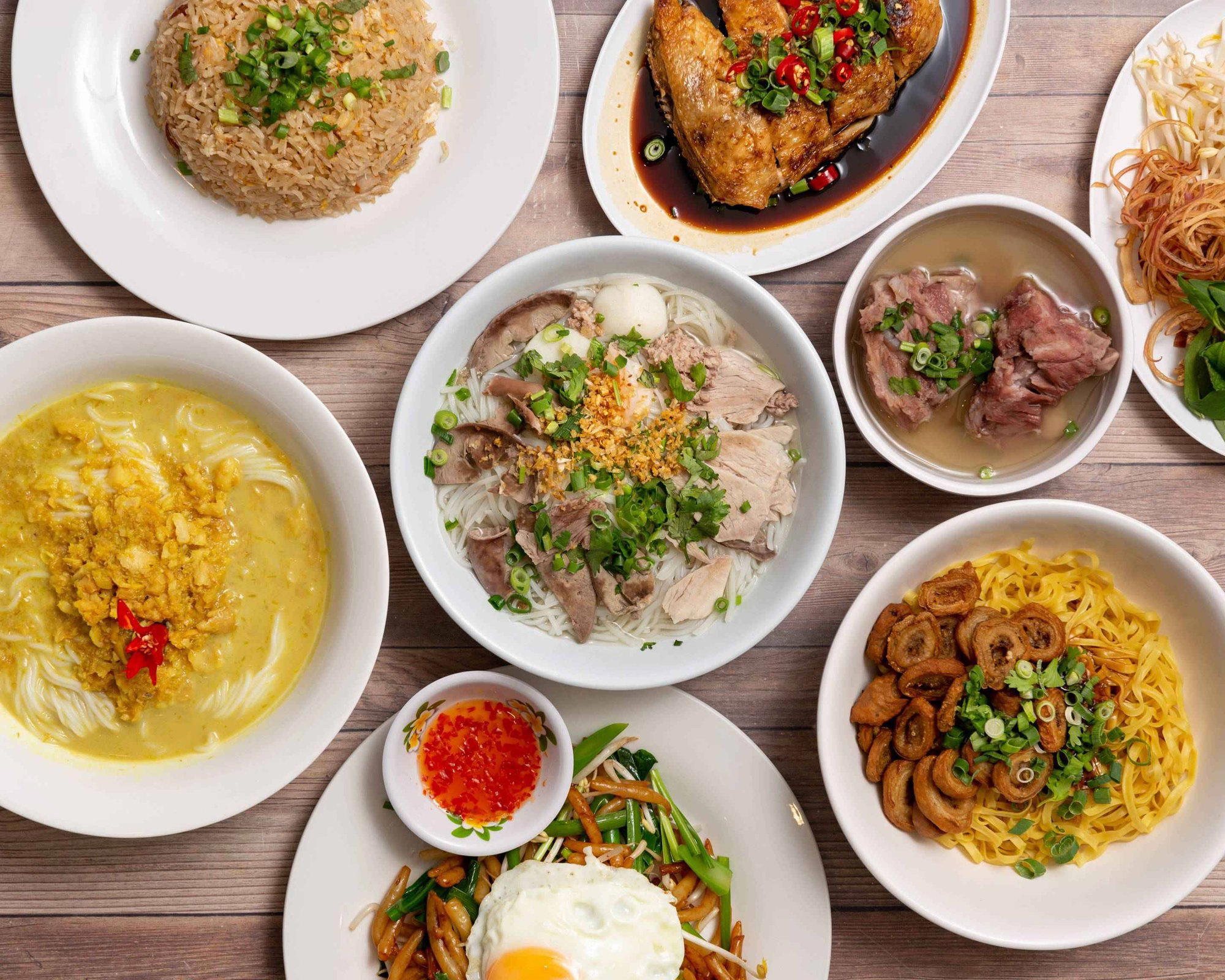
Walk into a Cambodian restaurant in Sydney and the first cue is often not spectacle but rhythm: rice at the centre, herbs doing quiet work, sourness cutting through richness, and fermented notes giving depth without asking for attention. Battambang sits in that underrepresented part of the city’s dining map, where Khmer cooking has to explain less by imitation and more by its own internal logic.
Khmer cooking in a city that often files Southeast Asia too broadly
Sydney understands Southeast Asian dining well, but the public shorthand can flatten the region. Thai heat, Vietnamese freshness and Malaysian street-food formats have clearer recognition among diners; Cambodian food is less frequently given its own lane. That matters because Khmer cooking is not a diluted midpoint between neighbours. Its structure leans on rice, freshwater fish traditions, herbs, pickled accents, coconut, palm sugar, pepper and fermented seasonings, with balance built through restraint rather than volume.
The name Battambang carries cultural weight before a plate arrives. Battambang is a Cambodian city associated with rice country, French-colonial architecture, arts education and a slower agricultural identity than Phnom Penh. For a Sydney diner, that reference point helps frame the meal away from generic Southeast Asian expectations. The point is not novelty; it is specificity. Cambodian cooking has its own canon, and Sydney’s dining culture is stronger when that canon is not reduced to a footnote beside better-known cuisines.
That specificity also changes how to read the menu. Khmer food often rewards diners who order across textures and temperatures rather than chasing a single centrepiece. A table built around rice, herbs, a sour or pickled element, something grilled or stewed, and a dish with fermented depth will usually make more sense than treating the meal as a sequence of individual mains. In a city where tasting menus and chef-led counters receive much of the attention, this kind of table architecture is a reminder that complexity can come from shared balance rather than ceremony.
Why Sydney's Cambodian tables deserve a sharper lens
Cambodian restaurants in Australia often carry a community role that is easy to overlook in conventional restaurant writing. The cuisine’s modern diaspora story is tied to migration, rebuilding and family-run hospitality after the upheavals of the late twentieth century. In Sydney, that history sits beside a broader appetite for regional Asian cooking, but Khmer restaurants rarely receive the same critical oxygen as Japanese omakase, Cantonese seafood rooms or contemporary Thai dining.
Battambang is useful because it points to a different kind of value in the city: not luxury signalling, not imported prestige, and not a format designed for international award circuits. The value lies in cultural legibility. A Cambodian meal asks the diner to notice how sourness, sweetness and salinity are arranged; how rice carries the table; how herbs and condiments finish a dish rather than decorate it. Those details are not secondary. They are the cuisine’s operating system.
For readers mapping Sydney by category, this sits outside the familiar high-visibility lanes. The city can offer polished wine-bar dining at 10 William St, luxury seafood retail-dining at 10 Pounds, Mediterranean neighbourhood cooking at 1021 Mediterranean, chapel-side contemporary dining at 20 Chapel, and steak-frites simplicity at 24 York (steak-frites). Khmer cooking belongs in that same citywide conversation, not as a curiosity but as a cuisine with its own rules.
How to approach the table
The smart order at a Cambodian restaurant is usually communal and contrast-driven. Start with the assumption that rice is structural, not filler. Build around a mix of herbal, sour, savoury and richer dishes, then let condiments and acidity do the balancing work. Diners used to Thai chilli intensity or Vietnamese raw-herb brightness may find Khmer cooking quieter at first; the reward comes from the way flavours interlock across the table.
Planning should stay flexible because public-facing details for Battambang are sparse. Treat it as a Sydney Cambodian dining address rather than a formal fine-dining appointment, and confirm current service details before making plans. For wider context across the city, EP Club’s Sydney coverage is split by use case: Our full Sydney restaurants guide for dining, Our full Sydney hotels guide for where to stay, Our full Sydney bars guide for drinking, Our full Sydney wineries guide for cellar-door planning, and Our full Sydney experiences guide for cultural programming.
Outside Sydney, national and international listings can help calibrate how EP Club separates cuisine, format and city context: +39 Pizzeria in Melbourne, +81 Sushi Kappo in Brisbane, 26 & Sunny in Surfers Paradise, 2KW Bar & Restaurant in Adelaide, 3 Sicilians Ristorante in Newcastle, 400 Gradi in Brunswick East, Jōdo Saké Bar in Los Angeles, and Onigiri Time in Pasadena. The useful comparison is not venue against venue, but how a city makes room for cuisines that do not arrive with the loudest critical machinery.
In Context
Comparable venues nearby, for context on price, style, and recognition.
| Venue | Cuisine | Price | Notes |
|---|---|---|---|
| BattambangThis venue — the venue you are viewing | Not listed | $ | Not listed |
| D21 Ice Cream | Not listed | $ | CBD, Character Macaron Ice Cream Sandwiches |
| Mason Hunters Hill | Not listed | $$ | Hunters Hill, Contemporary Australian Café |
| Celebration Cake Bar | Modern dessert and celebration cake bar | $ | Not listed |
| Oliver Brown | Not listed | $$ | Sydney Olympic Park, Belgian Chocolate Cafe |
| Lankan Filling Station | Woolloomooloo, Sri Lankan | $$ | Not listed |
Continue exploring
More in Sydney
Restaurants in Sydney
Browse all →
Bars in Sydney
Browse all →
Hotels in Sydney
Browse all →
Wineries in Sydney
Browse all →
At a Glance
- Lively
- Classic
- Solo
- Family
- Group Dining
- Casual Hangout
- Standalone
- Street Scene