Bánh Canh Cua Bà Ba

Michelin Bib Gourmand
Our verdict
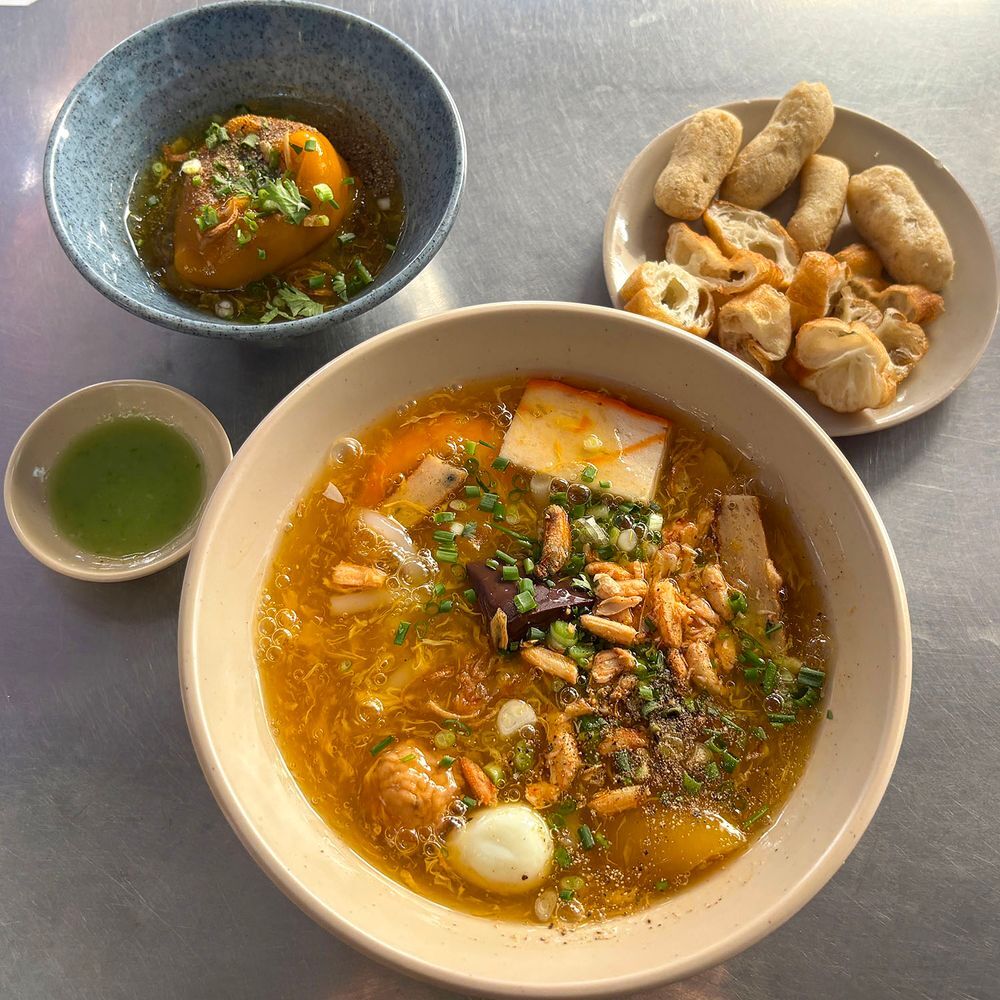
Bánh Canh Cua Bà Ba is a compact alley shop in Cho Quan Ward that focuses on a single dish: bánh canh cua, a vivid orange crab rice noodle soup with fish cakes, crab leg meat, and egg ribbons in a silky broth. The menu offers a smaller bowl for one or a clay pot for sharing, served with fried dough, tender pork trotter, and a zesty green chilli-lime sauce on the side.

Pearl is the En Primeur Club membership app — saves, bookings, and concierge access live there. Same editors, same standards.
- Address
- 84/6 Nguyen Bieu Street, Cho Quan Ward, Ho Chi Minh City, Hồ Chí Minh, 700000, VNM
- Phone
- +84 90 299 49 46
- Hours
- Mon–Wed 8 AM–8 PMThu ClosedFri–Sun 8 AM–8 PM
- Website
- guide.michelin.com
- Directions
- Get directions
The menu
What to order
- Bánh canh cua (crab rice noodle soup) in bowl
- Bánh canh cua clay pot for sharing
Down a narrow alley off Nguyen Bieu Street in Cho Quan Ward, a modest shop with plastic stools and makeshift awnings draws a steady midday crowd. Bánh Canh Cua Bà Ba operates from a single-dish premise: bánh canh cua, the thick crab rice noodle soup that appears on a rotating roster of street stalls across Ho Chi Minh City but rarely as the sole focus. The format is efficient: indoor and outdoor seating, no printed menu, orders dispatched at a pace that prioritizes turnover over theatre. This is the tier of Ho Chi Minh City's restaurant scene where reputation spreads through neighbourhood word-of-mouth rather than guided itineraries, and where locals outnumber visitors by a wide margin.
The soup and its sourcing
Bánh canh cua arrives in two formats: a smaller bowl for solo diners or a clay pot designed for sharing. The broth is a vivid orange, stained by crab roe and paddy-crab paste pounded into the stock base. The noodles are the wide, slippery variety made from tapioca and rice flour, thicker than the vermicelli or pho strands that dominate the city's noodle hierarchy. Each serving includes fish cakes, crab leg meat, and egg ribbons, the last folded in at a stage that leaves them soft rather than fully set. A side plate of fried dough and tender pork trotter arrives without prompting, and a small dish of green chilli-lime sauce is placed at each table for those who prefer a sharp counterpoint to the richness.
The crab leg meat comes whole, requiring diners to crack shells at the table, a signal that the kitchen prioritizes ingredient visibility over convenience. The fish cakes are dense and faintly sweet, likely made in-house from mackerel or catfish, rather than the pre-formed commercial variety that appears at larger volume operations. The pork trotter, braised until the cartilage yields easily, adds collagen to the broth and a textural contrast to the softer elements. This level of component layering is typical of southern Vietnamese cua soups, but the commitment to a single dish allows Bà Ba to refine the balance in a way that multi-page menus cannot sustain.
Where it sits in the city's noodle landscape
Ho Chi Minh City's noodle ecosystem is fiercely segmented. Phở dominates the northern-style noodle tier, with institutions like Phở Lệ (An Đông) and Phở Hùng (District 1) operating at high volume in tourist-adjacent zones. Bánh canh cua occupies a smaller, more specialized niche: thicker noodles, seafood-forward broths, and a customer base that skews toward locals who grew up eating the dish at home. The alley location and lack of English signage place Bà Ba outside the usual discovery radius for first-time visitors, though its inclusion in regional guides suggests it has crossed into a transitional phase where external recognition begins to shift the crowd composition.
Compared to Ốc Đào (District 1), another single-price-tier seafood specialist, Bà Ba operates with fewer menu distractions but a narrower margin for error. At Anan Saigon or Akuna, bánh canh cua appears as one element in a broader street-food-to-fine-dining translation; here, it is the entire proposition, which either satisfies completely or leaves little room for fallback. The format demands consistency at a level that benefits from repetition, and the crowd density during peak hours suggests the kitchen delivers it.
For those exploring the broader spectrum of Vietnamese noodle traditions, 19 P. Ngũ Xã in Hanoi and Ăn Thôi in Da Nang offer regional counterpoints in the north and central coast, while 115 Đ. Trần Cao Vân in Hoi An demonstrates how similar single-dish models operate in smaller, tourism-heavy towns. Bà Ba sits firmly in the southern, Saigon-specific tradition, where crab and pork dominate the flavour profile rather than the beef or chicken broths more common elsewhere.
The alley address in Cho Quan Ward places the shop in a residential pocket between District 1's tourist corridor and the more sprawling, industrial zones to the west. The neighbourhood lacks the density of international hotels or curated walking routes, which keeps the venue anchored to its original customer base. Seating expands onto the pavement during lunch service, and turnover is brisk enough that waits rarely extend beyond fifteen minutes. No reservations, no phone line, no website, arrival and availability are determined by timing rather than advance planning. For context on the broader Ho Chi Minh City dining landscape, see our hotels, bars, and experiences guides.
Frequently asked questions
Is Bánh Canh Cua Bà Ba okay with children?
Yes. The shop offers indoor and outdoor seating, and the single-dish format, crab rice noodle soup in bowls or clay pots, is straightforward for families. The zesty chilli-lime sauce is served on the side, so spice is adjustable.
Is Bánh Canh Cua Bà Ba formal or casual?
Casual. This is a compact street-food shop down an alley off Nguyen Bieu Street. Expect plastic stools, quick turnover, and a neighbourhood crowd eating a single dish.
Does Bánh Canh Cua Bà Ba have a Michelin star or similar recognition?
Bánh Canh Cua Bà Ba has received recognition including: down an alley, this compact shop with indoor and outdoor seating is a local favourite. The menu focuses on a single dish: bánh canh cua, a vivid orange crab rice noodle soup – in a smaller bowl for one or clay pot for sharing. W….
What part of town is Bánh Canh Cua Bà Ba in?
Bánh Canh Cua Bà Ba is located at 84/6 Nguyen Bieu Street, Cho Quan Ward, Ho Chi Minh City, Hồ Chí Minh, 700000, VNM, Ho Chi Minh City.
Should I book Bánh Canh Cua Bà Ba in advance?
No. The shop operates on a walk-in basis. Arrive early if you want outdoor seating or prefer to avoid peak lunch and dinner queues.
What's the standout thing about Bánh Canh Cua Bà Ba?
The focus: one dish only. Bánh canh cua arrives in a vivid orange broth filled with fish cakes, crab leg meat, and egg ribbons, with optional fried dough and pork trotter. The consistency has made it a local favourite despite the narrow menu.
How It Stacks Up
Comparable venues by cuisine and price in the same metro.
| Venue | Cuisine | Price | Awards |
|---|---|---|---|
| Bánh Canh Cua Bà BaThis venue — the venue you are viewing | Traditional Vietnamese Crab Noodle Soup Shop | $1–10 | Michelin Bib Gourmand |
| Nén Light | Modern Vietnamese Storytelling Tasting Menu | Not listed | Michelin Plate |
| Ốc Đào (District 1) | Vietnamese Shellfish and Snails | $1–10 | Michelin Plate |
| Phở Hùng (District 1) | Traditional Vietnamese Beef Pho | $1–10 | Michelin Plate |
| Phở Lệ (An Đông) | Southern Vietnamese Phở | $1–10 | Michelin Bib Gourmand |
Recognition history
Dated appearances from independent guides and award organizations, with the underlying list record or original source where available.
Michelin Bib Gourmand
Michelin
Continue exploring
More in Ho Chi Minh City
Restaurants in Ho Chi Minh City
Browse all →
Bars in Ho Chi Minh City
Browse all →

Details
- Lively
- Classic
- Solo
- Family
- Casual Hangout
- Group Dining
- Late Night
- Standalone
- Street Scene
- A La Carte
- Soft Drinks
- Tea
- Pescatarian Friendly
Current opening hours
- Monday
- 8 AM–8 PM
- Tuesday
- 8 AM–8 PM
- Wednesday
- 8 AM–8 PM
- Thursday
- Closed
- Friday
- 8 AM–8 PM
- Saturday
- 8 AM–8 PM
- Sunday
- 8 AM–8 PM
Hours can change for holidays and private events. Last verified .
A no-frills, bustling local eatery with simple seating, bright lighting, and an energetic atmosphere that gets crowded at peak hours, focusing attention on the steaming bowls of crab noodle soup rather than decor.