Banana Leaf
Our verdict
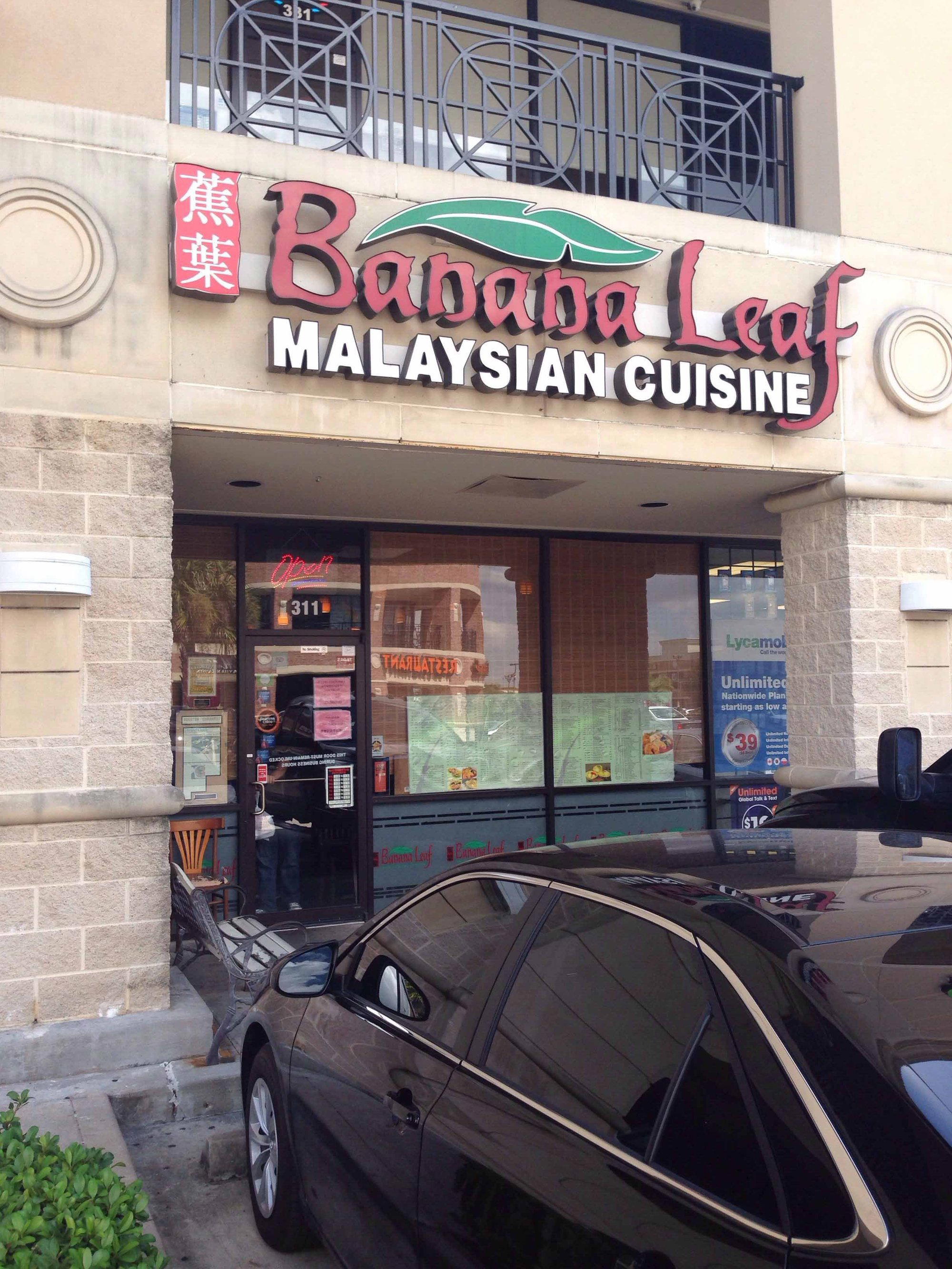
On Bellaire Boulevard in Houston's Asiatown corridor, Banana Leaf draws a loyal following that returns not out of novelty but habit. The restaurant sits inside a strip mall at 9889 Bellaire Blvd, a setting that signals nothing and promises everything to those who already know. For regulars, it represents the kind of dependable, specific cooking that keeps a dining room full without a publicist.

Pearl is the En Primeur Club membership app, where members save venues, book tables and use the concierge.
The menu
What to order
- Roti Canai
- Chicken Satay
- Beef Rendang
- Curry Laksa
Bellaire Boulevard and the Strip-Mall Dining Culture That Defines Asiatown
Houston's Asiatown corridor along Bellaire Boulevard operates by different rules than the city's downtown dining circuit. Strip malls here are not compromise venues, they are the primary format, and the cooking inside them frequently outpaces what you'll find in purpose-built restaurant spaces elsewhere in the city. The density of Southeast and South Asian restaurants along this stretch has made it one of the more serious eating corridors in the American South, a fact that food writers have noted for years without significantly changing how the neighborhood functions. It runs on repeat business, word-of-mouth, and the quiet authority of regulars who have already done the sorting work for you.
Banana Leaf occupies Suite 311 at 9889 Bellaire Blvd, deep inside that ecosystem. The address alone tells you something: this is not a restaurant that opened to court the broader Houston dining audience. It opened, and the audience found it. That pattern, venue stays put, reputation travels, is characteristic of the leading cooking on this stretch, and it applies here.
What Regulars Actually Order
The editorial angle that matters most at a restaurant like Banana Leaf is not the menu as printed but the menu as practiced by people who have eaten here dozens of times. In Southeast Asian cooking traditions, Malaysian, Singaporean, and Indonesian cuisines all operate in this register, the gap between what a newcomer orders and what a regular orders is often significant. Regulars build a short list through elimination and return to it. They know which preparations hold up, which are leading ordered fresh and eaten immediately, and which dishes reward sharing across a larger table.
Banana Leaf's name references a cooking and serving tradition common across Malaysia, South India, and parts of Indonesia, where food served on or with banana leaf imparts both presentation and a mild, grassy flavor transfer. The tradition signals a specific culinary lineage, one that sits at some distance from the Chinese-American and Tex-Mex categories that dominate Houston's popular dining conversation. For the regulars who have made this restaurant part of their rotation, that specificity is precisely the point. Houston's Asiatown has enough options that diners in the know are not eating here by default, they are eating here by preference.
For context on how Houston's dining scene distributes across cuisines and price points, the EP Club full Houston restaurants guide maps the city's categories in more detail. At the high-spend end of the spectrum, venues like March (Venetian-influenced, at the top of the Houston price bracket) and Musaafer (Indian, also at the premium tier) represent the city's award-circuit dining. BCN Taste & Tradition and Le Jardinier Houston anchor the European-leaning fine dining category. Banana Leaf operates in a different register entirely, community anchor rather than destination tasting menu, and valued for exactly that reason by the people who go there regularly.
The Return Visit Logic
What drives repeat patronage at a restaurant like this is not spectacle. Strip-mall Southeast Asian cooking that sustains a loyal following over years does so through consistency, portion logic, and the kind of value-density that makes a meal feel like a reasonable proposition on any given weeknight. In the Bellaire corridor specifically, diners have accumulated enough experience across enough restaurants to become genuinely demanding. A restaurant that keeps them returning has passed a more rigorous test than any award committee applies.
This is a dynamic visible in other American cities with similarly dense Asian dining corridors, Flushing in New York, the San Gabriel Valley in Los Angeles, Eden Center in Northern Virginia, where the regulars function as a distributed quality-control system. A restaurant that endures in that environment has earned its position through cooking, not marketing. Banana Leaf's presence on Bellaire, in a suite format that offers no exterior drama, is consistent with that logic.
For comparison, the tasting-menu format at high-investment restaurants like Le Bernardin in New York City, The French Laundry in Napa, or Smyth in Chicago asks for a different kind of commitment from a diner: a reservation made weeks out, a significant per-person spend, and a single extended sitting. The Bellaire corridor model asks for none of that. It asks that you know what you want, that you've done the research, and that you show up. Other notable venues in the national conversation, Lazy Bear in San Francisco, Providence in Los Angeles, Blue Hill at Stone Barns in Tarrytown, Addison in San Diego, Single Thread Farm in Healdsburg, Atomix in New York City, Atelier Moessmer Norbert Niederkofler in Brunico, Emeril's in New Orleans, and The Inn at Little Washington, all operate within a formal reservation and multi-course structure. Banana Leaf does not position itself in that bracket and does not need to. The two models serve different diner needs and should be evaluated on different terms.
Houston's Southeast Asian restaurant scene also benefits from a municipal context that supports it: the city's internationally diverse population creates an informed customer base that knows what the cooking should taste like from direct cultural familiarity. That is a more demanding audience than the enthusiast-tourist market that drives traffic to tasting-menu venues. Tatemó, with its masa-focused Mexican approach, operates under similar pressure from a community with direct knowledge of what the cooking should deliver. These are restaurants in conversation with an audience that already has reference points.
Planning a Visit
Banana Leaf is located at 9889 Bellaire Blvd, Suite 311, in the Asiatown corridor of southwest Houston. The strip-mall format means street parking is the standard mode, and the area is accessible by car from most of Houston's inner loop in under 30 minutes depending on time of day. For first-time visitors, the strongest approach is to arrive with a table of four or more, the format of cooking associated with this tradition rewards sharing, and larger groups can cover more of the menu across a single visit. As with most restaurants in this corridor, the busiest periods tend to be weekend lunches and weekend evenings; a weekday dinner visit typically means shorter waits and a more settled pace in the dining room.
Frequently asked questions
How do I find Banana Leaf?
Banana Leaf is located at 9889 Bellaire Blvd Suite 311, Houston, TX 77036, Houston.
Is Banana Leaf Houston a good option for Southeast Asian food in the Asiatown corridor?
Banana Leaf sits inside one of Houston's most concentrated zones for Southeast Asian cooking, the Bellaire Boulevard strip running through the 77036 zip code. The competition on this corridor is real and consistent, meaning restaurants that sustain repeat patronage here do so on the quality of the food rather than foot traffic alone. Its location at Suite 311 places it within walking distance of several comparable kitchens, making it part of a dining cluster worth treating as a full outing.
What do people recommend at Banana Leaf?
Regulars at the Bellaire Boulevard location tend to bypass the printed menu in favour of dishes that have earned a following through word of mouth within Houston's Asiatown community. The strip-mall setting draws a knowledgeable repeat crowd, and their ordering patterns are a more reliable guide than any menu description. Asking staff what is moving that day is the standard local approach.
Can I walk in to Banana Leaf?
Banana Leaf operates out of Suite 311 at 9889 Bellaire Blvd in southwest Houston's Asiatown corridor, a strip-mall format that typically supports walk-in dining. Street and lot parking are available at the centre. Calling ahead during peak hours is advisable, particularly on weekends when Bellaire Boulevard dining traffic runs high.
What's the signature at Banana Leaf?
The restaurant's identity sits in the Southeast Asian cooking tradition that anchors much of Bellaire Boulevard's dining culture. Dishes that sustain a loyal following over years in a competitive Asiatown corridor are the practical definition of a house signature. Regulars who return consistently are the clearest signal of what the kitchen does well.
Style and Standing
Comparable venues nearby, for context on price, style, and recognition.
| Venue | Cuisine | Price | Notes |
|---|---|---|---|
| Banana LeafThis venue (the venue you are viewing) | Malaysian | Not listed | Not listed |
| Toga | Yakitori Izakaya | Not listed | River Oaks |
| Crust City Pizza | Chicago-Style Thin Crust Pizza | $20–30 | Houston Heights |
| Gao's Crab - Houston | Chinese BBQ & Seafood Boil | $30–50 | Bellaire West |
| Teppay | Authentic Traditional Japanese Sushi | $30–50 | Briarmeadow |
| Blue Tuba | Euro-Tex Fusion | $30–50 | Greater Heights |
Continue exploring
More in Houston
Restaurants in Houston
All restaurants in Houston →
Bars in Houston
All bars in Houston →
Details
- Family
- Casual Hangout
- Group Dining
- A La Carte
- Vegetarian Friendly
- Vegan Options
Current opening hours
- Monday
- 11 AM–10 PM
- Tuesday
- Closed
- Wednesday
- 11 AM–10 PM
- Thursday
- 11 AM–10 PM
- Friday
- 11 AM–10 PM
- Saturday
- 11 AM–10 PM
- Sunday
- 11 AM–10 PM
Hours can change for holidays and private events. Hours as of .
Casual strip mall setting with fast-paced service during peak hours.