Balboa Surf Club
Our verdict
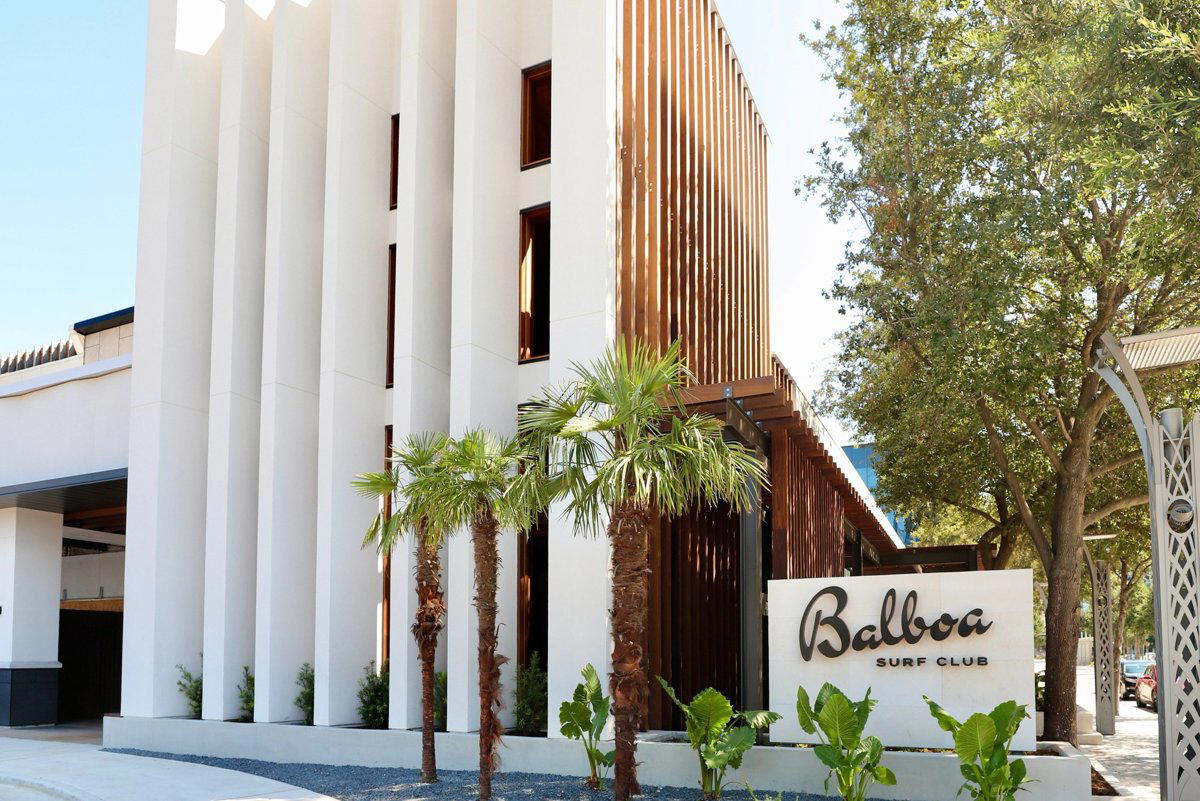
Balboa Surf Club occupies a Post Oak Boulevard address that places it squarely inside Houston's most competitive dining corridor. The kitchen works at the intersection where Gulf Coast ingredients meet technique drawn from further afield, producing cooking that reads as distinctly Texan in raw material while owing its structure to broader American and international culinary traditions. For diners tracking Houston's evolving fine-casual scene, it belongs on the shortlist.

Pearl is the En Primeur Club membership app — saves, bookings, and concierge access live there. Same editors, same standards.
- Address
- 1753 Post Oak Blvd, Houston, TX 77056
- Phone
- (713) 405-1260
- Hours
- Mon–Thu 11 AM–10 PMFri–Sat 11 AM–11 PMSun 11 AM–10 PM
- Website
- balboasurfclub.com
- Directions
- Get directions
- Booking
- Book on OpenTable
The menu
What to order
- King Crab Handroll
- The Crab Cake
- Tuna Frites
Post Oak and the Pressure of a Premium Address
Post Oak Boulevard is not a forgiving location. The stretch running through Uptown Houston carries one of the city's highest concentrations of hotel dining rooms, steakhouses, and chef-driven independents, which means any room along it competes for attention from expense-account regulars, hotel guests with high expectations, and a local dining public that has spent the last decade becoming considerably more demanding. Balboa Surf Club sits at 1753 Post Oak Blvd, inside that corridor, and the address alone signals something about its target audience and competitive positioning.
Houston's Uptown dining scene has matured in ways that reward specificity. Generic international formats have largely been displaced by kitchens with clearer points of view, whether that means the masa-forward precision of Tatemó, the tasting-menu ambition of March, or the Indian regional depth at Musaafer. Within that context, a venue with "Surf Club" in its name makes an implicit promise: casual adjacency, coastal reference, and a lighter register than the white-tablecloth rooms nearby. Whether the kitchen delivers on that promise in a way that separates it from the broader Post Oak competition is the operative question.
Gulf Coast Ingredients as the Foundation
The editorial angle that matters most for understanding where Balboa Surf Club sits in Houston's dining structure is the relationship between local raw material and imported technique. This is a tension the city's better kitchens have navigated with increasing sophistication over the past decade. Houston's position as a Gulf Coast city gives its restaurants access to shrimp, redfish, blue crab, and oysters that arrive with a provenance and freshness that few inland American cities can match. The question is what a kitchen does with that advantage.
Across American coastal dining, the most interesting kitchens have moved away from treating local seafood as a simple selling point and toward using it as the structural argument for a broader culinary approach. The model has precedents at the national level: Le Bernardin in New York City built a decades-long reputation on the principle that technique serves the fish rather than obscures it, while Providence in Los Angeles applies a similar discipline to Pacific Coast sourcing. Closer to Houston's register, Emeril's in New Orleans demonstrated that Gulf ingredients could anchor a kitchen with genuine culinary ambition without losing its regional identity.
A "Surf Club" framing in Houston suggests the kitchen intends to work with this coastal material in a format that is more accessible than a tasting-menu room but more considered than a casual seafood grill. That positioning, if executed with consistency, occupies a genuinely useful gap in the local market.
Where Technique Meets Texas
The broader trend in American fine-casual dining has been toward kitchens that import method from classical European or Asian traditions and apply them to hyper-local sourcing. Single Thread Farm in Healdsburg made this its organizing principle, while Blue Hill at Stone Barns in Tarrytown applied it with particular rigor to the farm-to-table format. In the urban context, Smyth in Chicago and Lazy Bear in San Francisco demonstrate how a kitchen can carry the intellectual weight of imported culinary training while remaining legible to a local dining public.
Houston is well-positioned for this kind of synthesis. The city's food culture has always absorbed global influence more readily than its reputation outside Texas suggests. Spanish technique has found a home at BCN Taste & Tradition, French precision at Le Jardinier Houston. The pattern suggests that Houston diners are prepared to engage with cooking that arrives from somewhere else intellectually, provided the ingredients feel genuinely local and the format does not ask too much of them in terms of ceremony.
The surf club format, historically associated with California coastal leisure, carries its own set of culinary associations: lighter preparations, citrus-forward flavors, raw bars, grilled fish, and a general preference for brightness over richness. Transposing that sensibility to the Gulf Coast requires substituting Pacific ingredients for Atlantic and Gulf ones, which is a direct exchange in terms of raw material but demands some care in terms of flavor profile. Gulf oysters are brinier and more mineral than their Pacific counterparts; Gulf shrimp are meatier than West Coast varieties; redfish behaves differently on the grill than Pacific snapper.
Kitchens that handle this translation well tend to produce cooking that feels genuinely regional rather than geographically borrowed. The risk is in importing a format wholesale without accounting for how the local ingredients want to be treated. At the national level, this challenge has been navigated with particular intelligence by kitchens like Addison in San Diego, where California produce and Pacific seafood inform the cooking without the format becoming a statement about California identity. A similar discipline, applied to Gulf Coast material, is what the Balboa Surf Club concept implies.
Diners considering Balboa Surf Club as part of a Houston visit should understand where it sits relative to the city's broader restaurant structure. Houston's premium tier is anchored by tasting-menu rooms and long-standing chef-driven institutions. The mid-to-upper casual tier, where a surf club format would typically land, is more crowded and more competitive. Against that backdrop, clarity of identity matters more than ambition of technique.
For comparison, venues at the top of Houston's critical hierarchy like March are operating in a different register entirely, with prix-fixe formats and price points that reflect that positioning. The surf club concept, by contrast, competes for the diner who wants to eat well without committing to a two-hour tasting experience. That is a valid and commercially important niche, and Houston's dining public is large enough to support multiple strong operators within it.
For readers building a broader itinerary, our full Houston restaurants guide maps the city's dining tiers in more detail, including how to sequence meals across neighborhoods and price points. And for those tracking how the local-ingredient, global-technique approach plays out at the national level, rooms like Atomix in New York City, The French Laundry in Napa, The Inn at Little Washington, and Atelier Moessmer Norbert Niederkofler in Brunico offer useful reference points for what the format can achieve at its ceiling.
Know Before You Go
- Address: 1753 Post Oak Blvd, Houston, TX 77056
- Neighbourhood: Uptown / Post Oak Corridor
- Hours:; verify before visiting
- Phone / Website:
Frequently asked questions
at Balboa Surf Club?
Given the venue's name and Post Oak address, Gulf Coast seafood preparations are the most logical anchor of the menu. When booking, ask directly about the kitchen's current sourcing and any market-driven dishes, as these tend to reflect what the kitchen is doing at its most considered.
How hard is it to get a table at Balboa Surf Club?
Post Oak corridor venues at the mid-to-upper price tier in Houston tend to fill on weekends, particularly given the density of hotel guests and corporate dining in the area. If Balboa Surf Club holds awards or press recognition, demand typically increases with that visibility. Contacting the venue directly for current booking windows is the most reliable approach.
What has Balboa Surf Club built its reputation on?
EP Club does not hold award or critical recognition data for Balboa Surf Club at this time. The venue's name and Post Oak positioning suggest a coastal-casual concept built around Gulf seafood, but the specific culinary identity and any formal recognition will require verification through current local press or the venue itself. Houston's Uptown dining scene is competitive enough that reputation tends to be earned through consistency of product rather than a single defining moment.
Can Balboa Surf Club handle vegetarian requests?
In Houston's Uptown dining tier, most kitchens can accommodate dietary preferences with advance notice, but a seafood-forward concept may have limited standalone vegetarian options as core menu items. Contacting the venue directly before booking is the most reliable way to confirm what the kitchen can offer.
Is a meal at Balboa Surf Club worth the investment?
What can be said is that Post Oak Boulevard venues at any price point are competing against a field that includes some of Houston's most polished kitchens. The surf club format, if executed with the kind of sourcing discipline and technique the concept implies, occupies a gap in the market that is genuinely worth filling. Verifying current pricing and recent press coverage before booking will give the clearest picture of value at the time of your visit.
Does Balboa Surf Club have an outdoor or terrace dining option?
However, Post Oak Boulevard's commercial strip tends toward interior dining rooms given Houston's summer heat, and venues along this corridor rarely offer substantial open-air terraces as a primary seating format.
Comparable Spots, Quickly
Comparable venues nearby, for context on price, style, and recognition.
| Venue | Cuisine | Price | Notes |
|---|---|---|---|
| Balboa Surf ClubThis venue — the venue you are viewing | American Seafood with Sushi | $50–100 | Not listed |
| Moxies - Houston | Modern American Fusion | $30–50 | Galleria |
| Field & Tides | Southern Coastal with Gulf Seafood | $30–50 | Greater Heights |
| Ouisie's Table | Eclectic Southern | $50–100 | Afton Oaks |
| Kiss | Modern Cajun-American Fusion | $50–100 | Washington Avenue |
Continue exploring
More in Houston
Restaurants in Houston
Browse all →
Bars in Houston
Browse all →
Hotels in Houston
Browse all →

Details
- Lively
- Trendy
- Elegant
- Date Night
- Group Dining
- Brunch
- Late Night
- Open Kitchen
- Terrace
- Extensive Wine List
- Craft Cocktails
- Local Sourcing
- A La Carte
- Small Plates
- Wine
- Cocktails
- Vegetarian Friendly
Current opening hours
- Monday
- 11 AM–10 PM
- Tuesday
- 11 AM–10 PM
- Wednesday
- 11 AM–10 PM
- Thursday
- 11 AM–10 PM
- Friday
- 11 AM–11 PM
- Saturday
- 11 AM–11 PM
- Sunday
- 11 AM–10 PM
Hours can change for holidays and private events. Last verified .
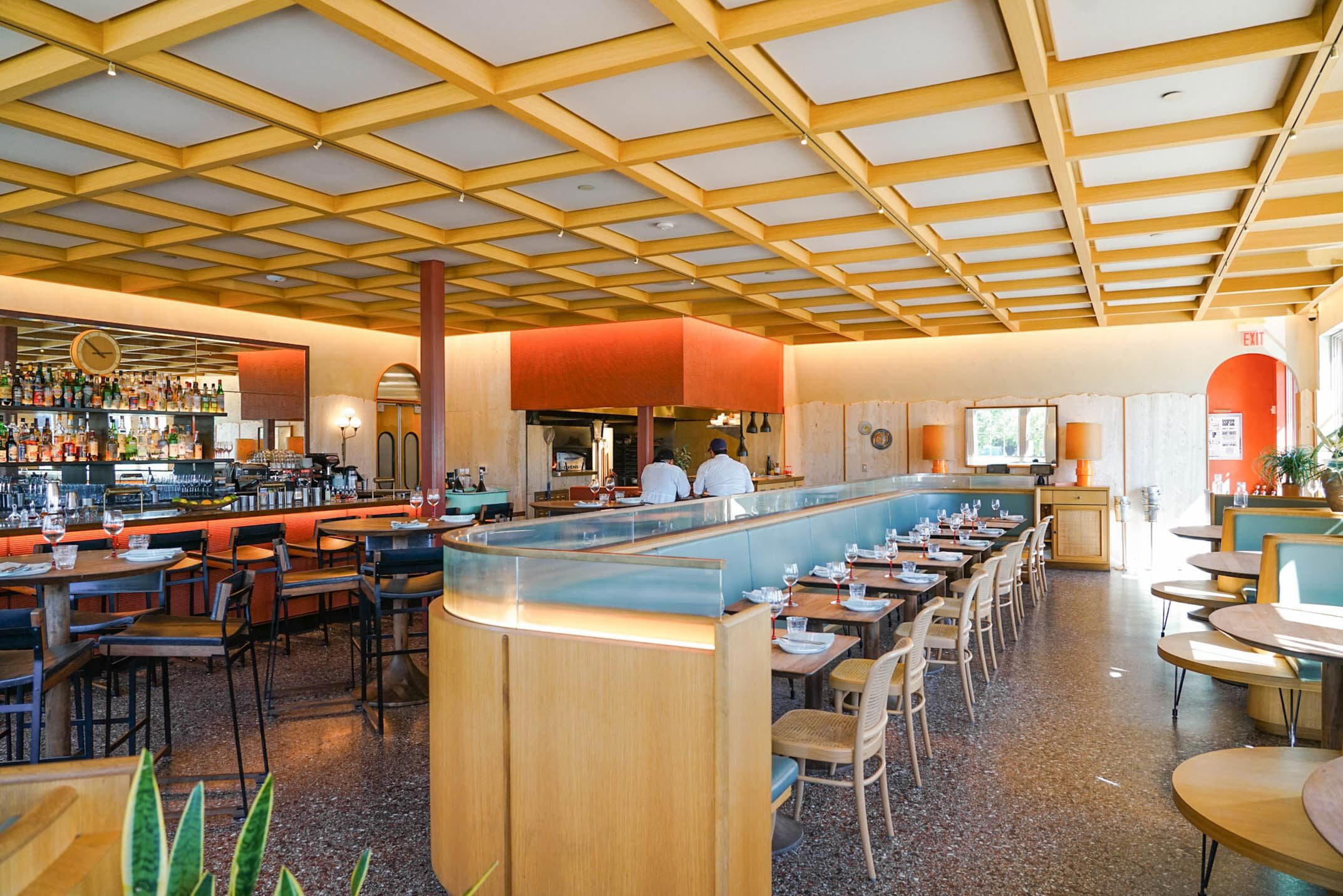
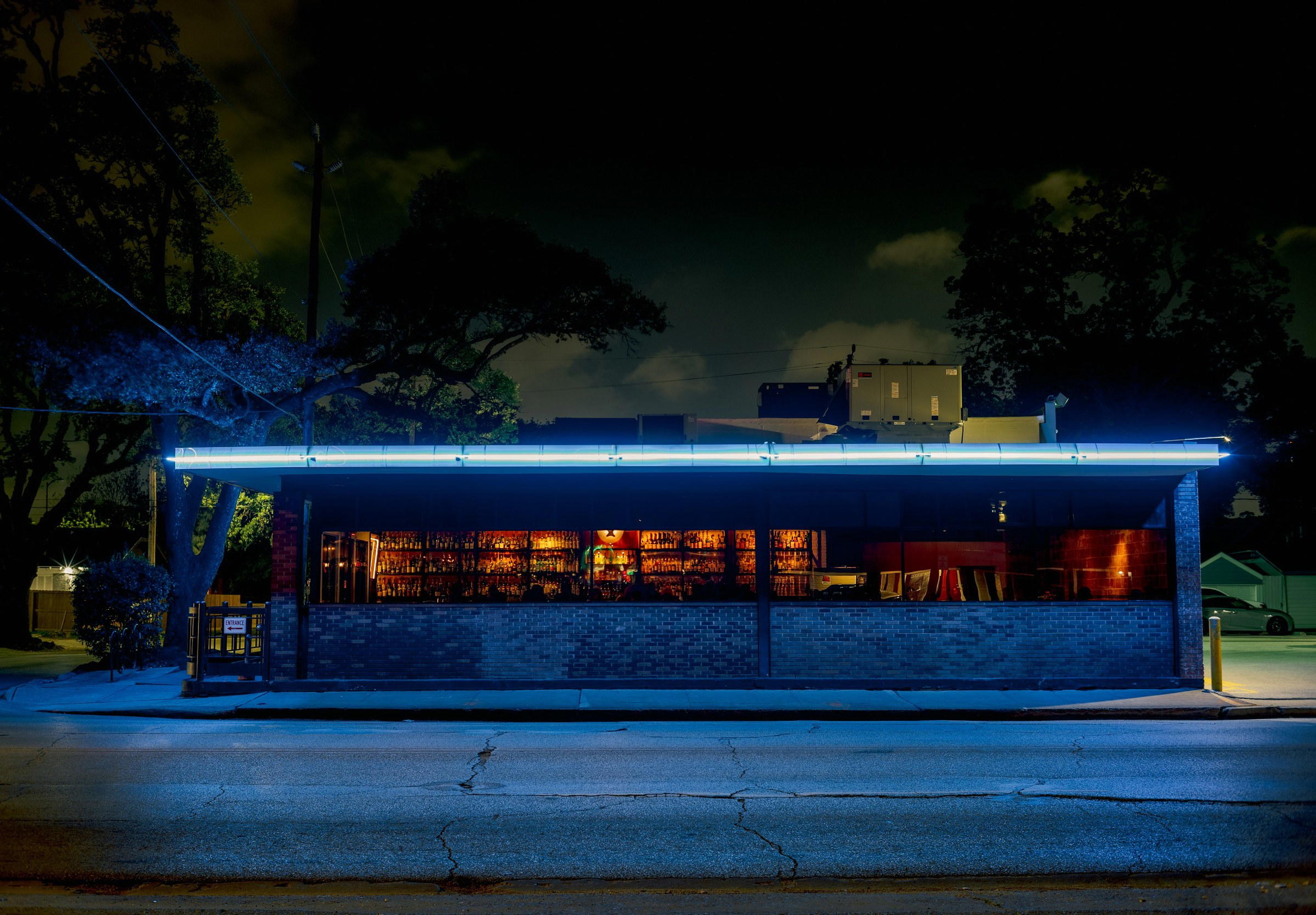
Lively and welcoming with lush plants, intimate booths, full-service bar, and lush patio creating a casual yet refined atmosphere.