
1 Michelin Star · We're Smart World 2 Radishes · Gault & Millau Remarkable Restaurant
Our verdict
A Michelin-starred table in the 16th arrondissement where Lebanese heritage and classical French technique intersect with precision and colour. Alan Geaam holds a Michelin star (2024–2025) and an Opinionated About Dining ranking of #402 in Europe, placing it in a distinct tier among Paris's creative kitchens. The €€€€ price point reflects the ambition of the cooking.

Pearl is the En Primeur Club membership app, where members save venues, book tables and use the concierge.
The menu
What to order
- Langoustine Royale
- Pigeon de Racan
- La Carotte
A Quiet Street in the 16th, and a Kitchen That Has Something to Say
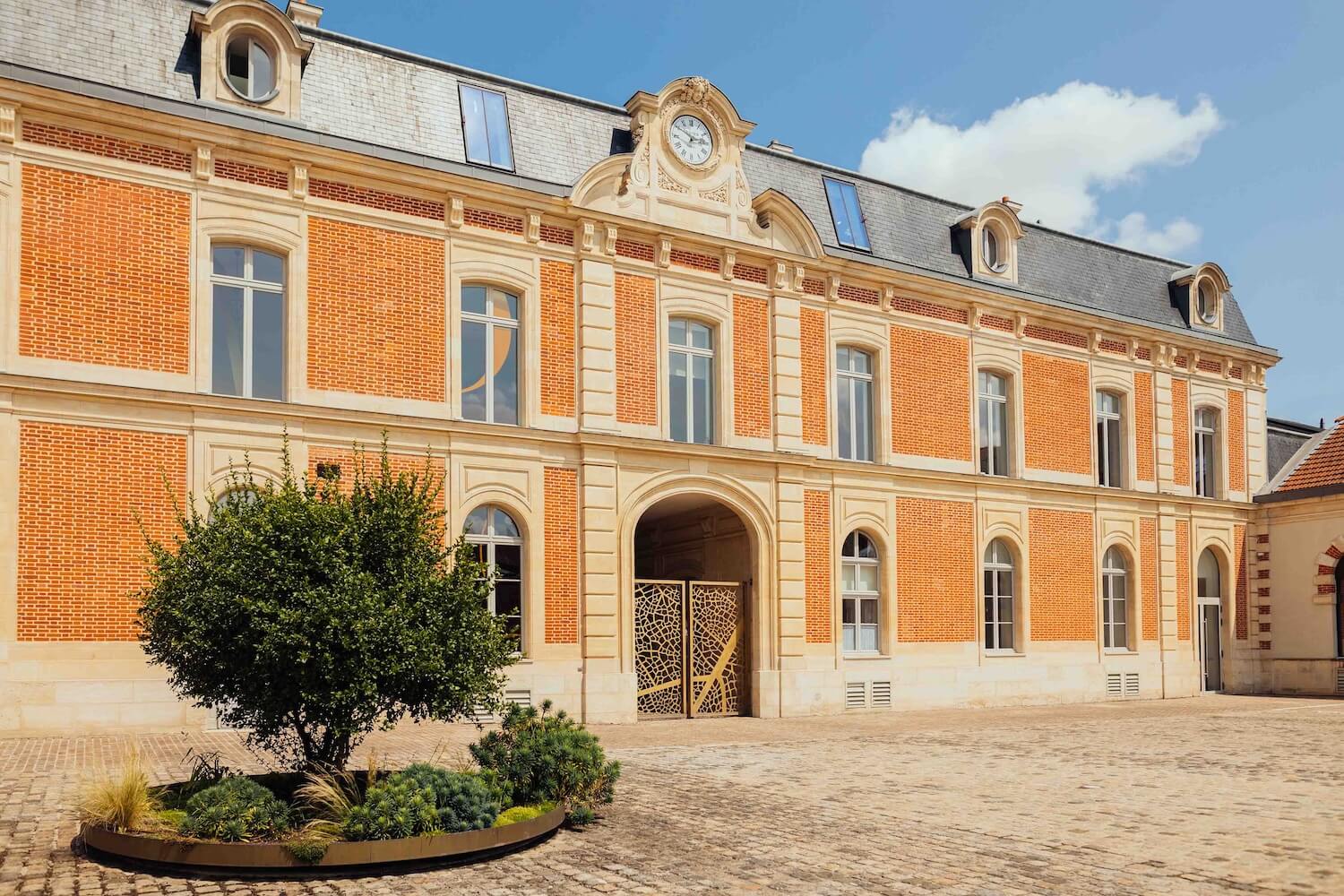
Rue Lauriston runs through the residential heart of the 16th arrondissement, a neighbourhood more associated with old-money discretion than culinary provocation. The building at number 19 offers little in the way of spectacle from the pavement. That restraint at the threshold is, in a sense, the point: what Paris's creative fine dining scene has increasingly demonstrated over the past decade is that the loudest rooms rarely produce the most considered food. Alan Geaam sits in a different category, a single Michelin star retained across 2024 and 2025, an Opinionated About Dining (OAD) European ranking of #402 in 2025 under the classification 'Remarkable', and a culinary grammar that has no direct parallel in the city's upper tier.
Lebanese Heritage Inside a French Framework
The broader creative fine dining conversation in Paris has long been dominated by chefs working through either classical French inheritance or a clearly defined immigrant tradition, rarely both simultaneously, and rarely in a way that resists easy categorisation. What distinguishes this table is the degree to which Lebanese ingredients and flavour logic are processed through French technique rather than simply presented alongside it. The OAD citation notes that Alan Geaam has no equal in the way the products of his Lebanese background are incorporated with both culinary and creative intent. That framing matters: it positions the kitchen not as a fusion exercise but as a specific authorial point of view, one that has earned institutional recognition in two consecutive Michelin cycles.
Among Paris's roster of creative restaurants at the €€€€ tier, this is a relatively rare positioning. Venues such as Alléno Paris au Pavillon Ledoyen operate at multi-star level through a framework of technical maximalism; Arpège anchors its identity in the vegetable garden; Le Gabriel at La Réserve Paris works through luxury hotel conventions. Alan Geaam occupies a separate lane: chef-owned, neighbourhood-scaled, and built on a culinary heritage that French gastronomy does not have a pre-existing template for.
The Cooking: Colour, Composition, and a Documented Dessert
The OAD citation describes the dishes as works of art, colourful, considered, built on combinations that reflect sustained creative effort. In the context of Paris's creative tier, that language signals a kitchen operating through visual intelligence as well as flavour logic, which is a specific kind of discipline. A plate that reads as a composition requires the chef to make simultaneous decisions about colour balance, geometric form, and taste architecture, and to hold all three accountable to each other. That approach is distinct from, say, the ingredient-purity model at Arpège or the sauce-centred classicism at Le Meurice Alain Ducasse.
The dessert programme carries a specific credential: a third-place finish in the Championnat de France de Desserts, a national competition with documented results. In a city where pastry credentials are taken seriously as a signal of overall kitchen rigour, that result is worth noting as a marker of where the sweet courses sit in the meal's hierarchy. It is not incidental detail, it suggests a kitchen where the full arc of the menu, from savoury to sweet, is held to the same standard of invention.
For those following creative fine dining outside Paris, the positioning here has parallels at venues like Enrico Bartolini in Milan and JAN in Munich, where individual culinary voices operate within European fine dining structures without defaulting to national culinary templates. The comparison is structural, not stylistic, each kitchen has built an identity around a singular perspective rather than a genre.
Where It Sits in the Paris Fine Dining Map
Paris's Michelin-starred creative tier in 2025 spans a wide range of formats, price points, and culinary philosophies. At the upper end, venues accumulating multiple stars, Alléno Paris, Le Meurice, operate through institutional scale and decades of accumulated reputation. The single-star tier is more varied: it includes kitchens in early ambition phases, kitchens consolidating an established voice, and kitchens that have been recognised and are deliberately not expanding. Alan Geaam, with two consecutive Michelin star cycles and an OAD 'Remarkable' classification, falls into the third category, a stable, legible identity rather than a kitchen in flux.
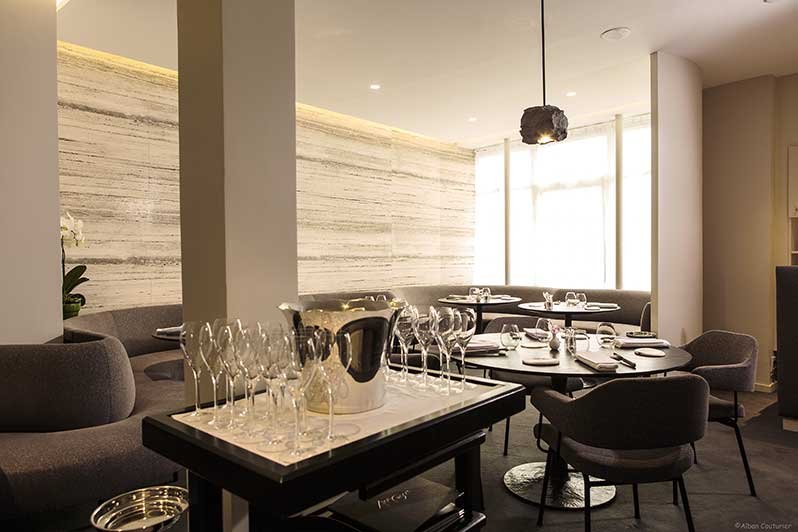
The 16th arrondissement location is not accidental in this context. The neighbourhood's residential character and relative distance from the tourist-heavy dining circuits of the 1st, 6th, and 8th mean that the table draws a locally aware clientele rather than a transient luxury audience. That dynamic tends to produce a different kind of dining room energy: more conversational, less performative. For a kitchen making the kind of food described in the OAD citation, detailed, personal, visually demanding, that environment is appropriate.
France's Creative Fine Dining in a Wider Frame
One useful way to read Alan Geaam's position is through what French fine dining has historically struggled to accommodate: cooking that draws from non-European culinary traditions at the highest technical level. The country's gastronomic identity, built through institutions from Paul Bocuse's Auberge du Pont de Collonges to Auberge de l'Ill to Troisgros, has tended to reward mastery of an inherited canon. Chefs who have introduced new geographic vocabularies, such as Mauro Colagreco at Mirazur in Menton or Emmanuel Renaut at Flocons de Sel in Megève, have done so by building new frameworks rather than inserting foreign elements into existing ones.
Alan Geaam's approach as documented belongs to that pattern. Lebanese produce and flavour logic do not appear as embellishment here; they constitute the structural basis of the cooking, processed through technique rigorous enough to sustain Michelin recognition across multiple years. In that sense, the kitchen contributes to a gradual widening of what French creative fine dining can look like, not by argument but by result. The same kind of structural expansion is visible across European creative cooking at venues like Bras in Laguiole, where regional identity was built into a form that French gastronomy eventually had to acknowledge on its own terms.
Planning a Visit
The restaurant is located at 19 Rue Lauriston, 75016 Paris, in a section of the 16th that is easily reached from the Trocadéro and Kléber metro stations. For those planning a broader Paris trip around the dining programme, our Paris hotels guide, bars guide, and experiences guide provide context for building the full visit.
The wine programme is not separately documented in available data, but the Paris wineries guide offers context on the broader natural and fine wine scene in the city for those who like to research pairings independently before booking.
Frequently asked questions
Who is the chef or culinary lead at Alan Geaam?
The chef associated with Alan Geaam is Alan Geaam.
Where do I go for Alan Geaam?
Alan Geaam is located at 19 Rue Lauriston, 75016 Paris, France, Paris.
What's the signature dish at Alan Geaam?
No single dish carries an official signature designation in documented sources. The kitchen is recognised by OAD for colourful, composition-driven plates that draw on Lebanese ingredients within a French fine dining structure. One verifiable marker is Alan Geaam's third-place finish at the Championnat de France de Desserts, which positions the dessert course as a particular point of focus. The Michelin star, held consecutively in 2024 and 2025, confirms the cooking's consistency across the menu as a whole.
What type of food is Alan Geaam known for?
What's the pricing like at Alan Geaam?
Pricing at Alan Geaam is listed as €€€€.
What awards or recognition does Alan Geaam have?
Alan Geaam has received recognition including: The dishes of Alan Geaam are real works of art, they are colourful and tasteful and are full of attractive combinations that have been put together with a lot of creativity. The icing on the cake is... a cake, or the dessert that made Alan….
Cuisine Lens
| Venue | Cuisine | Price | Awards | Notes |
|---|---|---|---|---|
| Alan GeaamThis venue (the venue you are viewing) | French-Lebanese Fusion Fine Dining | $50–100 | 1 Michelin Star · We're Smart World 2 Radishes | Not listed |
| Alléno Paris au Pavillon Ledoyen | Modern French Fine Dining | $150–200 | 3 Michelin Stars · World's 50 Best #79 | Creative |
| Kei | Modern French with Japanese Influences | $300–500 | 3 Michelin Stars · World's 50 Best #93 | Contemporary French, Modern Cuisine |
| L'Ambroisie | Classic French Haute Cuisine | $300–500 | 2 Michelin Stars · World's 50 Best #23 | French, Classic Cuisine |
| Le Cinq - Four Seasons Hôtel George V | Modern French Fine Dining | $300–500 | 3 Michelin Stars · World's 50 Best #24 | French, Modern Cuisine |
| Plénitude | Modern French Sauce-Led Fine Dining | $300–500 | 3 Michelin Stars · World's 50 Best #14 | Contemporary French |
Recognition history
Dated appearances from independent guides and award organizations, with the underlying list record or original source where available.
Michelin 1 Star
Michelin
Gault & Millau Remarkable Restaurant
Gault & Millau
Opinionated About Dining Classical in Europe Ranked #402
Opinionated About Dining
We're Smart World 2 Radishes
We're Smart World
Full recognition history (6 entries)
Michelin 1 Star
Michelin
Michelin 1 Star
Michelin