18 Monroe Street Market
Our verdict
A Market Format in Orlando's Most Transient Dining Zone Universal Boulevard runs through one of Orlando's densest concentrations of hotels, convention facilities, and tourist infrastructure. Dining here has historically defaulted to volume: large-format restaurants engineered for throughput, chain outposts, and hotel dining rooms that prioritize convenience over distinction. Against that backdrop, market-style venues have been carving out a different position, one where multiple food concepts share a single physical footprint and guests self-select based on what they want rather than committing to a single kitchen's entire menu. 18 Monroe Street Market, at 9939 Universal Blvd, sits inside this shift. The food-hall and market format has matured considerably across American cities over the past decade. Early iterations leaned heavily on the real estate logic: aggregate foot traffic, reduce individual operator risk, fill a large floor plate. The more considered versions that followed put sourcing closer to the front of the proposition. At operations where ingredient provenance shapes the vendor mix, the market format stops being purely a logistics play and becomes something closer to an editorial statement about where food should come from and how it should be prepared. Whether 18 Monroe Street Market operates at the sourcing-forward end of that spectrum is worth examining in the context of what Orlando's dining tier already offers. Ingredient Sourcing and the Market Format's Defining Logic The strongest argument for a market-style venue in any city is that it can concentrate sourcing relationships that individual restaurants spread across separate supply chains. A butcher vendor, a produce stall, and a prepared-food counter sharing a single space can, in principle, draw from the same regional farms and distributors, creating a coherent ingredient story rather than a collection of unrelated menus. Florida's agricultural base supports that kind of ambition: the state produces significant volumes of citrus, tomatoes, leafy greens, and seafood that don't require long supply chains to reach a kitchen in Orlando. This matters because Orlando's premium dining tier has been developing in exactly that direction. Restaurants like Kadence and Sorekara operate with tight, focused menus where sourcing decisions are visible in the finished dish. Camille takes a similarly considered approach within its Vietnamese framework. These venues signal that Orlando diners are increasingly comfortable with the idea that ingredient origin is part of the value proposition, not a marketing footnote. A market format that takes that premise seriously sits in coherent company with them, even if the price point and format are entirely different. For comparison, the farm-to-table sourcing model that venues like Blue Hill at Stone Barns in Tarrytown made into a national conversation, or that Single Thread Farm in Healdsburg has refined to an almost agricultural precision, represents the high end of sourcing-as-identity dining. Closer to the mid-market register, the logic still holds: knowing where produce, proteins, and dairy originate from changes how a vendor or kitchen makes purchasing decisions and, by extension, what ends up on the counter. Where 18 Monroe Street Market Sits in Orlando's Dining Map Orlando's dining scene has a structural split that shapes how any venue in the city should be read. On one side: the destination-dining tier, where Capa's steakhouse program and Natsu's Japanese counter operate at price points and reservation disciplines closer to what you'd find in Chicago or New York than in a typical tourist corridor. On the other side: high-volume operations designed to absorb the attendance figures that theme park and convention traffic generates. A market format occupies a third lane, accessible in price and format while still capable of prioritizing quality if the operator mix supports it. That third lane is where venues like 18 Monroe Street Market become relevant to a broader discussion about American market dining. Operations such as Smyth in Chicago or Providence in Los Angeles represent the fine-dining anchor of their respective cities' food cultures. Markets and halls serve a different but not lesser function: they democratize access to considered food in high-traffic areas where a tasting-menu counter would be impractical. In cities like New Orleans, venues such as Emeril's proved that serious culinary identity could coexist with significant volume. The question for any market format is whether that identity is present at the stall level, not just in the concept pitch. For travelers using the International Drive corridor as a base, the positioning of 18 Monroe Street Market within walking or short-drive distance of major hotel infrastructure makes it a practical option for meals that don't require a reservation or a commitment to a single cuisine. That practical accessibility is itself a form of editorial logic in a city where dining decisions are often made quickly, by groups with divergent preferences, and under time pressure from park schedules and convention agendas. Planning a Visit The address at 9939 Universal Blvd places 18 Monroe Street Market within the International Drive zone, a corridor well-served by the I-Ride Trolley and accessible from most major Orlando hotel clusters without requiring a car. For visitors staying near the theme parks or the Orange County Convention Center, this is a realistic walk-in option rather than a destination that requires dedicated travel planning. Given the market format, timing is flexible in a way that single-seating tasting menus are not. Phone and hours information is not currently listed, so confirming operating days directly before visiting is advisable. The venue has no published dress code, which aligns with the casual accessibility the market format implies. For travelers whose Orlando visit includes finer dining appointments, the city's premium tier extends well beyond the tourist corridor. Our full Orlando restaurants guide maps the full range, from high-commitment omakase to the hotel dining rooms that have outgrown their lobby-restaurant reputations. For context on how Orlando compares to other American cities where sourcing-driven dining has become a structural feature of the food scene, venues like Addison in San Diego, The Inn at Little Washington, or Le Bernardin in New York illustrate how seriously ingredient sourcing can be taken when it becomes the organizing principle of a kitchen's entire operation. The market format sets different ambitions, but the underlying logic, that what arrives at the back door determines what's possible at the front counter, is the same. Frequently Asked Questions Is 18 Monroe Street Market good for families?In an Orlando tourist corridor where most sit-down restaurants calibrate to tourist pricing, a market format is a practical family option: multiple counters mean divergent preferences get resolved without ordering arguments, and the casual format removes the formality pressure that makes young children difficult in tighter dining rooms.Is 18 Monroe Street Market formal or casual?No dress code is listed, and the market format throughout Orlando and other American cities runs consistently casual. If you are arriving directly from a theme park, you will not be out of place. Visitors looking for a more formal setting in the same city can reference the destination-tier operations in our Orlando guide, some of which do carry dress expectations.What do people recommend at 18 Monroe Street Market? Rather than speculating on specific items, the more reliable approach is to assess the vendor mix on arrival: in a market format, the stalls with the shortest supply chains and most visible ingredient sourcing tend to produce the most consistent results, a pattern that holds across comparable formats in cities from Chicago to San Francisco.How does 18 Monroe Street Market compare to other food-hall concepts in the Orlando area?Orlando's food-hall tier is still developing relative to cities like New York or San Francisco, where market formats have had longer to mature and stratify. Within the International Drive zone specifically, large-volume dining options dominate, which means a market format that prioritizes vendor quality over sheer seat count occupies a distinct position. No awards or external ratings data are currently published for 18 Monroe Street Market, so the most useful benchmark remains direct comparison with the vendor standards visible on the day of your visit.

Pearl is the En Primeur Club membership app — saves, bookings, and concierge access live there. Same editors, same standards.
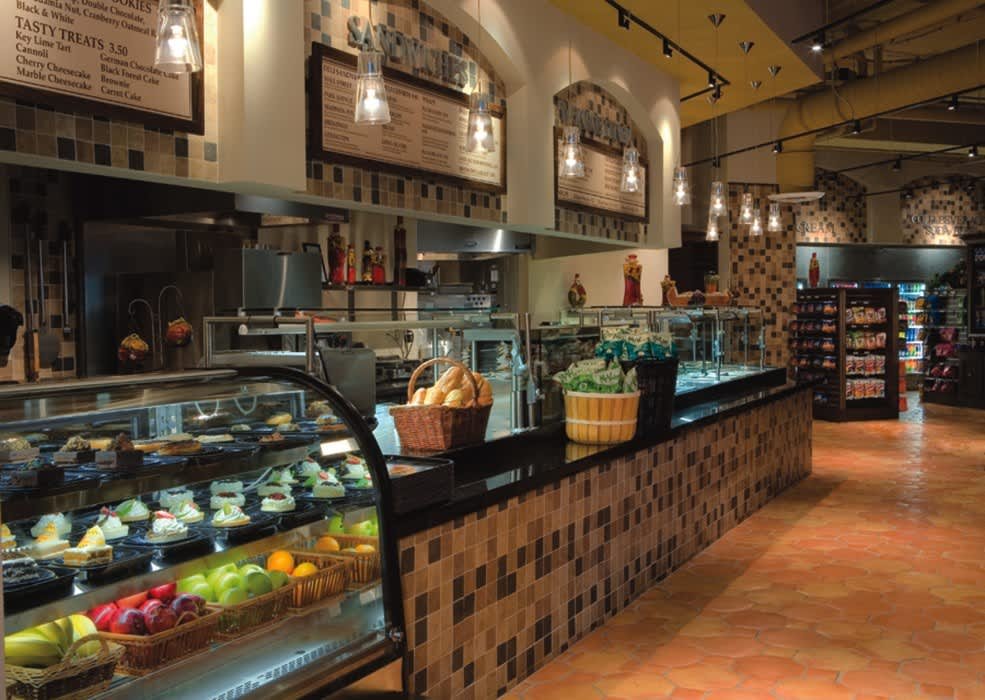
The menu
What to order
- Wall Street Sandwich
- Rosen’s Well-suited Pizza
- Italian Hoagie
A Market Format in Orlando's Most Transient Dining Zone
Universal Boulevard runs through one of Orlando's densest concentrations of hotels, convention facilities, and tourist infrastructure. Dining here has historically defaulted to volume: large-format restaurants engineered for throughput, chain outposts, and hotel dining rooms that prioritize convenience over distinction. Against that backdrop, market-style venues have been carving out a different position, one where multiple food concepts share a single physical footprint and guests self-select based on what they want rather than committing to a single kitchen's entire menu. 18 Monroe Street Market, at 9939 Universal Blvd, sits inside this shift.
The food-hall and market format has matured considerably across American cities over the past decade. Early iterations leaned heavily on the real estate logic: aggregate foot traffic, reduce individual operator risk, fill a large floor plate. The more considered versions that followed put sourcing closer to the front of the proposition. At operations where ingredient provenance shapes the vendor mix, the market format stops being purely a logistics play and becomes something closer to an editorial statement about where food should come from and how it should be prepared. Whether 18 Monroe Street Market operates at the sourcing-forward end of that spectrum is worth examining in the context of what Orlando's dining tier already offers.
Ingredient Sourcing and the Market Format's Defining Logic
The strongest argument for a market-style venue in any city is that it can concentrate sourcing relationships that individual restaurants spread across separate supply chains. A butcher vendor, a produce stall, and a prepared-food counter sharing a single space can, in principle, draw from the same regional farms and distributors, creating a coherent ingredient story rather than a collection of unrelated menus. Florida's agricultural base supports that kind of ambition: the state produces significant volumes of citrus, tomatoes, leafy greens, and seafood that don't require long supply chains to reach a kitchen in Orlando.
This matters because Orlando's premium dining tier has been developing in exactly that direction. Restaurants like Kadence and Sorekara operate with tight, focused menus where sourcing decisions are visible in the finished dish. Camille takes a similarly considered approach within its Vietnamese framework. These venues signal that Orlando diners are increasingly comfortable with the idea that ingredient origin is part of the value proposition, not a marketing footnote. A market format that takes that premise seriously sits in coherent company with them, even if the price point and format are entirely different.
For comparison, the farm-to-table sourcing model that venues like Blue Hill at Stone Barns in Tarrytown made into a national conversation, or that Single Thread Farm in Healdsburg has refined to an almost agricultural precision, represents the high end of sourcing-as-identity dining. Closer to the mid-market register, the logic still holds: knowing where produce, proteins, and dairy originate from changes how a vendor or kitchen makes purchasing decisions and, by extension, what ends up on the counter.
Where 18 Monroe Street Market Sits in Orlando's Dining Map
Orlando's dining scene has a structural split that shapes how any venue in the city should be read. On one side: the destination-dining tier, where Capa's steakhouse program and Natsu's Japanese counter operate at price points and reservation disciplines closer to what you'd find in Chicago or New York than in a typical tourist corridor. On the other side: high-volume operations designed to absorb the attendance figures that theme park and convention traffic generates. A market format occupies a third lane, accessible in price and format while still capable of prioritizing quality if the operator mix supports it.
That third lane is where venues like 18 Monroe Street Market become relevant to a broader discussion about American market dining. Operations such as Smyth in Chicago or Providence in Los Angeles represent the fine-dining anchor of their respective cities' food cultures. Markets and halls serve a different but not lesser function: they democratize access to considered food in high-traffic areas where a tasting-menu counter would be impractical. In cities like New Orleans, venues such as Emeril's proved that serious culinary identity could coexist with significant volume. The question for any market format is whether that identity is present at the stall level, not just in the concept pitch.
For travelers using the International Drive corridor as a base, the positioning of 18 Monroe Street Market within walking or short-drive distance of major hotel infrastructure makes it a practical option for meals that don't require a reservation or a commitment to a single cuisine. That practical accessibility is itself a form of editorial logic in a city where dining decisions are often made quickly, by groups with divergent preferences, and under time pressure from park schedules and convention agendas.
Planning a Visit
The address at 9939 Universal Blvd places 18 Monroe Street Market within the International Drive zone, a corridor well-served by the I-Ride Trolley and accessible from most major Orlando hotel clusters without requiring a car. For visitors staying near the theme parks or the Orange County Convention Center, this is a realistic walk-in option rather than a destination that requires dedicated travel planning. Given the market format, timing is flexible in a way that single-seating tasting menus are not. Phone and hours information is not currently listed, so confirming operating days directly before visiting is advisable. The venue has no published dress code, which aligns with the casual accessibility the market format implies.
For travelers whose Orlando visit includes finer dining appointments, the city's premium tier extends well beyond the tourist corridor. Our full Orlando restaurants guide maps the full range, from high-commitment omakase to the hotel dining rooms that have outgrown their lobby-restaurant reputations. For context on how Orlando compares to other American cities where sourcing-driven dining has become a structural feature of the food scene, venues like Addison in San Diego, The Inn at Little Washington, or Le Bernardin in New York illustrate how seriously ingredient sourcing can be taken when it becomes the organizing principle of a kitchen's entire operation. The market format sets different ambitions, but the underlying logic, that what arrives at the back door determines what's possible at the front counter, is the same.
Frequently asked questions
Is 18 Monroe Street Market good for families?
Is 18 Monroe Street Market formal or casual?
What do people recommend at 18 Monroe Street Market?
How does 18 Monroe Street Market compare to other food-hall concepts in the Orlando area?
Continue exploring
More in Orlando
Restaurants in Orlando
All restaurants in Orlando →
Bars in Orlando
All bars in Orlando →

Details
- Casual
- Cozy
- Casual Hangout
- Late Night
- Family
- Hotel Restaurant
- A La Carte
- Vegetarian Friendly
- Gluten Free Options
Current opening hours
- Monday
- Open 24 hours
- Tuesday
- Open 24 hours
- Wednesday
- Open 24 hours
- Thursday
- Open 24 hours
- Friday
- Open 24 hours
- Saturday
- Open 24 hours
- Sunday
- Open 24 hours
Hours can change for holidays and private events. Last verified .
Casual, convenient hotel market with a welcoming atmosphere for quick bites anytime.