VISTA VERDE


USA Today Best Ranches Best Ranches #19 · Top 50 Ranches
Vista Verde Ranch sits on thousands of acres north of Steamboat Springs, Colorado, where the working-ranch format meets AAA Four-Diamond amenities. Private cabins with hot tubs, gourmet dining, and a herd of 100 horses define its offering. It occupies a specific niche in American luxury hospitality: immersive ranching life without sacrificing comfort.

Pearl is the En Primeur Club membership app, where members save venues, book tables and use the concierge.
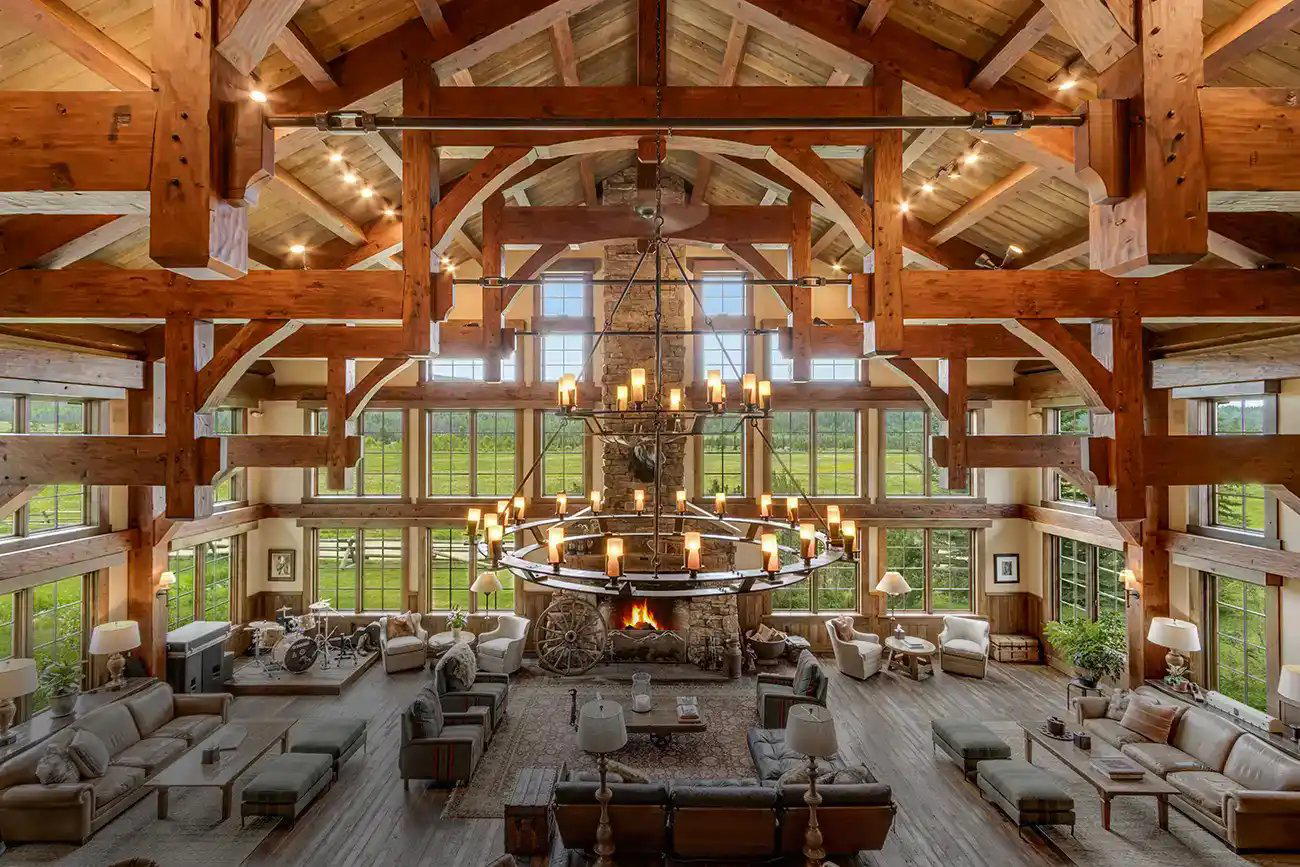
Where the Working Ranch Meets the Four-Diamond Standard
The approach to Vista Verde sets expectations immediately. Arriving via Cowboy Way outside Clark, Colorado, guests pass through open ranchland north of Steamboat Springs before the property reveals itself: a cluster of private cabins spread across thousands of acres of high-country terrain, framed by the Elk River Valley and the Mount Zirkel Wilderness beyond. This is not a resort that happens to have a horse paddock. The ranch runs a herd of 100 horses and grounds its programming in the rhythms of actual ranching life, from cattle drives to horsemanship clinics conducted with the seriousness of a working operation.
The physical setting does most of the architectural work here. The range of northwestern Colorado operates at a scale that renders interior design choices secondary, and Vista Verde leans into that logic rather than competing with it. Cabin construction follows the regional vernacular: timber framing, natural materials, and proportions calibrated to feel significant without overwhelming the surroundings. The hot tubs attached to private cabins are less an amenity flourish than a pragmatic response to the elevation and the temperature swings that define four-season ranching country. After a full day on horseback, that distinction matters.
The Cabin Tier and What It Signals
Across the American luxury ranch category, the design conversation increasingly centers on what level of comfort the property is willing to offer without compromising the authenticity of the experience. Properties at the lower end of the price tier tend to use shared facilities and communal sleeping arrangements that read more as dude ranch than resort. Vista Verde positions itself differently. Its AAA Four-Diamond rating places it in a small peer group of ranch properties that have committed to private accommodation with hotel-grade amenities while keeping the experiential programming firmly rooted in the land. The cabins here function as the equivalent of a luxury hotel's rooms: the baseline is comfort and privacy, and the activity program is layered on leading rather than baked into shared infrastructure.
That model has parallels in other landscape-driven properties across the American West. Amangani in Jackson Hole deploys a similar logic in Wyoming, where architecture and landscape are treated as a single composition. Amangiri in Canyon Point takes the approach furthest, with a design program built explicitly around the Utah desert's geometry. Vista Verde operates with less architectural ambition in the design sense, but its commitment to the ranch vernacular as a genuine organizing principle rather than aesthetic decoration gives it a coherence that properties playing at Western atmosphere rarely achieve.
Gourmet Dining in a Ranch Context
Ranch hospitality in the United States has historically separated into two tracks: the working ranch where food is fuel, and the resort property where dining is the main event. Vista Verde occupies a middle position that has become more common at the upper end of the category. Gourmet dining is listed among the property's core amenities, positioning the kitchen as a serious component of the guest experience rather than a logistical necessity. This matters for how guests plan their stay: at this tier of ranch property, meals function as structured anchors around which the outdoor program rotates, comparable to the dining rhythm at places like Blackberry Farm in Walland, where the kitchen and the land operate in visible conversation.
The broader trend driving this in American destination hospitality is the convergence of farm-to-table sourcing with experiential accommodation. Properties that once separated dining from activity programming have recognized that guests at the Four-Diamond tier expect both to be handled with equal seriousness. Vista Verde's setting, with its working ranch infrastructure and access to Colorado's agricultural networks, provides the raw material for that kind of kitchen ambition.
The Ranch as Architectural Concept
It is worth understanding Vista Verde less as a hotel that happens to occupy ranch land and more as an argument that the ranch format itself is an architectural idea. The distribution of private cabins across thousands of acres is a spatial decision with real consequences for how guests experience the property. Unlike a hotel where rooms concentrate around a central lobby, the dispersed cabin model means that the land between structures becomes part of the guest experience. Walking between dinner and your cabin, you are moving through the ranch, not through a corridor. The 100 horses are not background scenery; they are infrastructure.
This approach has clear comparators in the landscape-hotel category. Ambiente in Sedona frames itself explicitly as a landscape hotel, with architecture that responds to topography. Post Ranch Inn in Big Sur uses the cliff edge as a structural condition rather than a view. Vista Verde's version of this thinking is less visually dramatic but arguably more immersive: the ranch is the building, and the cabins are its rooms.
Planning Your Stay
Vista Verde Ranch is located at 58000 Cowboy Way in Clark, Colorado, a small community north of Steamboat Springs in Routt County. Clark sits at elevation, and the mountain climate means that timing affects what the property can offer: summer programming typically includes the full range of riding and cattle work, while winter shifts toward snowshoeing, cross-country skiing, and sleigh rides across the same terrain. Guests traveling from major cities will typically fly into Steamboat Springs' Yampa Valley Regional Airport or Denver International, with Steamboat Springs offering the shorter ground transfer. For those comparing high-end American ranch options, Sage Lodge in Pray operates on similar design principles in Montana's Paradise Valley, while Alpine Falls Ranch in Superior represents the Montana alternative at the luxury tier. Within the wider American luxury resort conversation, properties like Canyon Ranch Tucson and Bernardus Lodge in Carmel Valley serve different terrain but share the same commitment to pairing serious amenity programming with a specific landscape identity. For EP Club's broader context on Colorado's hospitality scene, see our full Clark guide.
At-a-Glance Comparison
Comparable venues nearby, for context on price, style, and recognition.
| Venue | Cuisine | Price | Awards | Notes |
|---|---|---|---|---|
| VISTA VERDEThis venue (the venue you are viewing) | luxury guest ranch with secluded log cabins | Not listed | USA Today Best Ranches Best Ranches #19 · Top 50 Ranches | Not listed |
| W Aspen | modern Swiss chalet with playful Aspen history influences | $300–500 | Michelin Selected | Aspen Village |
| The Ritz-Carlton, Bachelor Gulch | Modern mountain lodge with rustic elegance and contemporary updates | Not listed | Michelin Selected · Star Wine List | Bachelor Gulch |
| The Art Hotel Denver, Curio Collection | Art-focused boutique hotel in Denver's arts district | $100–200 | Michelin Selected · Conde Nast Best Hotels #31 | Civic Center |
| Aspen Meadows Resort | Bauhaus-inspired resort blending art, nature, and modern comfort on 40 scenic acres. | $300–500 | Preferred Hotels Member | Aspen Flyover 1/4 Section Grid |
| Hotel Teatro | Historic preservation meets contemporary luxury; a restored 1911 landmark reimagined as a modern boutique hotel with theatrical design references throughout. | $200–300 | Michelin Selected | Central Business District |
Recognition history
Dated appearances from independent guides and award organizations, with the underlying list record or original source where available.
Top 50 Ranches
Top 50 Ranches
USA Today Best Ranches Best Ranches #19
USA Today Best Ranches
Continue exploring
More in Clark
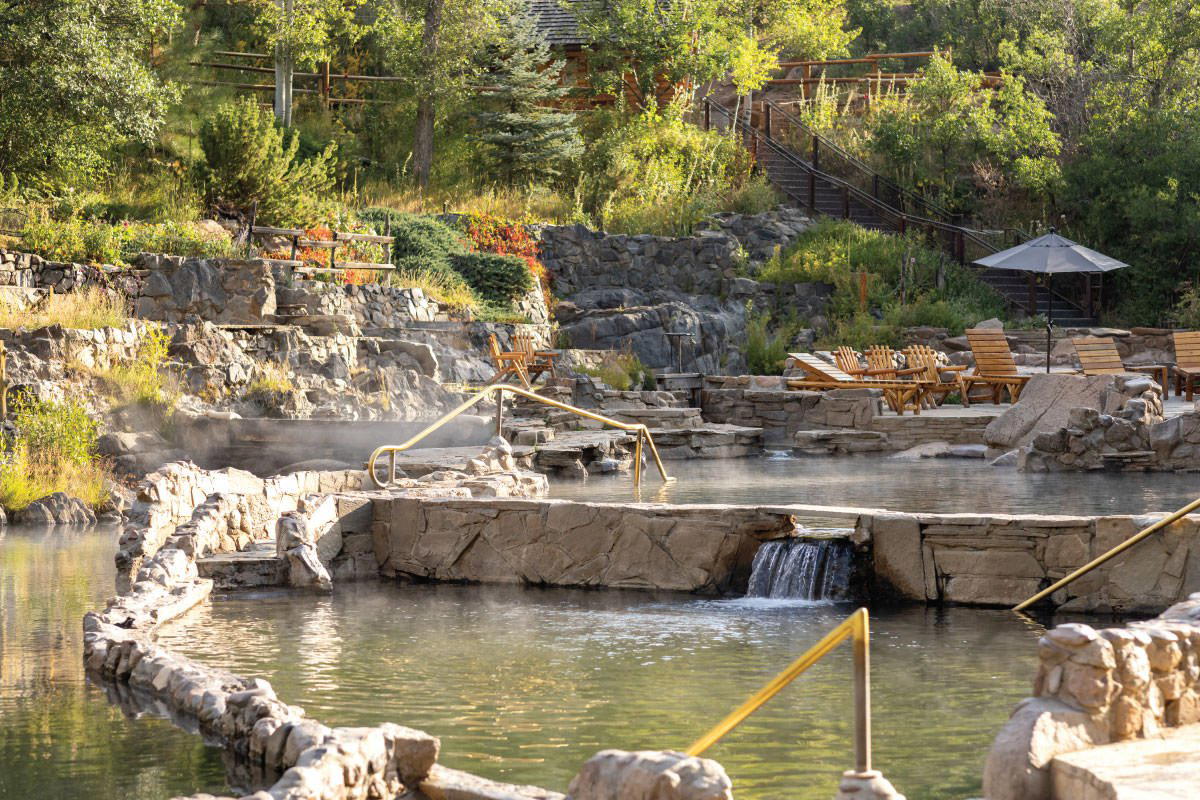
Details
- Rustic
- Scenic
- Cozy
- Romantic
- Romantic Getaway
- Wellness Retreat
- Group Retreat
- Panoramic View
- Wi Fi
- Pool
- Fitness Center
- Spa
- Concierge
- Airport Transfer
- Mountain
Cozy and relaxing with wood-burning fireplaces, luxurious linens, and peaceful mountain surroundings highlighted in guest reviews.