The Ritz-Carlton, Half Moon Bay



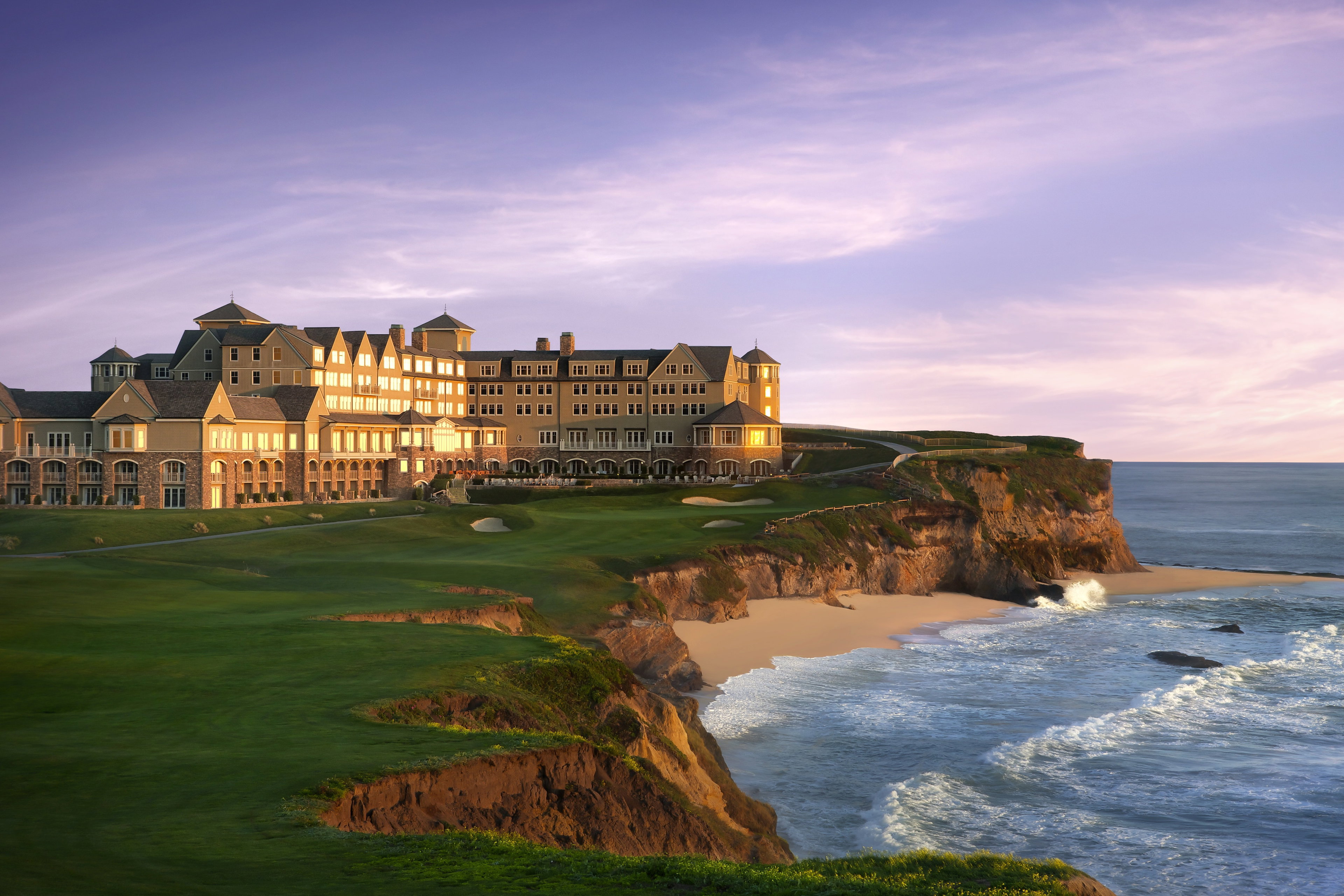
Perched on a bluff above the Pacific roughly 40 minutes south of San Francisco International Airport, The Ritz-Carlton, Half Moon Bay pairs two championship golf courses with a coastal spa and a dining program rooted in sustainably sourced Northern California seafood. The property earned 93 points in the 2026 La Liste Top Hotels ranking and holds 239 guest rooms and 22 suites across a cliff-top setting shaped by the rhythms of the NorCal coast.
A Coastline That Sets the Terms
The stretch of Pacific Coast Highway south of San Francisco is one of California's more demanding drives in the leading possible sense: fog banks that roll in without warning, surf that crashes against sandstone bluffs, and a light that shifts from silver to amber in the hour before dusk. The Ritz-Carlton, Half Moon Bay sits at the end of that drive, on a promontory above the water at 1 Miramontes Point Road, where the architecture and interior palette have been calibrated to the environment rather than imposed upon it. Silvery grays, soft whites, and slate tones echo the ocean surface in every season; surfing and water photography on the walls reinforces the property's relationship to its site. This is a resort that treats its coastline as the primary design document.
That orientation matters for guests deciding between a Half Moon Bay stay and the more urban alternatives in the city proper. Properties like the Four Seasons Hotel San Francisco at Embarcadero or the Fairmont San Francisco are embedded in the city's financial and civic architecture. Half Moon Bay operates on a different premise entirely: the Pacific is the programme. For guests who want San Francisco's dining and cultural infrastructure, the city hotels make more sense. For guests whose goal is coastal immersion with full-service luxury, the Ritz-Carlton's bluff-leading position is the point of the whole exercise. It earned 93 points in the 2026 La Liste Leading Hotels ranking, placing it in the tier of North American resort properties that draw destination travelers rather than business transients.
Where the Food Comes From
Northern California's coastline produces some of the most closely tracked seafood in the American premium dining market. Dungeness crab seasons, Pacific halibut availability, and wild salmon runs are calendar events that chefs in the region build menus around rather than supplement with. At The Ritz-Carlton, Half Moon Bay, the dining program is structured around sustainable seafood, a framing that reflects both the property's geographic position and the broader sourcing standards that have become baseline expectations in the NorCal fine dining market over the past decade.
The European-inflected culinary approach, shaped by the kitchen's Scandinavian executive chef background, sits within a tradition that has long found productive tension between local California abundance and continental technique. Scandinavian cooking at its foundation is also coastal, also seasonal, also built on restraint and the quality of the underlying ingredient rather than elaboration. That convergence makes the Half Moon Bay setting a logical one: the Pacific supplies what the technique requires. Guests who have eaten at places like Auberge du Soleil in Napa, where the ingredient sourcing story is similarly foregrounded, will recognize the register. The Global Cuisine Series that the property has run, bringing visiting chefs for collaborative menus, situates it within a hospitality category that treats the dining program as a draw in its own right rather than a support function for the rooms.
The Rooms and the Club Level
The property holds 239 guest rooms and 22 suites. Room design follows the same restrained coastal logic as the public spaces: gray marble, silvery water-print headboards, 400-thread-count Egyptian cotton sheets, and Asprey Purple Water toiletries in rain showers. The Carrara marble credenza, water-scented bath salts, and deep soaking tubs are practical details that compound the sensory logic of the place without relying on ornament for effect. Ground-floor terrace rooms with fire pits offer an outdoor fireside experience that functions as a distinct product within the inventory, suited to the property's frequently cool, breezy coastal evenings.
At the leading of the hierarchy, the Club Level on the fifth floor operates as a hotel-within-a-hotel. Coastal-view rooms at that tier come with access to an exclusive lounge offering breakfast and lunch service, baked goods, and a beverage program that runs from coffee through Tavel rosé to port. The model mirrors what the Hotel Bel-Air in Los Angeles and similarly positioned luxury properties use to justify a meaningful rate premium: continuous hospitality access that reduces the need to leave the floor for routine requirements. The 2,000-square-foot Ritz-Carlton Suite anchors the suite tier with two bedrooms, a walkout balcony, and an eight-seat dining room table.
Golf and the Landscape
The resort operates two courses, and the distinction between them is worth understanding before arriving with clubs. The original course, designed by Arnold Palmer and Francis Duane, follows the contours of the property itself, hugging the bluff and offering consistent Pacific views. The second, a Scottish links-style layout by Arthur Hills, is built around exposed coastal terrain and refined sightlines from every hole. The links format is a deliberate architectural reference to the tradition that produced golf as a sport, and its presence at a California coastal resort reflects how seriously the golf program is positioned. Properties like Canyon Ranch Tucson in Tucson anchor their offering in wellness programming; Half Moon Bay anchors comparably in serious sport infrastructure.
The Spa Program and Local Sourcing
The spa operates across 15 treatment rooms and draws its menu from Northern California's botanical and natural material supply chain. The Coastal Lavender Indulgence sources its aromatic element from lavender harvested at Matanzas Creek Winery in Sonoma; the Redwood Forest Ritual uses a hot poultice scrub derived from redwood forest materials. These are not marketing descriptions of vague natural origins; they are traceable sourcing links to named NorCal producers and landscapes. In the context of the broader Bay Area and wine country hospitality market, where provenance of ingredients in food and spa treatments is now a standard expectation at the top tier, the specificity of those references matters. The same sourcing logic that governs the dining program extends into the treatment rooms.
The Bagpiper and the Ritual of Arrival and Departure
Roughly 90 minutes before sunset each evening, a bagpiper in full kilt walks the perimeter of the property before ending on the 18th green to play a ceremonial close to the day. The detail functions the way daily rituals do at properties that have thought carefully about what makes guests return: it creates a shared, time-specific experience that cannot be replicated by amenities alone. Coastal luxury properties in the Pacific and Caribbean, from Kona Village, A Rosewood Resort in Kailua-Kona to Little Palm Island Resort & Spa in Little Torch Key, have developed comparable sunset-anchored programming for similar reasons: the light is the spectacle, and the ritual frames it.
Planning Your Stay
The drive from San Francisco International Airport takes approximately 40 minutes and requires a rental car, taxi, or rideshare service; there is no direct public transit connection. The journey south along Highway 1 is itself part of the Half Moon Bay experience, so building in time for the coastal road rather than treating it as a logistical inconvenience is worth doing. Pack a warm layer regardless of season: the bluff-leading position means wind and temperature drops in the early morning and after sunset even in summer, a consistent feature of this stretch of Northern California coastline. Guests not booked into the Club Level who want a stocked in-room refrigerator on arrival should call the property a few days ahead of check-in to arrange it.
For broader trip planning across the region, our full San Francisco hotels guide covers the urban alternatives in depth, and our full San Francisco restaurants guide, bars guide, wineries guide, and experiences guide cover the wider Bay Area scene. Guests comparing coastal resort options along the US coastline might also consider Four Seasons at The Surf Club in Surfside on the Atlantic side, or, for a more remote wilderness format, Amangiri in Canyon Point. Within San Francisco, 1 Hotel San Francisco, The Battery, Hotel Drisco, Hotel Nikko San Francisco, and InterContinental San Francisco each serve different segments of the city-stay market, from member-only private clubs to Pacific Rim-focused full-service hotels. For points of comparison at the international end, Aman New York in New York City, Aman Venice in Venice, and Badrutt's Palace Hotel in St. Moritz occupy a similar positioning tier in their respective markets: destination properties where the setting is the primary editorial argument. The Ritz-Carlton, Half Moon Bay is part of Marriott International's portfolio, which is relevant for loyalty program planning.
Frequently Asked Questions
- What kind of setting is The Ritz-Carlton, Half Moon Bay?
- The property sits on a bluff above the Pacific Ocean at Half Moon Bay, roughly 40 minutes south of San Francisco International Airport. It operates as a full coastal resort with two golf courses, a 15-room spa, and a dining program centered on sustainable NorCal seafood. It is not a city hotel: the setting is remote relative to downtown San Francisco, and guests are expected to self-contain within the property for most of their stay. The 2026 La Liste Leading Hotels ranking awarded it 93 points, placing it in the top tier of American resort properties.
- What's the most popular room type at The Ritz-Carlton, Half Moon Bay?
- The fifth-floor Club Level rooms draw the most consistent attention from repeat guests and editorial coverage. They combine coastal-view accommodation with access to a private lounge offering all-day food and beverage service. Among the specialty room categories, ground-floor terrace rooms with fire pits represent a distinct option particularly suited to Half Moon Bay's cool coastal evenings. The Ritz-Carlton Suite, at 2,000 square feet with two bedrooms and a walkout balcony, is the flagship accommodation.
- What should I know about The Ritz-Carlton, Half Moon Bay before I go?
- Plan for cool temperatures at any time of year: the exposed bluff position means wind and temperature drops are common in the mornings and after sunset. A rental car or car service is required; there is no direct public transit from San Francisco. If you want a stocked in-room refrigerator and are not on the Club Level, call a few days before arrival to arrange it. The sunset bagpiper ceremony on the 18th green happens approximately 90 minutes before sundown each evening and is worth timing your late afternoon around.
- Do they take walk-ins at The Ritz-Carlton, Half Moon Bay?
- As a resort property rather than a standalone restaurant or bar, The Ritz-Carlton, Half Moon Bay is primarily structured around booked stays. Walk-in access to dining and spa facilities may be possible depending on availability, but given the property's 93-point La Liste ranking and coastal resort positioning, peak periods are likely to be at capacity. Advance reservations for rooms, spa treatments, and dining are the standard approach for this category of property.
Cuisine and Awards Snapshot
A quick context table based on similar venues in our dataset.
| Venue | Cuisine | Awards | Notes |
|---|---|---|---|
| The Ritz-Carlton, Half Moon Bay | (2026) La Liste Top Hotels: 93pts; **Our Inspector's Highlights Everything about The Ritz-Carlton, Half Moon Bay is designed to showcase the beauty and majesty of the Pacific. From the silvery gray, soft white and slate color scheme to the surfing and water photos on the walls to the sustainable seafood on the menu, you feel at one with nature.The fifth-floor Club Level is the prime place to stay. Along with your coastal view room, you’ll have access to an exclusive lounge with games, books and tempting hot and cold fare for breakfast and lunch, freshly baked cookies and beverages ranging from coffee to Tavel rosé to port.Golfers should pack their clubs. The resort offers two spectacular courses: the original designed by Arnold Palmer and Francis Duane that hugs the resort and a newer Scottish links-style ocean option by Arthur Hills that affords stunning vistas from every hole.Schedule a time in one of the spa’s 15 treatment rooms to experience rituals that showcase NorCal’s local bounty. Our favorites include the Coastal Lavender Indulgence, inspired by the flowers harvested from Matanzas Creek Winery in Sonoma, and the Redwood Forest Ritual, which employs a hot poultice scrub drawn from the forest.About 90 minutes before sunset, you may spot a bagpiper in a kilt walking the perimeter of the Half Moon Bay hotel. He’ll end up on the 18th green, where he plays a fitting tune to say farewell to the sun as it slips away each evening.** **Things to Know You’ll need a rental car, taxi or shared car service to reach The Ritz-Carlton, Half Moon Bay, since it’s a 40-minute drive from San Francisco International Airport. Fortunately, the journey is a scenic one.Bring a warm jacket. The Northern California resort sits along a rugged stretch of coastline overlooking the Pacific, so it can get breezy early in the morning and later in the day.If you like having snacks in your room (and you’re not on the Club Level), call a few days before your stay to have the luxury hotel stock your refrigerator upon arrival. Drawing from his Scandinavian roots and international experience, executive chef Jakob Esko has a European-inspired culinary style that complements the fresh, locally sourced cuisine at The Ritz-Carlton, Half Moon Bay. Esko will welcome noted chefs — Val Cantu, Ebbe Vollmer, Søren Selin and Ryan McCaskey — for the resort’s acclaimed Global Cuisine Series throughout 2020.** **Treatments:** The Rooms The 239 guest rooms and 22 suites are luxurious and understated. From the expanse of gray marble under the TV to the subtle silvery water print on the headboards to the beds swathed in 400-thread-count Egyptian cotton sheets, every detail sets a calming ocean vibe.If you like sitting by a warm fire while enjoying the cool air, then ask for one of the terrace fire pit rooms on the ground floor. Wrap up in one of the fuzzy brown throws and order s’mores from room service for the ultimate fireside experience.Water-scented bath salts on the Carrara marble credenza invite you to take some me time in the deep bathtub. In the separate rain shower, you’ll find Asprey’s Purple Water toiletries.All suites boast cozy gas fireplaces, but only the 2,000-square-foot Ritz-Carlton Suite comes with two bedrooms, a walkout balcony and an eight-seat dining room table. **Amenities:** 1 Miramontes Point Road, Half Moon Bay, California 94019 | This venue | |
| Four Seasons Hotel San Francisco at Embarcadero | Michelin 2 Key | Michelin 2 Keys | |
| Four Seasons Hotel Silicon Valley at East Palo Alto | |||
| JW Marriott San Francisco Union Square | |||
| Palace Hotel, a Luxury Collection Hotel, San Francisco | |||
| Taj Campton Place |
Preferential Rates?
Our members enjoy concierge-led booking support and priority upgrades at the world's finest hotels.
Access the Concierge