



A converted 1969 government building reimagined by Foster + Partners, The Murray occupies one of Central's most architecturally significant addresses. Its 336 rooms average the largest footprints in Hong Kong, anchored by a Michelin-starred Cantonese restaurant, a 26th-floor rooftop bar, and service personalisation that extends from private in-room check-in to a 17-option pillow menu. Scored 94.5 points in La Liste's 2026 Top Hotels ranking.
Pearl is the En Primeur Club membership app — saves, bookings, and concierge access live there. Same editors, same standards.
- Address
- 22 Cotton Tree Dr, Central
- Phone
- +852 3141 8888
- Website
- niccolohotels.com
- Directions
- Get directions
 Saves & bookings on Pearl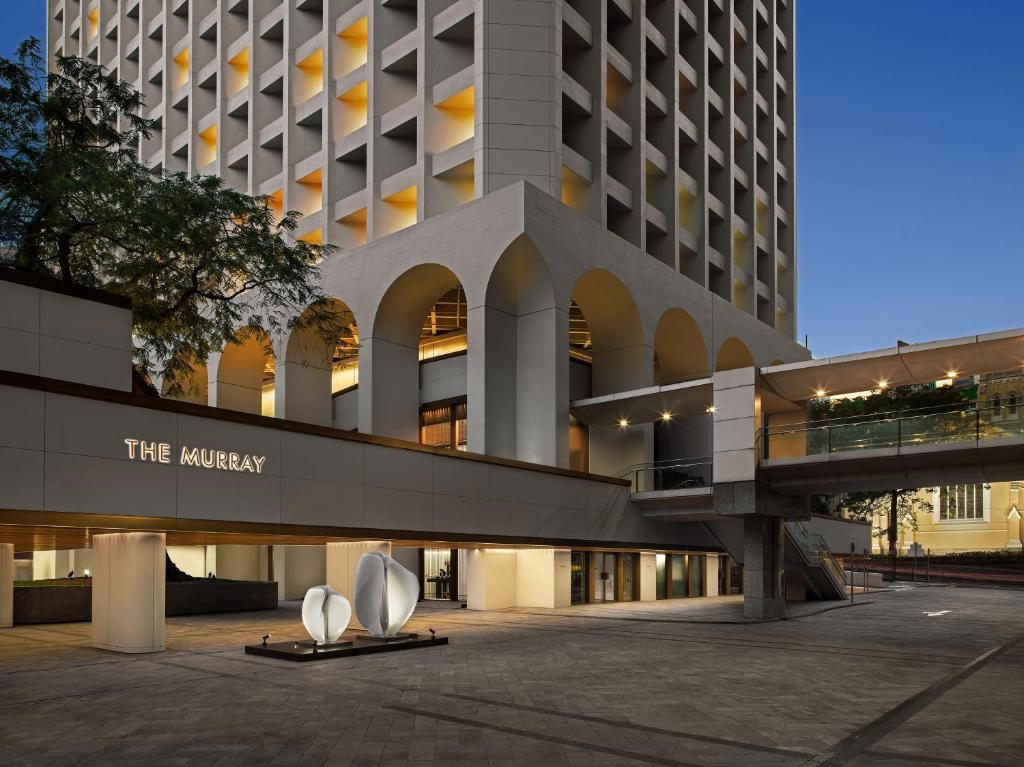
A Government Building Turned Into One of Central's Most Considered Hotels
Cotton Tree Drive runs along the edge of Hong Kong Park, where the city's dense financial core begins its slow exhale into greenery. Approaching The Murray from Garden Road, the building asserts itself before you reach the entrance: a wide, low-slung structure in white concrete, its facade marked by angled, recessed windows that British modernist architect Ron Phillips designed in 1969 specifically to reduce direct solar gain. Those windows were an energy-efficiency mechanism half a century before sustainability became a hospitality talking point. When Foster + Partners took on the conversion, they kept the structural logic intact while opening up the ground level, which the original government ministry had sealed off.
The result belongs to a specific tier of Hong Kong hotels: architecturally grounded, historically legible, and operating at a scale that permits genuine service depth. Properties like The Upper House and The Landmark Mandarin Oriental, Hong Kong occupy comparable ground in Central, each with a clear design identity and a tightly edited room count relative to their footprint. The Murray's 336 rooms place it at larger scale than either, but the average room size pulls in the opposite direction from what that number might suggest.
Space as a Service Premise
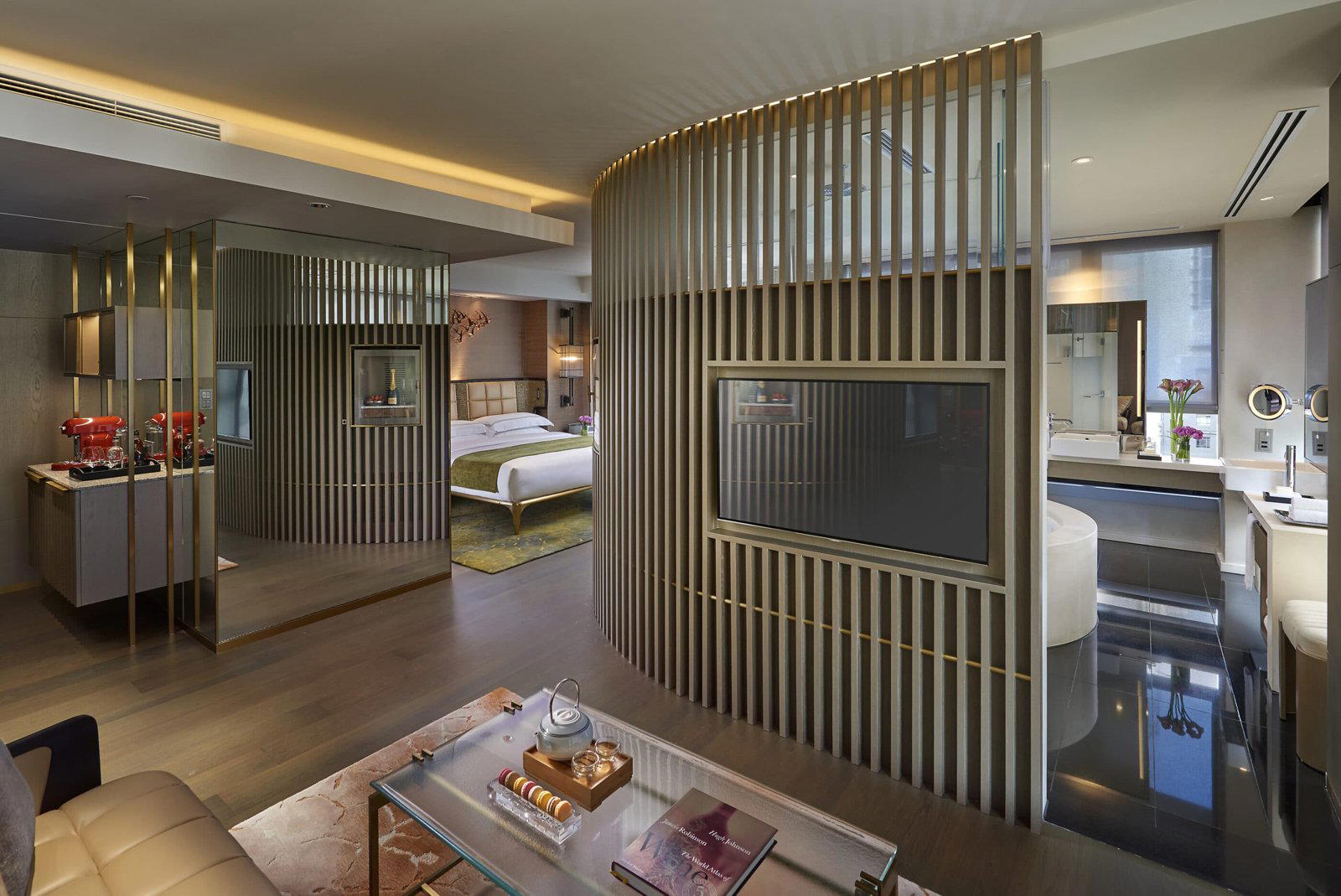
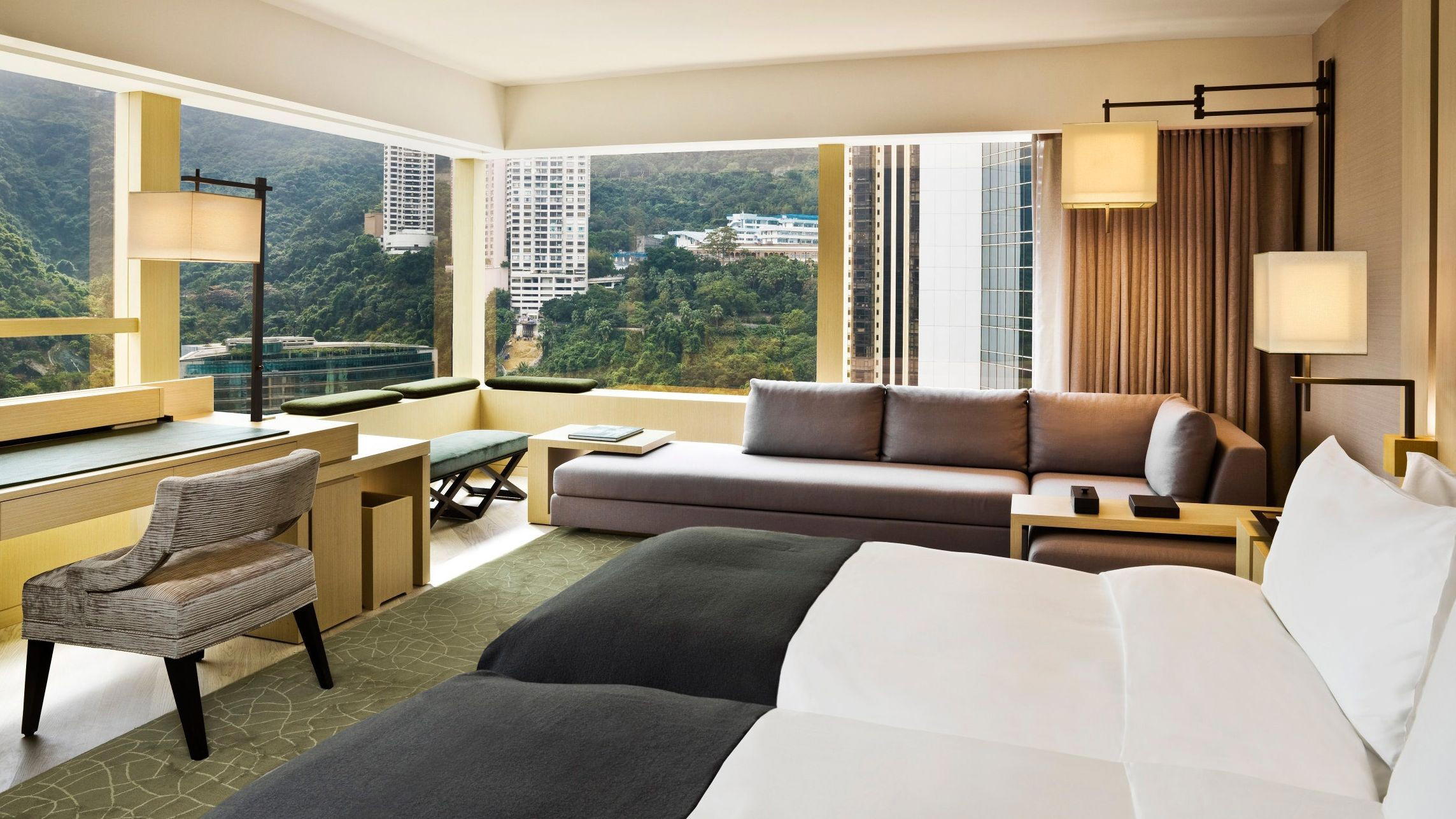
Room size in Hong Kong is a competitive axis in a way it rarely is in other cities, where square footage is more abundant. The Murray's rooms begin at 409 square feet and extend to the 2,422-square-foot Murray Suite, and the average across the property is, by most accounts, the widest in Hong Kong. That spatial generosity shapes the quality of the stay before any other service element comes into play. White Calacatta marble bathrooms, bronze accents, and organic toiletry products from Australian brand Grown Alchemist establish a material register that reads contemporary rather than classically grand.
The N2 Grand tier and above include standalone bathtubs alongside rain showers. The Murray Suite adds a private exercise room, a dining room, a lounge, and walk-in closets. The pillow menu runs to 17 options, including a Japanese tea-leaf variant designed to support sleep quality. These are not decorative amenities. They signal a service model that treats anticipatory choice as the default, not an upgrade. The same logic extends to the hotel's offer of private in-room check-in: guests who request it before arrival are escorted directly to their room without passing through the lobby. There is no charge attached.
Service Architecture and Personalisation
Hong Kong's premier hotel tier has generally organised itself around two service philosophies. The first, represented by institutions like The Peninsula Hong Kong and Mandarin Oriental, Hong Kong, is built on ceremonial formality with deep institutional memory. The second, more visible at properties like Rosewood Hong Kong, leans into contemporary personalisation at scale. The Murray operates closer to the second model, but with an added layer: its culinary team is available to construct bespoke menus for the duration of a stay, which can then be arranged for room service or served at any of the hotel's restaurant venues. The kitchen, in other words, treats the room as an extension of the dining floor rather than a separate logistical category.
The spa, with five treatment suites (two of which include in-room saunas), is small enough to function more like a private facility than a hotel amenity. That size limits throughput but improves the quality of booking certainty and attention during treatments. For guests whose primary interest is the spa, the scale is a practical consideration worth factoring in before arrival.
The Dining Layer
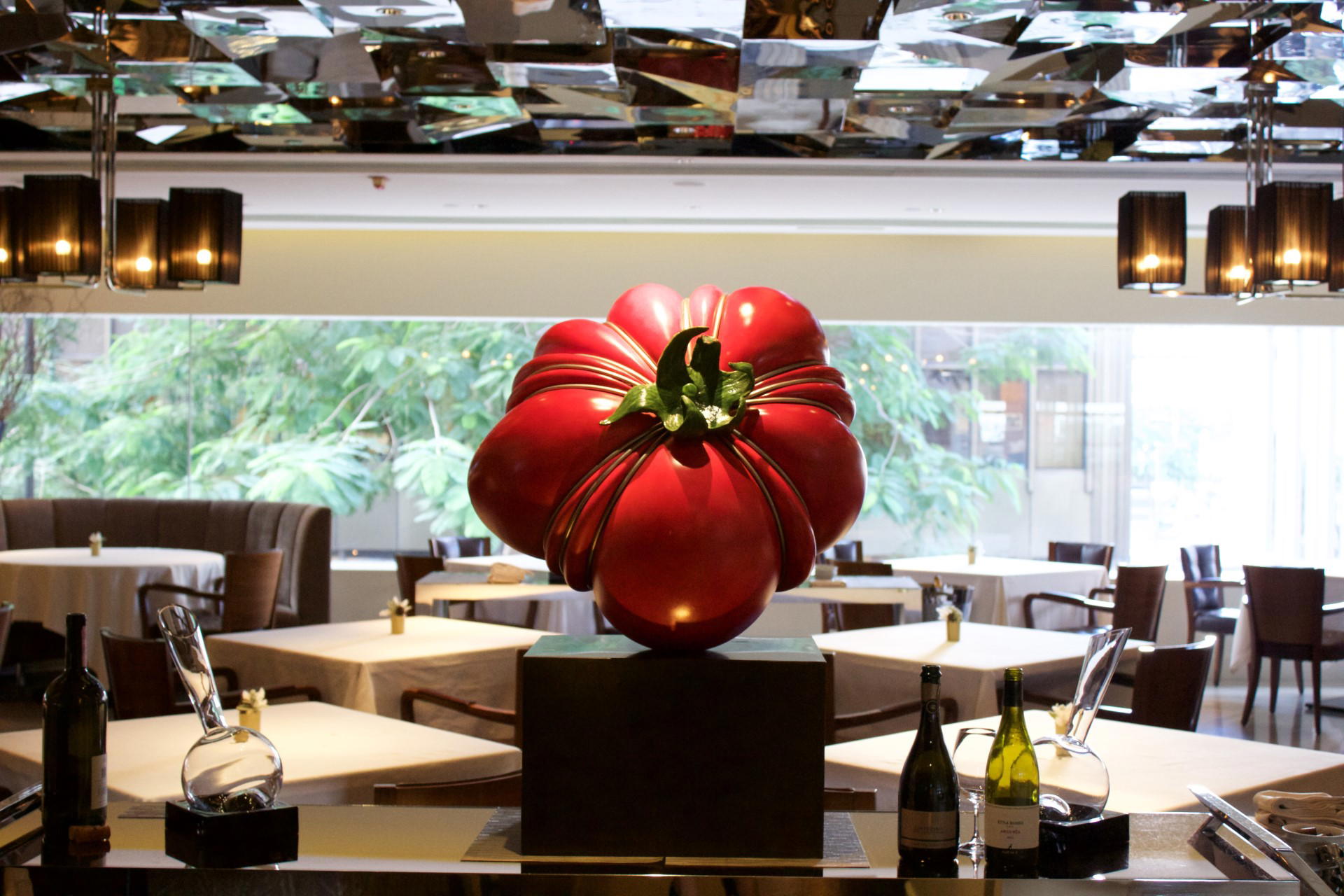
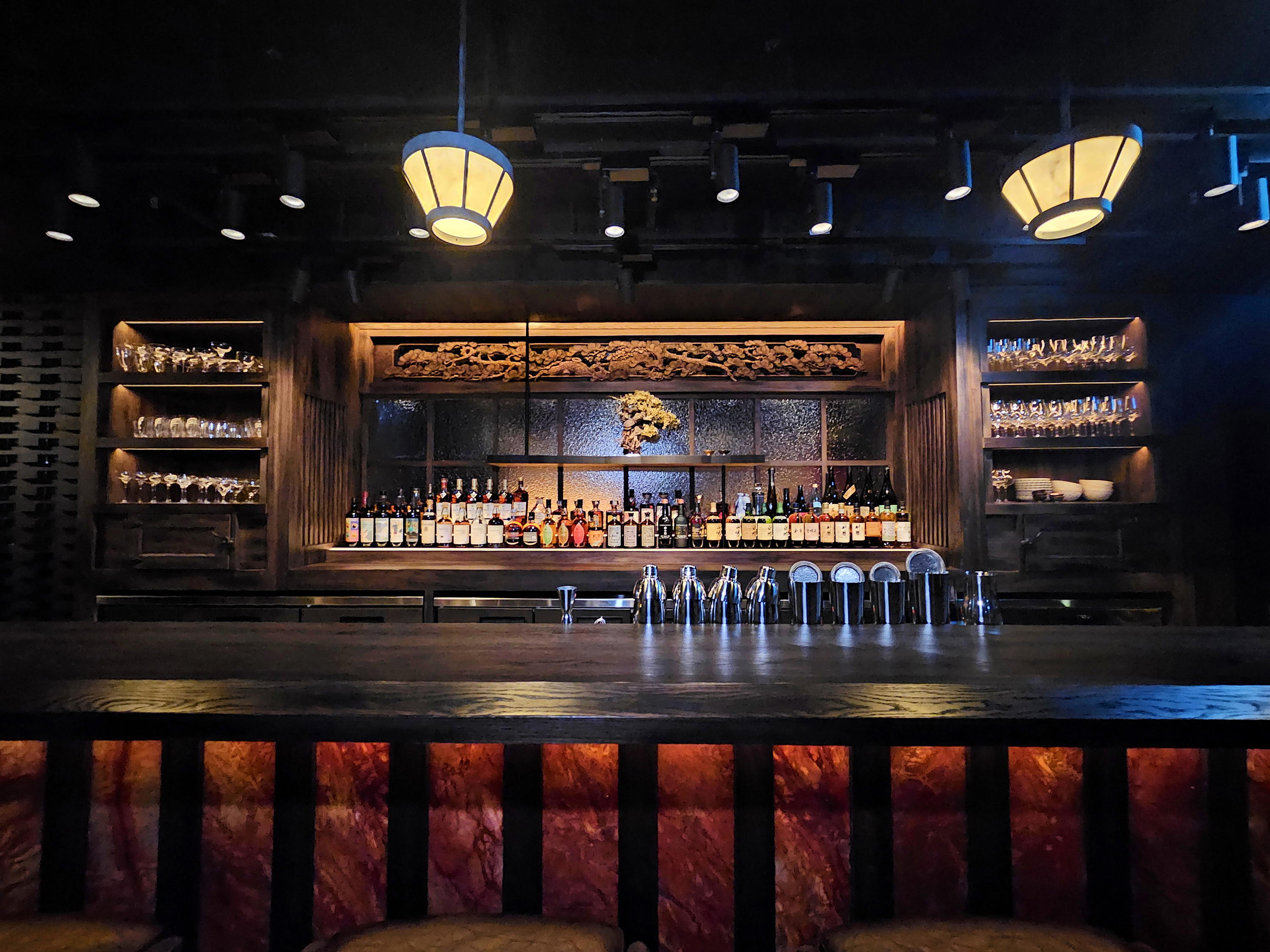
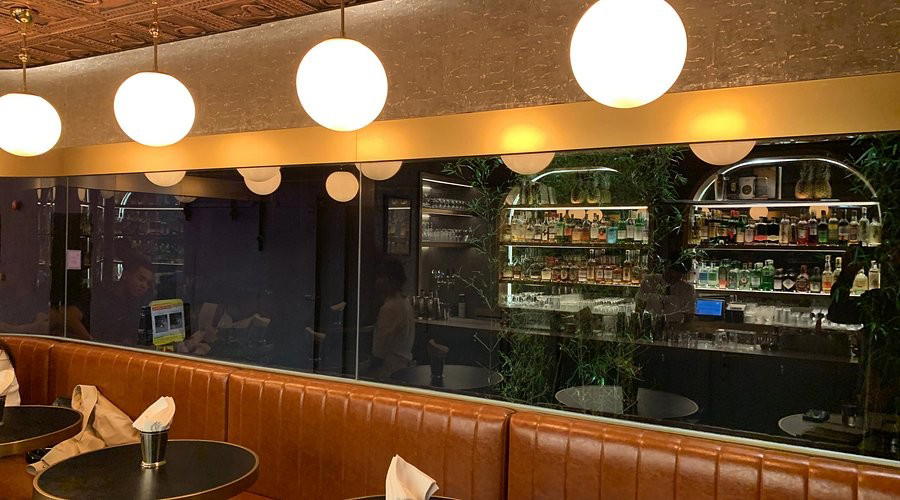
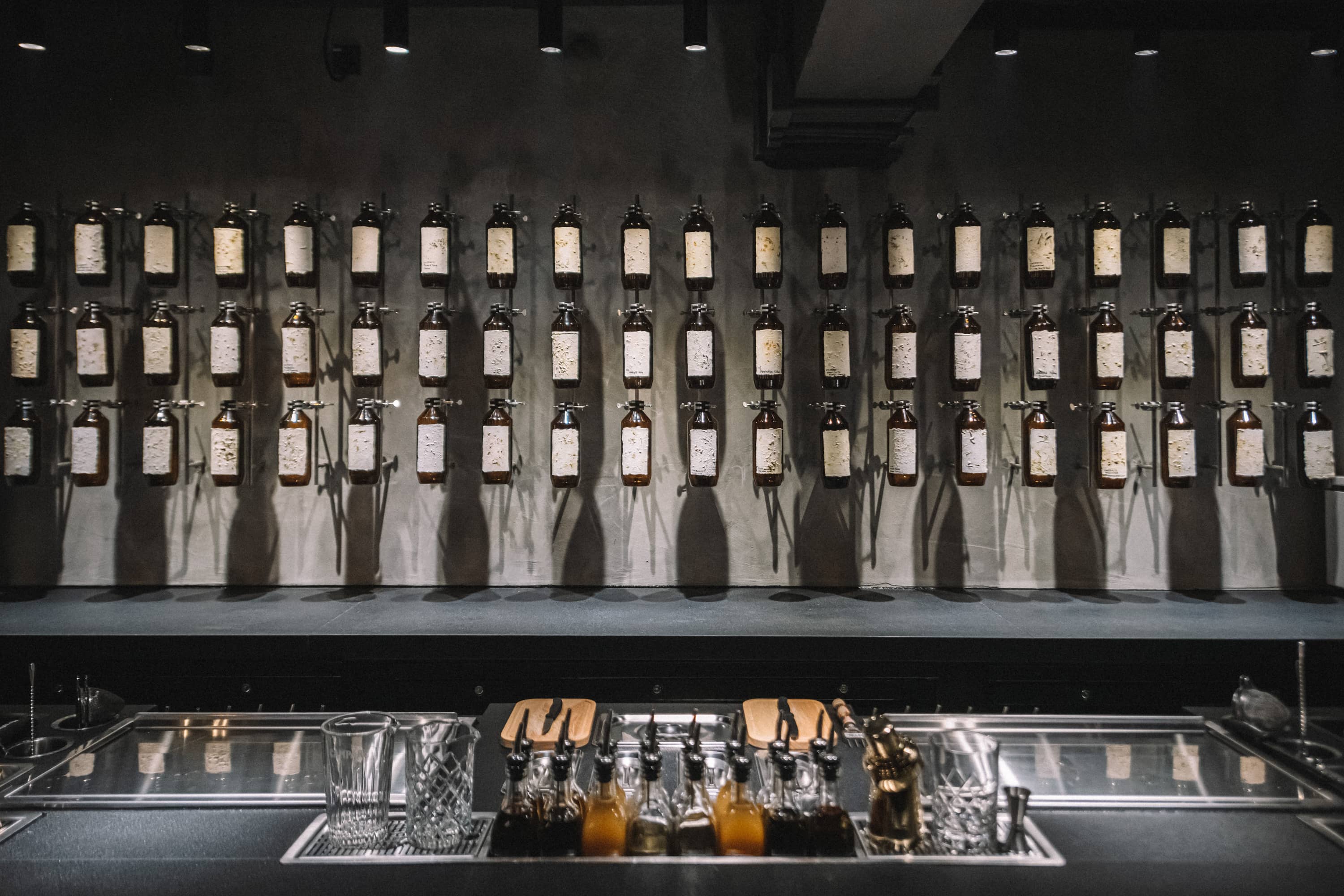
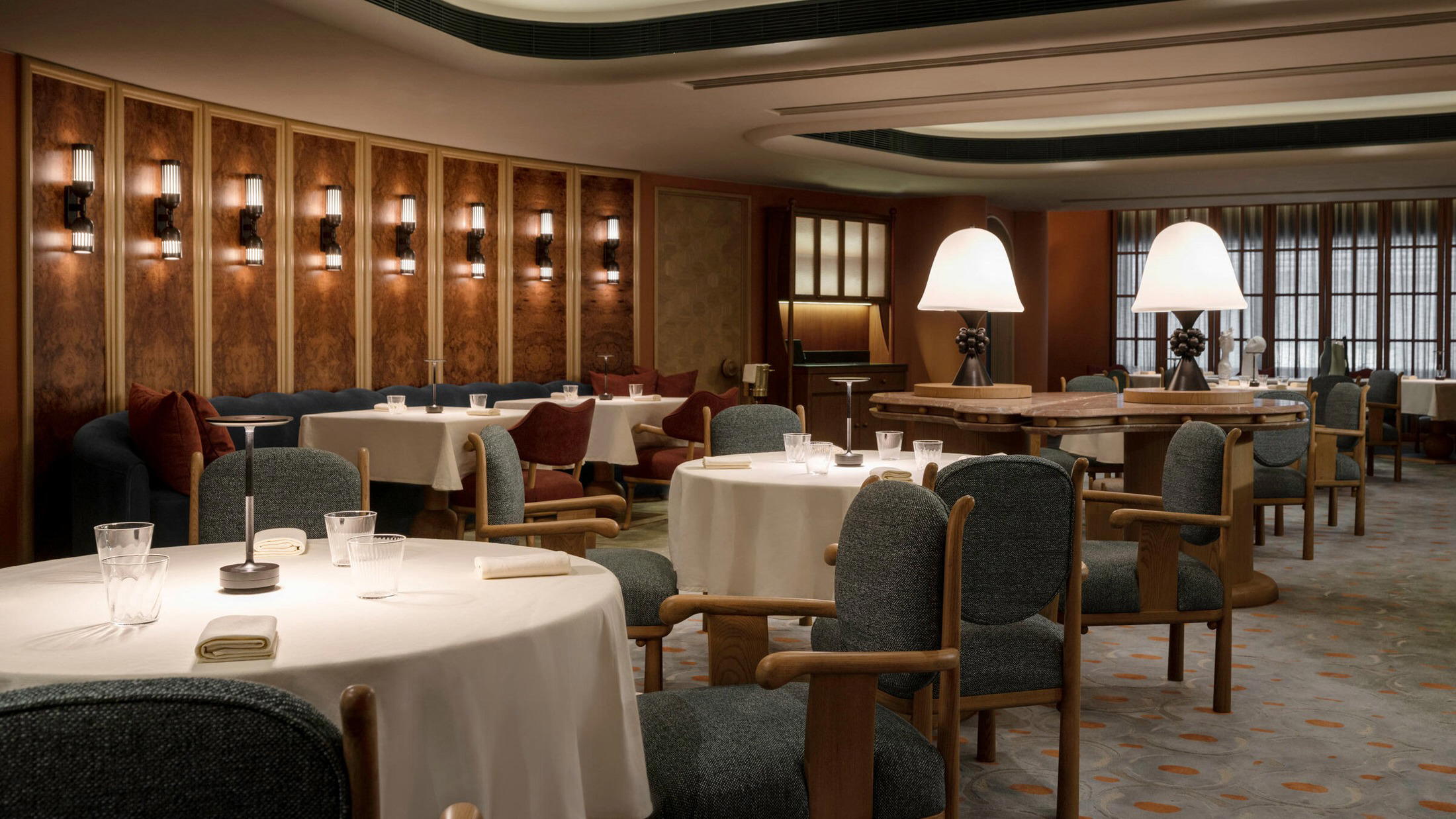
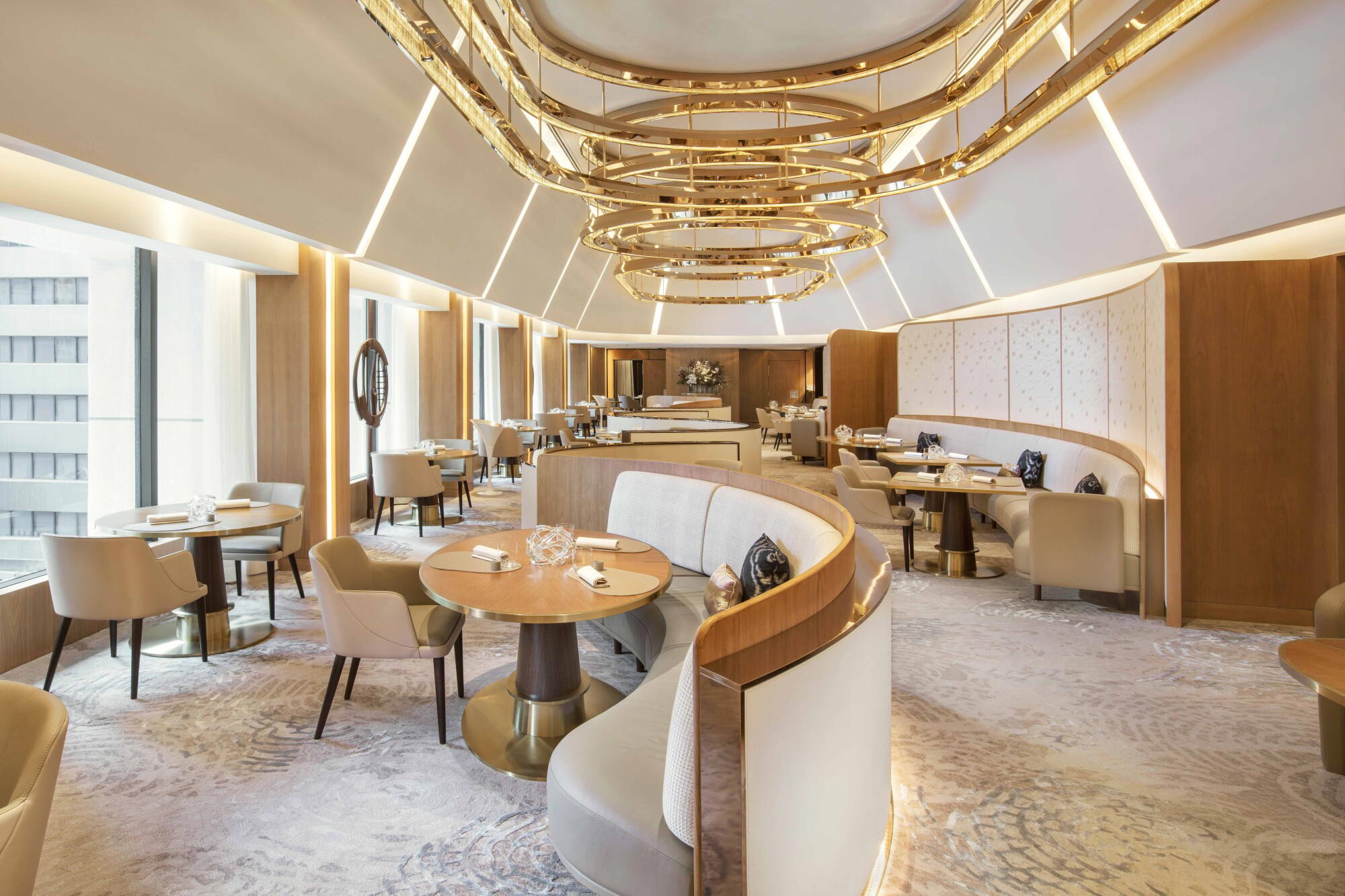
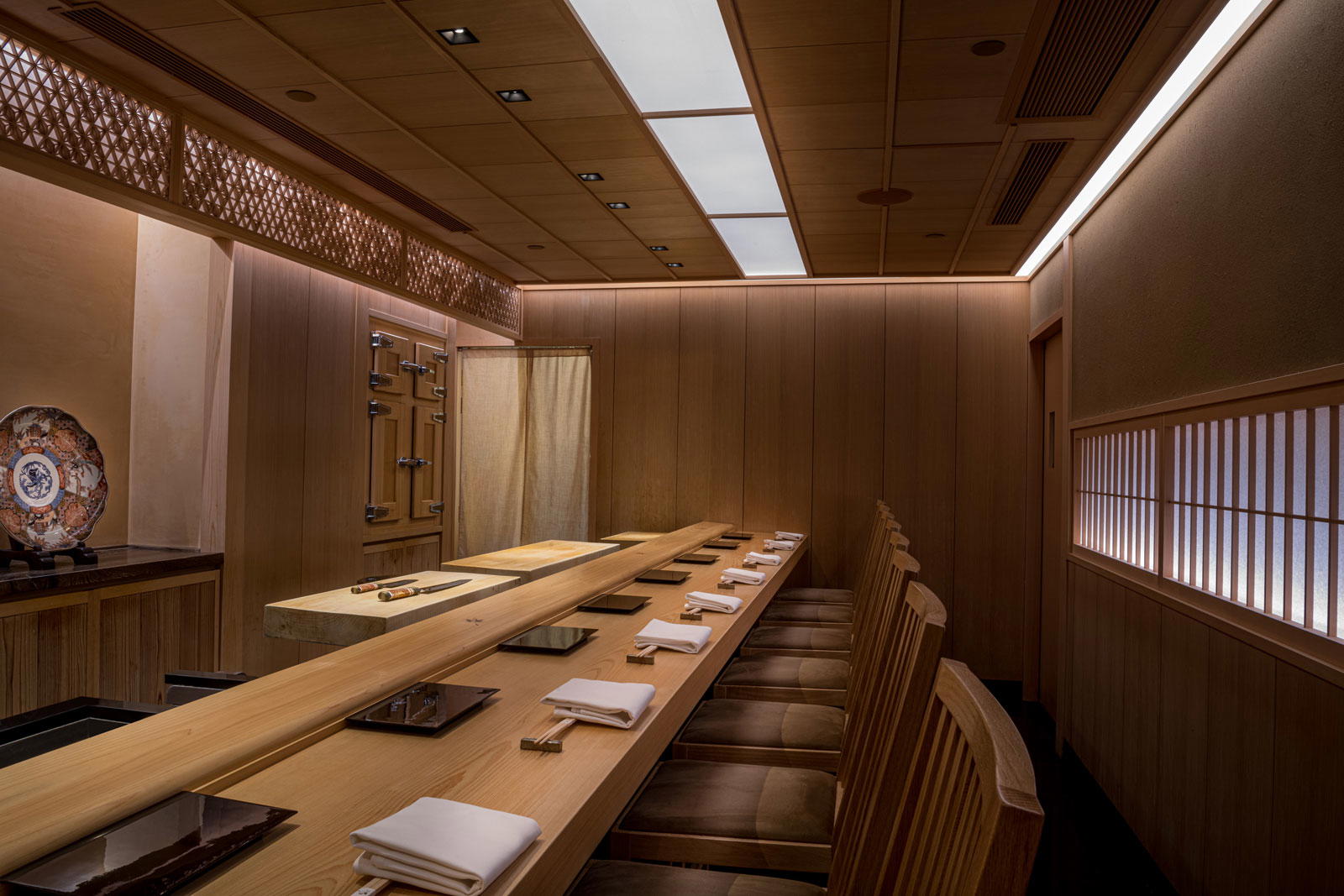
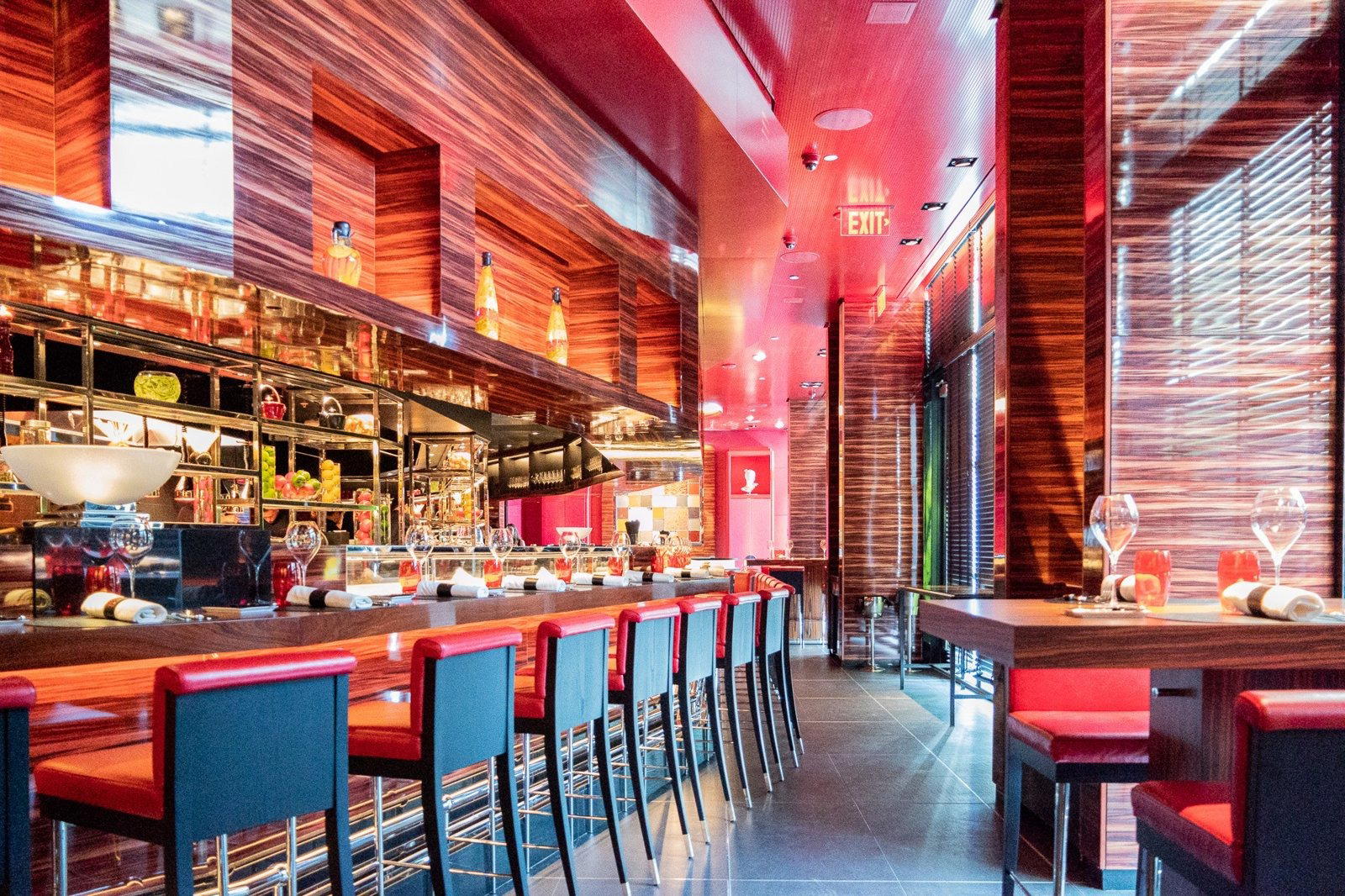
Few hotels in Hong Kong operate with this breadth of food and beverage programming. The Murray carries five distinct venues: Guo Fu Lou, a Michelin-starred Cantonese fine dining restaurant; Tai Pan, which runs a European and international menu; Popinjays, the 26th-floor rooftop restaurant, bar, and terrace; the Garden Lounge for all-day dining and afternoon tea; and Murray Lane, a bar positioned just off the lobby. That range places The Murray in a different competitive conversation from hotels that treat F&B; as a supporting function. It is closer to the model seen at Four Seasons Hotel Hong Kong, where multiple restaurant formats serve both in-house guests and the broader city.
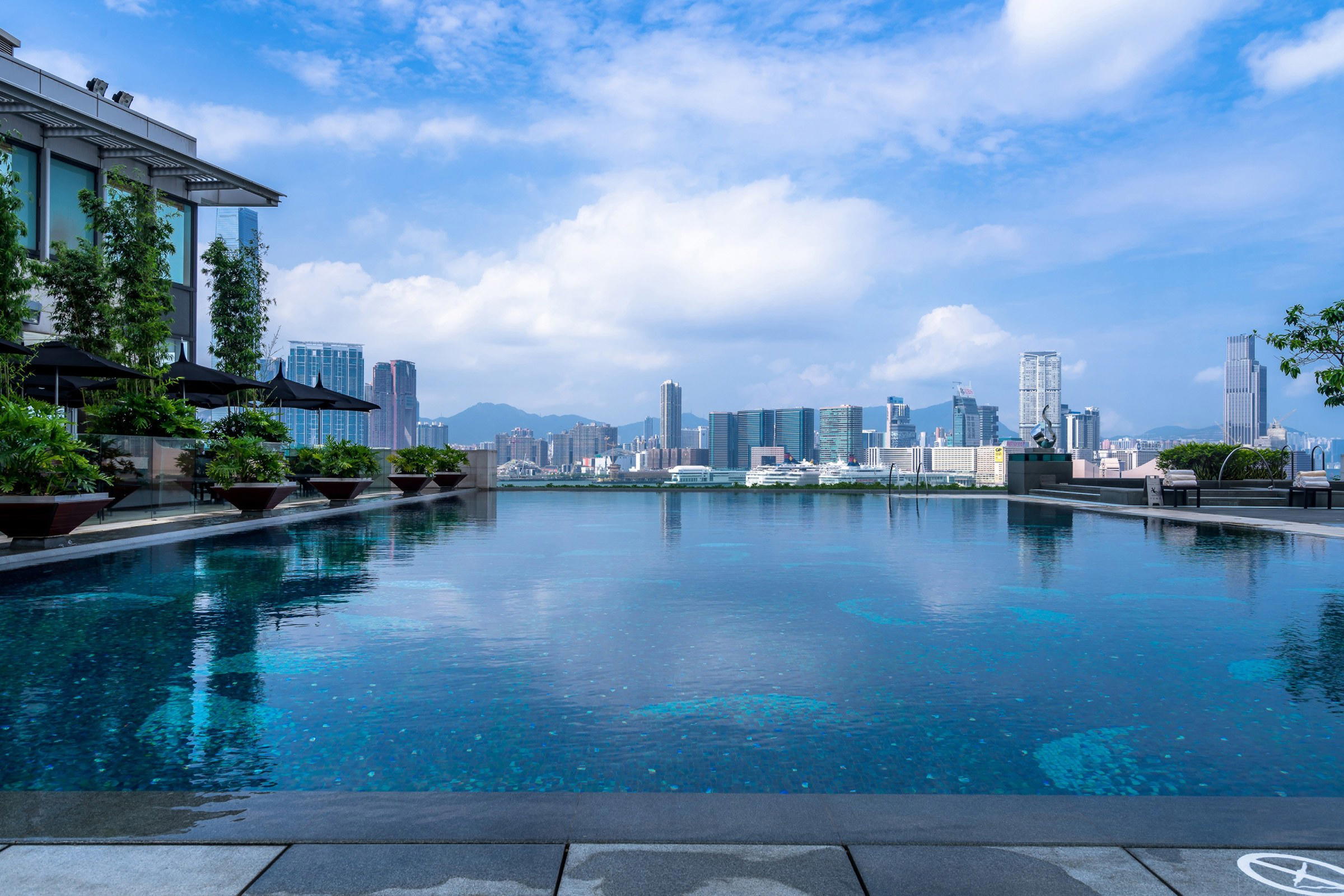
Guo Fu Lou's Michelin recognition anchors the food program's credibility. Cantonese fine dining in Hong Kong operates within among the more demanding critical environments in the world; a star in this city reflects a different level of competition than in most other markets. Popinjays earns its place at the summit of the itinerary for different reasons: named after the cockatoos that roam adjacent Garden Road, it sits on the 26th floor and delivers panoramic sightlines over Hong Kong's skyline and the green ridgeline behind.
The Collection and the Building as Cultural Object
The hotel's art collection draws from the owner's private holdings. Two charcoal installations by Seoul-based artist Bahk Seon-ghi occupy space within the property, alongside Awilda's White Head, an oversized sculpture by Spanish artist Jaume Plensa. These are not lobby decoration. They are works with significant international exhibition histories placed in a hotel context, which is a different proposition from commissioned art programs built for interior softening.
The building itself retains physical traces of its government-ministry past in deliberate ways. An angled driveway that formerly led into the building's parking structure has been converted into an events venue rather than erased. A century-old Sterculia lanceolata tree in the central driveway holds official status as a registered Old and Valuable Tree under Hong Kong's tree protection framework. These details matter because they ground the property in something other than a generic luxury conversion logic. The building has a documented history, and the renovation chose to carry that history forward rather than replace it.
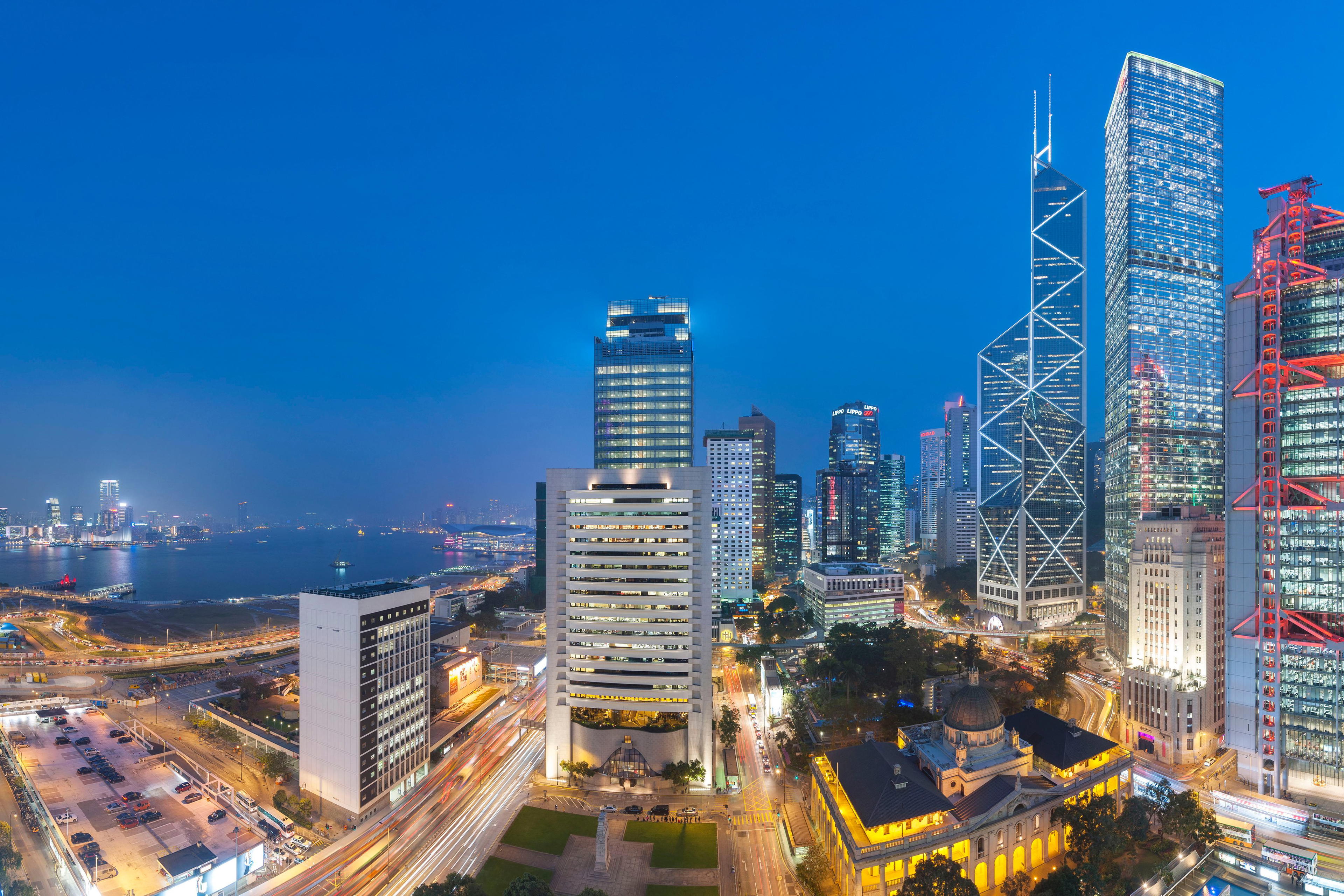
Hong Kong Park, directly across Cotton Tree Drive, extends the hotel's effective footprint into public space. The Edward Youde Aviary, which houses 70 species of birds, the botanical gardens, and the Flagstaff House Museum of Tea Ware are all within walking distance of the entrance. For guests staying at properties like Conrad Hong Kong in the same broader district, proximity to the park is a shared advantage, but the Murray's Cotton Tree Drive address places it immediately adjacent to the park's northern edge.
Planning a Stay
The Central MTR station is the closest rail connection, though the walk from the hotel runs approximately 10 to 15 minutes depending on which exit is used. Taxis are consistently available along Cotton Tree Drive and Garden Road at all hours. Guests preferring to avoid the lobby at arrival should notify the hotel prior to check-in to arrange the private room escort. The spa's five-suite capacity means booking treatments in advance of arrival is advisable for stays of two nights or fewer. The hotel holds one Michelin Key and has 5 awards in total. For reference across global properties operating at comparable architectural and service ambition, see entries such as Cheval Blanc Paris, Bvlgari Hotel Tokyo, HOTEL THE MITSUI KYOTO, Aman New York, La Réserve Paris, Badrutt's Palace Hotel, Hotel Plaza Athénée, Hôtel de Paris Monte-Carlo, Castello di Reschio, Hotel Bel-Air, Aman Venice, Amangiri, Hotel Du Cap-Eden-Roc, Hotel Esencia, Hotel Sacher Wien, The Fifth Avenue Hotel in New York City, and Crowne Plaza Hong Kong Kowloon East.
Reputation Context
Comparable venues nearby, for context on price, style, and recognition.
| Venue | Cuisine | Price | Awards | Notes |
|---|---|---|---|---|
| The Murray, Hong Kong, a Niccolo HotelThis venue — the venue you are viewing | Contemporary heritage luxury hotel | $$$$ | Michelin 1 Key | Not listed |
| The Ritz-Carlton, Hong Kong | Sky-high luxury hotel in the world's tallest hotel location | $$$$ | Michelin 1 Key | Yau Tsim Mong South |
| Hotel ICON | Contemporary upscale hotel with eco-friendly design and harbour views | $$$$ | Michelin 1 Key | Yau Tsim Mong South |
| The St. Regis Hong Kong | Contemporary luxury blending East-meets-West residential aesthetic | $$$$ | Michelin 1 Key | Wan Chai |
| The Pottinger Hong Kong | Boutique hotel blending historic charm with modern luxury | $$$$ | 5-Star | Central |
| Conrad Hong Kong | luxury high-rise business hotel | $$$$ | 5-Star | Central |
Recognition history
Dated appearances from independent guides and award organizations, with the underlying list record or original source where available.
Forbes 4-Star
Forbes
La Liste Top Hotels
La Liste
Forbes 4-Star
Forbes
Leading Hotels of World Member
Leading Hotels of World
Michelin 1 Key
Michelin
At a Glance
- Sophisticated
- Elegant
- Modern
- Well Known
- Business Trip
- Weekend Escape
- Celebration
- Romantic Getaway
- Historic Building
- Design Destination
- Panoramic View
- Terrace
- Destination Spa
- Rooftop Pool
- Wi Fi
- Spa
- Fitness Center
- Room Service
- Concierge
- Valet Parking
- Skyline
- Garden
- Wi Fi
- Spa
- Fitness Center
- Room Service
- Concierge
- Valet Parking
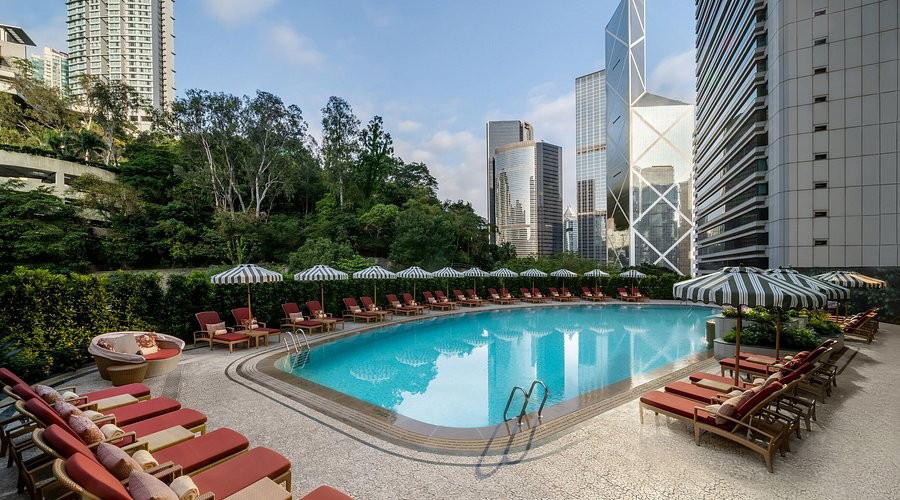
Contemporary chic and understated sophistication, with a sleek modern interior softened by marble, bronze accents, and light-filled rooms that frame city and park views.