The Manila Hotel
Few addresses in Southeast Asia carry the historical weight of The Manila Hotel, which has occupied its position at the edge of Rizal Park since 1912. Where newer luxury entrants in Makati and BGC compete on design and amenity counts, this property competes on continuity, as the backdrop to more than a century of Philippine political, cultural, and social history. For travellers who read a city through its institutions, it remains a primary reference point.
Pearl is the En Primeur Club membership app — saves, bookings, and concierge access live there. Same editors, same standards.
- Address
- 1 Rizal Park, Ermita, Manila, 0913 Metro Manila, Philippines
- Phone
- +63 2 8527 0011
- Website
- manila-hotel.com.ph
- Directions
- Get directions
 Saves & bookings on Pearl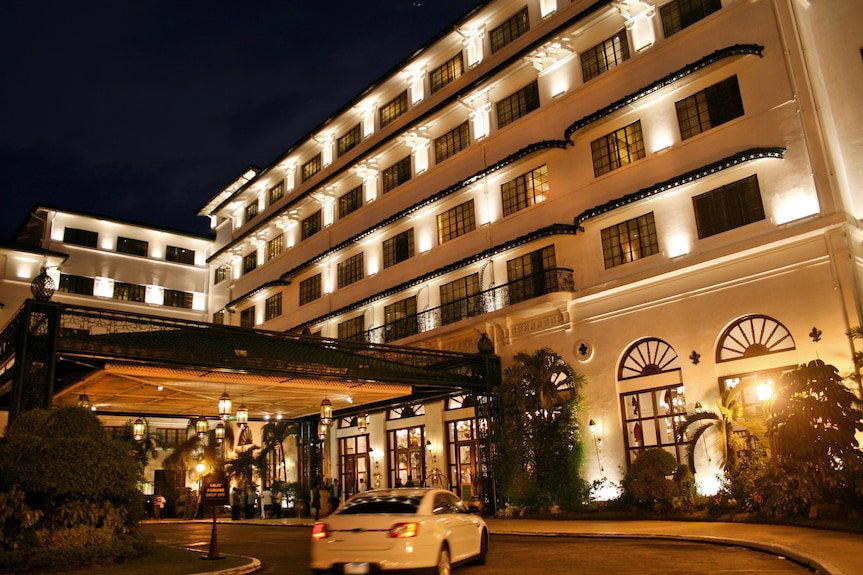
A Century of Witness at Rizal Park
The approach to The Manila Hotel tells you something about how the city has changed around it. Rizal Park stretches to one side, Manila Bay to the other, and the building itself, opened in 1912, making it one of the oldest operating hotels in Southeast Asia, sits at the geographic and symbolic centre of what was once the colonial capital's most formal civic quarter. Newer luxury properties in Makati and Bonifacio Global City have pulled the city's commercial gravity eastward, but Ermita retains a different kind of authority: the weight of accumulated occasion.
That framing matters when situating this property against its peers. Hotels like Fairmont Makati, Makati, and Conrad Manila compete primarily on contemporary amenity stacks, financial district proximity, and international brand infrastructure. The Manila Hotel competes on institutional memory. General Douglas MacArthur maintained a penthouse residence here during the pre-war years. Philippine presidents have held state functions within its halls. The guest registry reads, over more than a century, as a compressed ledger of twentieth-century history in the Pacific.
The Lobby as Arrival Statement
The interiors communicate this continuity without requiring a history lesson from the concierge. The grand lobby draws on Spanish colonial and American neoclassical reference points, executed in marble and dark timber, with the kind of proportions that were designed to impress visiting dignitaries rather than Instagram audiences. The ceiling heights and chandelier scale belong to an earlier vocabulary of luxury, one where physical grandeur was the primary signal of prestige, before design-led minimalism became the international idiom for premium hospitality.
That distinction places The Manila Hotel in a specific peer category: grand-dame institutions that predate the contemporary luxury playbook and whose authority derives from continuity rather than curation. In Asia, this cohort is small. Closer regional comparisons include properties like Aman Venice in terms of the way historical fabric becomes a hospitality asset, though the operational models and ownership contexts differ considerably. Within the Philippines, nothing else in Metro Manila occupies the same position.
Team, Service, and the Mechanics of Institutional Hospitality
Grand-dame hotels face a particular service challenge: the gap between historical reputation and day-to-day execution. Properties that trade on legacy must deliver consistently across the full service team, front desk, concierge, restaurant floor, and bell staff, because any weak point reads as institutional decline rather than an isolated lapse. The hotel's long tenure in the market means its service culture has been built over multiple generations of staff, with institutional knowledge about the property's particular guest mix: visiting diplomats, Filipino families marking milestone occasions, regional business travellers, and international visitors who have specifically chosen this address for its historical resonance.
That guest diversity requires a service register broader than most modern luxury properties need to maintain. A hotel catering primarily to international corporate travellers can standardize around a narrower protocol. A property hosting a presidential delegation, a golden wedding anniversary, and a foreign journalist simultaneously must operate with considerably more range. The front-of-house capability required to hold that register is, in practice, one of the harder operational achievements in Manila hospitality.
Travellers considering the property against alternatives like Discovery Primea Manila or Dusit Thani Manila should weigh this service breadth as a differentiator, particularly if their visit involves formal occasions or meetings where institutional setting carries practical value.
Dining at a Historic Address
Hotels of this age and standing typically house multiple food and beverage operations, each positioned at a different formality level. The configuration at the hotel has historically included a main dining room oriented toward Filipino and international cuisine, a café-style venue for lighter service, and banquet facilities scaled for state-level functions. The relevant editorial point here is about what historic hotel dining rooms in the Philippines represent more broadly: spaces where the negotiation between colonial-era formality and contemporary Filipino food identity plays out in a particularly visible way.
Filipino cuisine's global moment, driven partly by diaspora chefs and partly by a renewed domestic appreciation for regional traditions, has created pressure on hotel dining rooms to move beyond the hybrid international-Filipino menu that dominated Manila's luxury hotel restaurants for decades. How a property of this age responds to that shift, while preserving the ceremonial dining function that its banquet legacy demands, is an interesting editorial question. The tension between preservation and evolution is one that comparable grand institutions across the region continue to resolve in different ways.
Location, Access, and Planning Your Stay
The Ermita address is central in historical terms but peripheral to where most contemporary business and leisure activity now concentrates. Makati's CBD is roughly forty minutes by car in moderate traffic; BGC is longer. Intramuros, the colonial walled city, is within easy reach, as are the National Museum of the Philippines and the cultural institutions clustered around Rizal Park itself. For travellers whose itinerary is oriented toward the city's historical and cultural layer rather than its commercial districts, the location is genuinely useful. For those based in Makati for meetings, properties like Admiral Hotel Manila – MGallery or Hyatt Regency Manila City of Dreams may offer more practical positioning.
Booking is recommended directly, especially if room category matters, as heritage-wing accommodations command a premium for their views toward Manila Bay. The hotel's calendar fills for major Philippine holidays and state occasions, which are worth checking before assuming availability at short notice.
The Essentials
Comparable venues nearby, for context on price, style, and recognition.
| Venue | Price | Notes |
|---|---|---|
| The Manila HotelThis venue — the venue you are viewing | $$$$ | Not listed |
| Grand Hyatt Manila | $$$$ | Bonifacio Global City, Luxury urban tower blending hotel and residential living. |
| Manila Marriott Hotel at Newport World Resorts | $$$$ | Newport World Resorts, luxury urban resort hotel |
| Sky Tower at Solaire Resort Entertainment City | $$$$ | Entertainment City, luxury integrated resort tower |
| Marco Polo Ortigas Manila | $$$$ | Ortigas Center, Pasig, Luxury contemporary high-rise hotel positioned as a premier business and leisure destination with exclusive Continental Club privileges. |
| Nobu Hotel Manila | $$$$ | Parañaque, Trendsetting sustainable boutique hotel with modern Japanese-inspired aesthetic, verdant landscape, and calming water features. |
Continue exploring
More in Manila
Hotels in Manila
Browse all →
Bars in Manila
Browse all →
Restaurants in Manila
Browse all →
At a Glance
- Classic
- Elegant
- Well Known
- Sophisticated
- Ornate
- Romantic Getaway
- Business Trip
- Anniversary
- Celebration
- Historic Building
- Panoramic View
- Pool
- Spa
- Fitness Center
- Room Service
- Concierge
- Business Center
- Valet Parking
- Waterfront
- Skyline
- Pool
- Spa
- Fitness Center
- Room Service
- Concierge
- Business Center
- Valet Parking
Cozy yet regal atmosphere with warm color palettes, dark wooden accents, traditional art, vintage photographs, plush armchairs, marble desks, and gilded mirrors.