
Michelin Selected
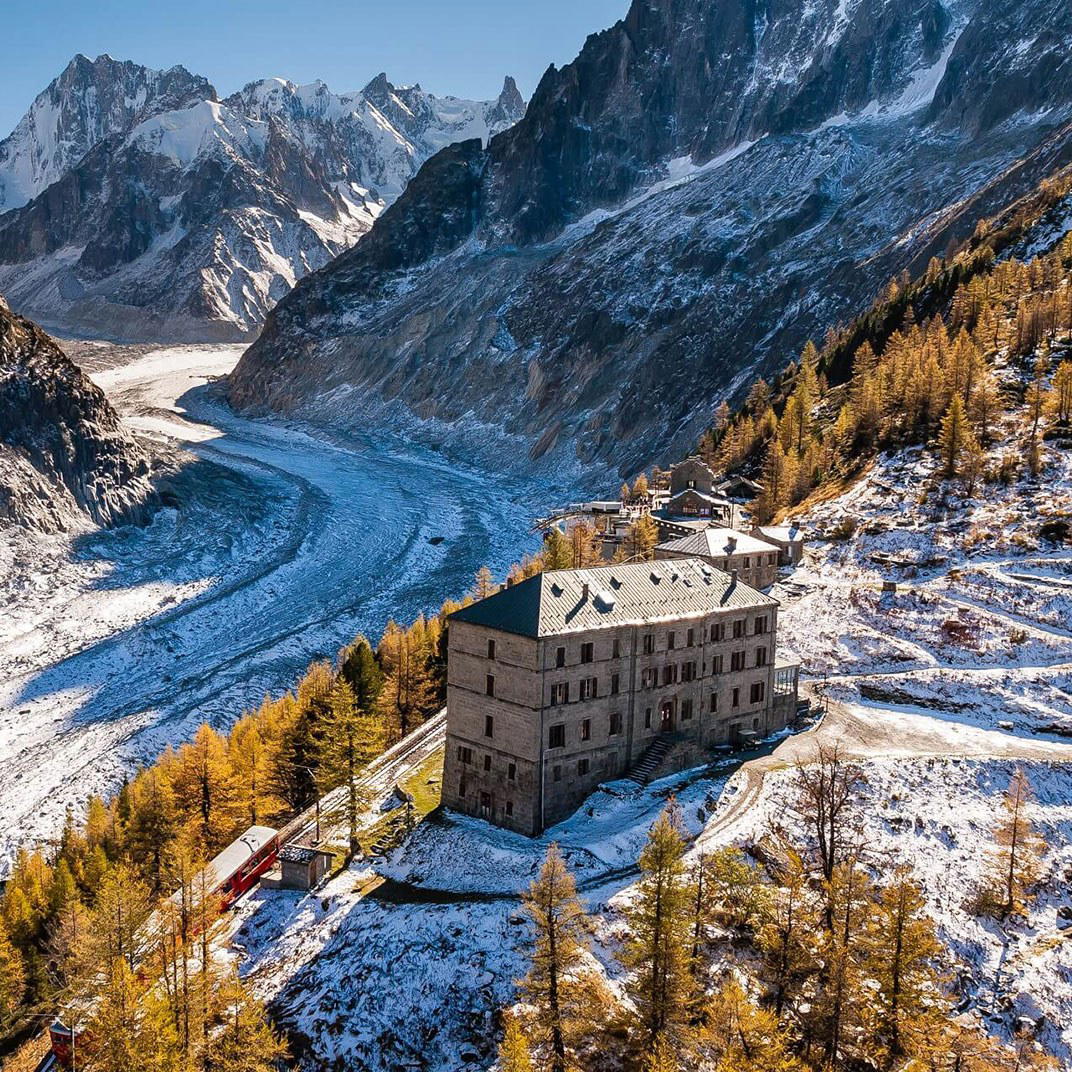
Perched above the Mer de Glace at 1,913 metres, Refuge du Montenvers is one of the French Alps' oldest mountain stations, recognised by the Michelin guide for 2025. Accessible by the historic rack railway from Chamonix, it combines glacier-front accommodation with a setting that has drawn alpinists, scientists, and travellers since the eighteenth century.

Pearl is the En Primeur Club membership app — saves, bookings, and concierge access live there. Same editors, same standards.
- Address
- Impasse du Montenvers, 74400 Chamonix-Mont-Blanc, France
- Phone
- +33 4 50 53 87 70
- Website
- refugedumontenvers.com
- Directions
- Get directions
A Station Above the Ice
The approach defines the experience before you even arrive. The Montenvers rack railway, operating since 1909, climbs 871 metres from Chamonix town in roughly twenty minutes, cutting through pine forest before the treeline drops away and the Mer de Glace opens below. At 1,913 metres, the station and its attached refuge sit on a granite ledge directly above one of Europe's largest glaciers. The physical drama of the site is not incidental to a stay here — it is the stay. Accommodation options in the Chamonix valley range from design-led valley hotels like Le Morgane and Heliopic to chalet properties such as Auberge du Bois Prin, but Refuge du Montenvers operates in an entirely different register. The glacier is not a view from the window; it is the reason the building exists.
History Built Into the Stone
Mountain refuges in the Alps occupy a distinct architectural and cultural category. They are not hotels that happened to be built at altitude — they are functional responses to the reality of glacial terrain, shaped by the scientists, guides, and adventurers who needed a base above the valley. Montenvers has been that base since the eighteenth century. Horace-Bénédict de Saussure, the Genevan scientist who helped define the intellectual fascination with Mont Blanc, visited the site in 1778. The first permanent structure followed decades later, and the arrival of the rack railway in 1909 transformed what had been a destination for the hardiest travellers into a site accessible to a broader public, though the altitude and exposure still impose conditions that a valley hotel does not.
The building that stands today carries the layered character of a structure that has been rebuilt, expanded, and repurposed across two centuries. Alpine architecture at this elevation is pragmatic first: thick stone walls, steeply pitched roofs designed to shed snowload, orientation calculated against prevailing wind. Montenvers has all of this, but it also carries the institutional weight of a place that housed some of the foundational figures of Alpinism. The guest register, had it been preserved intact, would read as a catalogue of nineteenth and early twentieth-century mountaineering history.
The Michelin selection for 2025 places Refuge du Montenvers alongside a relatively small group of mountain properties that earn recognition not through conventional hotel metrics, spa facilities, restaurant Michelin stars, room count, but through distinction of setting and cultural significance. The Michelin Selected designation is a trust signal worth reading carefully in this context: it does not equate to the same evaluation criteria applied to a valley luxury hotel. The selection acknowledges that some properties earn their place in the guide through what they represent in the broader narrative of travel and place.
The Glacier as Context
Mer de Glace has retreated substantially over the past century, and the descent to reach it by gondola from the Montenvers station now covers considerably more vertical ground than it did in earlier decades. This retreat is itself part of the site's historical record. Photographs mounted in the station compare the glacier's surface level across different eras, making Montenvers an inadvertent document of climate change as much as a piece of Alpinism heritage. A stay here means living alongside that record rather than simply reading about it.
Summer season, roughly late June through early September, brings the fullest range of access to the glacier and surrounding terrain. The Montenvers railway operates on a schedule tied to visitor demand and weather, and direct access to the Mer de Glace ice cave is typically available through the summer months. Winter visits offer a different character: the railway continues to operate, but the glacier approaches close, and the site functions more purely as a high-altitude viewpoint rather than an active base for glacier exploration. For travellers focused on the historical and architectural experience rather than glacier access, shoulder months in spring or autumn offer quieter conditions with the railway still running.
Where Montenvers Sits in the Chamonix Context
Chamonix's accommodation options have diversified considerably over the past two decades, with the valley now supporting everything from the party-adjacent energy of La Folie Douce to the refined chalet format of Chalet Valhalla and the established town-centre positioning of properties like Le Faucigny, Les Aiglons, and Le Jeu de Paume Chamonix. These are valley properties oriented toward the conventional mountain-luxury offer: ski-in convenience, afternoon tea by a fire, spa access after a day on the slopes.
Refuge du Montenvers is not competing in that category. The audience for a night at Montenvers is narrower: travellers for whom the historical and glacial context is the purpose of the visit, not the backdrop to it. Within French alpine accommodation, the closest analogies are the CAF (Club Alpin Français) high-mountain refuges, though Montenvers sits in a middle tier, more accessible than a technical climbing refuge, less polished than a design hotel, but carrying more historical weight than either. The comparison set across France's premium travel circuit includes properties selected for place-specific significance: Royal Champagne Hotel & Spa in Champillon for wine-country context, Domaine Les Crayères in Reims for architectural and culinary heritage, and the Hotel Du Cap-Eden-Roc in Cap d'Antibes for a different kind of historical accumulation by the sea. Montenvers belongs to this tradition of places that carry the sediment of significant visits, even if the room count and service infrastructure sit well below those benchmarks.
For the broader Chamonix planning picture, our full Chamonix guide covers valley dining, après-ski, and how the town's different accommodation tiers compare across seasons.
Planning a Visit
Access is exclusively via the Montenvers rack railway departing from a dedicated station adjacent to Chamonix's main train terminal. The railway does not run continuously through the year; services are concentrated in the summer season and reduced in the intermediate periods between ski season close and summer opening. Travellers arriving in Chamonix by train from Geneva (approximately ninety minutes on the Mont Blanc Express from Saint-Gervais) or by road through the Mont Blanc tunnel from Italy will find the Montenvers departure point walkable from the town centre.
Booking for an overnight stay should be treated differently from valley hotel reservations. Capacity at the refuge is limited, and summer weekends in particular fill well in advance. The property is not positioned as a conventional luxury stay, so travellers calibrating expectations against valley peers like Le Morgane or Heliopic should arrive with a different framework. The value proposition is historical access and altitude, not amenity depth. Packing accordingly, warm layers regardless of season, waterproof outer shells, is not optional advice at nearly 2,000 metres above sea level.
Across France's wider premium accommodation circuit, the Michelin Selected list for 2025 includes properties at very different price and luxury levels, from Le Bristol Paris and Hôtel de Paris Monte-Carlo to culturally significant properties like Refuge du Montenvers, where the selection logic is rooted in something other than thread count. That distinction is worth holding onto when choosing whether this fits a broader French Alpine itinerary that might also include Four Seasons Megève or the resort-luxury context of Le K2 Palace in Courchevel.
City Peers
| Venue | Cuisine | Price | Awards |
|---|---|---|---|
| Refuge du MontenversThis venue — the venue you are viewing | This venue | Not listed | Michelin Selected |
| La Folie Douce | Not listed | Not listed | Michelin Selected |
| Le Faucigny | Not listed | $200–300 | Michelin Selected |
| Auberge du Bois Prin | Not listed | $200–300 | Michelin Selected |
| Heliopic | Not listed | $200–300 | Michelin Selected |
| Le Morgane | Not listed | $200–300 | Michelin Selected |
Recognition history
Dated appearances from independent guides and award organizations, with the underlying list record or original source where available.
Michelin Selected
Michelin
Continue exploring
More in Chamonix
Hotels in Chamonix
Browse all →
Bars in Chamonix
Browse all →
Restaurants in Chamonix
Browse all →

Details
- Rustic
- Scenic
- Cozy
- Historic
- Quiet
- Romantic Getaway
- Weekend Escape
- Panoramic View
- Historic Building
- Wi Fi
- Restaurant
- Luggage Storage
- Mountain
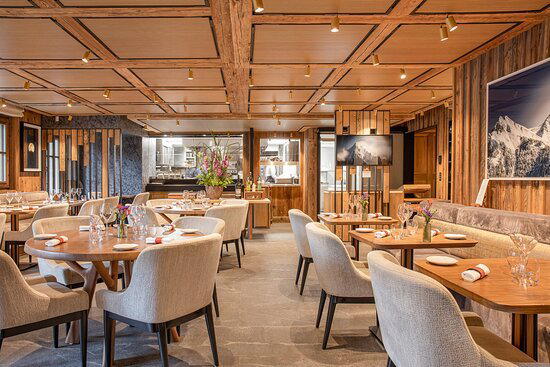
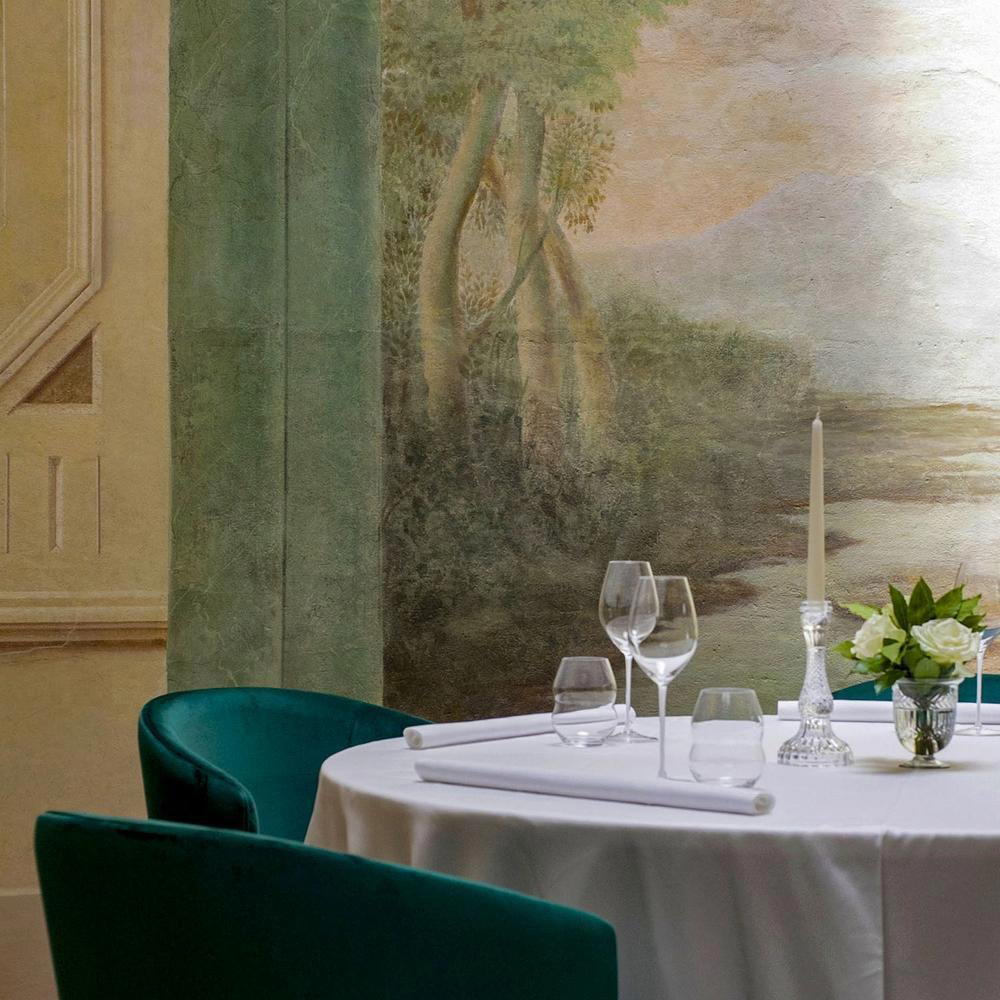
Cozy wood-paneled interiors with rustic charm, warm lighting, and a sense of high-mountain authenticity and tranquility.