

Michelin Selected · Mr & Mrs Smith Seal of Approval
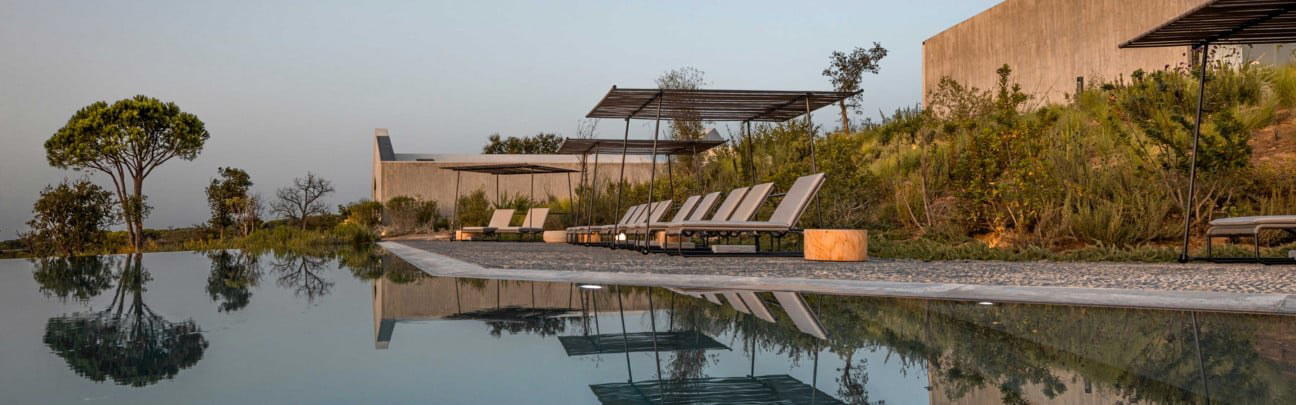
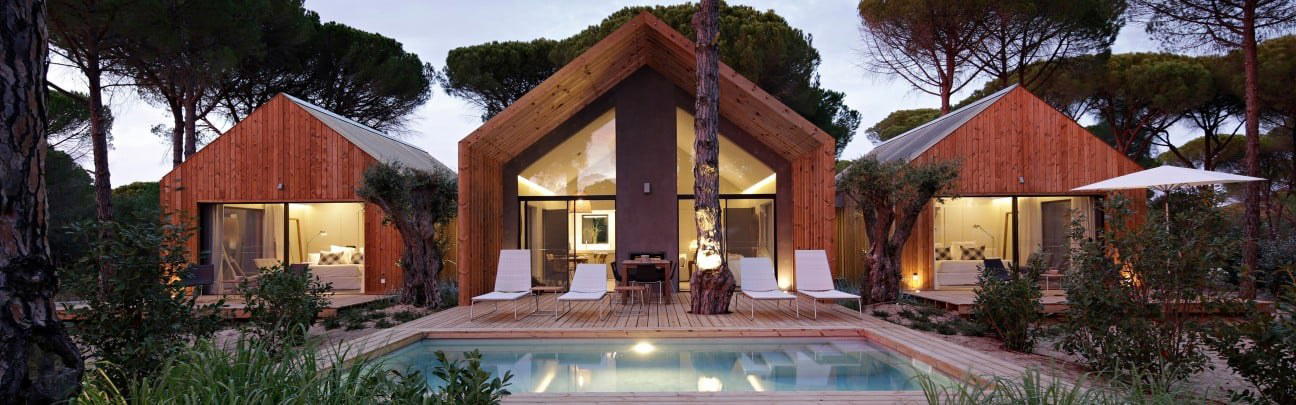
A Michelin Selected property on the Alentejo coast, Pa.te.os sits outside Melides along a stretch of Portugal that has become one of Europe's most closely watched rural retreats. The design draws on the region's agricultural vernacular, with low-slung whitewashed structures arranged around cork and pine. For those tracking the quieter side of Portuguese hospitality, it belongs in the same conversation as Hôtel Vermelho down the road.

Pearl is the En Primeur Club membership app, where members save venues, book tables and use the concierge.
Where the Alentejo Coast Defines Its Own Architecture
The Alentejo littoral has spent the past decade resisting the resort grammar that defines so much of the Portuguese south. While the Conrad Algarve and its Algarve peers operate within a language of golf courses, polished lobbies, and branded amenity, the coastline between Comporta and Melides has moved in a different direction entirely. Here, the dominant architectural idea is not grandeur but groundedness: buildings that sit low against the land, materials drawn from the immediate region, and a deliberate refusal to impose scale on a landscape that rewards restraint. Pa.te.os, positioned along Estrada Nacional 261–2 outside Melides, is a considered expression of that tendency.
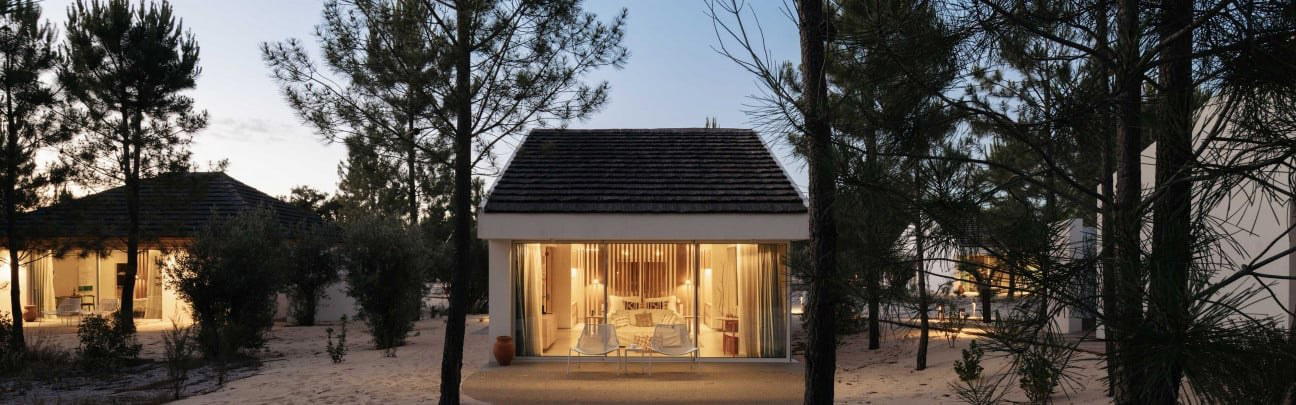
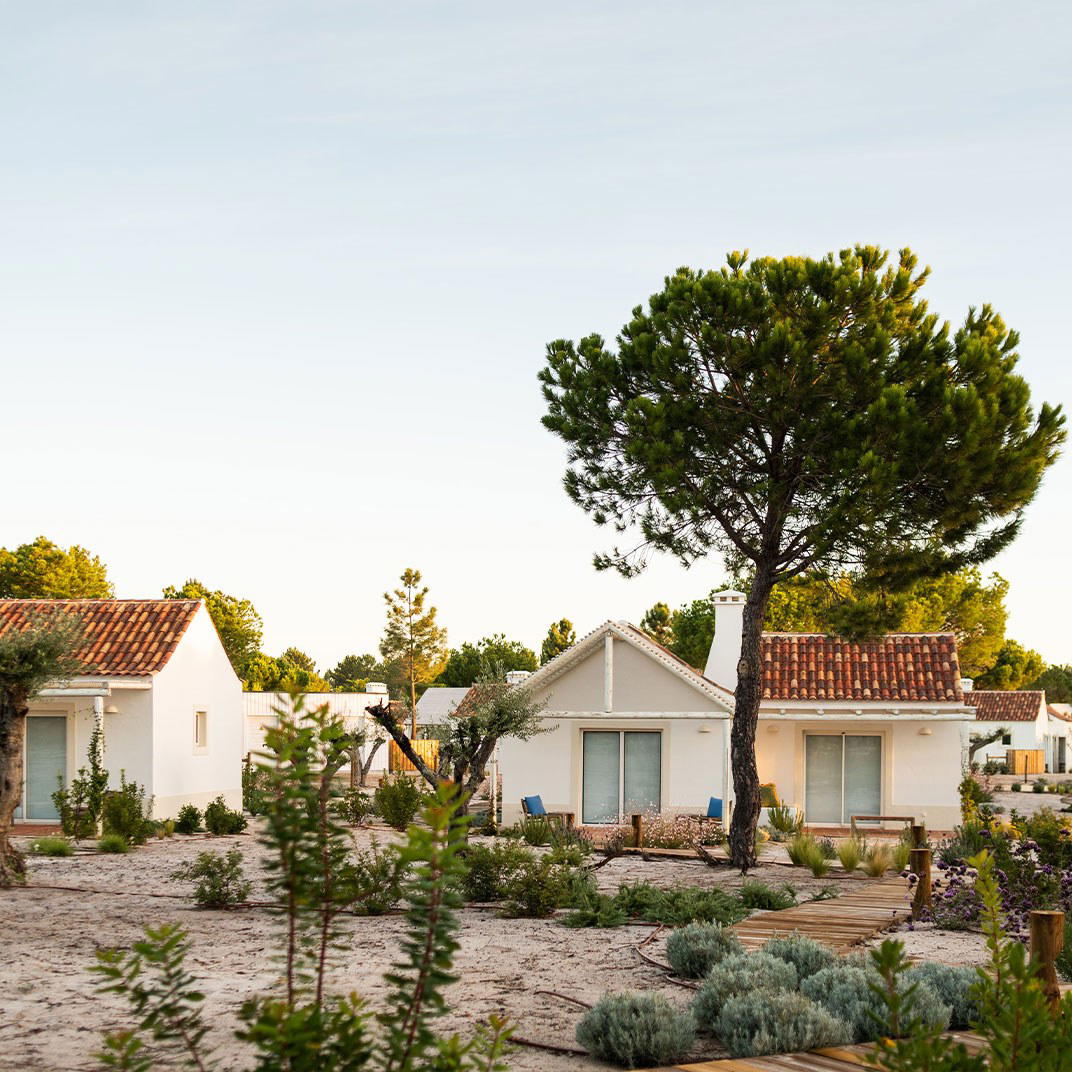
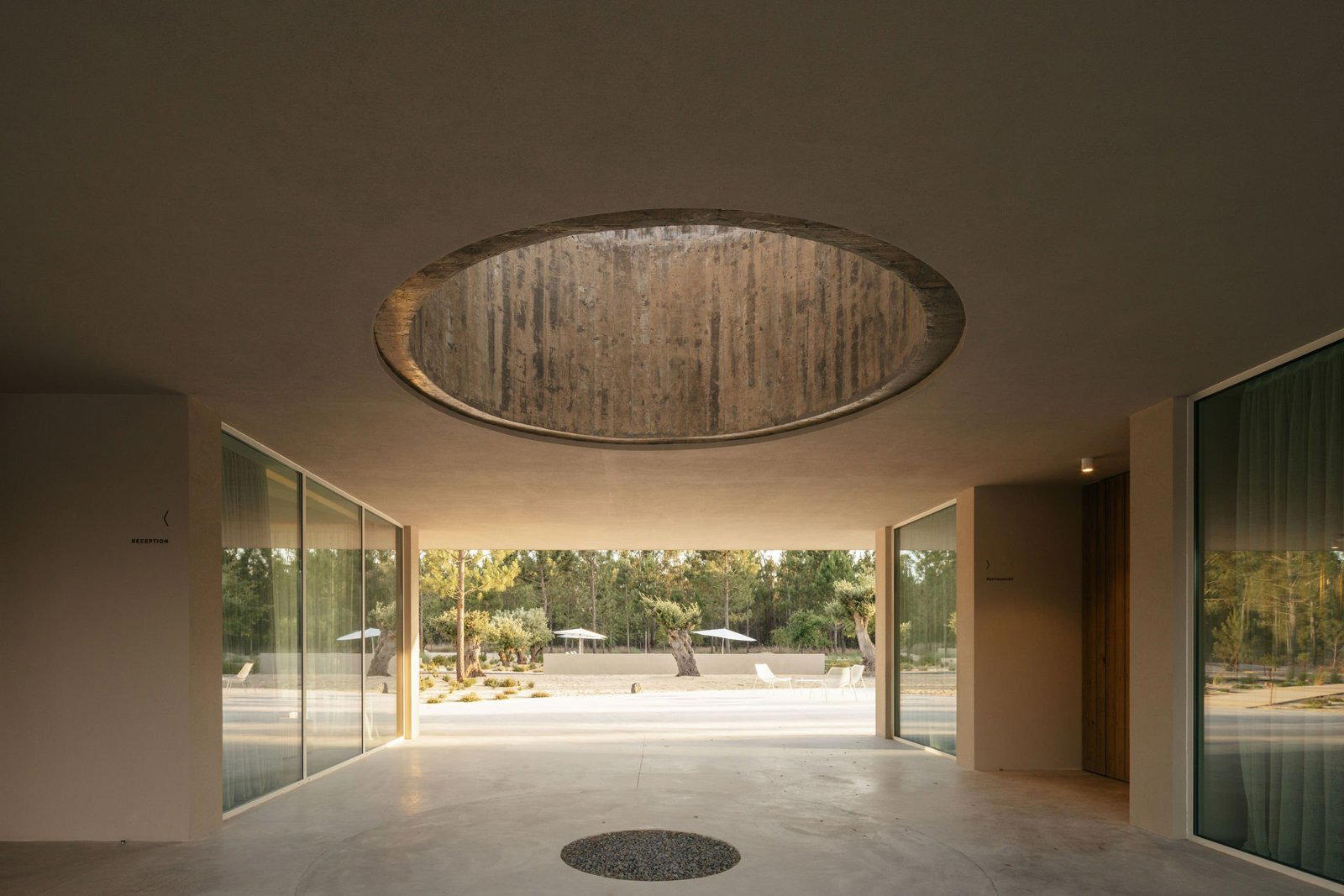
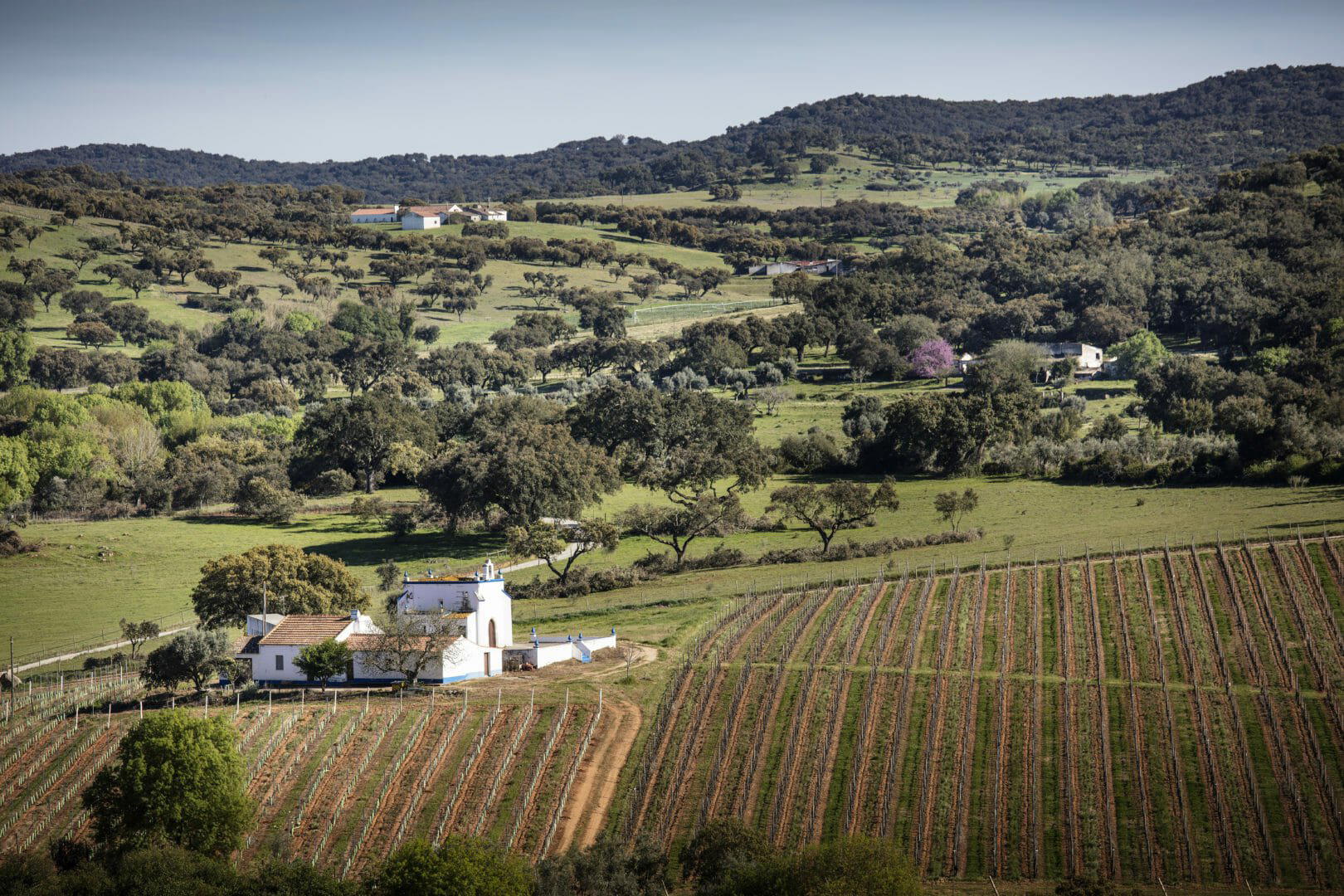
The name itself signals the organising principle. A pátio in Alentejo rural tradition is not merely a courtyard but a structuring device, a way of arranging domestic and agricultural life around enclosed outdoor space. Pa.te.os reads as a plural of that idea, a property assembled from multiple such nodes rather than built as a single monolithic structure. The effect, as with several of the region's better-regarded small properties, is less hotel than hamlet, a loose arrangement of whitewashed volumes in which the outdoor space is as designed as the indoor.
The Melides Context: A Village That Attracted Serious Attention
Understanding Pa.te.os requires understanding what Melides became, and why that happened relatively quickly. The village sits roughly 140 kilometres south of Lisbon, accessible by road in under two hours, and for most of its existence attracted little outside attention beyond Portuguese weekenders who preferred it to the more commercialised Comporta to the north. That changed in earnest around the late 2010s, when international figures, architects, and design-forward hospitality operators began arriving in numbers. Hôtel Vermelho, which opened with considerable fanfare and international press, is the most visible symbol of that shift. Pa.te.os sits within the same moment, though with a quieter profile.
The broader Alentejo coast has developed a peer group unlike anything else in mainland Portugal. Properties here compete less with urban hotels in Lisbon or Setúbal, such as Hotel Casa Palmela, and more with a specific international set of low-key rural retreats that have become the preference of travellers who want remoteness without sacrifice. That peer group extends to places like Ventozelo Hotel and Quinta in the Douro, and to heritage conversions like MS Collection Aveiro further north, but Melides has a coastal and climatic specificity that sets it apart.
Michelin Selection and What It Implies
Pa.te.os carries a Michelin Selected designation in the 2025 Michelin Hotels and Stays guide. Within the Michelin hotel framework, Selected status functions as curatorial endorsement rather than a scored distinction, indicating that the property meets criteria of character, quality, and interest without being ranked against a numerical scale. In Portugal, that endorsement places Pa.te.os in the company of properties that span a wide range of formats and price points, from city palaces like Palacete Severo in Porto to nature-led retreats like Octant Furnas in the Azores.
For the Alentejo coast specifically, Michelin recognition of this kind signals that the area is being taken seriously as a hospitality destination rather than a seasonal curiosity. Properties like The Lince Ecorkhotel in Évora, which applies similar sustainability-oriented thinking to an inland Alentejo context, show that this regional identity is coherent enough to produce multiple credible entrants in the guide's selection.
Design Logic: Material Honesty and Agricultural Reference
The architecture of the western Alentejo coast has its own vernacular, and Pa.te.os works within it deliberately. The dominant materials in the region are whitewash, cork oak, pine, and rammed earth, materials that respond to the specific quality of light along this coast, which is sharper and more horizontal than the softened Mediterranean light of the Algarve. Properties that try to import a different visual vocabulary tend to look provisional against the landscape; those that accept the vernacular tend to age with it.
Pa.te.os applies the courtyard logic to its spatial organisation in a way that rewards time rather than arrival. The experience of the property builds across a stay rather than front-loading impact at check-in, a structural choice that contrasts with the lobby-as-statement approach of large international properties. Comparable thinking appears in heritage-conversion properties elsewhere in Portugal, including Vidago Palace in the north and Carmo's Boutique Hotel in Ponte de Lima, though the Melides version operates from a very different starting point, rural rather than aristocratic, coastal rather than riverine.
How to Place a Stay Here
Pa.te.os sits on Estrada Nacional 261–2, approximately four kilometres outside Melides village, which itself has a small number of restaurants and food shops sufficient for a few days of low-key exploration. Driving is the practical approach from Lisbon; train access to the wider region is possible via Grândola, the nearest rail hub, though onward connectivity requires a car. The property's remoteness is part of its offer rather than a logistical inconvenience: the nearest beaches along this coast are among the least developed in mainland Portugal, and the dune systems behind them are protected under Natura 2000 designations.
Those building a longer Portugal itinerary around properties of similar character should consider the range available across the country. Bela Vista Hotel and Spa in Praia da Rocha represents an older, more ornate Portuguese coastal tradition. Casa Mãe Hotel in Lagos applies a stripped-back aesthetic to the Algarve. Palácio de Tavira takes the heritage-palace route in the eastern Algarve. Each represents a distinct answer to the same question of what considered Portuguese hospitality looks like at this tier, and Pa.te.os's answer is among the most geographically specific of the group.
For dining context around the broader region, our full Melides guide covers what to eat and where in and around the village. For those extending into other parts of the country, the Hotel Britânia Art Deco in Lisbon offers a very different urban register, while the Sheraton Cascais Resort covers the more conventional coastal resort market closer to the capital.
Comparable Venues
Comparable venues nearby, for context on price, style, and recognition.
| Venue | Cuisine | Price | Awards | Notes |
|---|---|---|---|---|
| Pa.te.osThis venue (the venue you are viewing) | Modernist concrete houses centered around private patios in preserved Alentejo nature. | Not listed | Michelin Selected · Mr & Mrs Smith Seal of Approval | Not listed |
| Hôtel Vermelho | luxury boutique with personalized, artistic design | $300–500 | 2 Michelin Keys · Virtuoso Luxury Hotel Partner | Melides |
| Hotel Hotel Lisbon | Urban oasis boutique hotel | Not listed | Michelin Selected · Design Hotels Member | Avenida da Liberdade |
| Convent Square Lisbon, Vignette Collection | Restored 13th-century convent in Lisbon's historic center | Not listed | Michelin Selected | Baixa |
| Companhia das Culturas | Sustainable eco-boutique agriturismo on organic farm | $100–200 | Michelin Selected | Castro Marim |
| Torel 1884 | Historic 19th-century palace restored with modern luxury and exploration-themed interiors. | $100–200 | 1 Michelin Key | Baixa |
Recognition history
Dated appearances from independent guides and award organizations, with the underlying list record or original source where available.
Michelin Selected
Michelin
Mr & Mrs Smith Seal of Approval
Mr & Mrs Smith
Continue exploring
More in Melides
Hotels in Melides
All hotels in Melides →
Bars in Melides
Browse all →
Restaurants in Melides
All restaurants in Melides →

Details
- Quiet
- Modern
- Scenic
- Minimalist
- Intimate
- Romantic Getaway
- Wellness Retreat
- Weekend Escape
- Infinity Pool
- Panoramic View
- Terrace
- Design Destination
- Pool
- Wi Fi
- Breakfast Included
- Garden
Tranquil and secluded atmosphere emphasizing connection to nature, with low-touch service, infinity pool, and natural sounds of birds, bees, and ocean.