Old Bank Hotel

Occupying a former Victorian bank on Oxford's High Street, Old Bank Hotel carries a MICHELIN Selected distinction for 2025 and a position at the centre of one of England's most architecturally layered cities. The conversion preserves the building's original grandeur while placing guests within walking distance of the Bodleian, the covered market, and the colleges that define Oxford's identity.
Pearl is the En Primeur Club membership app — saves, bookings, and concierge access live there. Same editors, same standards.
- Address
- 92-94 High St, Oxford OX1 4BJ, United Kingdom
- Phone
- +44 1865 799599
- Website
- oldbankhotel.co.uk
- Directions
- Get directions
 Saves & bookings on Pearl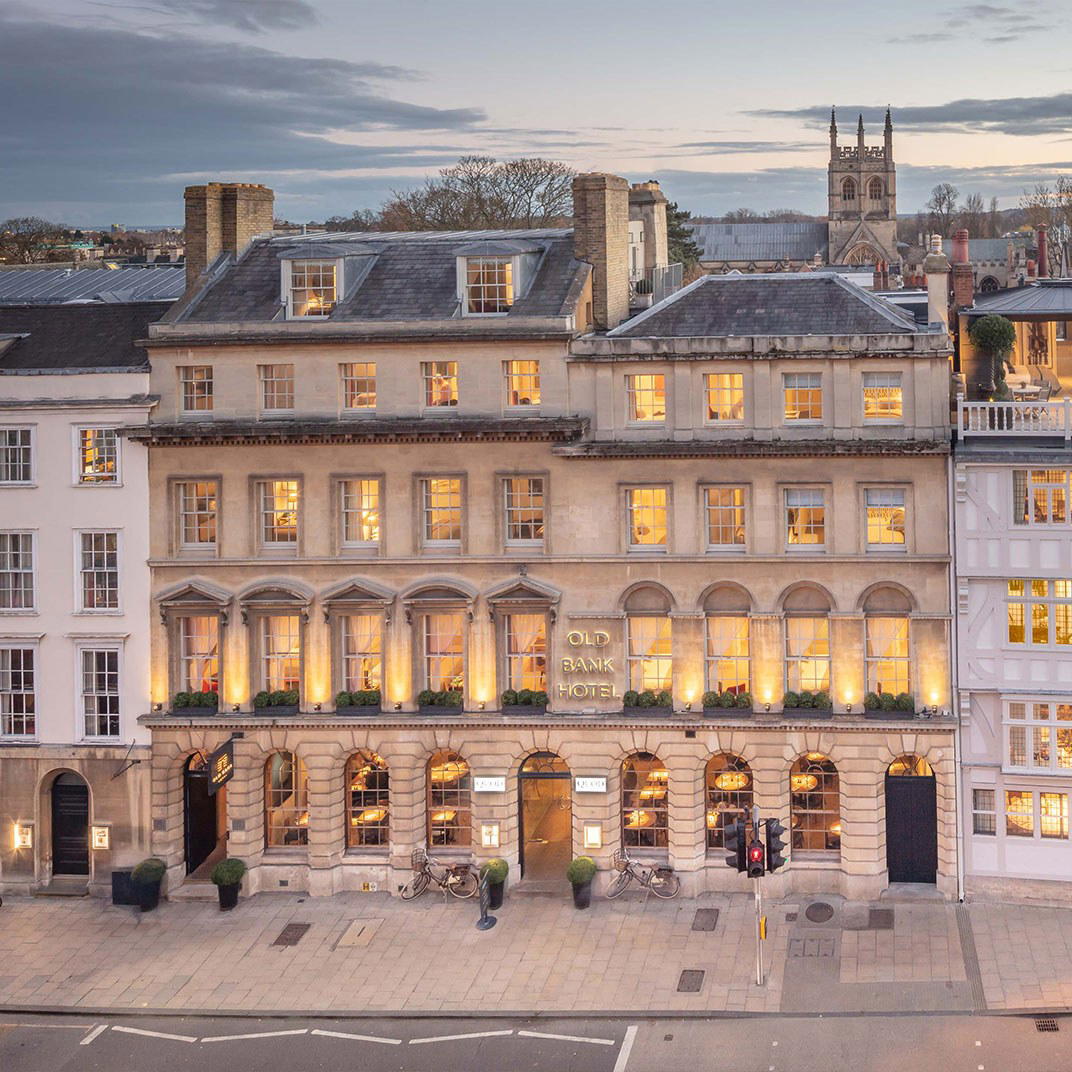
A Victorian Vault on the High Street
Oxford's High Street is one of the more demanding addresses in English architecture. The curve from Carfax Tower to Magdalen Bridge draws together medieval college facades, Georgian shopfronts, and Victorian civic buildings in a sequence that has been analysed in architectural histories for over a century. To open a hotel at 92-94 High Street is to accept that the building itself will always be part of the review. Old Bank Hotel does not resist this. The property occupies a former bank, and the original banking hall's proportions, tall ceilings, large windows giving onto the street, stonework that carries the confidence of nineteenth-century institutional architecture, form the physical logic of the ground floor. Where many conversions strip period fabric to create a neutral hospitality shell, the approach here keeps the structural character visible and works around it.
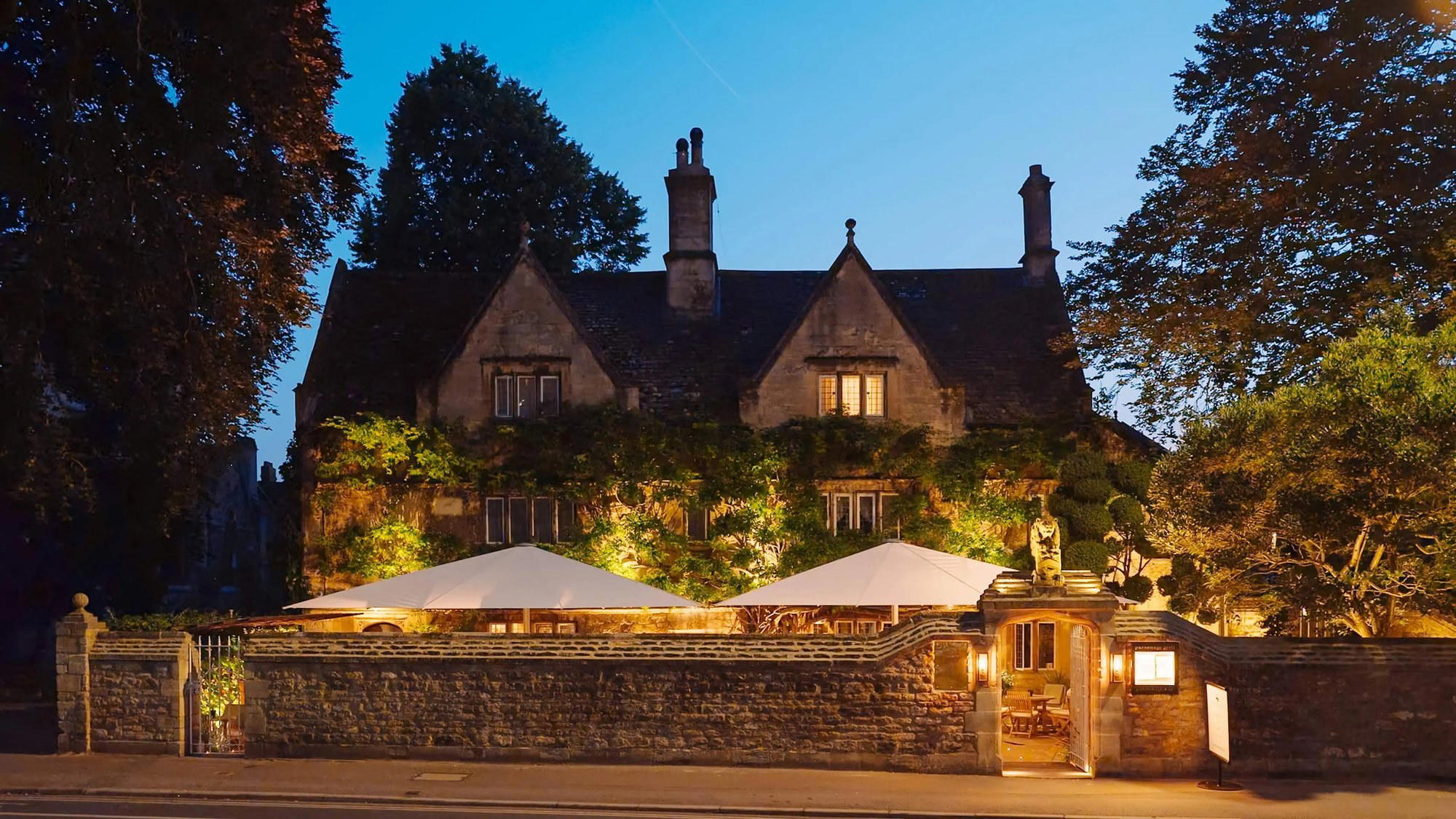
This places Old Bank Hotel in a specific tier within Oxford's accommodation market: properties where the building is itself a reason to stay, as much as the room category or the food offering. The Old Parsonage Hotel occupies a seventeenth-century building north of the city centre and operates on a comparable logic. The The Randolph Hotel Oxford, a Graduate by Hilton brings Victorian Gothic scale to Beaumont Street. Old Bank sits between these positions, combining High Street centrality with the intimacy that comes from a smaller footprint than the Randolph's full hotel operation.
The Architecture of Conversion
Bank-to-hotel conversions have become a recognisable sub-genre of British hospitality development over the past two decades. The challenge is consistent: banking halls were designed for transaction and display, with volumes scaled to project institutional authority rather than residential comfort. Bedrooms typically occupy upper floors where the original building logic shifts, and the design problem becomes how to connect the drama of the ground floor to the more human scale required above it.
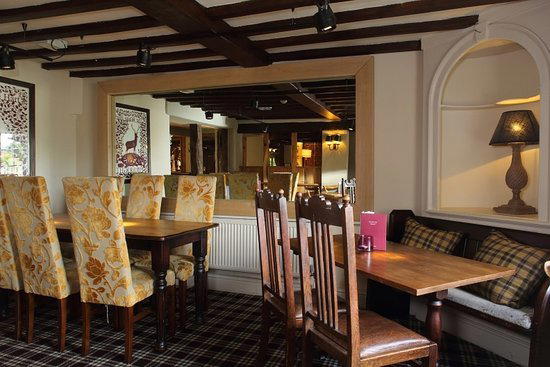
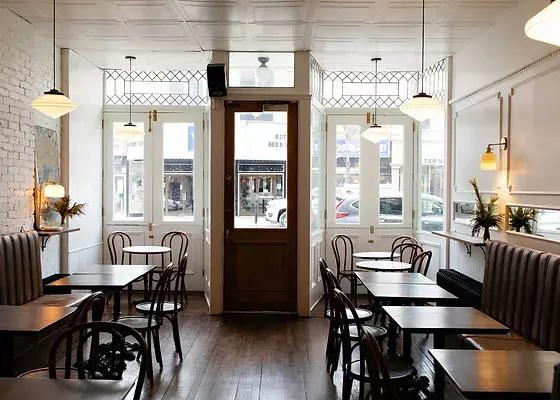
At Old Bank, the High Street facade retains its Victorian stone character, giving the hotel a visual weight appropriate to its neighbours. The ground floor restaurant and bar benefit from the original tall windows, which bring in the light and movement of one of Oxford's busiest pedestrian routes. This kind of ground-floor activation, where the hotel's public spaces open visually onto the street, is harder to achieve in properties set back from the road or positioned on quieter residential streets, and it gives Old Bank a different daily rhythm from alternatives like the Artist Residence Oxfordshire, which operates at a more secluded register.
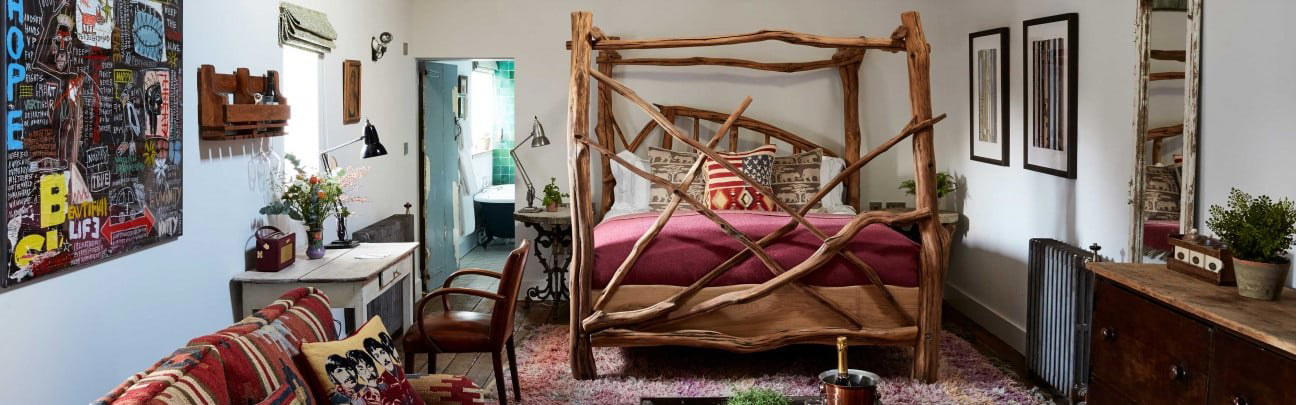
The art collection displayed throughout the hotel is a documented feature of the property, with works by Maggi Hambling and others giving the interiors a programmatic identity that goes beyond generic decorative choices. In the context of a university city where art is embedded in public and institutional life, the Ashmolean is less than ten minutes' walk, this is a coherent curatorial decision rather than a styling exercise.
Position in Oxford's Hotel Set
Oxford's premium hotel tier has consolidated around a handful of addresses, each with a distinct positioning. The The Store Oxford represents a newer design-led entry into the market. The Graduate by Hilton Oxford brings chain infrastructure to a university-adjacent location. Old Bank operates as an independent, and the MICHELIN Selected recognition it carries in 2025 places it within the guide's curated set of hotels judged on quality of welcome, comfort, and overall experience rather than on restaurant alone. MICHELIN's hotel selection is criteria-based rather than star-graded in the same way as its restaurant distinctions, and inclusion signals that the property meets a consistent standard across categories that range from room quality to service approach.
For comparison, other MICHELIN Selected properties in the UK include addresses as varied as Lime Wood in Lyndhurst and The Newt in Somerset, which demonstrates that the designation spans multiple formats and price points. Within Oxford specifically, the MICHELIN Selected tag helps readers identify which properties have been independently assessed against a consistent framework, rather than relying on aggregator scores alone.
Location as an Argument
The High Street address is especially direct practical fact about Old Bank Hotel, and it matters more here than in cities where the premium hotel district is removed from the historic core. Oxford's academic and architectural points of interest, the Bodleian Library, Radcliffe Camera, Christ Church, the covered market, the Ashmolean, are all reachable on foot from 92-94 High Street. For guests whose primary reason for being in Oxford is the city itself, the walk from the front door to any of these places takes under fifteen minutes. This is not a hotel that requires a taxi to reach the version of Oxford that most visitors come to see.
The High Street's own character adds to this. It is a working street, tourists, cyclists, students, and delivery vehicles share the same pavement, and staying on it rather than in a quieter residential area gives a different texture to an Oxford visit than properties positioned further from the centre. Whether that texture is appealing or not depends on what you want from a stay, but the tradeoff is explicit: noise and animation in exchange for immediacy.
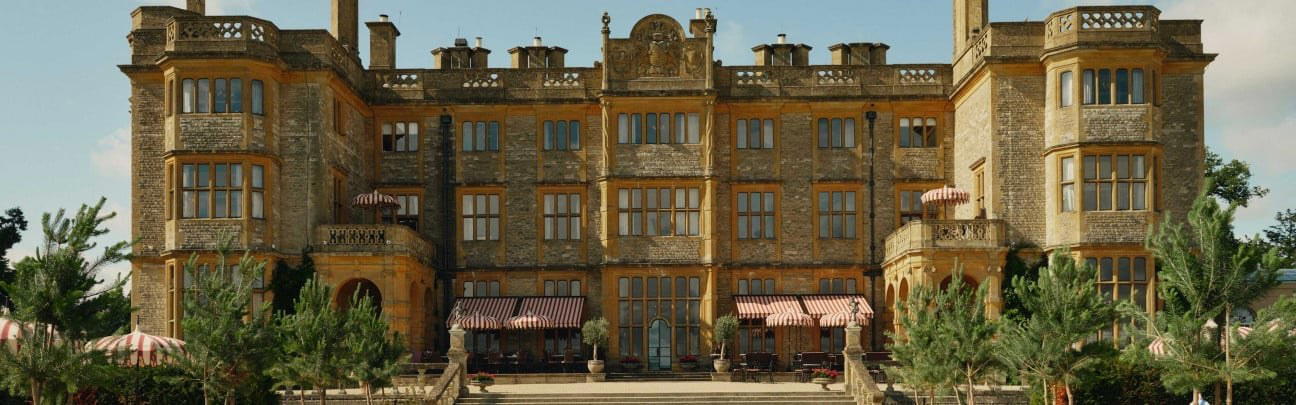
Guests considering quieter alternatives might look at the Old Parsonage Hotel on Banbury Road, which trades the High Street energy for a more residential setting. Those wanting the full range of UK MICHELIN Selected hotel options beyond Oxford can explore properties including Gleneagles in Auchterarder, The Savoy in London, or Estelle Manor in North Leigh, which is itself less than twenty miles from Oxford. For a broader view of the city's dining scene, see our full Oxford restaurants guide.
Planning a Stay
Old Bank Hotel sits at 92-94 High Street, Oxford, in the centre of the city's pedestrian-heavy historic core. Guests arriving by train from London Paddington (approximately one hour on fast services) will find the hotel roughly a fifteen-minute walk or short taxi from Oxford station. The High Street is part of Oxford's central cycling and pedestrian zone, so car access requires attention to local traffic restrictions. The nightly rate is around $241. For comparable independently positioned UK hotels in cathedral or historic university cities, Longueville Manor in Jersey and Farlam Hall Hotel and Restaurant in the Lake District offer useful reference points for what independent properties in heritage settings tend to offer at a similar tier.
How It Stacks Up
Comparable venues nearby, for context on price, style, and recognition.
| Venue | Cuisine | Price | Awards | Notes |
|---|---|---|---|---|
| Old Bank HotelThis venue — the venue you are viewing | Historic bank conversion with luxury boutique positioning | $$$$ | 5-Star | Not listed |
| The Store Oxford | Luxury lifestyle hotel in historic department store building | $$$$ | 5-Star | Broad Street |
| Artist Residence Oxfordshire | historic coaching inn with contemporary artistic renovations | $$$ | Michelin 1 Key | South Leigh |
| The Randolph Hotel Oxford, a Graduate by Hilton | Historic landmark with modern updates | $$$$ | 5-Star | Oxford City Centre |
| Old Parsonage Hotel | 17th-century historic parsonage with modern updates | $$$$ | Michelin 1 Key | Oxford City Centre |
| Longueville Manor | Restored historic manor house with homely yet chic contemporary elements | $$$$ | 5-Star | St Saviour |
Recognition history
Dated appearances from independent guides and award organizations, with the underlying list record or original source where available.
Michelin Selected
Michelin
At a Glance
- Elegant
- Sophisticated
- Classic
- Romantic Getaway
- Business Trip
- Weekend Escape
- Historic Building
- Terrace
- Wi Fi
- Room Service
- Concierge
- Elevator
- Parking
- EV Charging
- Street Scene
- Wi Fi
- Room Service
- Concierge
- Elevator
- Parking
- EV Charging
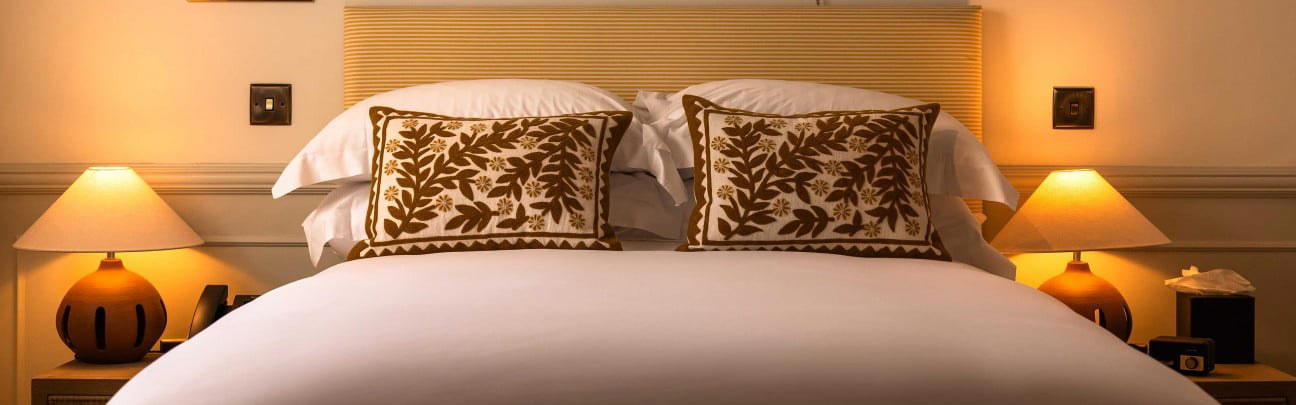
Elegant and sophisticated with historic Georgian architecture, marble bathrooms, and stimulating twentieth-century art collection.