Mercure Bukhara Old Town
The Mercure Bukhara Old Town occupies a Samarkand Street address inside Bukhara's UNESCO-listed historic core, placing guests within walking distance of the Kalon Minaret, the Poi Kalon complex, and the Lyabi-Hauz ensemble. An Accor-flagged property in a market dominated by courtyard guesthouses and converted caravanserais, it offers a recognisable booking infrastructure in a city where mid-scale branded inventory is genuinely limited.

Pearl is the En Primeur Club membership app, where members save venues, book tables and use the concierge.
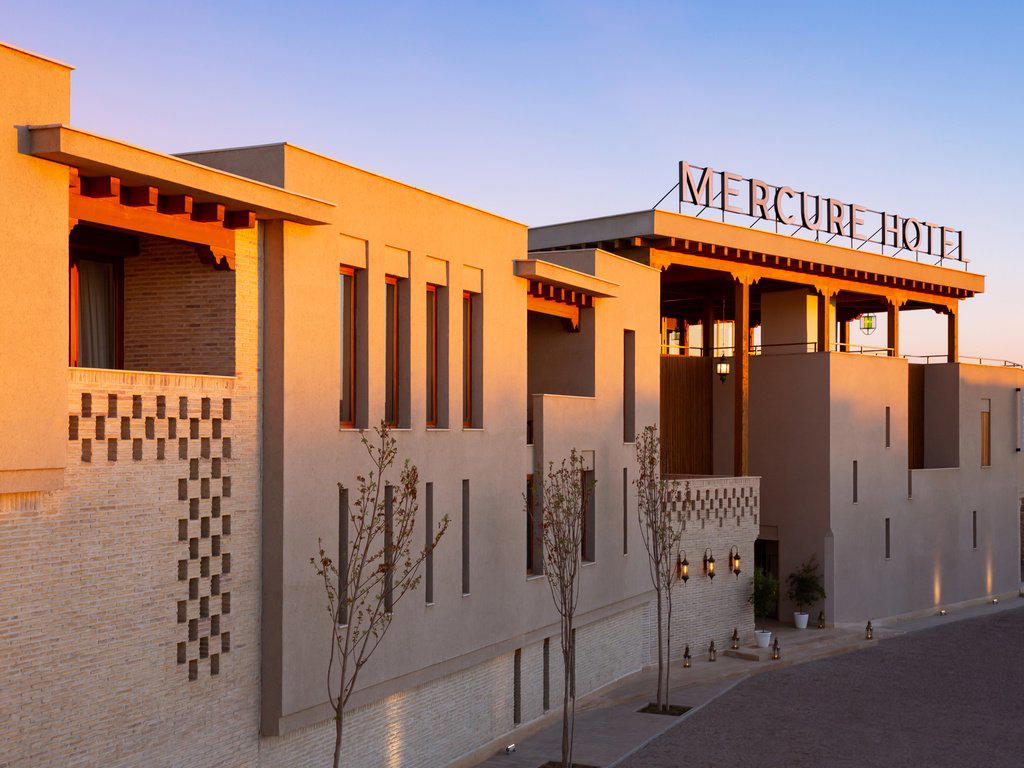
Where Silk Road Brick Meets a Modern Chain Format
Bukhara's old city does not ease you in gently. Walking toward Samarkand Street from the Lyabi-Hauz pool, you pass fired-earth facades that have stood for centuries, madrassas whose tile work dates to the Timurid era, and bazaar arcades whose proportions were set long before the concept of a hotel chain existed. Into this architectural environment, the Mercure Bukhara Old Town inserts itself at address 206 Samarkand Street, placing a recognizable mid-market international format directly inside one of Central Asia's most concentrated historic streetscapes. That tension between global hospitality standardization and a UNESCO-listed urban fabric is, in many ways, the defining experience of staying here.
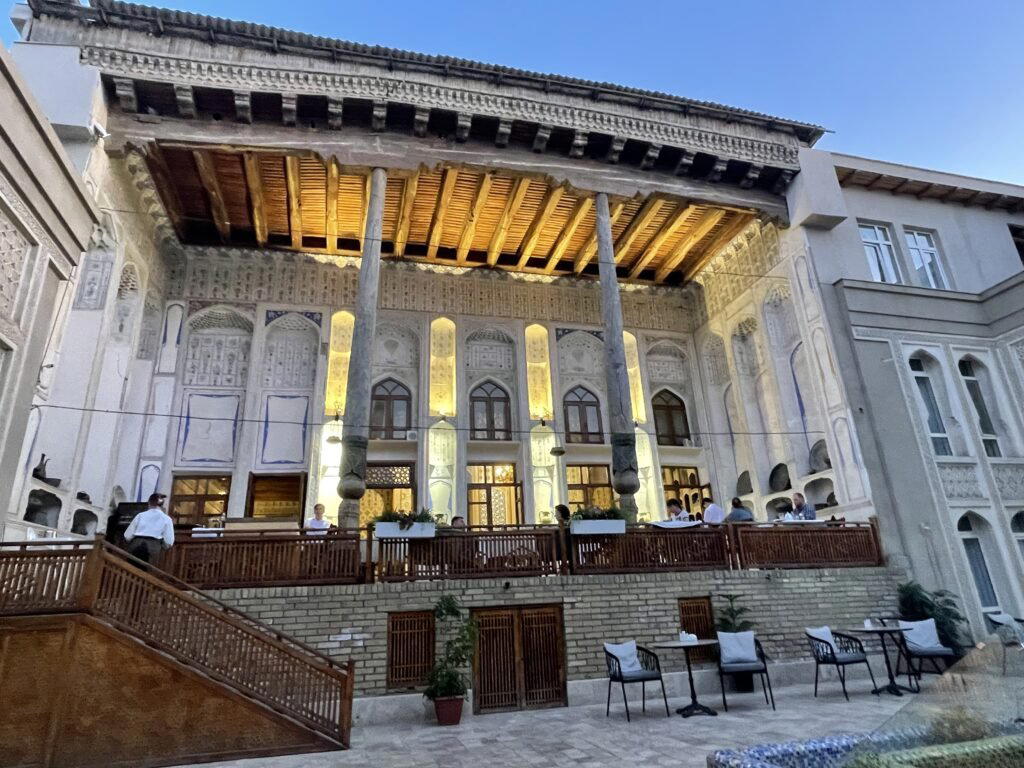
Bukhara's old town sits within a protected zone that imposes meaningful constraints on new construction and renovation. Buildings must respect scale, massing, and in many cases facade materials. For a property operating under the Mercure banner, those constraints shape the guest experience from the outside in: the approach feels more like entering a restored caravanserai than checking into a business hotel. The courtyard typology that defined Central Asian inn architecture for over a millennium, where rooms arranged around a shaded central space provided both security and relief from summer heat, remains the organizing principle for properties of this type in Bukhara's core. Whether that logic holds at the Mercure's specific site is worth examining on arrival, but the urban context makes it almost inevitable.
The Old Town Address and What It Implies
Positioning on Samarkand Street places the property within direct walking distance of Bukhara's primary monument cluster: the Kalon Minaret, the Ark Fortress, and the trading domes of the old bazaar district. This is not peripheral Old Town access. It is central, and it carries consequences for both atmosphere and noise. Bukhara draws significant tourist volume during the spring and autumn shoulder seasons, roughly March through May and September through November, when temperatures drop from the punishing summer range of 35 to 40 degrees Celsius into a workable 15 to 25 degrees. Occupancy at properties in this location clusters heavily into those windows, which affects availability and, typically, rate. Travelers planning visits outside those months should expect a quieter streetscape but more extreme conditions underfoot.
The old city's pedestrian character is one of its genuine architectural assets. Motorized traffic is largely excluded from the historic core, which changes the acoustic quality of the area in ways that larger Central Asian cities, including Tashkent, cannot offer. Properties like the Hyatt Regency Tashkent operate in a capital-city register, with the infrastructure and spatial scale that implies. Bukhara's old town operates on an entirely different register: narrower, slower, and architecturally denser. The Mercure format, which in other markets typically occupies contemporary urban or airport-adjacent real estate, reads differently here because the street itself is the amenity.
Architecture as Context: What the Bukhara Building Tradition Establishes
Bukhara's built environment is among the most studied in the Islamic architectural world. The city's craftsmen developed a distinct tradition of pakhsa and fired-brick construction, with surface ornament concentrated at doorways, stalactite cornices, and tilework friezes. The characteristic summer rooms, or aivan, were designed for cross-ventilation, their deep-shaded porches reducing interior temperatures by ten degrees or more in the absence of mechanical cooling. Restoration projects across the old city have attempted to reconcile these passive-cooling logics with contemporary guest expectations of air conditioning, hot water, and connectivity.
International hotel groups operating in historic cores across the globe have approached this problem differently. Aman Venice and Cipriani, A Belmond Hotel, Venice have resolved the tension between historic fabric and contemporary luxury at a high price point and with significant architectural investment. Castello di Reschio in Umbria demonstrates what deep restoration can achieve when a single ownership group controls both the property and the surrounding estate. At the Mercure level, the expectation and the investment are different, but the challenge is the same: how to make an international format feel architecturally coherent with a setting it had no hand in creating.
For the Bukhara old town context specifically, the most legible markers of quality restoration are usually found in the courtyard treatment, the handling of original archways, and the degree to which guest rooms retain proportions consistent with the historic room sizes rather than being subdivided or extended for contemporary spatial norms. These details matter more here than thread counts or lobby lighting design.
The Mercure Format in Central Asia
The Mercure brand, within the Accor portfolio, occupies a mid-scale tier that emphasizes local character as a differentiator from the group's more standardized flagships. In markets where that local character is architecturally significant, the brand positioning can work to the property's advantage. Bukhara is precisely the kind of market where the brief aligns well with the setting: a city where the building stock itself is the attraction, and where guests are self-selecting for cultural and heritage interest rather than business travel infrastructure.
Uzbekistan's hospitality sector has expanded significantly since the country's tourism liberalization reforms of 2018 and 2019, which removed visa barriers for dozens of nationalities and stimulated inbound travel to a degree the old Soviet-era hotel stock was unprepared to accommodate. New properties across Samarkand, Khiva, and Bukhara have entered the market to fill that gap. For travelers accustomed to the reference points of premium international hospitality, properties like Hotel Sacher Wien, Le Bristol Paris, or Mandarin Oriental Bangkok represent a different tier entirely. The Mercure Bukhara Old Town does not position against those properties. It positions as a brand-backed option in a market where independently operated boutique guesthouses and Soviet-era hotels represent the main alternatives, and where the Accor name provides booking confidence and loyalty program access for travelers who want both.
For a wider view of options across the city, see our full Buxoro restaurants and hotels guide.
Planning a Stay: What to Know
The property's address on Samarkand Street in the 200118 postal zone places it within the old city's controlled area. The shoulder seasons of April and October represent the practical sweet spot for first-time visitors: the monument sites are accessible without summer-heat attrition, and the bazaar trading domes function as genuine commercial spaces rather than pure tourist theater. Arriving in either window also coincides with the leading natural light for photographing the Kalon ensemble, which faces roughly south and catches morning light directly on its decorated facade.
How It Stacks Up
| Venue | Awards |
|---|---|
| Mercure Bukhara Old TownThis venue (the venue you are viewing) | Not listed |
| Hyatt Regency Tashkent | Star Wine List |
| InterContinental Tashkent, an IHG Hotel | 1 Michelin Key · Forbes Recommended |
| Oscar Boutique Hotel | World Travel Awards |
Continue exploring
More in Buxoro
Details
- Classic
- Elegant
- Scenic
- Cozy
- Romantic Getaway
- Weekend Escape
- Historic Building
- Terrace
- Panoramic View
- Wi Fi
- Pool
- Spa
- Fitness Center
- Room Service
- Concierge
- Restaurant
- Street Scene
- Garden
- Wheelchair Accessible
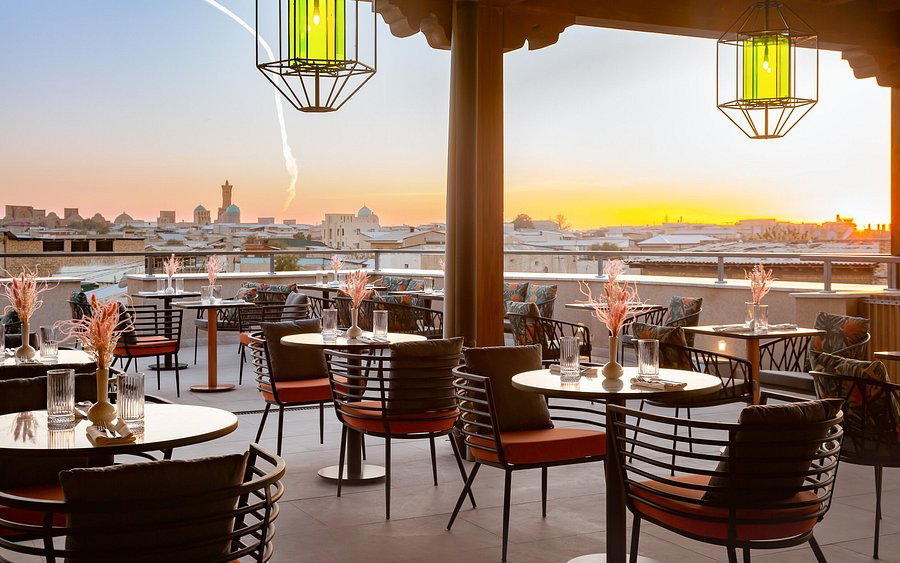
Inviting atmosphere combining modern and historical elements with stylish interiors using light neutral colors, oriental patterns, and traditional materials like Bukhara brick and majolica tiles.