Lumeria Maui Retreat Center

Michelin Selected
Lumeria Maui sits on Baldwin Avenue in Makawao, on Maui's cooler upcountry slopes, where the retreat format has long attracted guests seeking structured withdrawal from the coast's resort density. The property operates within a category of wellness-focused stays that prioritizes program depth and setting over amenity scale, placing it alongside a small peer group of American retreat centers defined by landscape integration rather than room count.

Pearl is the En Primeur Club membership app — saves, bookings, and concierge access live there. Same editors, same standards.
- Address
- 1813 Baldwin Ave, Makawao, HI 96768
- Phone
- (808) 579-8877
- Website
- lumeriamaui.com
- Directions
- Get directions
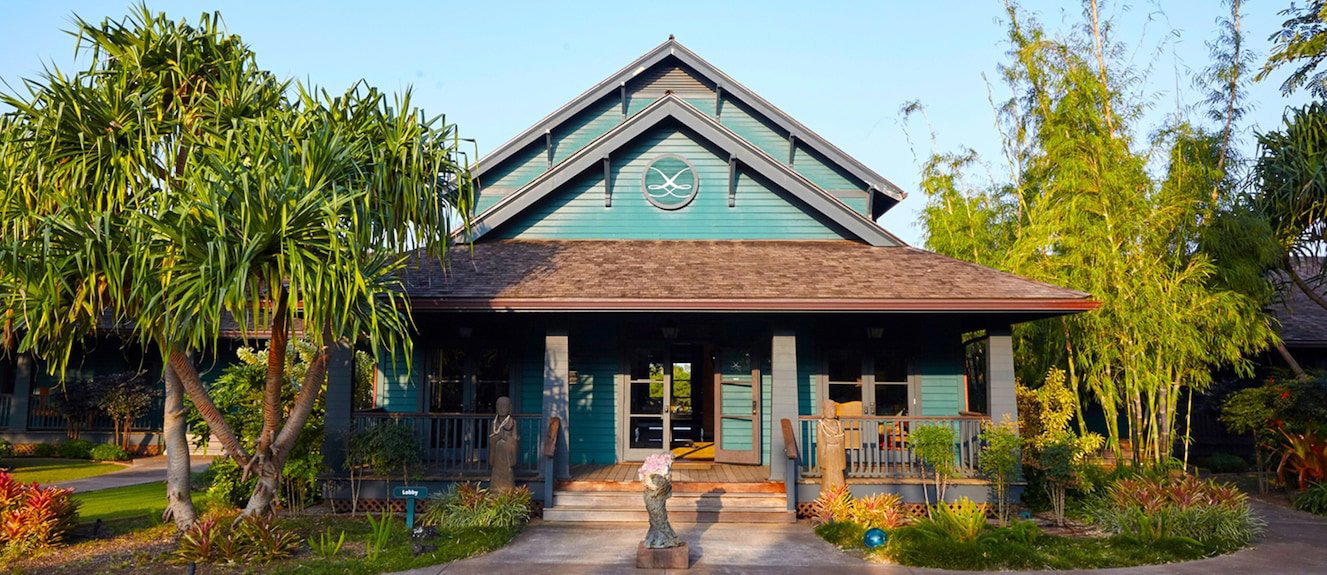
Upcountry Maui and the Architecture of Withdrawal
The road up Baldwin Avenue climbs out of Paia's surf-town commerce and into a different register of Maui entirely. By the time you reach Makawao, the elevation has dropped the temperature several degrees, eucalyptus and Norfolk pines have replaced the coastal palms, and the island's resort identity feels genuinely distant. This is the context in which Lumeria Maui Retreat Center operates, and the context matters more than most venue details: upcountry Maui has long functioned as a counterweight to the Wailea and Ka'anapali corridor, drawing a different kind of visitor who comes specifically for the altitude, the agricultural character, and the absence of ocean-facing infinity pools.
Retreat centers in this part of the island sit within a longer Hawaiian tradition of using upland landscapes for contemplation and recovery. The cooler, cloud-touched environment of the slopes below Haleakala has a physiological effect that differs markedly from sea-level resort stays, and properties in this zone have built programming around that distinction rather than competing with coastal luxury on its own terms. Lumeria Maui's address at 1813 Baldwin Ave places it squarely within that tradition, in a setting where the surrounding pineapple and protea farmland is part of what the property offers, not merely its backdrop.
Design in Conversation with the Landscape
Wellness retreat architecture in the United States has split into two broad approaches over the past two decades. One approach, exemplified by large-format destinations like Canyon Ranch Tucson, treats the built environment as a self-contained campus where programming and amenity scale do the heavy lifting. The other, smaller-property approach subordinates structure to setting, using modest building footprints, open-air connections, and materials sourced from the surrounding landscape to make the environment itself the primary therapeutic agent. Lumeria Maui operates in the latter register.
Properties that pursue landscape integration over built-amenity density share a recognizable aesthetic vocabulary: low-rise structures that follow natural topography rather than flatten it, circulation paths that move guests through cultivated or native plantings rather than past them, and interior spaces that sacrifice scale for view-line quality. This approach is not unique to Hawaii. You see it at Amangiri in Canyon Point, where architecture wraps a sandstone butte rather than imposing on it, and at Ambiente in Sedona, where each unit is oriented to a specific desert view corridor. In Makawao, the relevant landscape is softer and greener than either of those, but the design logic is comparable: the building serves the land, not the other way around.
The plantation-era character of upcountry Maui also shapes what buildings here look like. Structures on and around Baldwin Avenue carry the architectural memory of the sugar and pineapple industries that defined this corridor for more than a century. Retreat centers that occupy older buildings in this zone inherit that material history whether they engage with it explicitly or not, and the most considered properties treat preserved structural elements as part of what distinguishes them from purpose-built resort construction.
Programming Logic at Altitude
The retreat format, as it has developed in North America, makes a specific promise: that a structured stay, defined by scheduled programming rather than open leisure, produces outcomes that an unstructured hotel visit cannot. Properties like Blackberry Farm in Walland and SingleThread Farm Inn in Healdsburg pursue a version of this through culinary immersion and farm-to-table programming. Wellness-specific retreats like Lumeria Maui pursue it through movement, meditation, and bodywork sequences that are designed to compound across days rather than be sampled individually.
Upcountry Maui's climate supports this format more naturally than the coast does. The lower ambient temperature and reduced UV intensity at elevation make outdoor morning practice viable year-round in a way that sea-level Maui cannot reliably guarantee. Guests arriving from the continental United States also find the time-zone adjustment less disorienting at higher elevations, where cooler evenings help reset sleep cycles faster. These are not marketing claims; they reflect well-documented physiological responses to altitude and ambient temperature that retreat operators in mountain and highland settings have long built their schedules around.
For context on where Lumeria Maui sits within Hawaii's broader hospitality range, consider the distance between this kind of stay and something like Kona Village, A Rosewood Resort, which operates on the Big Island as a full-service luxury resort with an entirely different amenity proposition. Both are valid Hawaiian hospitality modes, but they address different needs and attract guests at different points in their travel intentions. Lumeria Maui is not a resort with a spa; it is a retreat center with rooms, and the distinction carries real implications for what a stay produces.
Planning a Stay: What to Know
Makawao is accessible from Kahului Airport, Maui's main air entry point, with the drive up Baldwin Avenue taking roughly 30 to 40 minutes depending on traffic in Paia. The upcountry location means guests who want to access Maui's beaches or the Hana Highway will need to drive down; the retreat functions as a destination in itself rather than a convenient base for coastal exploration. For guests whose primary intention is the programming rather than island touring, this is a reasonable trade. For those who want to split time between wellness activities and resort-style beach access, a coastal property would serve better as a base, with upcountry visits made as day excursions.
Retreat-format stays in this category generally reward longer bookings. A two-night stay allows enough time to move through an initial adjustment period and begin engaging with scheduled programming at depth, but three to five nights is where the compounding logic of structured retreat formats tends to deliver more complete results. Properties in this niche, from Post Ranch Inn in Big Sur to Little Palm Island Resort and Spa, consistently find that guest satisfaction increases with stay duration, and Lumeria Maui's programming structure is built with that arc in mind.
Those interested in the broader Maui hospitality picture, from Lumeria's upcountry register down to the island's coastal options, can find additional coverage in our full Maui County restaurants guide. For guests comparing this kind of retreat stay against other American properties in the design-led wellness category, reference points worth considering include Sage Lodge in Pray, Alpine Falls Ranch in Superior, and Troutbeck in Amenia, each of which operates in a different landscape but shares the structural logic of a property where setting and program are the primary offer.
Side-by-Side Snapshot
| Venue | Price | Awards |
|---|---|---|
| Lumeria Maui Retreat CenterThis venue — the venue you are viewing | Not listed | Michelin Selected |
| Aman New York | Not listed | 3 Michelin Keys · World's 50 Best #87 |
| Amangiri | $1,000–1,500 | 3 Michelin Keys · World's 50 Best #45 |
| Hotel Bel-Air | $750–1,000 | 3 Michelin Keys · World's 50 Best #57 |
| The Beverly Hills Hotel | Not listed | 3 Michelin Keys · World's 50 Best #65 |
| The Carlyle, A Rosewood Hotel | $1,500–2,500 | 2 Michelin Keys · World's 50 Best #64 |
Recognition history
Dated appearances from independent guides and award organizations, with the underlying list record or original source where available.
Michelin Selected
Michelin

Details
- Wellness Retreat
- Garden
- Spa
Serene and peaceful