

Selected by the Michelin Guide Hotels 2025, Los Cauquenes Resort & Spa occupies a commanding position on the Beagle Channel in Ushuaia, Argentina's southernmost city. The property sits within a tier of design-led Patagonian retreats where the physical environment, glaciers, sub-Antarctic forests, and open water, is the primary architectural reference. It is one of few hotels in Tierra del Fuego to carry Michelin recognition.
Pearl is the En Primeur Club membership app — saves, bookings, and concierge access live there. Same editors, same standards.
- Address
- Barrio Bahía Cauquén, De la Ermita 3462, V9410 Ushuaia, Tierra del Fuego, Argentina
- Phone
- +54 2901 44-1300
- Website
- loscauquenes.com
- Directions
- Get directions
 Saves & bookings on Pearl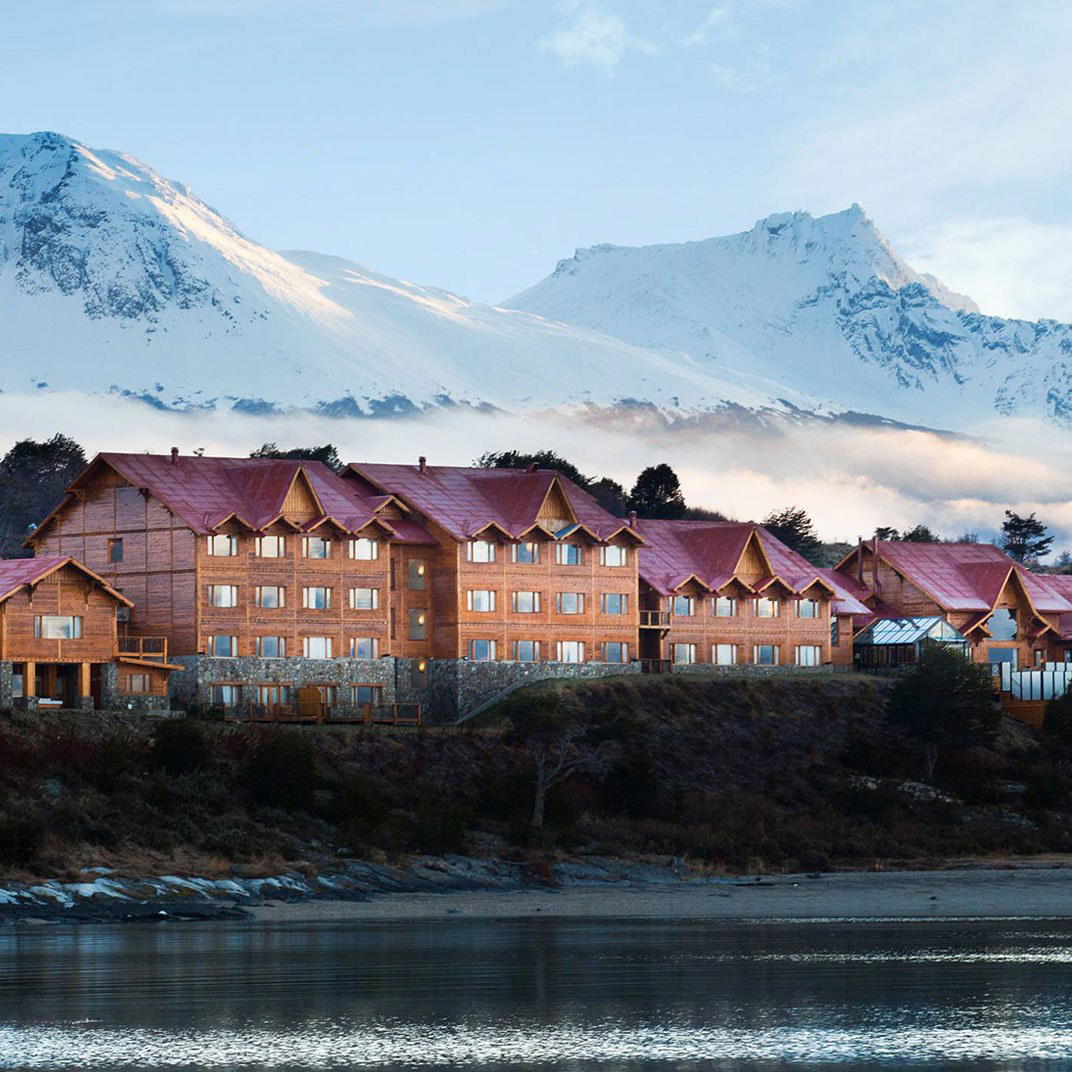
Where the Beagle Channel Sets the Design Brief
In most destination hotels, architecture responds to a client brief. At the southern edge of Argentina, in Ushuaia, Los Cauquenes Resort & Spa is a 5-star hotel. The Beagle Channel, the strait that separates Argentine Tierra del Fuego from Chilean islands to the south, is not background scenery. It is the dominant force around which every sightline, facade angle, and material choice at properties like Los Cauquenes Resort & Spa must answer. The result, at its leading, is architecture that reads as translation rather than imposition: stone, wood, and glass arranged to frame a specific patch of sub-Antarctic water rather than to assert any independent aesthetic identity.
Los Cauquenes sits on De la Ermita, a shoreline road that curves along the channel's edge on the western approach to Ushuaia's town centre. The location places the property within view of the mountains of the Cordón Martial to the north and Chilean territory to the south, and far enough from the port's commercial activity to register as a retreat rather than a base camp. This is the physical context that defines the tier of hotel it belongs to, properties where the decision about where to build was as considered as any design decision made afterward.
Michelin Recognition and What It Signals in This Market
The Michelin Guide's 2025 hotel selection includes Los Cauquenes among its recognised properties, a designation that places it within a curated set of hotels the Guide considers worth the detour on the basis of comfort, character, and setting. In a city as geographically remote as Ushuaia, accessible primarily by air, roughly 3,100 kilometres south of Buenos Aires, Michelin inclusion carries particular weight because the pool of assessed properties is small and the barrier to justifying a trip is high. Visitors are not passing through; they are here deliberately, and the hotel infrastructure has to hold up to that level of scrutiny.
Within Argentina's broader Michelin-selected hotel portfolio, Los Cauquenes occupies a specific niche: a resort-format property in a remote natural setting, positioned closer in character to properties like Estancia Cristina in El Calafate or Awasi Iguazu in Puerto Iguazu than to the urban palace hotels that dominate the country's luxury hotel narrative. For comparison, Buenos Aires carries the Alvear Palace Hotel tier, Alvear Palace Hotel being the clearest example of that category, while Patagonia and the far south operate by different rules, where landscape access and physical design coherence matter more than amenity lists or room counts.
The Architecture of Extreme Latitude
Building at 54 degrees south presents constraints that shape everything. The lenga beech forests that cover the hillsides behind Ushuaia turn a brief, vivid amber-red each autumn before the wind strips them. Snow can arrive in any month. Light in summer extends past ten in the evening; in winter it retreats before mid-afternoon. Architecture in this environment has to work across conditions that would expose cheap solutions immediately.
The design approach at properties operating in this tier along the Beagle Channel tends toward materials that weather honestly, local stone, timber with visible grain, large glass planes oriented south toward the channel rather than inward toward interior spaces. This is not a style choice in the decorative sense; it is a functional response to a setting where the exterior is always more interesting than anything an interior designer could produce. The more considered properties in this region resist the temptation to fill rooms with alpine-chalet references and instead let the channel's grey-blue light do the visual work.
The nearby Arakur Ushuaia Resort & Spa represents the other end of the local design spectrum, a larger-footprint property built higher on the hillside, with panoramic views that prioritise altitude over channel proximity. The two properties serve different versions of the same destination: one oriented toward the water, one toward the city and mountains above it. Neither approach is wrong; they reflect different architectural responses to the same unusually demanding site.
Patagonian Context and comparable set
Argentina's southern hospitality circuit has developed its own logic over the past two decades, with a small number of design-serious properties spread across vast distances. The Patagonian lake district to the north, anchored by Bariloche, where Villa Beluno Hotel & Spa operates, shares some of the same material vocabulary: natural stone, timber, lake views. But Ushuaia operates at a different register. The sub-Antarctic context, the proximity to Tierra del Fuego National Park, and the fact that it serves as the primary departure point for Antarctic expedition cruises gives it a frontier seriousness that the lake district's resort atmosphere lacks.
Guests arriving in Ushuaia in this tier of property are typically combining the stay with trekking in the national park, day trips on the channel, or pre-embarkation nights before an Antarctic voyage. The hotel has to function as both arrival point and base, which is a different operational demand from a pure leisure retreat. Los Cauquenes Resort + Spa + Experiences addresses this directly through an experiences-led format that positions the property within the active-travel tier of the regional market.
Planning a Stay
Ushuaia is served by daily flights from Buenos Aires (Aeroparque and Ezeiza), with the journey running approximately three and a half hours. The town's size means that the airport is close to the main hotel strip, and the drive along the channel road to Los Cauquenes' De la Ermita address takes a matter of minutes from arrivals. Summer (December through February) brings the longest days and the highest concentration of visitors, particularly those connecting to Antarctic departures, booking well ahead for this window is advisable, as Michelin-recognised properties at this latitude fill early in peak season. Autumn, particularly March and April, offers the lenga beech colour with considerably fewer competing guests.
How It Stacks Up
Comparable venues nearby, for context on price, style, and recognition.
| Venue | Cuisine | Price | Awards | Notes |
|---|---|---|---|---|
| Los Cauquenes Resort & SpaThis venue — the venue you are viewing | Chalet-style lodge integrated with natural Fuegian surroundings on Beagle Channel shores. | $$$$ | 5-Star | Not listed |
| Arakur Ushuaia Resort & Spa | Modern luxury mountain resort | $$$$ | 5-Star | Cerro Alarkén Natural Reserve |
| Los Cauquenes Resort + Spa + Experiences | Cozy luxury resort set on Beagle Channel shores with panoramic views and Patagonian authenticity. | $$$$ | 5-Star | outskirts of Ushuaia |
| Awasi Mendoza | Spanish colonial adobe villas set in vineyards | $$$$ | 5-Star | Luján de Cuyo |
| Casa Duhau | luxury villas and suites in wine country estate | $$$$ | 5-Star | Alto Agrelo |
| SLS Buenos Aires Puerto Madero | Luxury contemporary design hotel blending Buenos Aires cultural energy with international sophistication, featuring residential towers and curated art collection. | $$$$ | 5-Star | Puerto Madero |
Recognition history
Dated appearances from independent guides and award organizations, with the underlying list record or original source where available.
Virtuoso Luxury Hotel Partner
Virtuoso
Michelin Selected
Michelin
At a Glance
- Scenic
- Elegant
- Quiet
- Cozy
- Sophisticated
- Honeymoon
- Romantic Getaway
- Wellness Retreat
- Anniversary
- Waterfront
- Panoramic View
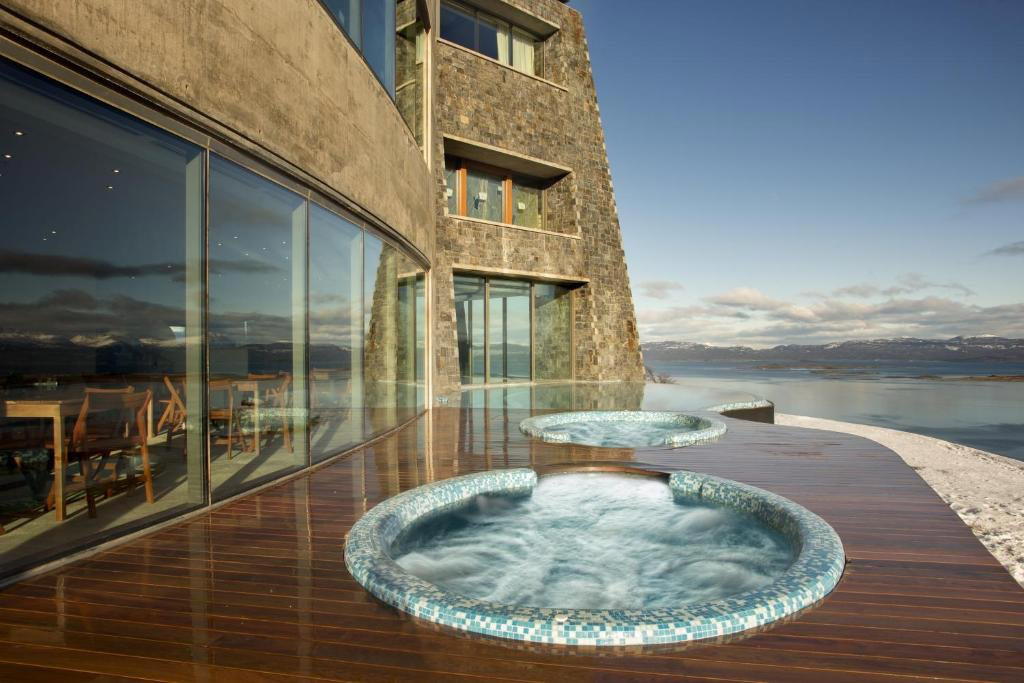
- Infinity Pool
- Pool
- Spa
- Fitness Center
- Room Service
- Concierge
- Restaurant
- Wi Fi
- Waterfront
- Mountain
- Pool
- Spa
- Fitness Center
- Room Service
- Concierge
- Restaurant
- Wi Fi
Warm and cozy atmosphere with relaxing living areas by the fire, rustic Fuegian style blending natural lenga wood and stone, and picture windows framing dramatic Beagle Channel and mountain views.