
Michelin Selected
Lloyd's Inn occupies a quietly converted address on Lloyd Road in Singapore's Tiong Bahru-adjacent district, operating in the smaller, design-led tier of the city's accommodation market. Where large international hotels compete on scale and amenity count, Lloyd's Inn positions itself on restraint: low-key architecture, considered materiality, and proximity to one of Singapore's most characterful residential neighbourhoods.

Pearl is the En Primeur Club membership app, where members save venues, book tables and use the concierge.
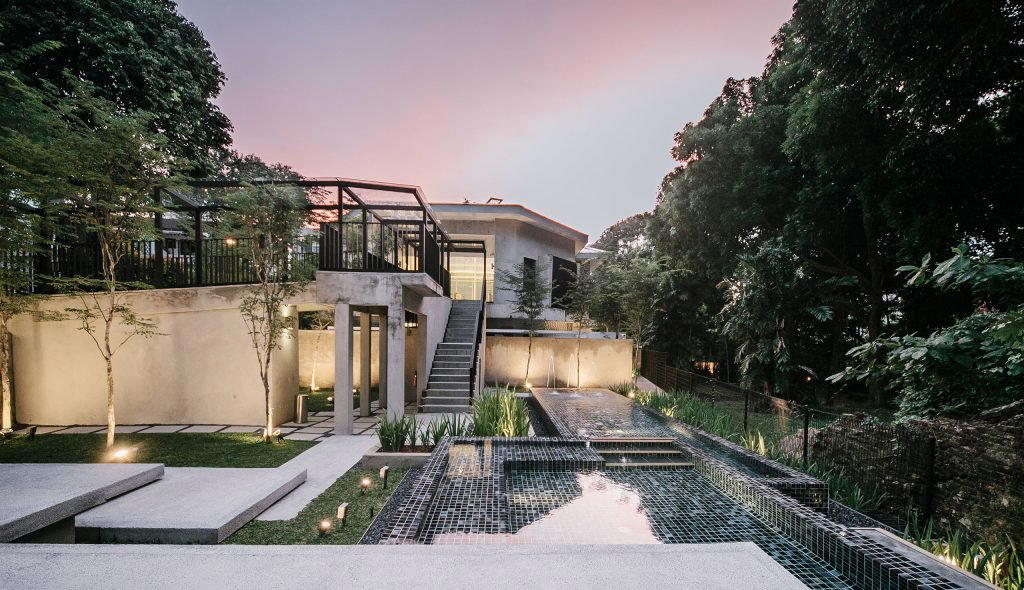
Where Singapore's Design-Led Hotel Tier Begins
Singapore's hotel market has long bifurcated between large-footprint international properties and a smaller cohort of independently minded stays. Capella Singapore and Raffles Hotel Singapore anchor the heritage-luxury tier; Conrad Singapore Marina Bay and Andaz Singapore represent the contemporary-international bracket. Lloyd's Inn at 2 Lloyd Road operates in a different register entirely: compact, architecture-forward, and sited in a low-rise residential corridor that most international visitors bypass on the way to Orchard Road. That positioning is precisely the point.
The property sits in the River Valley district, close enough to the Tiong Bahru conservation area to benefit from its neighbourhood character, coffee shops, independent bookstores, pre-war shophouses, without being embedded in it. Singapore's conservation zones have made this kind of location increasingly legible to a certain traveller: one who is less interested in proximity to Changi's transit connections and more interested in what the city looks like at street level, between the landmarks.
The Architecture of Restraint
In a city where hotel interiors tend toward either branded luxury maximalism or the glass-and-marble conventions of the business tier, Lloyd's Inn presents a different argument. The property's design language is deliberately pared back: natural materials, considered greenery, and an approach to space that favours open-air transition zones over climate-controlled lobbies. This is consistent with a broader movement in Southeast Asian boutique hospitality, where the boundary between interior and exterior is treated as a design element rather than an engineering problem.
The relationship between structure and landscape at Lloyd's Inn draws from a regional tradition of architecture that treats tropical climate as a material condition to work with rather than against. Covered walkways, planted surfaces, and rooms that engage with ambient light and air place the property in a lineage that runs through Bali's earlier resort wave, Singapore's own black-and-white bungalow heritage, and the contemporary eco-luxury experiments now appearing across the region. Amangiri in Canyon Point and Hotel Esencia in Tulum pursue related instincts in vastly different climates: the idea that a hotel's physical environment should amplify rather than insulate against its geography.
At Lloyd's Inn, this translates to a property that reads differently depending on the time of day. Morning light through planted screens, the sound of the residential street rather than a hotel corridor, and the absence of the standard lobby-bar-pool configuration that dominates comparable-tier international addresses. What the property offers in place of amenity breadth is spatial coherence, a sense that the architecture and the experience it enables were conceived together rather than assembled from a hospitality template.
Sited in Singapore's Most Walkable Hinterland
Lloyd Road itself is a short address, and the surrounding district rewards pedestrian exploration in a way that few hotel locations in Singapore do. The broader River Valley and Tiong Bahru corridor contains some of the city's most concentrated examples of 1930s Streamline Moderne housing, a legacy of the Singapore Improvement Trust's pre-war building program that produced a distinctive low-rise residential character now protected under conservation guidelines.
From Lloyd's Inn, the Tiong Bahru Market, one of Singapore's older hawker centres, operating in its current form since the 1950s renovation of the original wet market, is accessible on foot or by a short ride. The area's food culture runs from traditional kaya toast operations that have occupied the same stalls for decades to the wave of independent cafés that arrived in the early 2010s and repositioned Tiong Bahru as a destination neighbourhood. For broader context on where to eat and drink across the city, our full Singapore restaurants guide maps the dining scene by area and price tier.
The contrast with Singapore's more conventional hotel corridors is sharp. Properties like Carlton Hotel Singapore and Amara Singapore operate close to the CBD and Marina Bay precinct, where proximity to convention facilities and financial-district offices drives the guest profile. Lloyd's Inn's Lloyd Road address positions it closer to a residential and cultural circuit that includes the National Museum, Fort Canning Park, and the Dempsey Hill dining cluster, a different itinerary entirely.
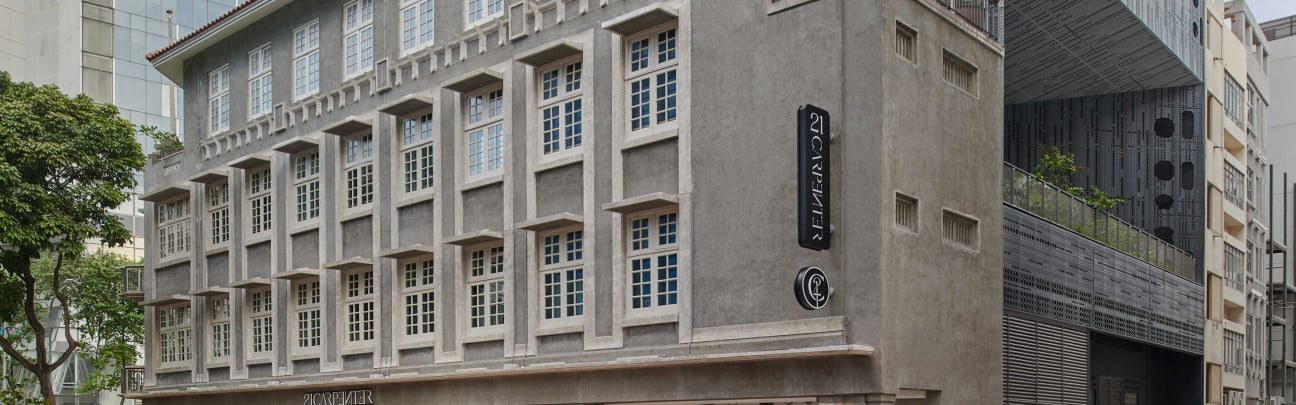
Singapore's boutique hotel tier is smaller than the city's international reputation might suggest. The market has historically rewarded scale and brand affiliation, which means independently operated, design-led properties occupy a narrow but increasingly well-defined niche. 21 Carpenter operates in a comparable register in Chinatown, with a shophouse conversion format. Artyzen Singapore sits at a slightly higher price point with a stronger F&B; program. The Outpost Hotel Sentosa by Far East Hospitality targets a leisure-first demographic in a resort corridor rather than the residential city grid.
Globally, the design-minimalist boutique hotel model that Lloyd's Inn represents has strong precedents. Castello di Reschio in Lisciano Niccone uses architectural restoration as its primary editorial position; HOTEL THE MITSUI KYOTO in Kyoto situates itself within a Japanese spatial tradition rather than international luxury convention. In New York, The Fifth Avenue Hotel and Aman New York represent opposite ends of the design-luxury spectrum, one rooted in period architecture, the other in contemporary minimalism, both pursued with conviction. Lloyd's Inn occupies the less-capitalised but equally considered end of that same sensibility, in a city where the category is still establishing its footing.
Planning Your Stay
Lloyd's Inn is located at 2 Lloyd Road, Singapore 239091, a short distance from Somerset MRT station on the North-South Line. The River Valley address places it within walking range of Fort Canning Park and a taxi or ride-share ride from the Marina Bay precinct. Given the property's size and the growing visibility of Singapore's boutique hotel tier among design-aware travellers, securing a reservation ahead of key travel periods, particularly the Formula 1 Grand Prix weekend in September and the year-end holiday window, is advisable. Travellers comparing design-led options across the city should also consider the options mapped in our Singapore city guide before finalising a neighbourhood preference.
Quick Comparison
| Venue | Cuisine | Price | Awards |
|---|---|---|---|
| Lloyd's InnThis venue (the venue you are viewing) | This venue | $100–200 | Michelin Selected |
| Capella Singapore | World's 50 Best | $750–1,000 | 1 Michelin Key · World's 50 Best #97 |
| Conrad Singapore Marina Bay | Not listed | $300–500 | Forbes 4-Star |
| Conrad Singapore Orchard | Not listed | Not listed | Forbes 4-Star |
| Fairmont Singapore | Not listed | Not listed | La Liste Top Hotels · Forbes Recommended |
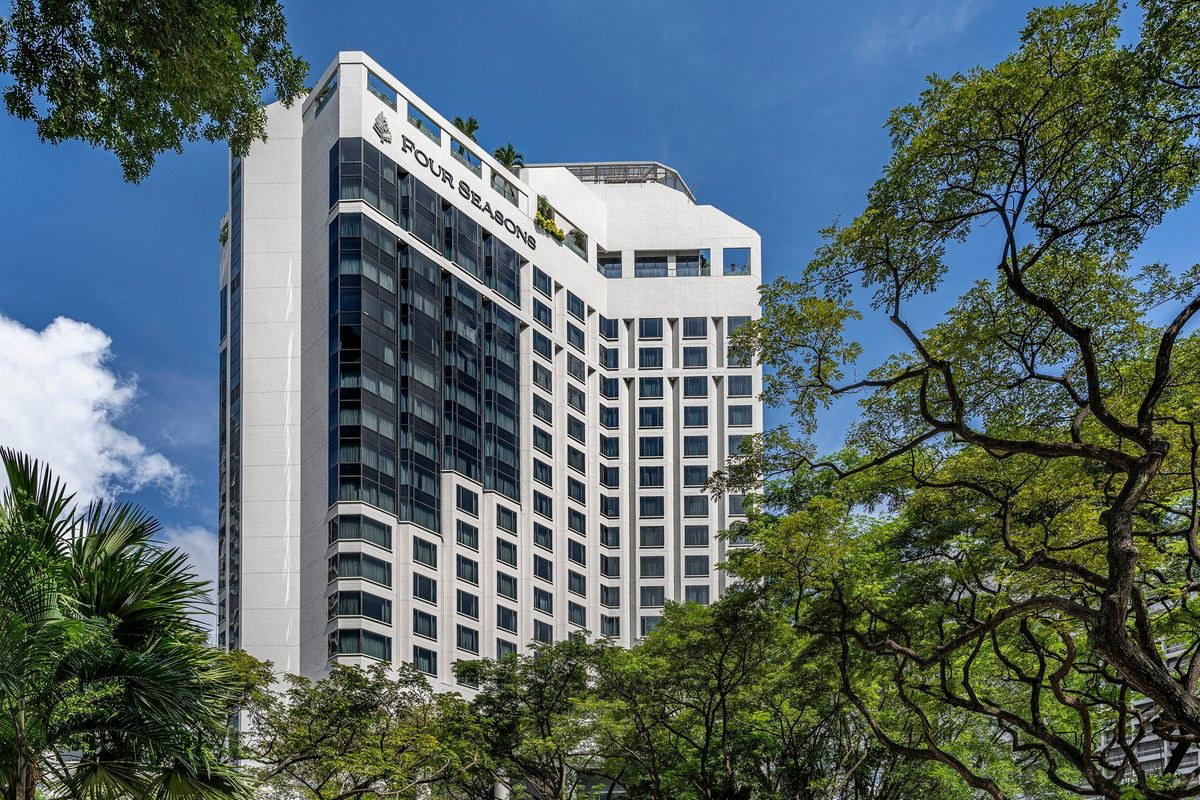
| Four Seasons Hotel Singapore | Not listed | $200–300 | 1 Michelin Key · La Liste Top Hotels |
Recognition history
Dated appearances from independent guides and award organizations, with the underlying list record or original source where available.
Michelin Selected
Michelin
Continue exploring
More in Singapore
Hotels in Singapore
All hotels in Singapore →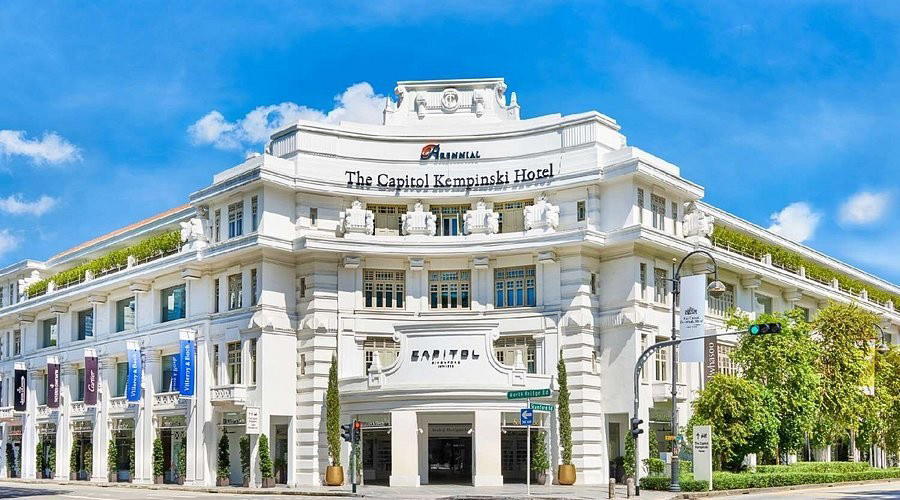
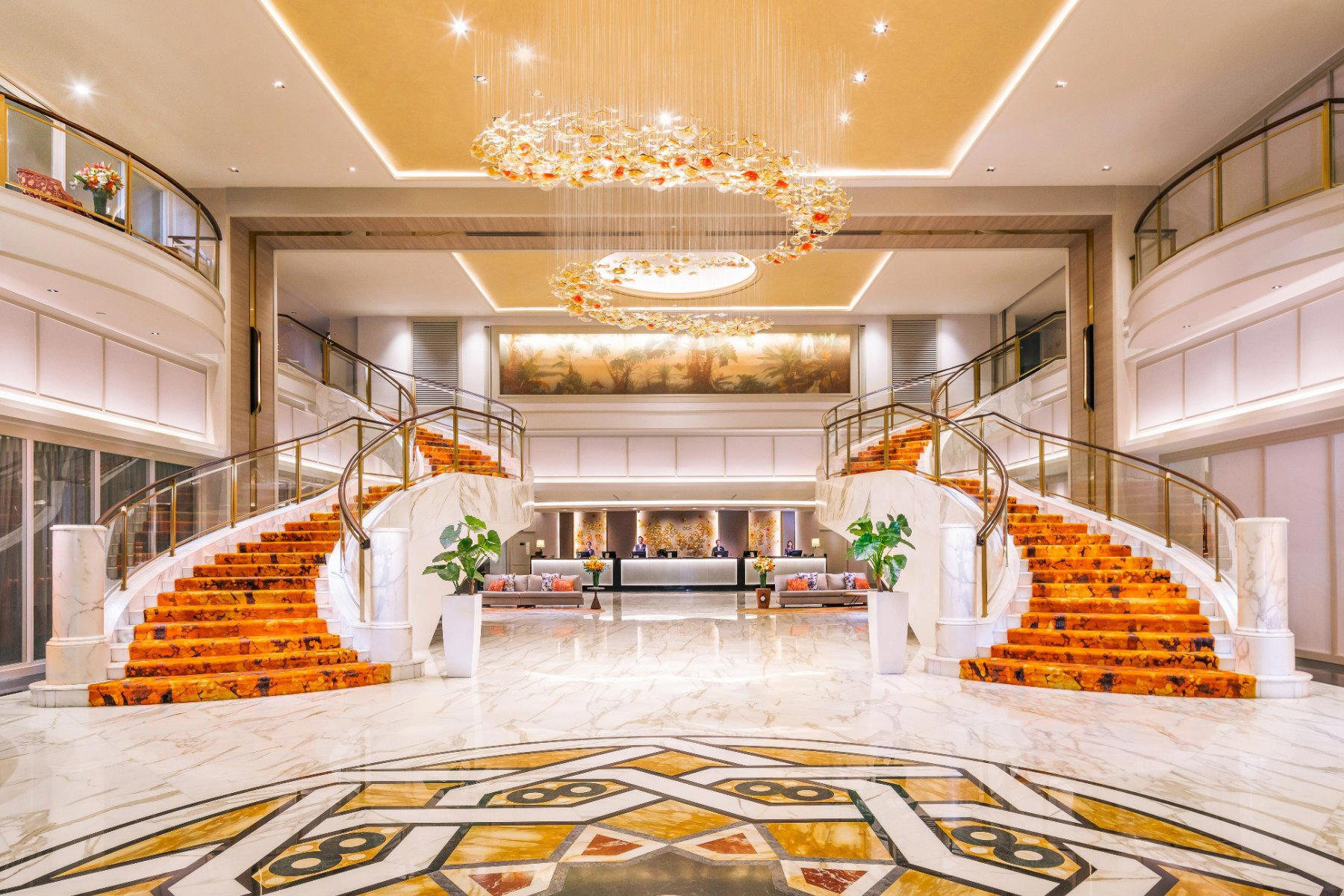
Bars in Singapore
All bars in Singapore →
Details
- Minimalist
- Quiet
- Modern
- Intimate
- Weekend Escape
- Romantic Getaway
- Wellness Retreat
- Garden
- Terrace
- Design Destination
- Wi Fi
- Pool
- Air Conditioning
- Garden
- Elevator
- Accessible Restroom
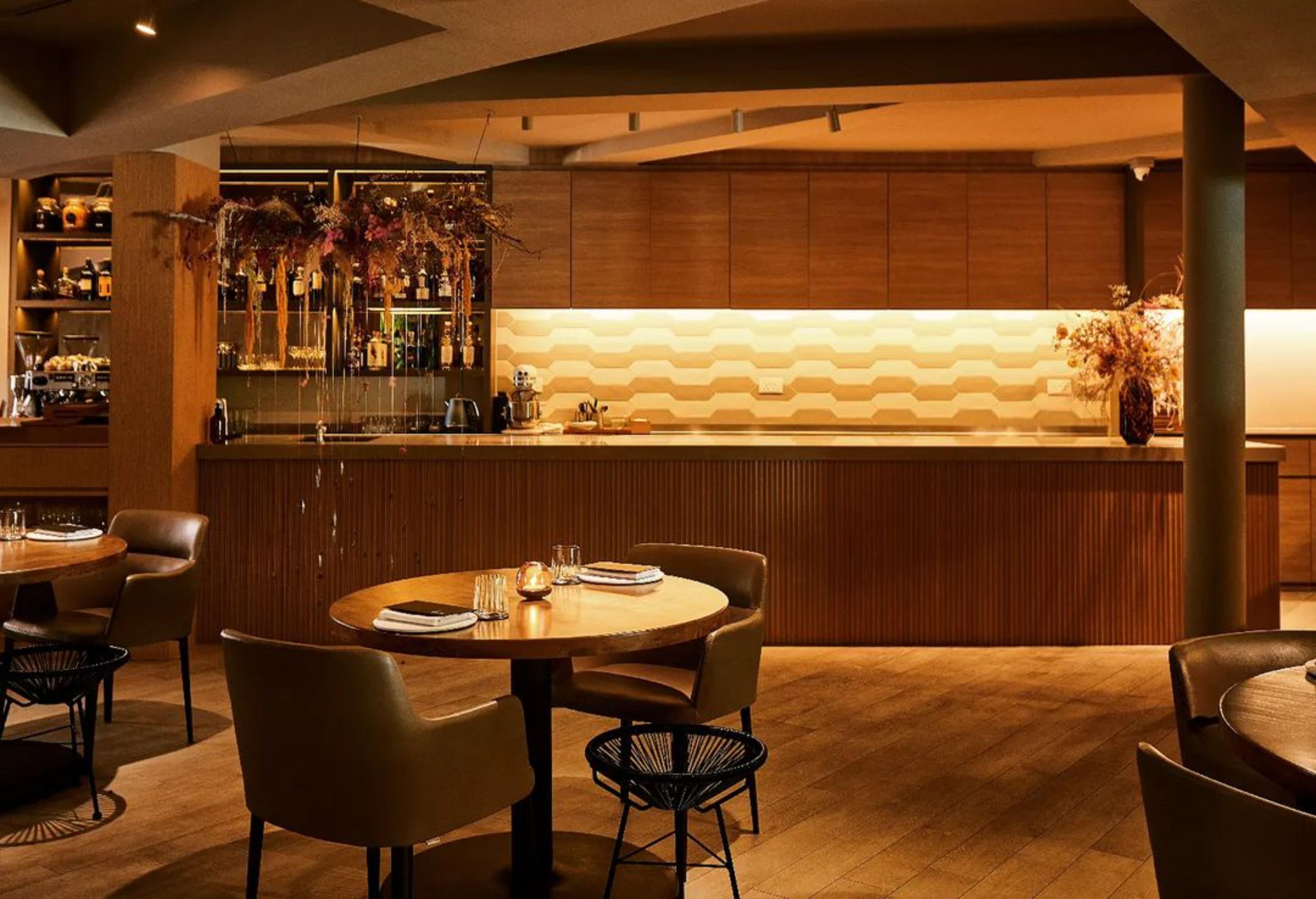
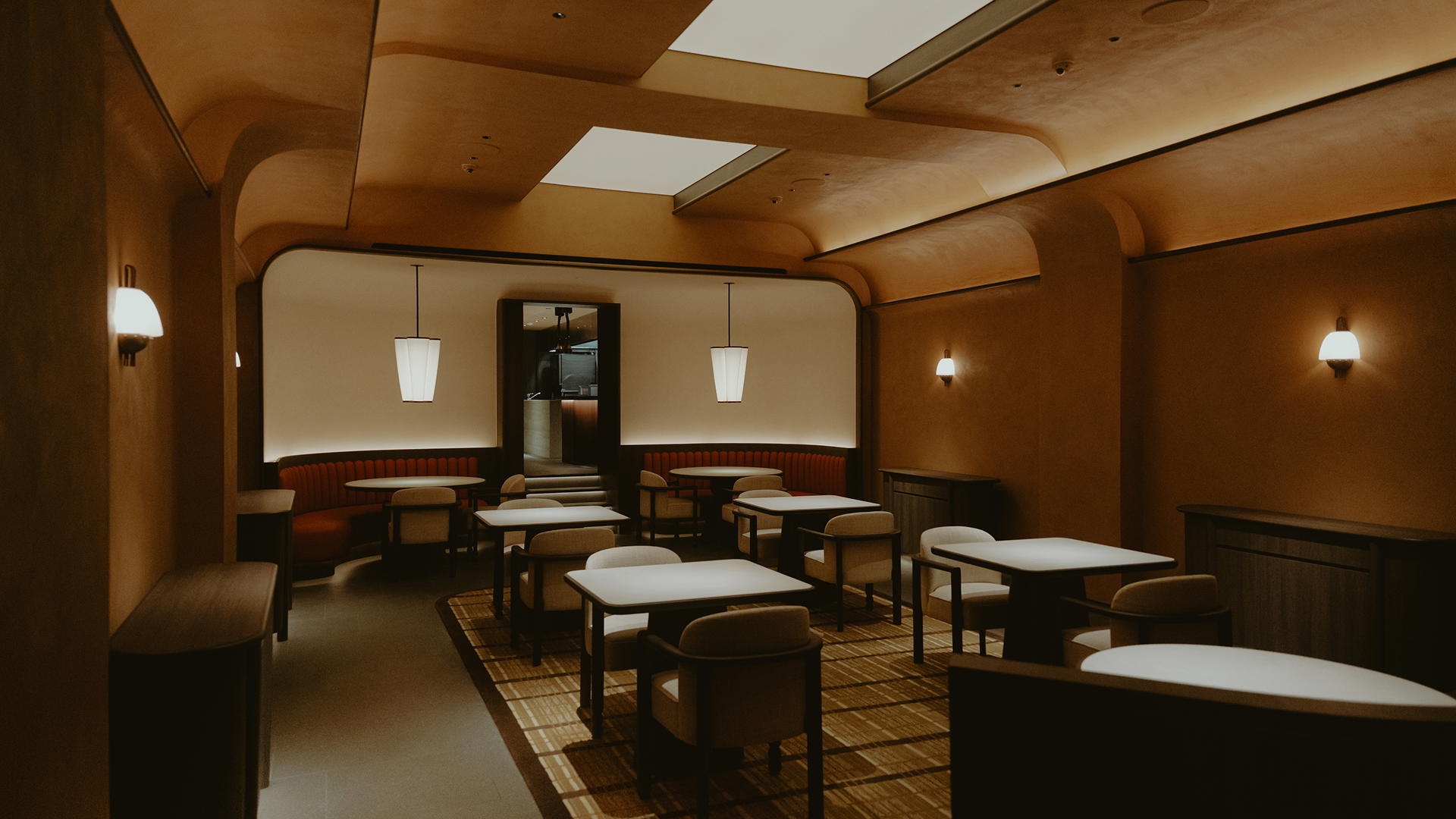
Serene and tranquil with monochromatic design, exposed concrete finishes, abundant natural light, and greenery creating a calming sanctuary amid the bustling city.