


A working farm on Corsica's south coast where former shepherds' dwellings have been converted into 29 private stone houses, each with its own pool, fireplace, and outdoor kitchen. Recognised by La Liste (96.5 points, 2026) and awarded a Michelin Key, Domaine de Murtoli operates across three restaurants, a private beach, and 12-hole golf course, with pricing available on request only.
Pearl is the En Primeur Club membership app — saves, bookings, and concierge access live there. Same editors, same standards.
- Address
- Vallée de l'Ortolo, 20100 Sartène
- Phone
- +33 4 95 71 69 24
- Website
- murtoli.com
- Directions
- Get directions
 Saves & bookings on Pearl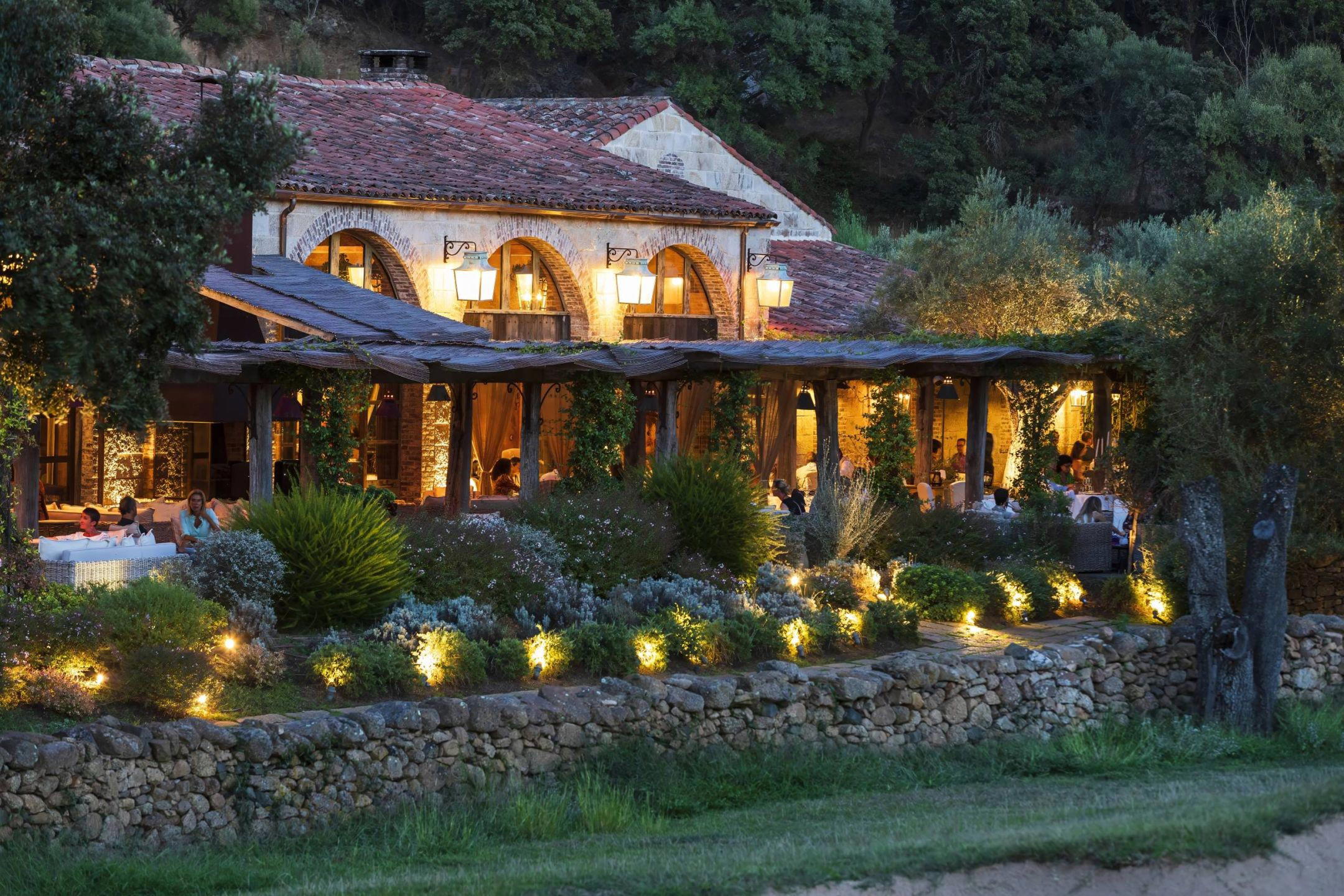
Stone, Maquis, and the Architecture of Disappearance
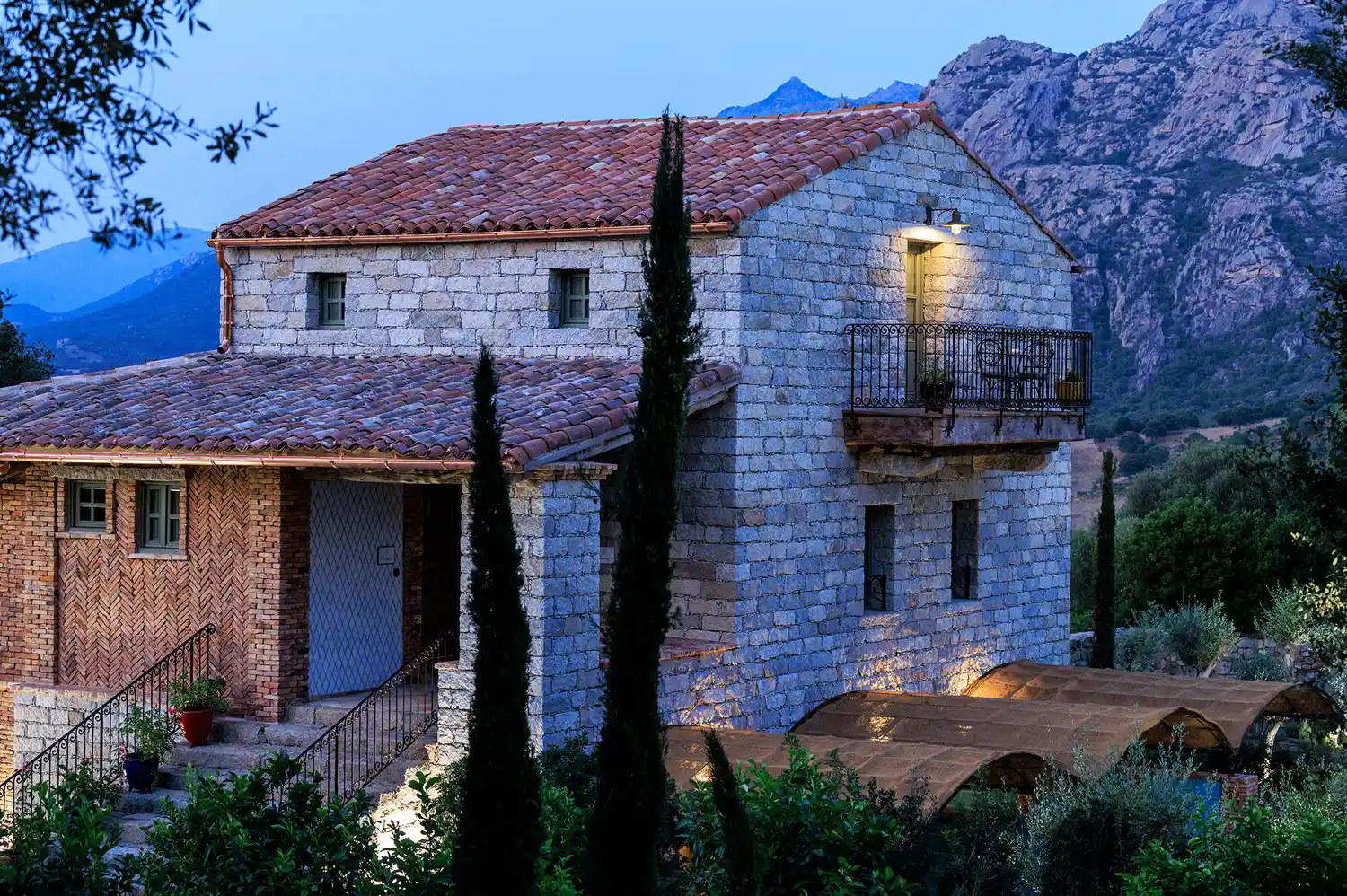
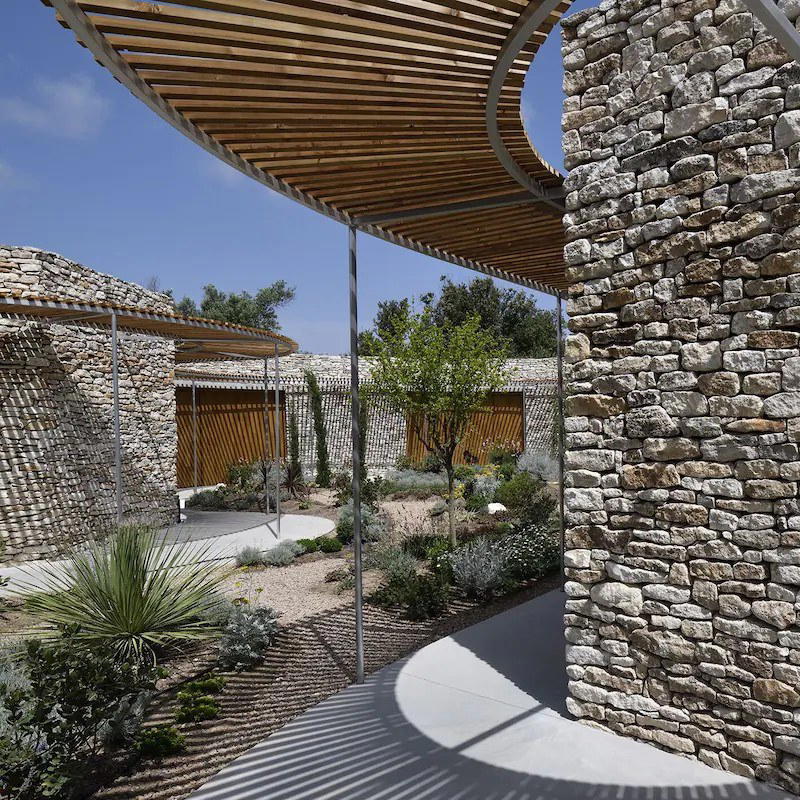
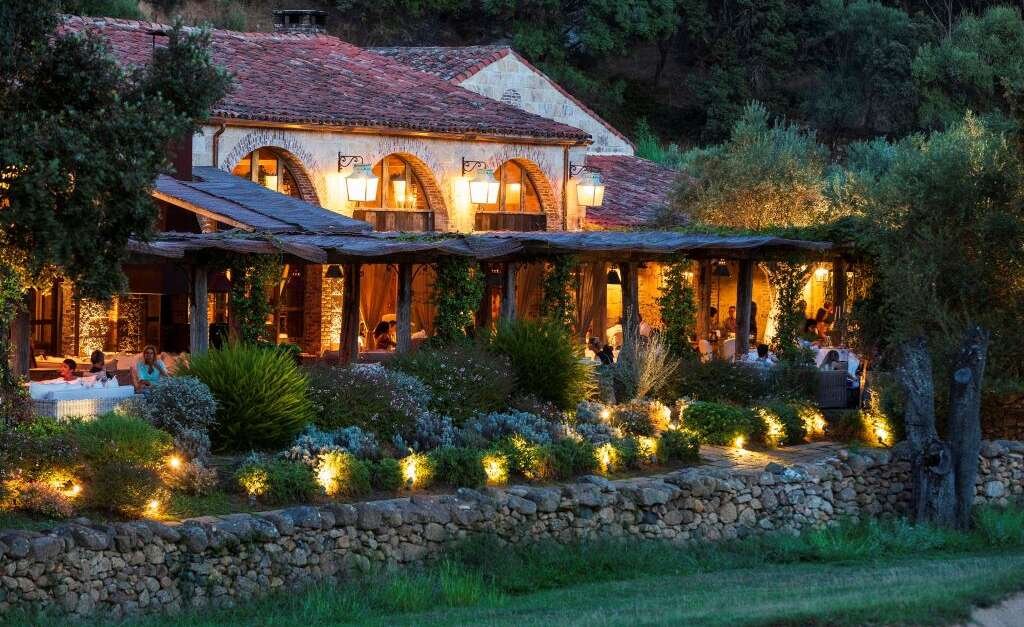
The valley of the Ortolo, south of Sartène, is the kind of terrain that resists development almost as a matter of principle. The maquis runs dense and low across the hills, the stone outcroppings are assertive, and the light, particularly in the late afternoon, turns the whole scene into something closer to a painted landscape than an amenable resort site. It is precisely this resistance that gives Hôtel Domaine de Murtoli its character. The property does not sit in its environment so much as it extends from it, using the existing vocabulary of Corsican rural architecture, rough-cut granite, timber, wrought iron, to house what is, beneath the agricultural surface, a property recognised by La Liste with 96.5 points in 2026.
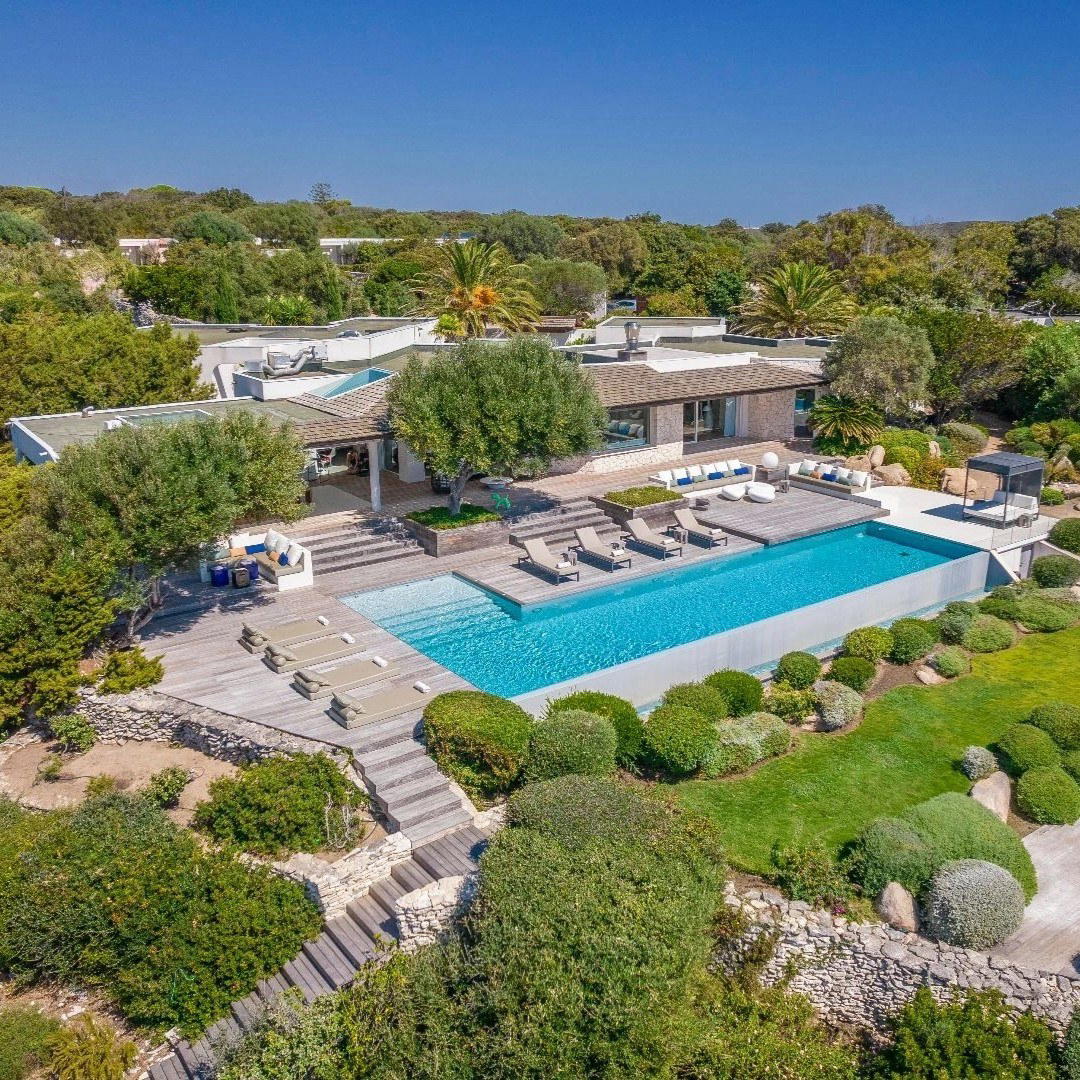
What the estate has achieved, across decades of quiet renovation, is the near-total concealment of its own luxury. The 19 accommodations are distributed across the valley in structures that were, in their previous lives, shepherds' dwellings. That lineage is not cosmetic. The buildings retain their original proportions, their relationship to the land, and their sense of settlement rather than imposition. Each has been updated, private pool, fireplace, outdoor kitchen, wrought-iron gate, without being transformed into something generic. This is a different project from the ground up than what you find at, say, La Réserve Ramatuelle or Airelles Saint-Tropez Château de la Messardière, where the architecture announces itself. At Murtoli, the design ambition is in the edit, not the statement.
The Grammar of Corsican Stone
French hospitality at the premium tier has split into two broad registers over the past decade. One follows the grand-hôtel tradition, formal public spaces, uniform room typologies, design signatures that translate across properties. The other, much smaller cohort works site-specifically, with architecture that would be illegible elsewhere. Domaine de Murtoli belongs firmly to the second category, and it earns its Gault & Millau Exceptional Hotel designation (5 points, 2025) and Michelin Key (2024) partly on those terms: this is a place that could only exist here, in this valley, built from this stone.
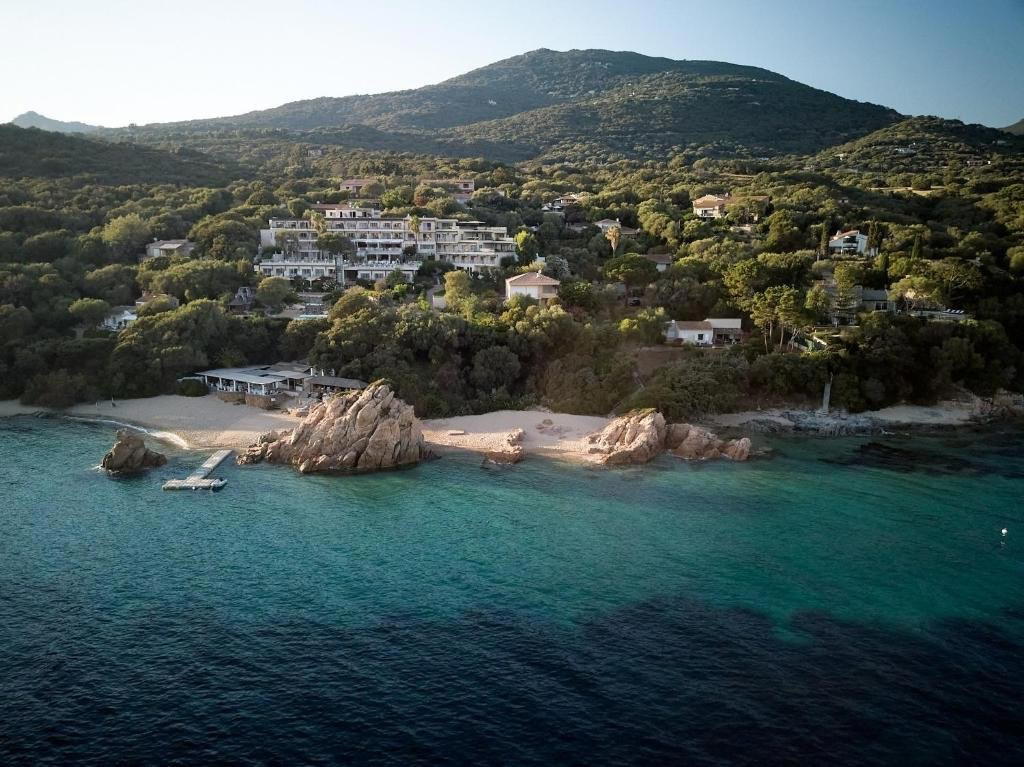
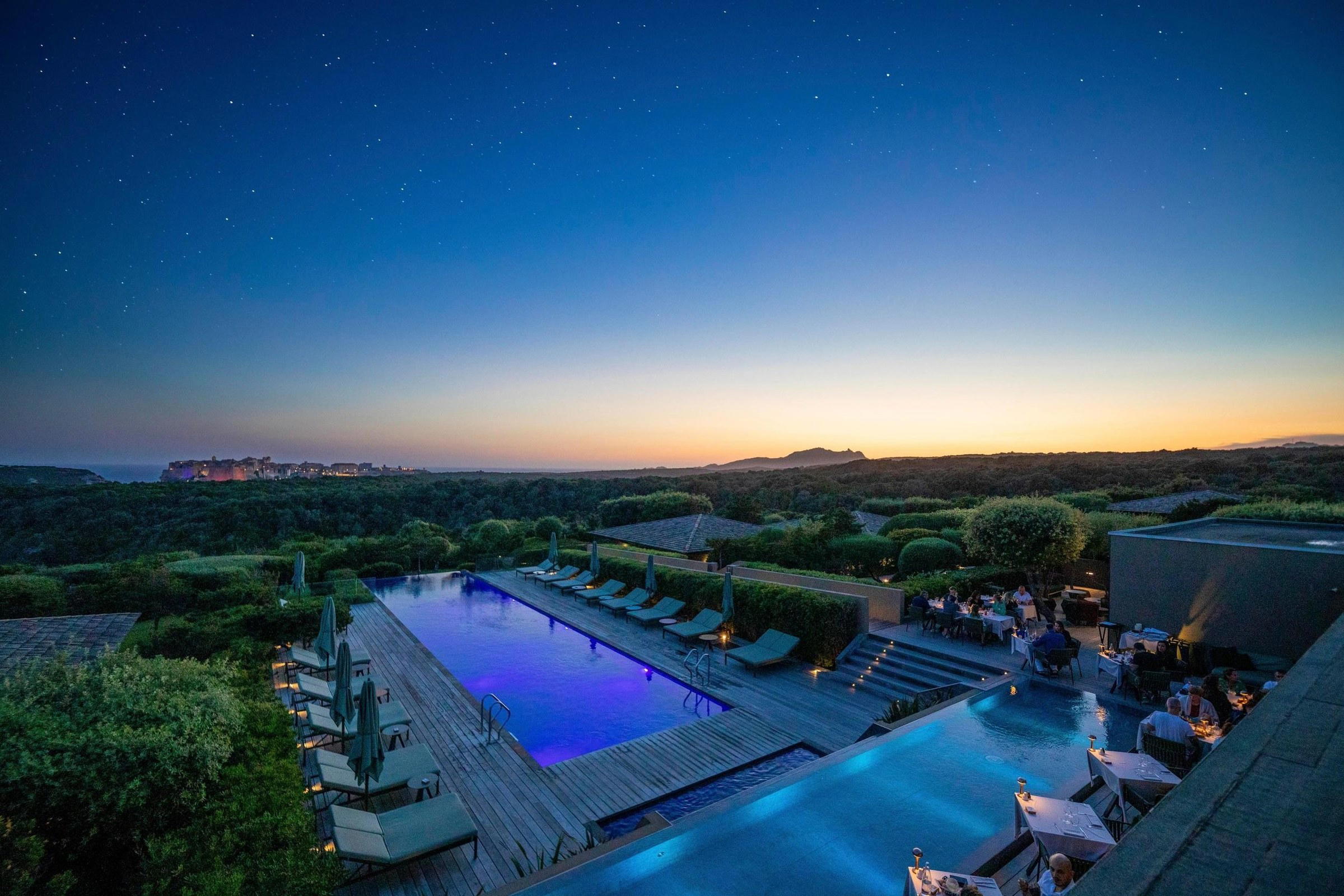
The dispersed layout is itself an architectural argument. Rather than centralising amenities and bringing guests to them, the estate distributes itself across varying elevations and microenvironments. Some houses open toward the sea; others press back into the green pastures and feel genuinely remote from the coast. The effect is that the property has no single face. Different guests occupy structurally different experiences of the same estate, depending on which dwelling they're assigned. For a frame of reference, consider how Villa La Coste in Provence uses art installations to create a distributed estate experience; Murtoli achieves something analogous through topography and vernacular architecture alone.
The outdoor kitchens fitted to each dwelling are worth pausing on as a design decision. They are not decorative gestures. At a property that operates its own working farm, where guests have access to a fishing boat and horses, the outdoor kitchen is part of a coherent logic: the estate produces, and guests may participate in that production at whatever level they choose. The architecture supports an argument about provenance and autonomy that distinguishes Murtoli from more service-intensive luxury properties like Cheval Blanc Paris or Hotel Du Cap-Eden-Roc. The comparison is not a ranking, it reflects genuinely different hospitality philosophies.
Three Restaurants, Three Registers
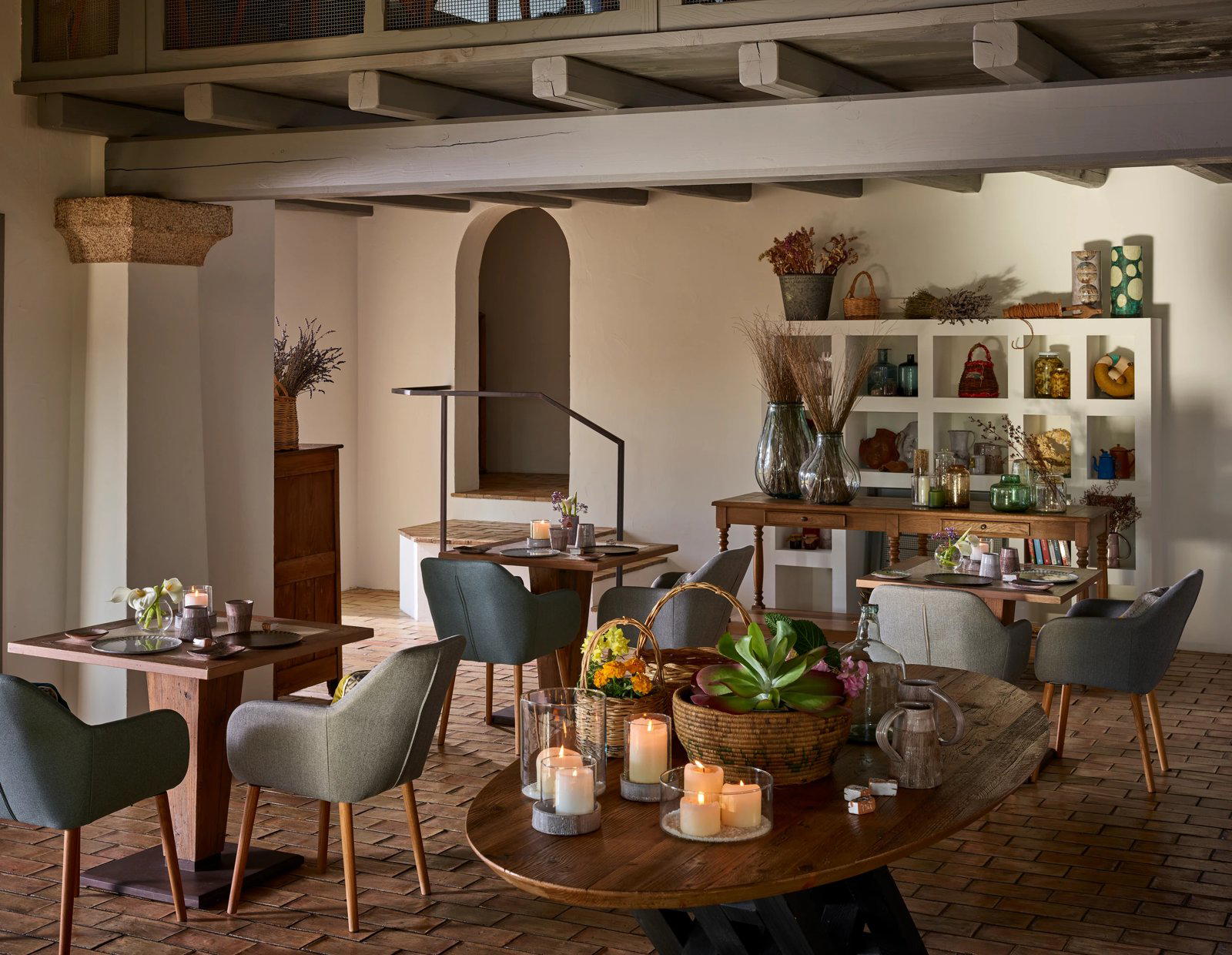
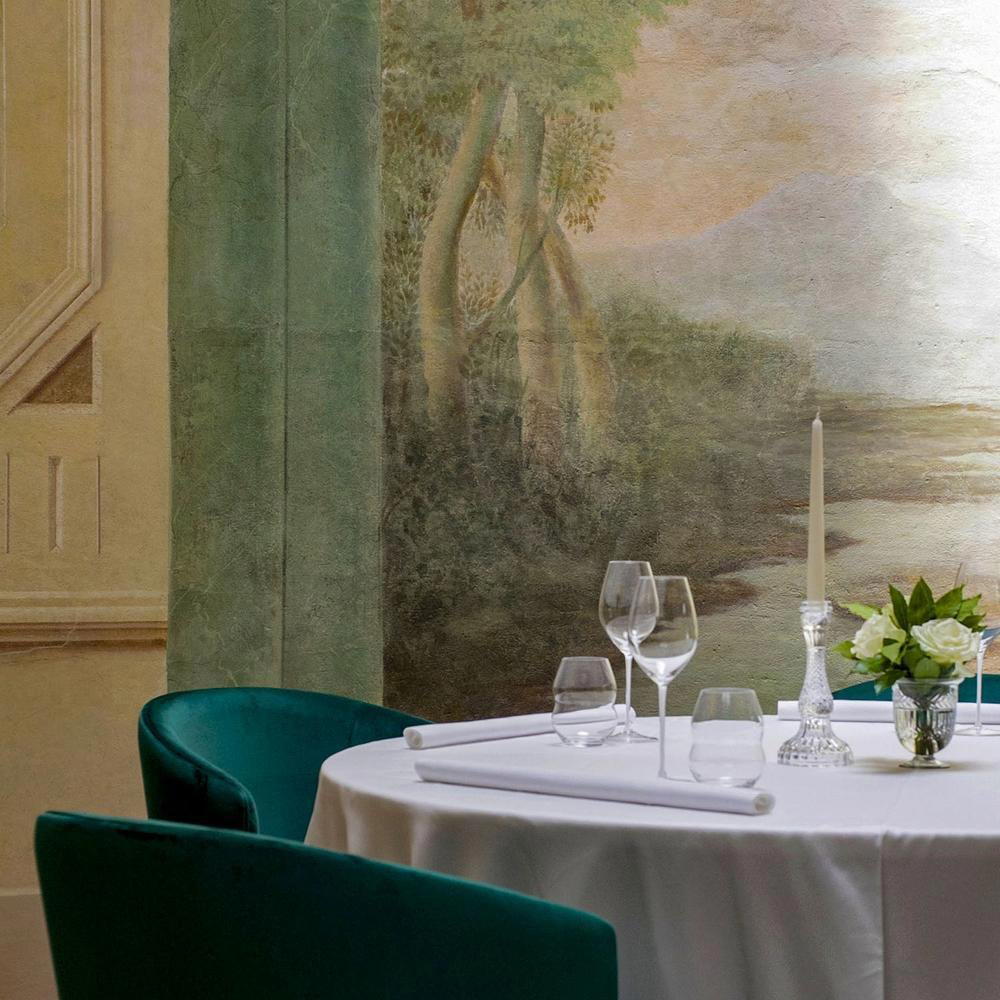
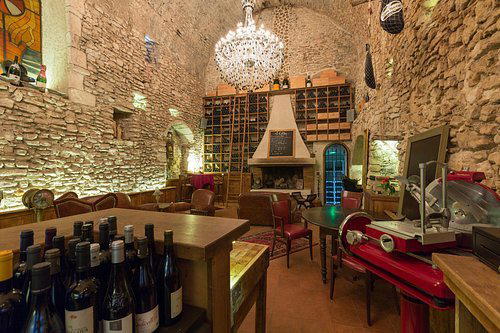
Dining programme at Murtoli has the structural confidence to separate its three restaurants by architecture as much as by menu. The seafood restaurant is built entirely from driftwood, a material decision that places it in dialogue with the coastline rather than simply near it. The traditional Corsican restaurant is set inside a terraced cave, a space that enforces a particular kind of meal: enclosed, grounded, oriented around the island's older culinary registers. La Table de la Ferme, the fine-dining option, operates at the upper end of the property's culinary range. The three formats are distinct enough that they do not compete with one another. Guests move between registers across their stay.
This multi-restaurant architecture is more common at large resort properties, Baumanière Les Baux-de-Provence or Les Sources de Caudalie each run multiple dining concepts, but Murtoli's approach differs in that each restaurant is architecturally embedded in its setting rather than built to accommodate a concept. The driftwood structure would have been gathered from the estate's beach. The cave existed before anyone decided to put tables in it. The farm supplies La Table de la Ferme. The coherence is material, not programmatic.
The Estate as Infrastructure
Beyond accommodation and dining, the estate functions as a set of interlocking activities that could absorb several days without repetition. The private beach provides coastal access without the shared infrastructure of resort hotels. The 12-hole golf course is integrated into the landscape rather than imposed on it. Horses and a fishing boat are available for guest use, activities whose appeal is partly in how they connect guests to the estate's working identity as a farm.
This operating model, hospitality built on top of a genuinely productive agricultural property, sits closer to the Italian agriturismo tradition than to anything with a direct French equivalent. The distinction matters because it shapes what the property is actually selling. Guests are not purchasing access to a curated version of Corsican nature; they are staying on a working estate that has been made comfortable enough to receive them. The difference in register between that proposition and, say, The Maybourne Riviera or Casadelmar in Porto-Vecchio is significant. Those properties are designed for guests. Murtoli exists for other reasons and has opened itself to guests.
On Corsica specifically, that positioning is notable. The island has historically been cautious about the kind of premium hospitality infrastructure that has reshaped coastal Sardinia or the French Riviera. Murtoli's approach, a distributed, low-density property with a strong agricultural identity, is one of the few models that fits both the island's physical character and its cultural relationship to outside development. The adjacent property A Mandria di Murtoli extends this logic further into the estate.
Planning a Stay
Pricing at Domaine de Murtoli is available on request only, which places it in the same opaque tier as properties like Aman Venice or Aman New York, a deliberate signal about the guest relationship and the expected spend level. The 29 rooms across the dispersed dwellings mean availability is limited, and the season on the south Corsican coast concentrates demand into the summer months. The estate is accessed via the Vallée de l'Ortolo outside Sartène, making a hire car effectively necessary.
Domaine Les Crayères in Reims, Royal Champagne Hotel & Spa in Champillon, La Bastide de Gordes, Château de la Chèvre d'Or in Èze, Château de la Gaude in Aix-en-Provence, Château de Montcaud in Sabran, Château du Grand-Lucé, Hôtel & Spa du Castellet, Four Seasons Megève, Cheval Blanc Courchevel, Castelbrac in Dinard, and The Fifth Avenue Hotel in New York City each offer reference points for guests assembling a broader travel programme.
Comparison Snapshot
Comparable venues nearby, for context on price, style, and recognition.
| Venue | Cuisine | Price | Awards | Notes |
|---|---|---|---|---|
| Domaine de Murtoli (L'Hôtel de la Ferme)This venue — the venue you are viewing | rustic luxe farm estate | $$$$ | 5-Star | Not listed |
| Hôtel Domaine de Murtoli | Restored 17th-century shepherd houses and farm estate with modern comforts | $$$$ | Michelin 1 Key | Sartène |
| A MANDRIA DI MURTOLI | Reinvented village-style eco-luxury retreat designed as converted traditional stone sheepfolds within a private estate. | $$$$ | 5-Star | Ortolo Valley |
| Le Hameau de Saparale | Restored 19th-century hamlet in vineyard estate | $$$$ | 4-Star | Vallée de l'Ortolo |
| Domaine Le Mouflon d'Or | Patrician residence with shepherd's cottages in a 19-hectare park | $$$$ | Michelin 1 Key | Alta Rocca |
| Les Regalia | Luxurious family-owned estate evolving from 1965 origins into modern Corsican refinement. | $$$$ | Michelin 1 Key | Sainte-Lucie de Porto-Vecchio |
Recognition history
Dated appearances from independent guides and award organizations, with the underlying list record or original source where available.
La Liste Top Hotels
La Liste
Gault & Millau Exceptional Hotel
Gault & Millau
Michelin 1 Key
Michelin
Michelin 1 Key
Michelin

At a Glance
- Romantic
- Rustic
- Scenic
- Elegant
- Intimate
- Quiet
- Honeymoon
- Romantic Getaway
- Family Vacation
- Wellness Retreat
- Weekend Escape
- Private Villa
- Golf Course
- Panoramic View
- Terrace
- Pool
- Spa
- Wi Fi
- Room Service
- Concierge
- Restaurant
- Fitness Center
- Beach Access
- Golf Course
- Garden
- Mountain
- Pool
- Spa
- Wi Fi
- Room Service
- Concierge
- Restaurant
- Fitness Center
- Beach Access
- Golf Course
Rustic elegance with natural light flooding white-washed stone rooms, antique furnishings scented with lavender and beeswax, candlelit terraces overlooking sea and valleys, evoking intimate Corsican farm charm.