
Hotel Le Temple puts Borobudur’s hotel conversation in architectural terms rather than resort scale. Recognized in Tablet Hotels’ 2026 Design Awards for Asia, it belongs to the small group of Central Java stays where the building, setting, and temple-country context carry as much weight as conventional luxury markers.
Pearl is the En Primeur Club membership app — saves, bookings, and concierge access live there. Same editors, same standards.
- Address
- Sawah, Borobudur, Magelang Regency, Central Java, Indonesia
- Website
- hotelletemple.com
 Saves & bookings on Pearl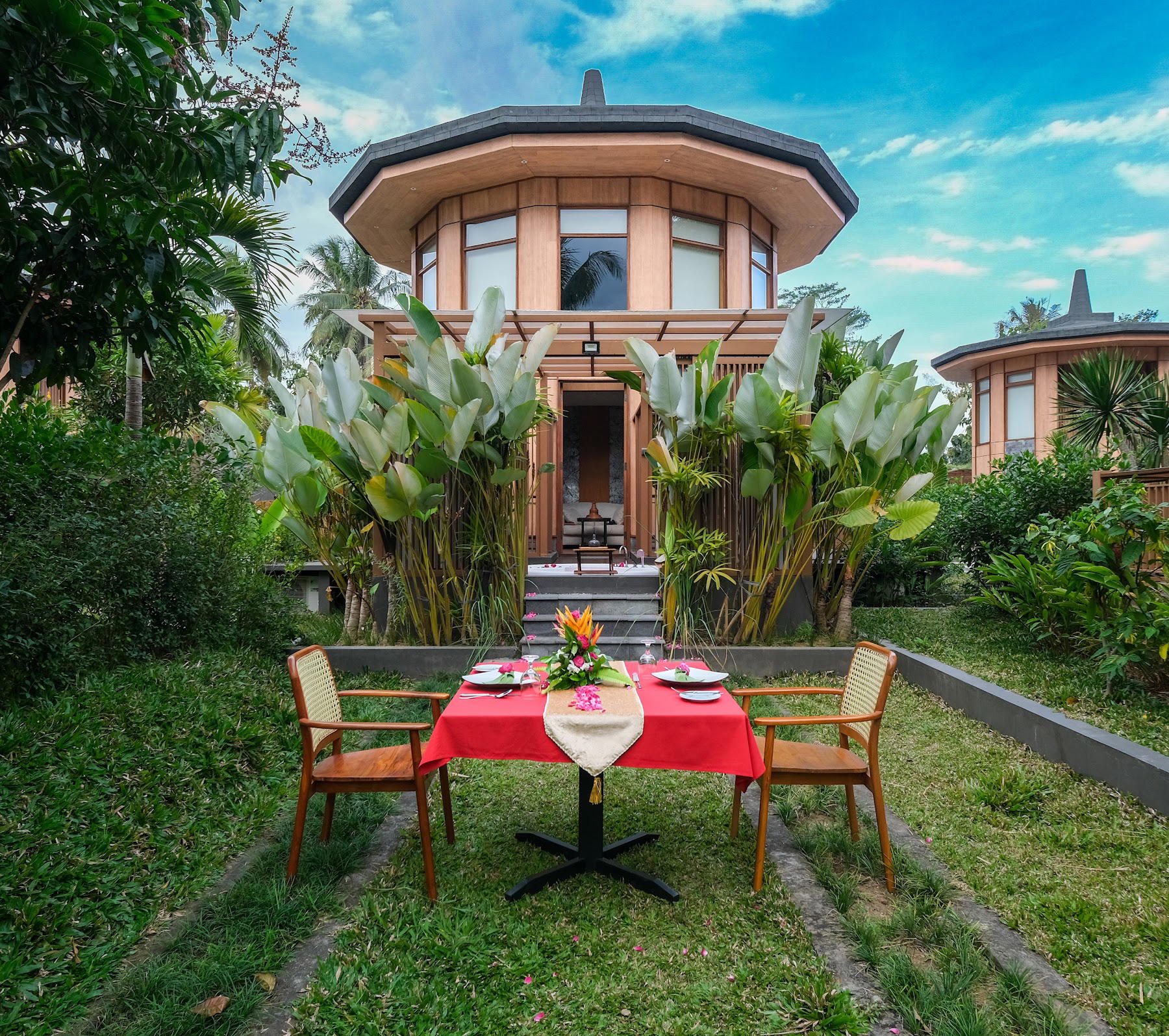
Approaching Borobudur, the visual grammar changes before the hotel enters the frame: volcanic ridgelines, agricultural plots, low village roofs, and the mass of one of Java’s great Buddhist monuments nearby. In this part of Central Java, hospitality cannot rely on beach frontage or urban spectacle. It has to answer a harder question: how should a hotel sit near a sacred archaeological landscape without turning the setting into decoration?
Hotel Le Temple is interesting because it belongs to that question. Its recognition in Tablet Hotels’ 2026 Design Awards for Asia places the property in a design-led category rather than a conventional resort checklist. That distinction matters in Borobudur, where the strongest stays tend to be judged by spatial intelligence: scale, restraint, procession, sightlines, and the ability to hold quiet around a destination that already carries enormous cultural weight.
Temple-country design, not generic resort theatre
Borobudur is not Bali, and treating it as another tropical leisure address misses the point. The area’s appeal is slower and more archaeological: sunrise starts, temple circuits, village roads, and a landscape shaped by agriculture and volcanic geology. A hotel here has to negotiate proximity to heritage rather than compete with it.
That is where architecture becomes the central experience. Design-led hotels in temple regions work when they control drama rather than amplify it: arrival sequences, framed views, textured surfaces, and the rhythm between indoor rooms and open air do the heavy lifting. Hotel Le Temple’s 2026 design recognition signals that its value sits in this physical composition. For travelers weighing Borobudur against Indonesia’s better-known resort corridors, the reason to come is not breadth of facilities. It is the chance to stay in a place where the room, paths, and public spaces are part of the way the destination is read.
The broader Indonesian hotel scene often splits into beach resorts, jungle wellness retreats, city design hotels, and remote lodges. Borobudur occupies a separate lane: culturally anchored, quieter, and more dependent on the quality of the built environment. Readers mapping the wider country can compare that logic with the urban playfulness of 25hours Hotel Jakarta The Oddbird in Jakarta, the Balinese resort vocabulary of Alila Seminyak in Seminyak, or the cliffside architecture associated with Alila Villas Uluwatu in Uluwatu. Borobudur asks for a different register: less scene, more pause.
Why Borobudur rewards a smaller, slower hotel rhythm
The destination’s strongest travel days are structured around timing. Early starts, heat management, temple access, and road movement shape the itinerary more than nightlife or shopping. That makes the hotel’s atmosphere unusually consequential. A property in this area is not just a place between activities; it becomes the recovery space between cultural visits, long drives, and dawn departures.
For that reason, formality here reads differently than it would in Jakarta or Bali. The tone is expected to be composed rather than ceremonial, with design carrying the sense of occasion. Tablet’s 2026 Asia design recognition gives Hotel Le Temple a public trust signal in that category, especially for travelers who care less about brand scale and more about architectural character. The address in Sawah, Borobudur, also places the hotel in the Magelang Regency context, where the surrounding landscape is part of the stay rather than background scenery.
Food and drink should be read through that same lens. Borobudur is not primarily a restaurant-hopping destination; meals tend to support the cadence of temple travel and retreat-style stays. For broader planning around the area, use Our full Borobudur restaurants guide, Our full Borobudur bars guide, Our full Borobudur wineries guide, and Our full Borobudur experiences guide. The hotel decision, though, should begin with architecture and setting rather than a dining program alone.
How it fits into Indonesia's design-hotel map
Indonesia’s premium stays are often sorted by island and mood: Ubud for greenery and wellness, Uluwatu for cliffs, Seminyak for beach traffic, Jakarta for design and dining access, and remote islands for retreat. Borobudur’s category is narrower. It is a heritage-adjacent stay, where the hotel must avoid visual noise and make the monument-region context feel legible.
That makes the hotel a more specific choice than a general luxury resort. Travelers building an Indonesia itinerary can place it beside other design- or setting-led stays without treating them as direct substitutes: Abisena Wellness and Resort Ubud in Gianyar, Adiwana Suweta in Ubud, Alila Manggis in Manggis, Alila Solo in Solo, Aman Villas at Nusa Dua in Nusa Dua, Amanjiwo in Magelang, Amanwana in Moyo Island, Amarterra Villas Resort Bali Nusa Dua, Autograph Collection in Bali, AYANA Resort Bali in Jimbaran, Bambu Indah in Banjar Badung, Banyan Tree Bintan in Bintan, Batu Karang Lembongan Resort in Nusa Lembongan, Batur Natural Hot Spring in Kintamani, and Berawa Village in Badung.
The editorial call is clear: choose this address when Borobudur itself is the reason for the trip and the hotel needs to extend that sense of place through architecture. For readers still sorting the wider field, Our full Borobudur hotels guide is the natural next reference, while out-of-region comparisons such as! Xaus Lodge in Dawid Kruiper. Here Baa Atoll Maldives in Baa Atoll, and "Róże i Zen" Apartamenty. Pokoje Gościnne in Torun underline the larger point: design hotels only work when their physical language belongs to the place around them.
In Context
Comparable venues nearby, for context on price, style, and recognition.
| Venue | Price | Awards | Notes |
|---|---|---|---|
| Hotel Le TempleThis venue — the venue you are viewing | $$$$ | 5-Star | Not listed |
| Kimpton Naranta Bali | $$$$ | 5-Star | Nusa Dua, barefoot luxury lifestyle sanctuary blending Balinese heritage with modern design |
| The Laguna, a Luxury Collection Resort & Spa, Nusa Dua, Bali | $$$$ | 5-Star | Nusa Dua, Balinese oasis with modern luxury |
| The Damai | $$$$ | 5-Star | Lovina Beach, Secluded luxury boutique resort |
| Hoshinoya Bali | $$$$ | 5-Star | Tampaksiring, Balinese village-style luxury resort fusing Japanese minimalism with local craftsmanship |
| Umana Bali, LXR Hotels & Resorts | $$$$ | 5-Star | Ungasan, Contemporary luxury clifftop villa resort blending Balinese cultural authenticity with modern design and Italian influences. |
Recognition history
Dated appearances from independent guides and award organizations, with the underlying list record or original source where available.
Tablet Hotels Best New Hotel Designs (Asia)
Tablet Hotels · Tablet Hotels Design Awards 2026: Best New Hotel Designs (Asia)
At a Glance
- Romantic
- Scenic
- Elegant
- Intimate
- Ornate
- Well Known
- Honeymoon
- Romantic Getaway
- Family Vacation
- Weekend Escape
- Destination Wedding
- Group Retreat
- Private Villa
- Garden
- Panoramic View
- Terrace
- Design Destination
- Historic Building
- Private Dining
- Wi Fi
- Pool
- Spa
- Fitness Center
- Room Service
- Concierge
- Business Center
- Garden
- Mountain
- Wi Fi
- Pool
- Spa
- Fitness Center
- Room Service
- Concierge
- Business Center
Secluded and immersive resort atmosphere with architecture echoing Borobudur’s stupas, lush gardens, lagoon-style pools, and a calm, intimate feel suited to romantic and reflective stays.