

Hotel Colón occupies a landmark position in Seville's Casco Antiguo, steps from the Cathedral and the city's most concentrated stretch of civic architecture. A member of Leading Hotels of the World since 2025, it sits in the upper bracket of the city's traditional grand-hotel tier, distinct from the design-led boutique properties that have reshaped Seville's hospitality market over the past decade.
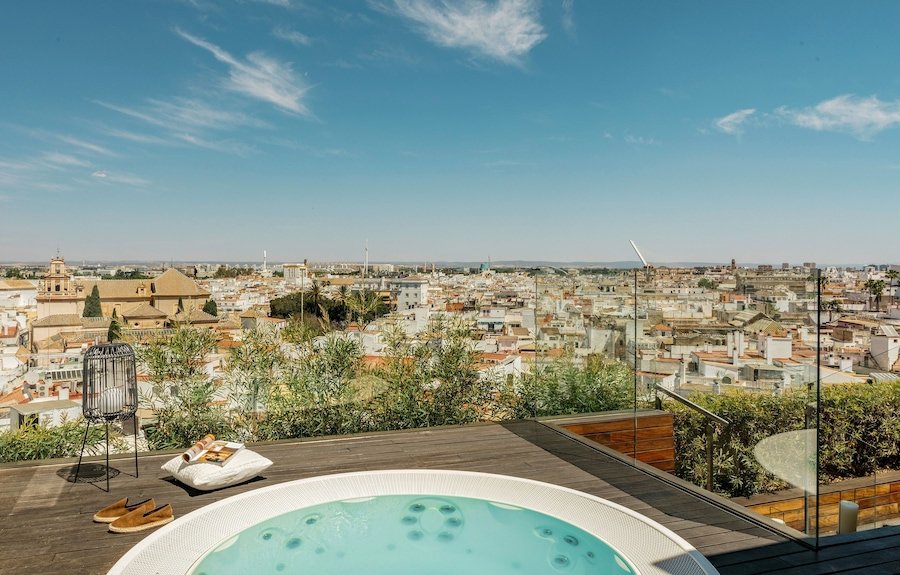
Where Seville's Grand-Hotel Tradition Meets the Casco Antiguo
The Casco Antiguo has always been the gravitational centre of Seville's hospitality offer. The Cathedral, the Alcázar, and the densely layered civic fabric of the old city pull visitors and residents alike into a relatively small perimeter, and the hotels that occupy this zone carry a weight of context that newer properties in outlying districts simply cannot replicate. Hotel Colón, positioned on Calle Canalejas at the edge of that historic core, belongs to the category of grand urban hotels that define a city's first impression for international travellers. Its 2025 admission to Leading Hotels of the World, the membership organisation whose criteria span physical condition, service standards, and food and beverage delivery, places it in a documented tier above the general market.
Within Seville specifically, the upper hotel bracket has become more competitive and more internally differentiated over the past several years. Properties like CoolRooms Palacio Villapanés and Hotel Mercer Sevilla have earned Michelin Keys, the Guide's hotel-quality recognition introduced to Spain in recent editions, while newer entrants such as Unuk have also picked up the same credential. Hotel Colón's Leading Hotels of the World membership signals a different competitive logic: less the curated-boutique model, more the sustained institutional standard that grand European city hotels have historically represented. These are not the same thing, and the distinction matters when choosing where to stay.
The Food and Beverage Argument for a Grand Hotel
One of the more consistent debates in premium travel concerns whether grand hotels still make a credible culinary argument. For much of the late twentieth century, hotel restaurants in Spain operated as convenient fallbacks rather than dining destinations, overshadowed by the city's tapas circuit and the independent restaurant culture that Andalucía takes seriously. That dynamic has shifted materially. Leading Hotels of the World membership, which requires meaningful food and beverage programming as part of its assessment criteria, implies that the property has cleared a documented threshold in its dining and bar offer, even where individual dish or menu details are not publicly catalogued.
Seville's dining culture sets a high baseline. The city's tapas tradition is one of the most coherent in Spain: the neighbourhood of Triana across the Guadalquivir, the bars around the Feria market, and the concentrated stretch of old-city bodegas each maintain distinct registers of Andalusian cooking. A hotel in this city that anchors its food and beverage programme to local ingredients and regional technique is positioning against that broader standard, not just against other hotel restaurants. For travellers who want their hotel to function as a genuine culinary base rather than a logistics node, the Leading Hotels of the World signal is worth taking as a starting point. For a wider map of where the city's independent dining sits, see our full Seville restaurants guide.
Reading the Location in Urban Terms
Calle Canalejas sits within immediate reach of the Archivo de Indias, the Giralda, and the Royal Alcázar gardens, which means the hotel's position is not simply prestigious in the abstract but operationally useful. The Casco Antiguo rewards walking: morning routes to the Cathedral, afternoon circuits through the Jewish quarter of Santa Cruz, evening movement toward the tapas bars of the old centre are all manageable on foot from this address. Hotels in outer districts of Seville offer lower density but surrender this kind of proximity, which for a short stay in particular represents a real trade-off.
Seville's climate also shapes when this location performs at its leading. Summer temperatures in the city regularly exceed 40°C, compressing useful outdoor hours into the morning and evening. A hotel positioned centrally enough to minimise transit time between air-conditioned rooms and cultural sites carries a practical advantage in July and August that outlying properties cannot match regardless of their pool or garden offer. Spring, when the city hosts Semana Santa and the Feria de Abril in consecutive weeks, is the period of peak demand across all hotel tiers; rates reflect that pressure, and availability at well-regarded properties typically closes months in advance.
How Hotel Colón Sits in the Broader Spain Premium Market
Spain's premium hotel market has developed a recognisable internal geography over the past decade. Wine-estate hotels such as Abadía Retuerta LeDomaine and Torre del Marqués Hotel Spa & Winery occupy a rural gastronomy niche. Restaurant-hotels such as Atrio Restaurante Hotel in Cáceres and Akelarre in San Sebastián derive their identity from their culinary programmes. Urban palace-hotels such as Mandarin Oriental Ritz, Madrid represent the international-brand end of the grand-hotel format. Hotel Colón sits in none of these sub-categories exactly; it belongs to the independent grand-urban tier that membership organisations like Leading Hotels of the World exist specifically to validate and make legible to international travellers.
For reference points outside Spain, the Leading Hotels of the World model appears across properties as different as Aman Venice and boutique city hotels across Europe and North America. The common thread is documented standards applied consistently, not brand-scale marketing. That framing applies to Hotel Colón's position in Seville: what the membership certifies is a level of operation, not a design statement or a culinary identity built around a single chef.
Planning a Stay: What to Know Before Booking
Hotel Colón's address in the Casco Antiguo places it in the restricted traffic zone that covers central Seville; arriving by car requires attention to access rules and parking logistics, and most guests arriving by rail from Seville Santa Justa station will find a taxi or rideshare the direct option. The city's tram line connects the old city to outlying areas, though the core is compact enough that most cultural destinations are within walking distance of the hotel's Calle Canalejas address.
For travellers building a longer Andalucía itinerary, Seville pairs naturally with Cádiz, Córdoba, and the sherry towns of the Marco de Jerez, all reachable by train or road in under two hours. Those spending more time in the city alongside exploring its drinking culture should cross-reference our full Seville bars guide, while visitors curious about regional wine producers can find context in our full Seville wineries guide. The city's experience offer, from flamenco to guided architectural tours, is mapped in our full Seville experiences guide. For a complete overview of where Hotel Colón sits relative to every upper-tier property in the city, our full Seville hotels guide provides the comparative view, including properties such as Only YOU Hotel Sevilla, Radisson Collection Hotel, Magdalena Plaza Sevilla, and Serras Sevilla.
Frequently Asked Questions
- What is the main draw of Hotel Colón?
- The combination of a central Casco Antiguo address and Leading Hotels of the World membership (2025) positions Hotel Colón as a validated grand-hotel option in a city where the upper bracket now spans everything from Michelin-Keyed boutiques to international-brand properties. For travellers prioritising proximity to the Cathedral, Alcázar, and old-city dining within a documented quality framework, it represents a coherent choice rather than a compromise.
- What is the most popular room type at Hotel Colón?
- Specific room-type data is not publicly catalogued, but in grand urban hotels of Hotel Colón's style and Leading Hotels of the World standing, rooms with views toward the city's historic monuments typically command both the highest demand and the highest nightly rates. Booking well in advance, particularly around Semana Santa and the Feria de Abril, is advisable regardless of room category.
- Is Hotel Colón reservation-only?
- As with most Leading Hotels of the World members, Hotel Colón can be booked through the LHW booking platform as well as through standard international hotel reservation channels. Direct booking via the hotel's own website is generally advisable for rate parity and room-preference flexibility, though specific booking policies should be confirmed directly with the property.
- How does Hotel Colón's Leading Hotels of the World membership affect the dining experience?
- Leading Hotels of the World applies documented standards across food and beverage delivery as part of its membership criteria, which means the hotel's dining programme has been assessed against a defined benchmark rather than self-described. In a city with Seville's independent culinary depth, that matters: a hotel restaurant that has cleared an external threshold offers a different proposition from one operating purely as a guest convenience. For context on what the city's independent restaurant circuit offers alongside the hotel's own programme, see our full Seville restaurants guide.
Price and Recognition
A compact peer snapshot based on similar venues we track.
| Venue | Price | Awards | Notes |
|---|---|---|---|
| Hotel Colón | (2025) Leading Hotels of World Member | This venue | |
| CoolRooms Palacio Villapanés | Michelin 1 Key | Michelin 1 Key | |
| Hotel Mercer Sevilla | Michelin 1 Key | Michelin 1 Key | |
| Unuk | Michelin 1 Key | Michelin 1 Key | |
| Only YOU Hotel Sevilla | |||
| Radisson Collection Hotel, Magdalena Plaza Sevilla |
Preferential Rates?
Our members enjoy concierge-led booking support and priority upgrades at the world's finest hotels.
Access the Concierge