Hotel Carlton

Hotel Carlton occupies a central position in Antananarivo's accommodation offer, with 171 rooms on Rue Pierre Stibbe in the Anosy district. For travellers arriving in Madagascar's capital before dispersing to coastal lodges or highland circuits, it provides a practical and established urban base without the remoteness that defines the country's island properties.
 Discover on Pearl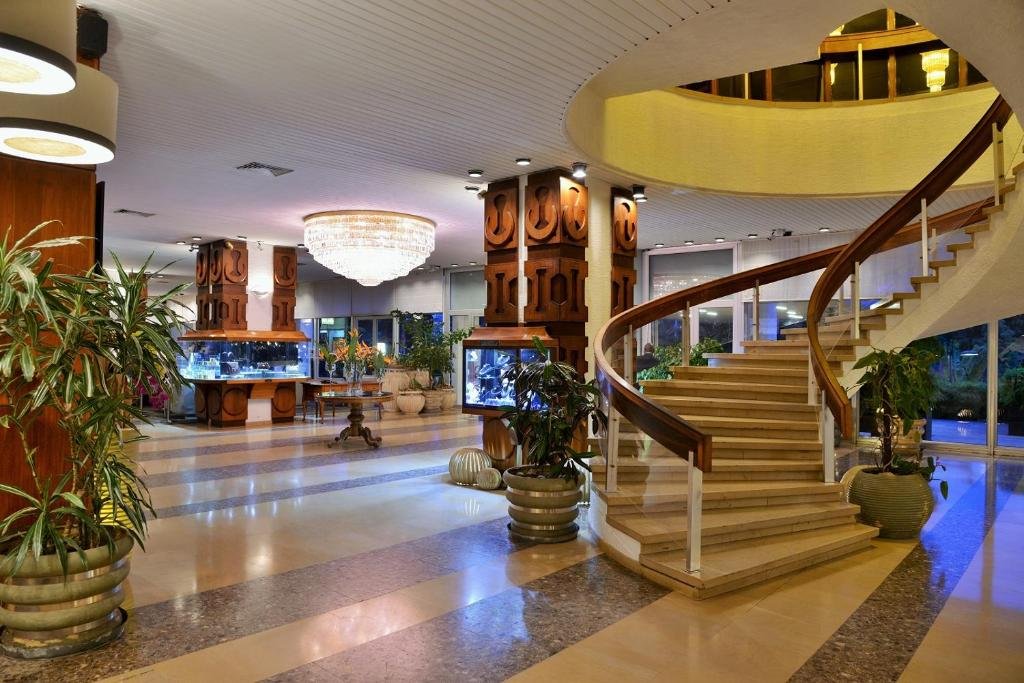
Where Antananarivo's Urban Hotel Tier Sits
Antananarivo divides its accommodation supply along a familiar axis: a small cluster of city hotels serving business travellers, transit guests, and those beginning or ending Madagascar itineraries, and a much larger body of remote lodge properties positioned across the island's coast and wilderness. Hotel Carlton, with 171 rooms on Rue Pierre Stibbe in the Anosy district, sits squarely in the urban tier. That matters as context, because travellers comparing it against properties like Miavana by Time + Tide in Nosy Ankao or Anjajavy le Lodge in Anjajavy are making a category error. The Carlton answers a different question: where do you stay in the capital itself?
Madagascar's capital sits at roughly 1,250 metres above sea level on a series of ridges, giving Antananarivo a cooler, more temperate climate than the coast and a topography of steep lanes and colonial-era architecture that sets it apart from most sub-Saharan African capitals. The Anosy district, where the Carlton is located, is among the more navigable and centrally positioned parts of the city, adjacent to the lake of the same name and within reach of government buildings, embassies, and the commercial district. For first-time visitors, that positioning reduces the logistical friction that can characterise arrivals into Antananarivo, whose road conditions and traffic patterns reward accommodation choices made with geography in mind.
The shortlist, unlocked.
Hard-to-book tables, cellar releases, and concierge-planned trips.
Get Exclusive Access →The Scale of a 171-Room Urban Property
At 171 rooms, the Carlton occupies a mid-to-large footprint by Antananarivo standards. City-centre hotels in francophone African capitals at this scale typically carry a range of room categories, meeting facilities, and at least one main restaurant and bar. That breadth of infrastructure makes them workhorses for the business travel, NGO, and government-mission segments that drive much of Antananarivo's hotel demand, while also functioning as practical bases for leisure travellers who need a predictable platform before or after journeys into the country's more remote zones.
The hotel's address on Rue Pierre Stibbe places it in a part of the city where the French colonial administrative legacy is still readable in the built environment. That context is worth noting not as atmosphere, but as practical information: the street grid in this area is more legible than in some of the steeper residential quarters, taxis and ride-hail options circulate more reliably, and proximity to the lake makes orientation easier for visitors who are new to the city's compressed, layered geography. For a more intimate alternative in the same city, Muguet offers a smaller-scale option for those who prefer fewer rooms and a tighter editorial feel.
Dining in the Antananarivo Urban Hotel Format
The dining programme at a 171-room capital city hotel in Madagascar occupies a specific functional role. Unlike the remote lodge properties that define much of the island's premium travel offer, where all-inclusive or half-board formats are the norm and guests have no viable alternative for most meals, an Antananarivo city hotel operates alongside a functioning restaurant scene. The capital has a range of Malagasy and French-inflected dining options, reflecting the country's colonial history and the culinary preferences of its large diplomatic and NGO community.
In this context, a hotel restaurant at the Carlton's scale typically serves multiple functions simultaneously: breakfast for all room types, lunch for business meetings, dinner for guests who prefer not to venture out, and catering support for any conference or event space. The food style at francophone African capital hotels of this category tends to draw on both French bistro conventions and local Malagasy staples, with romazava (the national beef and greens broth) and vary amin'anana (rice with greens) appearing alongside grilled proteins and standard continental preparations. This dual register reflects the market the property serves rather than a singular culinary identity, and it is a sensible approach for a hotel whose guest mix shifts significantly between weekday business stays and weekend leisure arrivals.
Travellers whose primary interest is Madagascar's more remote properties, such as Andilana Beach Resort in Nosy Be or Time + Tide Miavana in Antsiranana, will find the Carlton most useful as a functional staging point, where the dining programme is part of a broader service infrastructure rather than a destination in itself. That is not a criticism of the property; it is an accurate description of what this tier of hotel is designed to deliver.
Comparing the Carlton to Global Urban Hotel Categories
For readers who calibrate expectations against properties like Hotel Sacher Wien in Vienna, Mandarin Oriental Bangkok, or Le Bristol Paris, the Carlton operates in a different tier entirely. The relevant comparison set is not European palace hotels or Asian luxury flagships, but the category of established, multi-departmental city hotels that serve capital cities in developing markets, where consistent infrastructure, central positioning, and operational reliability matter more than design ambition or restaurant celebrity. Within that peer set, 171 rooms represents a property with enough critical mass to maintain staffing depth and facility breadth, which is a meaningful consideration in a market where smaller boutique options can be inconsistent in execution.
For the global traveller who moves between properties like Aman New York or Cheval Blanc Paris on one end of a trip and remote African lodges on the other, the Carlton answers a transitional need. It is the kind of property where the calculus is direct: does it provide a reliable room, functional food, and a manageable position in a complex city? For Antananarivo, those are meaningful questions, and a 171-room property in Anosy is reasonably positioned to answer them. For a broader survey of where the Carlton fits in the capital's overall hospitality and restaurant picture, our full Antananarivo restaurants guide maps the city's options by category and neighbourhood.
Planning Your Stay
The Carlton's Anosy address gives it workable proximity to Antananarivo Ivato International Airport via the main city road, though Antananarivo traffic is variable and arrivals should allow generous transfer time regardless of time of day. The hotel's scale suggests conference and event capacity, which means room availability can tighten around major government or NGO gatherings in the city. Booking ahead of confirmed travel dates is advisable. For guests arriving from or departing to remote Madagascar properties, the Carlton functions as a practical buffer night rather than a destination stay; most island circuits begin with a capital-city overnight before onward domestic flights to coastal airstrips.
The shortlist, unlocked.
Hard-to-book tables, cellar releases, and concierge-planned trips.
Get Exclusive Access →Frequently Asked Questions
Booking and Cost Snapshot
These are the closest comparables we have in our database for quick context.
| Venue | Price | Awards | Notes |
|---|---|---|---|
| Hotel Carlton | This venue | ||
| Anjajavy le Lodge | |||
| Andilana Beach Resort | |||
| Time + Tide Miavana | |||
| Muguet | |||
| Miavana by Time + Tide |
Preferential Rates?
Our members enjoy concierge-led booking support and priority upgrades at the world's finest hotels.
Get Exclusive AccessThe shortlist, unlocked.
Hard-to-book tables, cellar releases, and concierge-planned trips.
Get Exclusive Access →