

Occupying a 16th-century shipbuilding hall on the Senglea waterfront, Cugó Gran Macina Malta places guests inside one of the Grand Harbour's most architecturally significant structures. The hotel commands unobstructed sightlines across the marina, Valletta, and the Three Cities — a vantage point that few properties in Malta can match. For travellers seeking historical texture alongside harbour access, it sits in a category of its own within the Maltese luxury tier.
Pearl is the En Primeur Club membership app — saves, bookings, and concierge access live there. Same editors, same standards.
- Address
- Macina, Triq il-31 ta' Marzu, Senglea Isl 1040, Malta
- Phone
- +356 2711 2711
- Website
- marriott.com
- Directions
- Get directions
 Saves & bookings on Pearl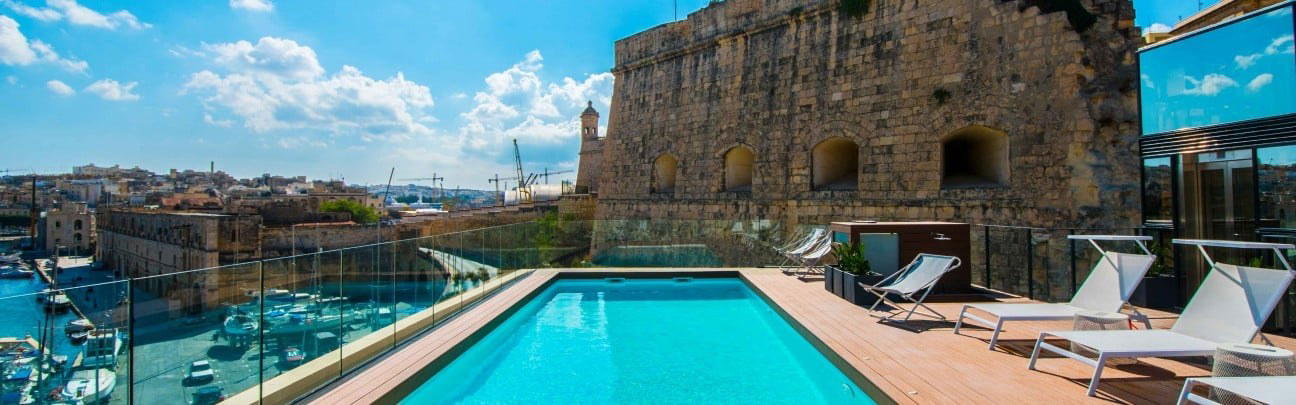
Stone, Water, and the Weight of Six Centuries
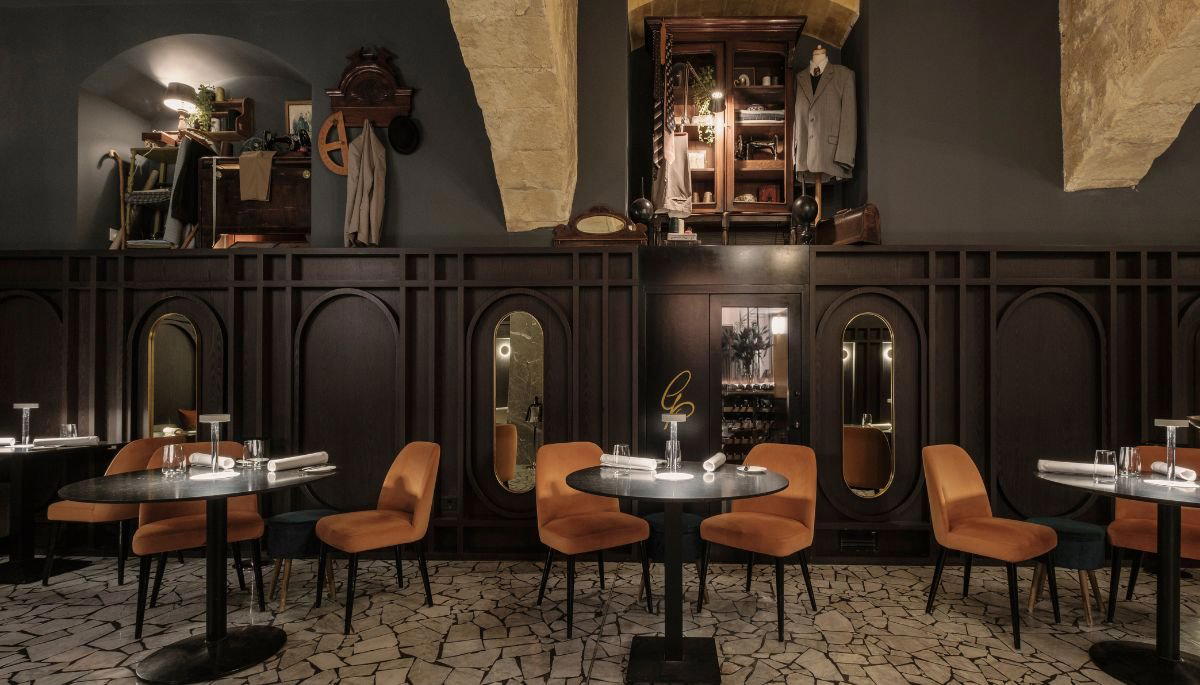
Approaching Senglea by water — or on foot through the narrow limestone lanes of the Three Cities — you arrive at a building that reads immediately as something older and heavier than the boutique hotel category usually accommodates. The Macina was a 16th-century shipbuilding hall, part of the Knights of St John's operational infrastructure around the Grand Harbour, and its scale reflects that original purpose: high vaulted ceilings, walls of pale Maltese limestone several feet thick, and an orientation that faces the harbour with an almost confrontational directness. The water isn't a backdrop here; it's the entire foreground. Cugó Gran Macina Malta occupies this structure today, and whatever the hotel does operationally, the architecture does the heavier editorial work. For more on what Senglea offers across dining and hospitality, see our full Senglea restaurants guide.
What Adaptive Reuse Looks Like When the Original Building Wins
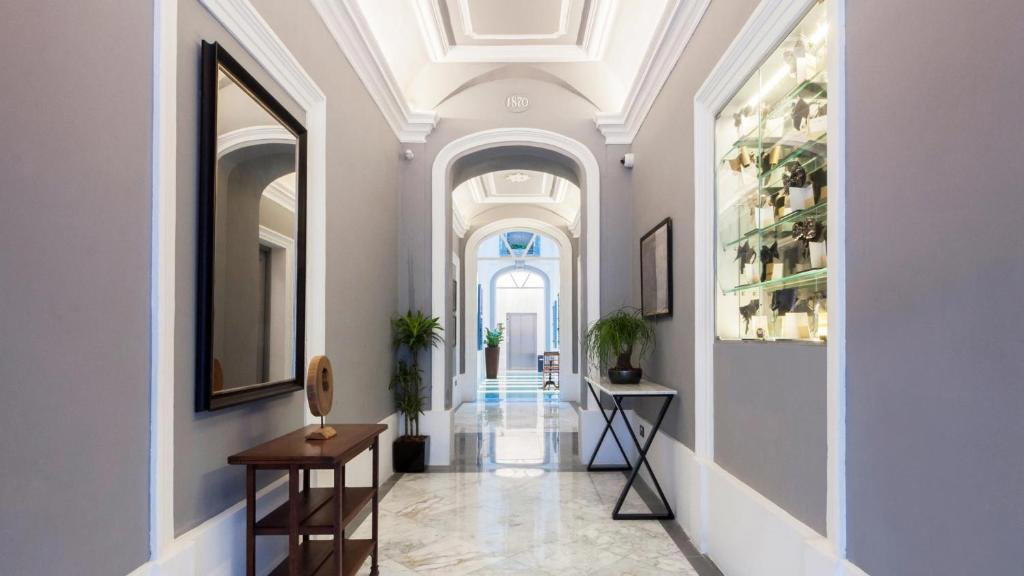
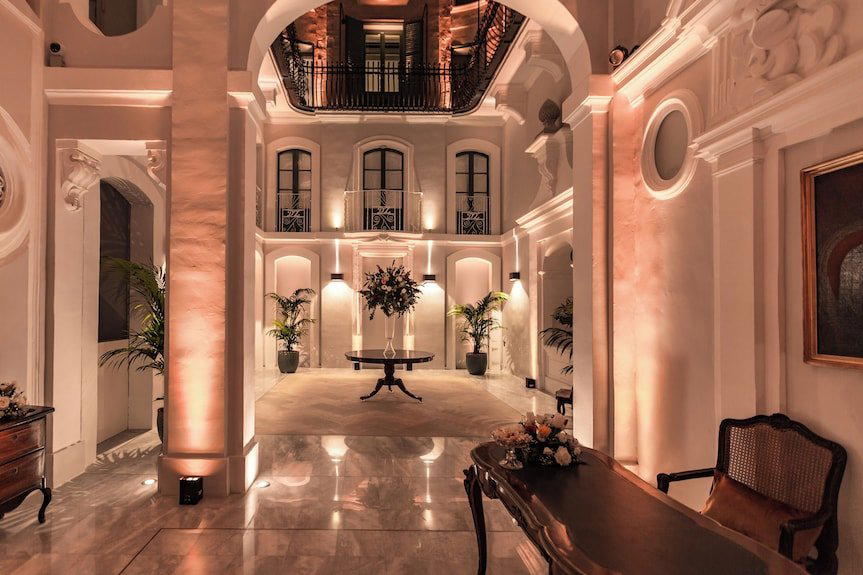
Luxury hotel conversions of historic structures fall into two broad categories: those where the contemporary fit-out overwhelms the original bones, and those where the design team understood that restraint was the brief. Malta's Grand Harbour fortifications belong to a UNESCO-recognised urban ensemble, and the Macina sits within that protected fabric. The conversion of an operational shipyard building into a functioning hotel required navigating heritage constraints that don't apply to a greenfield luxury project, and the result is a property where the 16th-century structure remains legible throughout. The vaulted masonry, the proportions of the original hall, the waterfront orientation, these aren't decorative gestures; they are the architecture.
This approach places Cugó Gran Macina in a specific peer category within Maltese hospitality. Properties like AX The Saint John in Valletta and Palazzo Bifora in Mdina similarly work within historically significant structures, where the building's age and provenance form the core of the hospitality proposition. At the other end of the spectrum, larger resort-format properties like AX The Palace in Sliema, Corinthia St George's Bay in St Julian's, and InterContinental Malta in St Julian's Bay operate on a different scale with a different logic. The Macina is not competing with those properties; its pitch is fundamentally about architectural specificity and location singularity.
The Grand Harbour View as a Measurable Asset
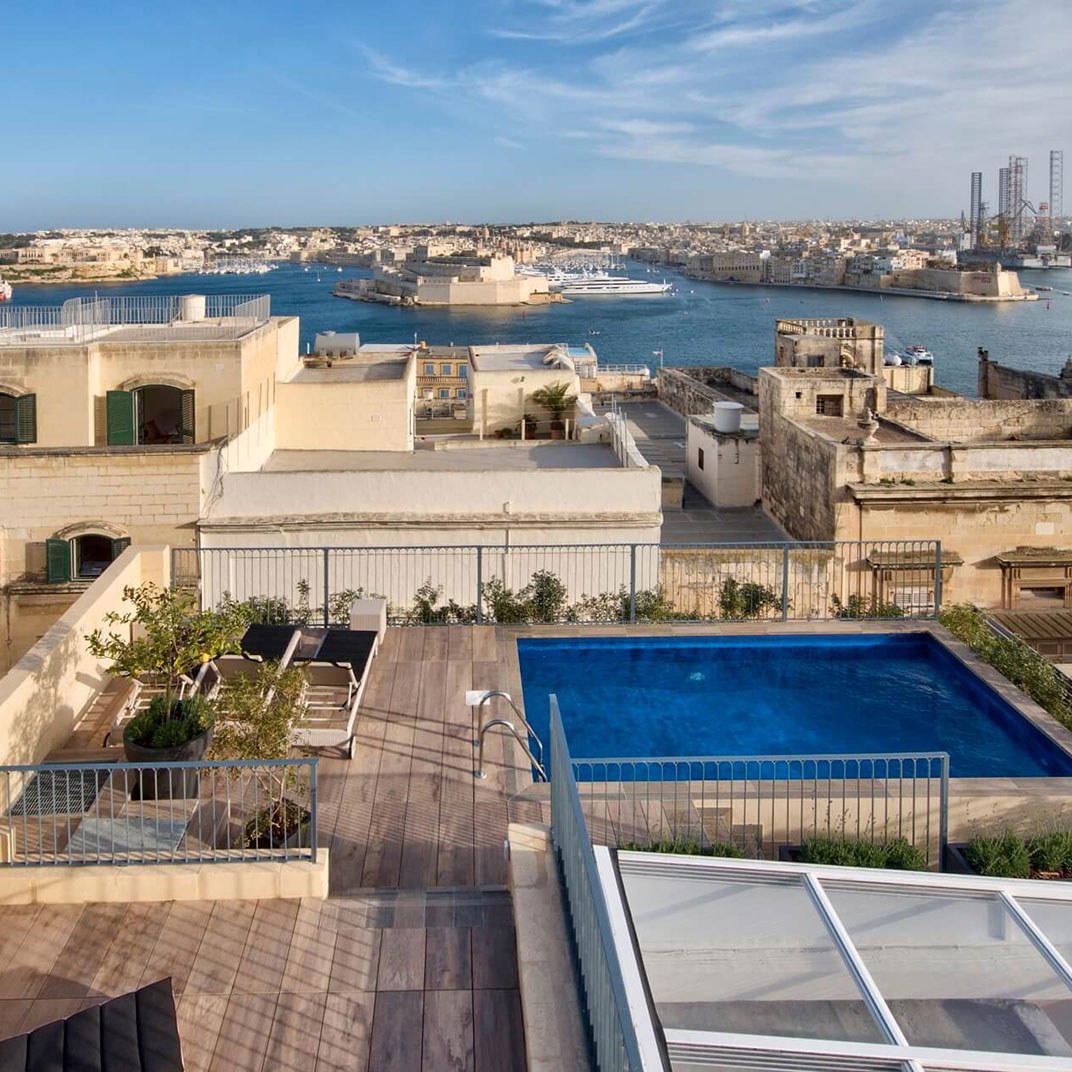
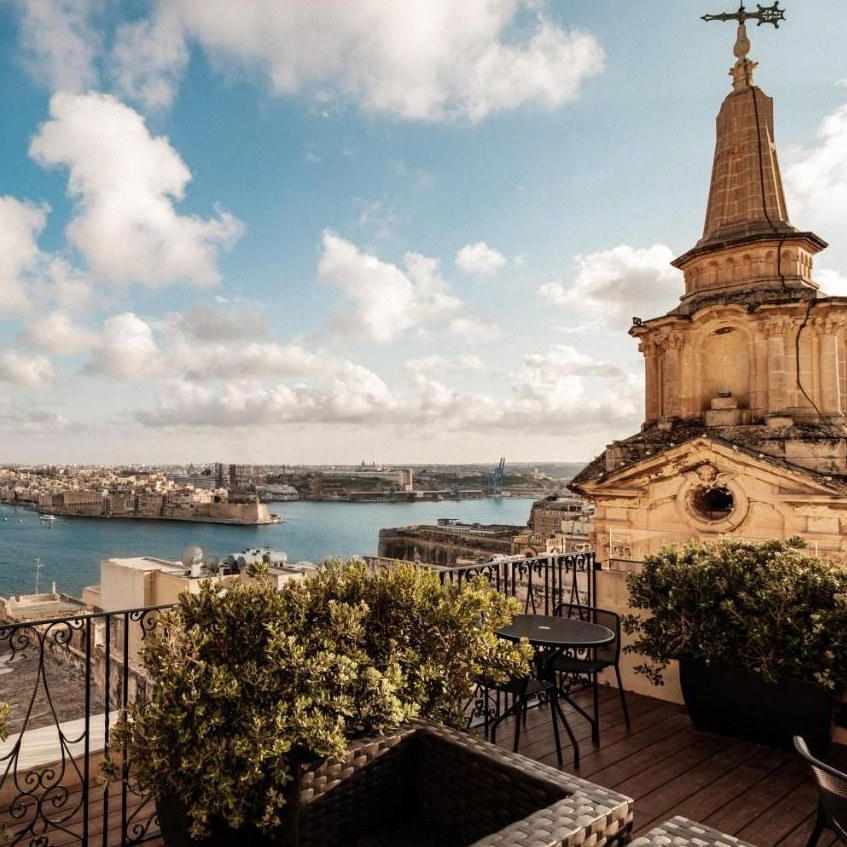
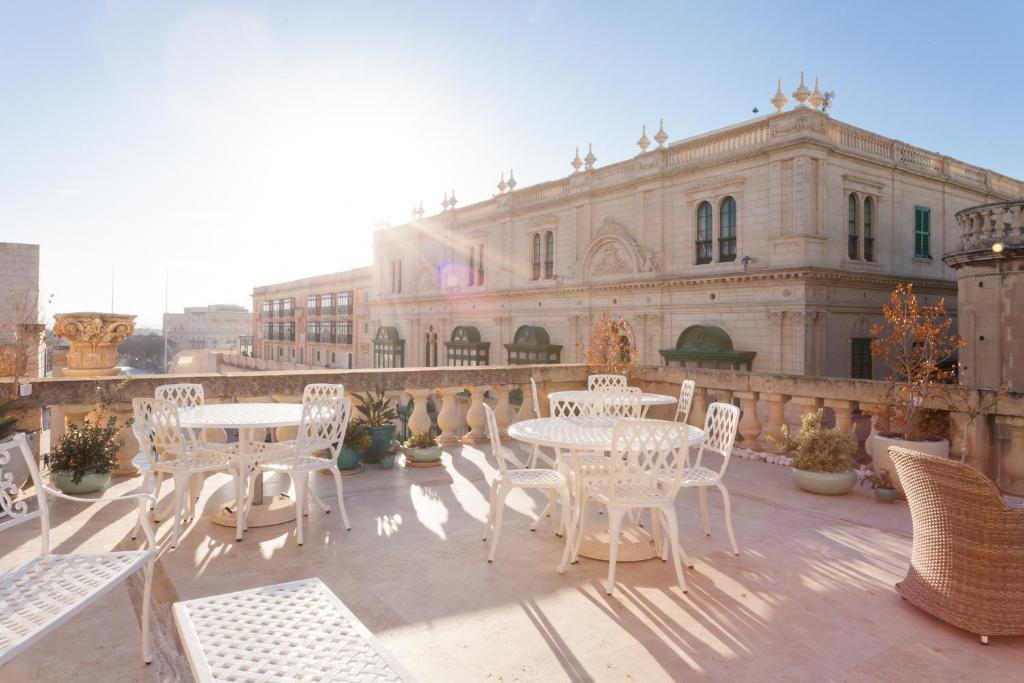
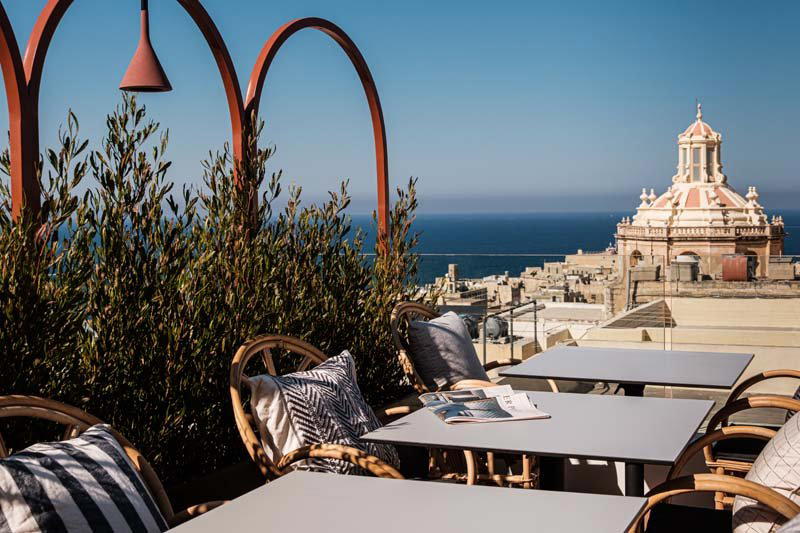
Malta's hospitality market has always indexed heavily on waterfront position, but not all water views are equivalent. The Grand Harbour is a working, living maritime theatre: cargo vessels, traditional dghajsa water taxis, the Valletta ferry, and the limestone ramparts of the capital rising on the opposite shore. From Senglea's waterfront, the view encompasses Valletta, Birgu (Vittoriosa), and the open harbour mouth toward the Mediterranean. This is a panorama with genuine historical density, not a manufactured marina outlook. Properties positioned directly on the Grand Harbour represent a small and relatively fixed supply; the Macina's orientation, facing the full breadth of the harbour from the Senglea peninsula, places it among the best-positioned addresses in that group.
For context on how other premium properties approach harbour or waterfront positioning in the region, Corinthia Palace Malta in Attard takes an inland garden approach, while Lure Hotel and Spa in Mellieħa looks north toward the quieter end of the island. The Grand Harbour view from Senglea is a different register entirely.
Senglea as a Destination Choice
Choosing Senglea over Valletta or the St Julian's hotel corridor is itself an editorial decision about how to experience Malta. The Three Cities, Senglea, Vittoriosa, and Cospicua, sit on peninsulas across the harbour from Valletta and have historically been the working port districts, home to the Maltese families who built and crewed the Knights' fleet. The gentrification of these areas has been measured rather than aggressive; the limestone streets remain narrow and residential, the pace slower than Valletta's tourist core, and the bars and restaurants oriented toward a local clientele. Staying in Senglea means ferry crossings to Valletta rather than a short walk, but it also means waking up to a view of Valletta rather than being inside it, a trade-off that suits a specific type of traveller.
Other boutique properties in Malta's historic towns offer a comparable orientation toward character over convenience. Cesca Boutique Hotel in Il Munxar on Gozo operates within a similar logic of small-scale, place-specific accommodation. Royale Sainte Hélène Boutique Hotel in Birkirkara and Verdi Gzira Promenade in Gzira occupy the middle tier between boutique and resort scale. The Macina sits at the upper end of the boutique category, anchored by a building that commands a price premium justified by the structure and the view rather than by service amenities alone.
Planning a Stay
Senglea is most practically reached by water taxi or ferry from Valletta, which takes under ten minutes and deposits guests at the Three Cities waterfront. The drive from Malta International Airport is approximately twenty to twenty-five minutes depending on traffic, with parking limited in the narrow streets of the peninsula. The ferry crossing to Valletta runs regularly and costs a nominal fare, making Valletta's restaurants, bars, and cultural institutions accessible without a car. The Grand Harbour's summer calendar includes the Malta International Arts Festival and the Regatta, both of which are visible from the Senglea waterfront and represent timing considerations worth factoring into a booking. The shoulder seasons, April through June and September through October, offer calmer harbour conditions and lower hotel-wide occupancy across Malta, a relevant detail for guests prioritising harbour-view room availability at the Macina.
For travellers calibrating the Macina against international benchmarks in adaptive-reuse luxury, relevant comparators include properties like Aman Venice, Castello di Reschio in Lisciano Niccone, and Cheval Blanc Paris, all of which demonstrate the range of outcomes possible when significant historic fabric is given to a luxury hotel operator. At the regional Mediterranean level, Hôtel de Paris Monte-Carlo and Hotel Du Cap-Eden-Roc in Cap d'Antibes offer a sense of where the category peaks in terms of pedigree and waterfront positioning. The Macina operates at a different price point and scale, but within the same broad aspiration: a building with a verifiable history, a view that geography makes unrepeatable, and an accommodation experience where the architecture is the primary argument for the rate.
Recognition history
Dated appearances from independent guides and award organizations, with the underlying list record or original source where available.
Design Hotels Member
Design Hotels
Mr & Mrs Smith Smith Seal of Approval
Mr & Mrs Smith
Michelin Selected
Michelin
Continue exploring
More in Senglea
Hotels in Senglea
Browse all →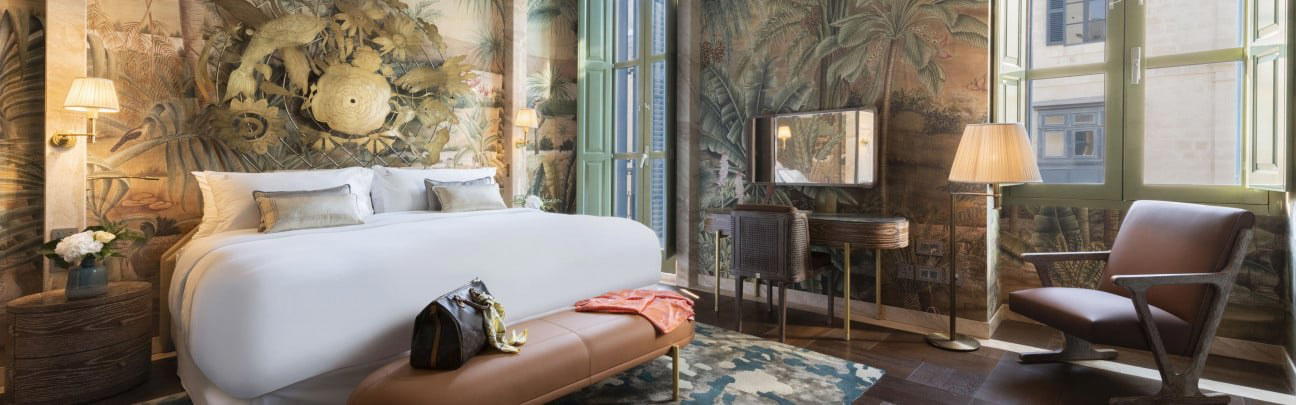
Bars in Senglea
Browse all →
Restaurants in Senglea
Browse all →
Wineries in Senglea
Browse all →
At a Glance
- Romantic
- Elegant
- Sophisticated
- Scenic
- Intimate
- Honeymoon
- Romantic Getaway
- Anniversary
- Weekend Escape
- Rooftop Pool
- Panoramic View
- Historic Building
- Waterfront
- Terrace
- Wi Fi
- Pool
- Spa
- Room Service
- Concierge
- Restaurant
- Fitness Center
- Waterfront
- Wi Fi
- Pool
- Spa
- Room Service
- Concierge
- Restaurant
- Fitness Center
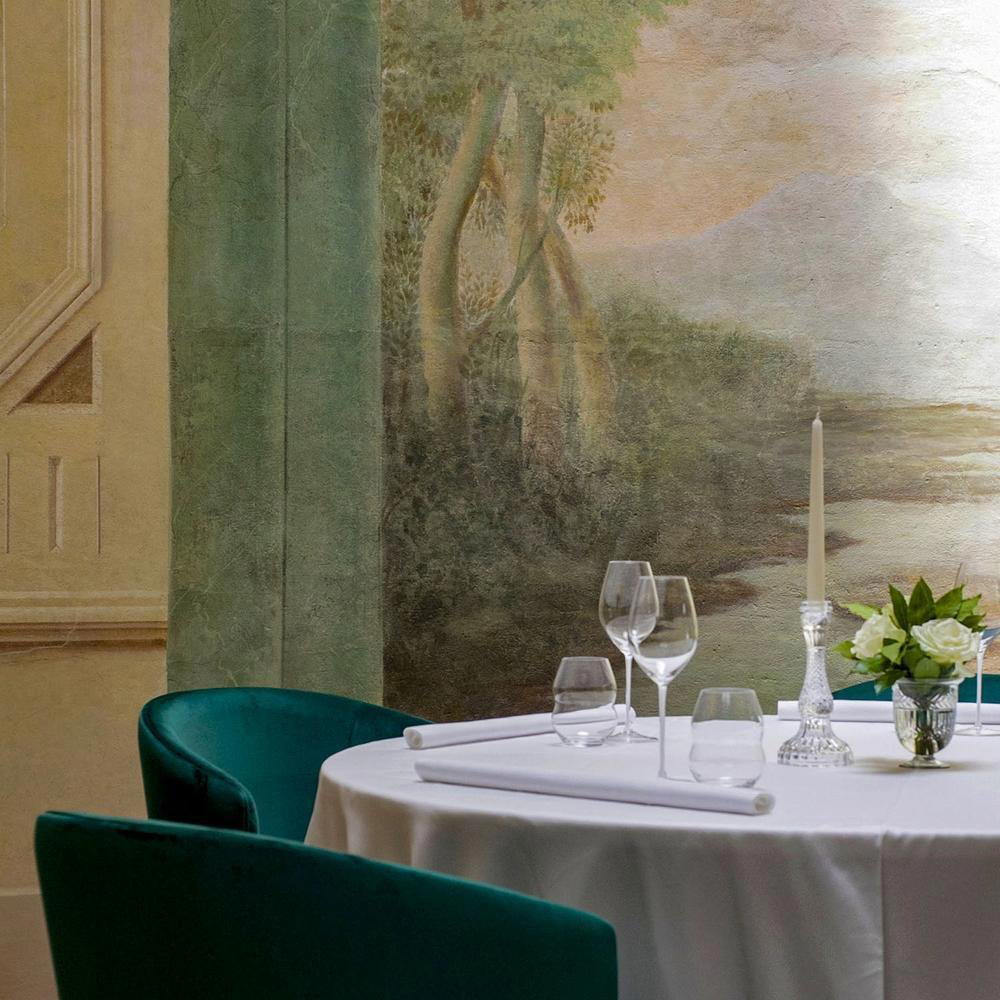
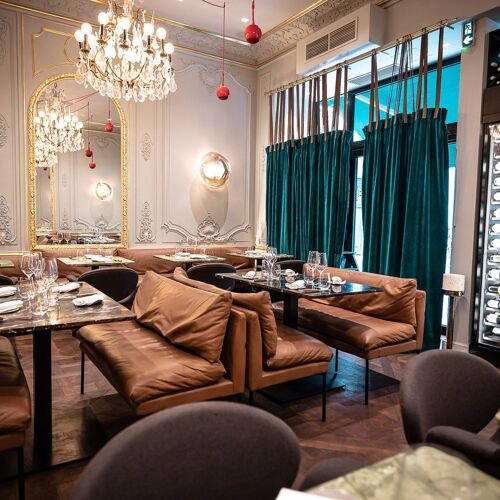
Ultra-modern design blended with historic stone walls and vaulted ceilings, creating a peaceful, luxurious atmosphere with dramatic harbour vistas.