Château Le Nessay

Michelin Selected
A Michelin Selected château-hotel on the Brittany coast at Saint-Briac-sur-Mer, Château Le Nessay occupies a promontory position above the Emerald Coast with the architectural presence of a 19th-century turreted manor. The property sits in a tier of French château conversions where heritage fabric and coastal setting do the heavy lifting, placing it well outside the resort-hotel mainstream.

Pearl is the En Primeur Club membership app — saves, bookings, and concierge access live there. Same editors, same standards.
- Address
- Bd du Bechay, 35800 Saint-Briac-sur-Mer, France
- Phone
- +33 2 99 21 02 10
- Website
- lenessay.com
- Directions
- Get directions
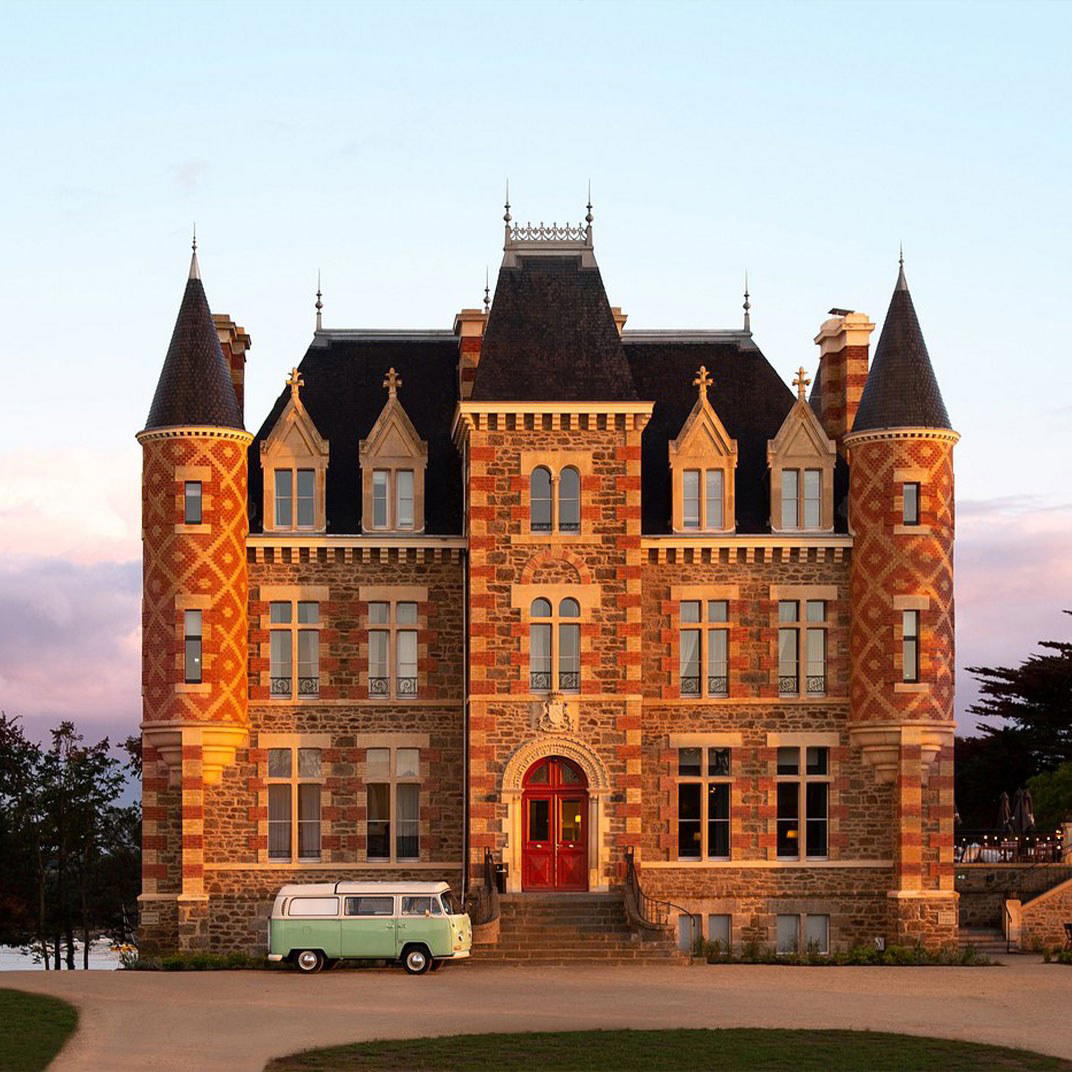
A Château on the Emerald Coast
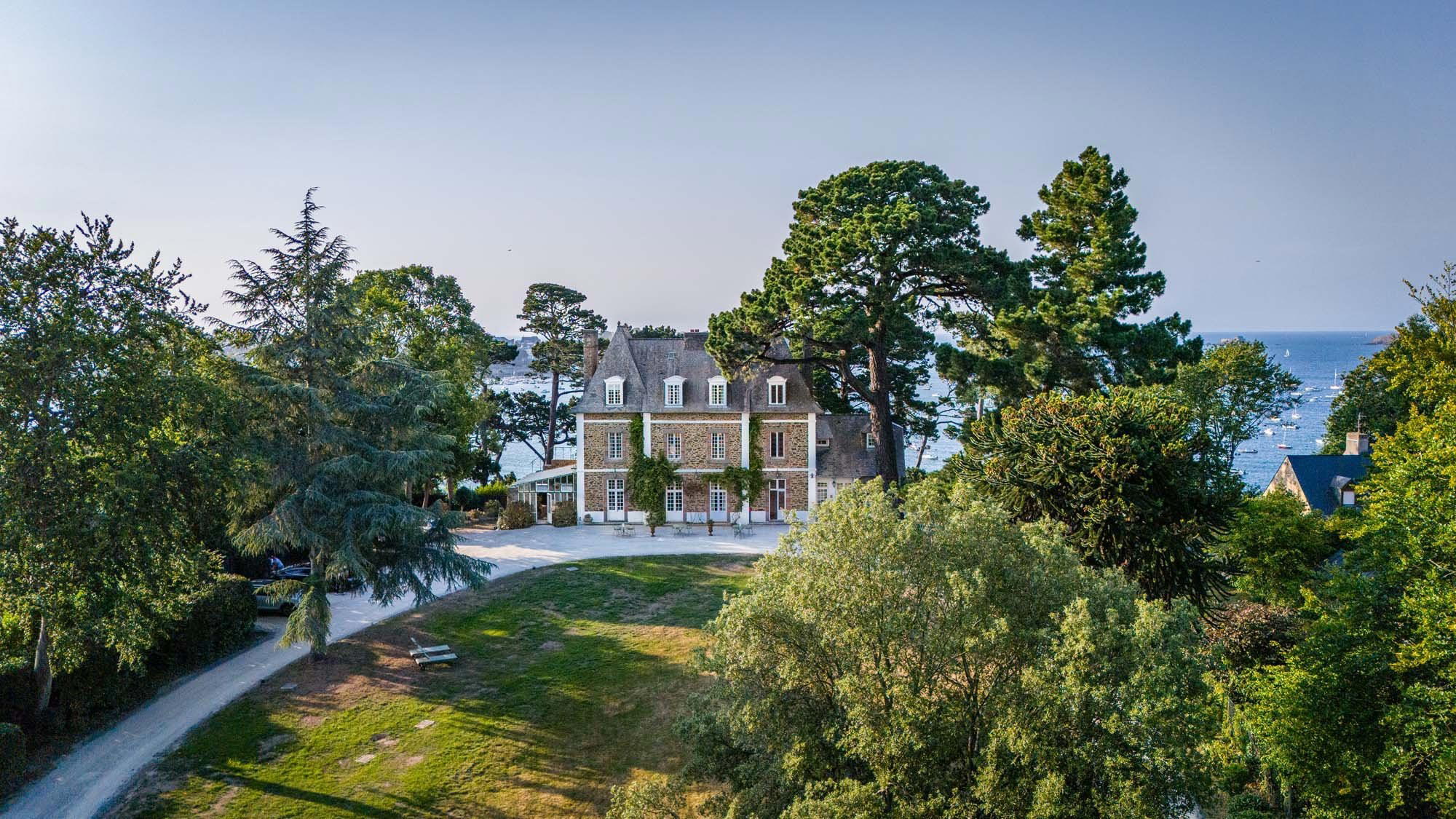
The Brittany coast between Dinard and Saint-Malo has long operated as a counterpoint to the French Riviera: cooler, quieter, less photographed, and built around a particular kind of stone architecture that the region's granite quarries made possible for centuries. Saint-Briac-sur-Mer sits along this stretch of the Côte d'Émeraude, and Le Nessay announces itself through the conventions of the 19th-century Breton manor house: turreted rooflines, dressed granite façades, and a siting on refined ground above the water that was as much a social statement as a practical one when properties like this were first built.
Approaching along Boulevard du Bechay, the château reads less like a converted hotel and more like a house that has always been inhabited at some scale of consequence. That impression matters, because it sets the register for everything that follows. This is a property where the architecture is the primary argument, not a backdrop to branded amenities or a spa program.
The Architecture as Primary Statement
French château conversions occupy a spectrum. At one end sit the grand Loire Valley properties, now often conference hotels with heritage dressing. At the other end are smaller, tighter estates where the original fabric has been preserved with enough care that the building still reads on its own terms. Château Le Nessay belongs to the second category, and in the context of the Breton coast, that positioning is less common than it sounds.
The granite construction typical of this part of Brittany ages differently from the limestone of the Loire or the rendered render of Normandy. It takes on a particular grey-green quality in coastal light, shifting tone depending on whether the sky is carrying rain in from the Atlantic or clearing after it. Properties built in this material tend to feel anchored rather than grand, settled into their topography rather than imposed on it. That quality is structural, not decorative, and no amount of interior renovation can replicate it from scratch.
The turreted profile, common to the late 19th-century Breton revival style, gives the château a silhouette that reads clearly from the water and from the surrounding coastline. This was deliberate: the houses built along this stretch of the Côte d'Émeraude in the Belle Époque period were as much signals of arrival as places to stay, designed to be seen from sailing boats and from the promenades at Dinard and Saint-Malo. That visual logic still holds. Château Le Nessay occupies its promontory in a way that integrates historical intent with present-day setting, rather than requiring the visitor to mentally subtract 130 years of change.
For travellers comparing château-hotel properties across France, the reference points are varied. Properties like Château du Grand-Lucé in Le Grand-Lucé represent the formal classical axis; Baumanière Les Baux-de-Provence in Les Baux positions itself through restaurant prestige and Provençal landscape. Château Le Nessay operates in a different register: the Breton coastal château, where the setting and the architectural vernacular carry the identity of the stay.
Michelin Selection and What It Signals
The 2025 Michelin Selected designation places Château Le Nessay within a tier of French hotels that the Guide considers worthy of attention without yet reaching the Clef (key) distinction awarded to the most exceptional properties. Michelin Selected hotels are evaluated on quality, comfort, and setting rather than on service depth or gastronomic programming alone, which means the designation reflects something about the physical experience of the property as much as its service infrastructure.
In the context of Brittany specifically, Michelin Selected properties are not common. The region generates fewer luxury hotel entries than the Côte d'Azur or the Loire Valley, partly because the visitor profile has historically skewed toward family and self-catering tourism rather than high-spend hotel stays. Travellers comparing this property against Michelin-recognised coastal hotels elsewhere in France might look at La Réserve Ramatuelle in Ramatuelle or Casadelmar in Porto-Vecchio, but the architectural and atmospheric proposition is fundamentally different: those are contemporary design statements; this is a heritage property on a working coastline.
For a broader view of how French hotel architecture divides across price tiers and regions, our full Saint-Briac-sur-Mer guide maps the local context. Properties like Le Bristol Paris, Hotel Du Cap-Eden-Roc in Cap d'Antibes, and Hôtel de Paris Monte-Carlo represent the leading bracket of French grand hotel tradition; Domaine Les Crayères in Reims and Royal Champagne Hotel & Spa in Champillon show what a château conversion looks like when it anchors a gastronomic destination program. Château Le Nessay operates at a different scale and with different ambitions, which is part of its appeal to a certain kind of traveller.
Coastal Brittany as Context
Saint-Briac-sur-Mer sits between two of Brittany's most-visited towns, Dinard and Saint-Malo, without attracting the visitor volumes of either. Dinard carries its own Belle Époque legacy, with villa architecture and a cross-channel association that brought British holidaymakers in large numbers from the late 19th century onward. Saint-Malo is walled, historically significant, and heavily touristed in summer. Saint-Briac sits between them in terms of both geography and register: accessible by road from both, but quieter, less marketed, and better suited to stays that prioritise the coastline over a town agenda.
The Côte d'Émeraude takes its name from the particular green cast the sea takes on in clear conditions, a product of the shallow granite seabed and the tidal range, which along this stretch of the Breton coast is among the largest in Europe. The landscape shifts substantially between low and high tide, with large sand exposures appearing at low water that disappear entirely as the tide comes in. For a property positioned on refined ground above this coastline, the visual experience changes with each tidal cycle in a way that is specific to this geography and not replicable anywhere further south or east along the French coast.
Travellers arriving by car from Paris should plan for approximately four hours via the A11 motorway to Rennes, then west toward Saint-Malo. The TGV from Paris Montparnasse reaches Rennes in around 1 hour 25 minutes; from Rennes, Saint-Briac is accessible by car in under an hour. Neither Dinard nor Saint-Briac has a direct rail link, so a hire car or taxi transfer from Rennes or Saint-Malo is the practical approach for most arrivals. The closest airport with regular service from Paris and London is Dinard-Pleurtuit-Saint-Malo Airport, approximately 10 kilometres from the property.
Planning Your Stay
The Breton coast sees its highest visitor concentration between July and August, when school holidays drive demand across Dinard, Saint-Malo, and the surrounding villages. Shoulder months, particularly May, June, and September, offer cooler temperatures and clearer availability at properties along the Côte d'Émeraude. The Atlantic weather pattern means rainfall is possible in any month, but the light quality in spring and early autumn is notably different from high summer, with lower sun angles that animate the granite architecture and the tidal landscape in ways the flatter midday light of July does not.
For travellers building a longer French Atlantic itinerary, comparable château and heritage properties worth mapping alongside Le Nessay include La Ferme Saint-Siméon in Honfleur to the east along the Normandy coast, and Hôtel du Palais in Biarritz to the south. Each represents a different inflection of the French coastal heritage hotel, and together they trace the range of what this category of property can mean across different regional architectures and visitor cultures. Further afield, those with an appetite for French château architecture in different landscape contexts might consider Les Sources de Caudalie in Bordeaux, Hôtel Chais Monnet & Spa in Cognac, or La Bastide de Gordes in Gordes for the Provençal variant of the converted historic property.
Comparable Venues
Comparable venues nearby, for context on price, style, and recognition.
| Venue | Cuisine | Price | Awards | Notes |
|---|---|---|---|---|
| Château Le NessayThis venue — the venue you are viewing | Château-style boutique hotel blending historic charm with modern comfort | Not listed | Michelin Selected | Not listed |
| Le Nessay | Chateau-style family-friendly retreat | $200–300 | Mr & Mrs Smith Seal of Approval · Small Luxury Hotels of the World Member | Saint-Briac-sur-Mer |
| L'Aiguille Grive | Contemporary chalet hotel with eco-friendly low-energy constructions. | Not listed | Michelin Selected | Charmettoger |
| Castel Clara | Chic seaside resort with slate-roofed buildings blending into the landscape. | Not listed | Michelin Selected | Goulphar |
| Les Dromonts | Well-known 1960s alpine architecture with fan-shaped pine-cone design. | Not listed | Michelin Selected | heart of Avoriaz |
| Domaine de Barive | Château hotel with antique charm and contemporary comforts in verdant parkland. | $200–300 | Michelin Selected | Sainte-Preuve |
Recognition history
Dated appearances from independent guides and award organizations, with the underlying list record or original source where available.
Michelin Selected
Michelin
Continue exploring
More in Saint Briac sur Mer
Hotels in Saint Briac sur Mer
Browse all →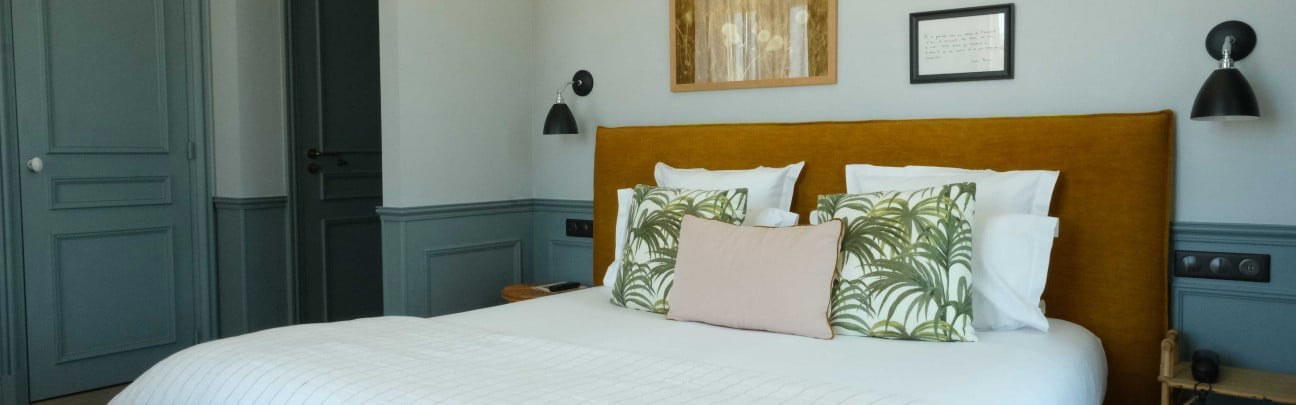
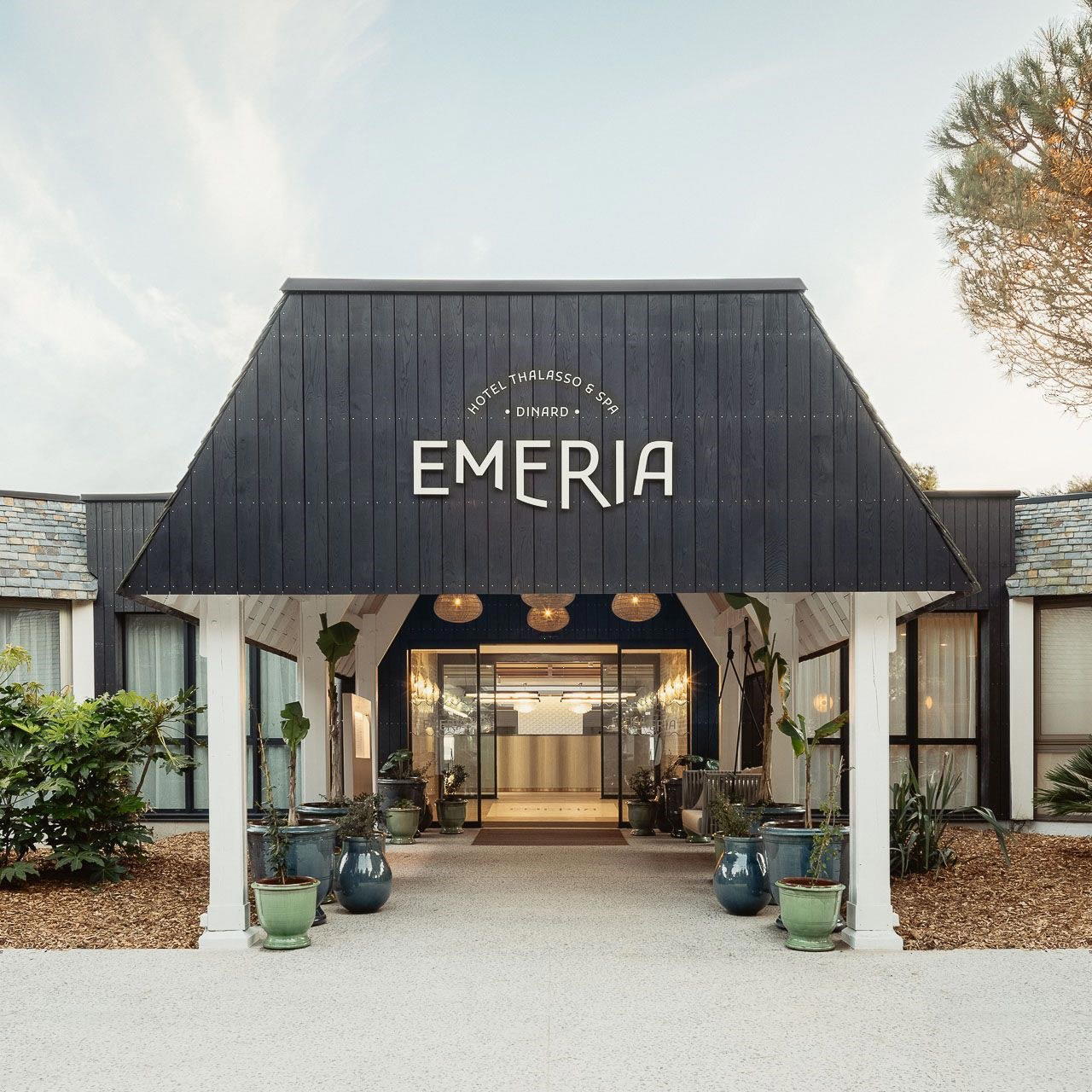
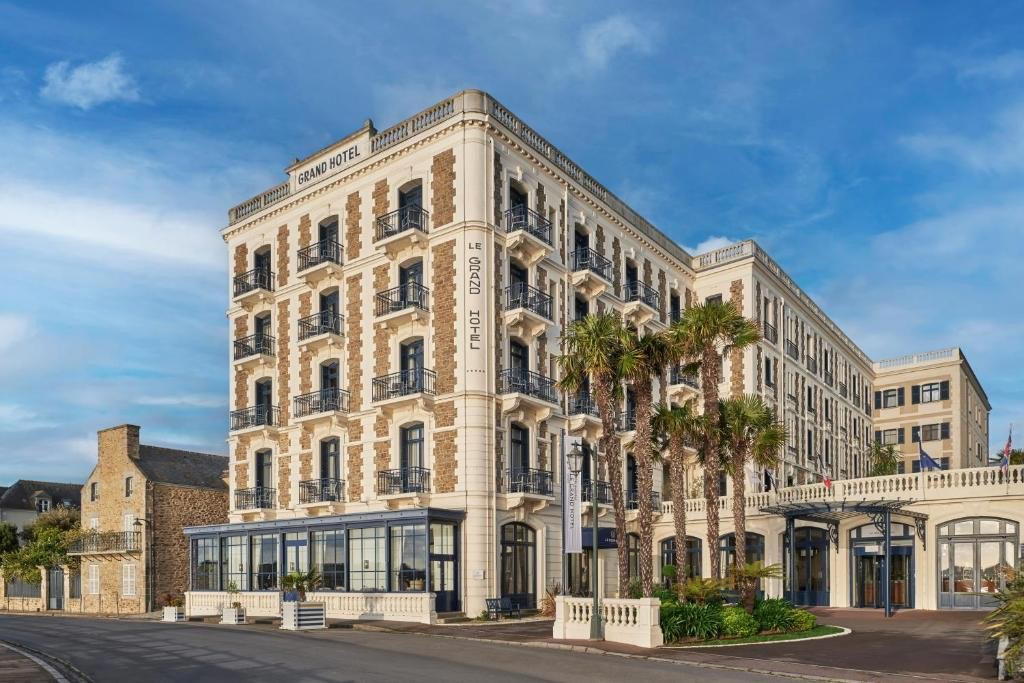
Bars in Saint Briac sur Mer
Browse all →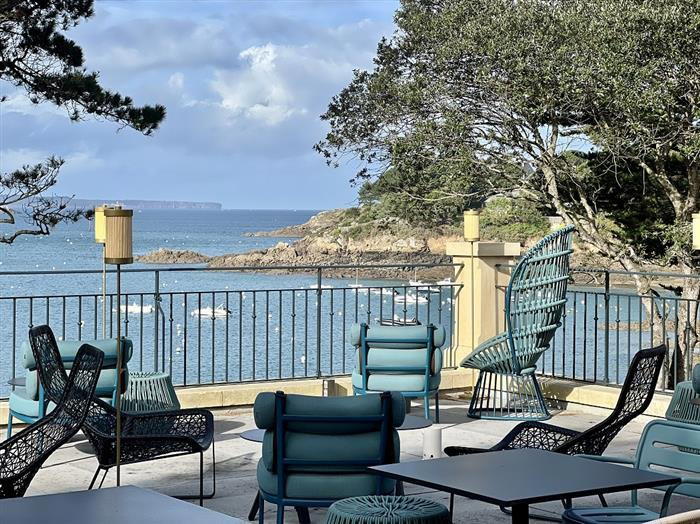
Details
- Romantic
- Scenic
- Elegant
- Cozy
- Intimate
- Romantic Getaway
- Family Vacation
- Weekend Escape
- Waterfront
- Historic Building
- Panoramic View
- Terrace
- Wi Fi
- Pool
- Spa
- Sauna
- Restaurant
- Room Service
- Concierge
- Garden
- Waterfront
- Elevator
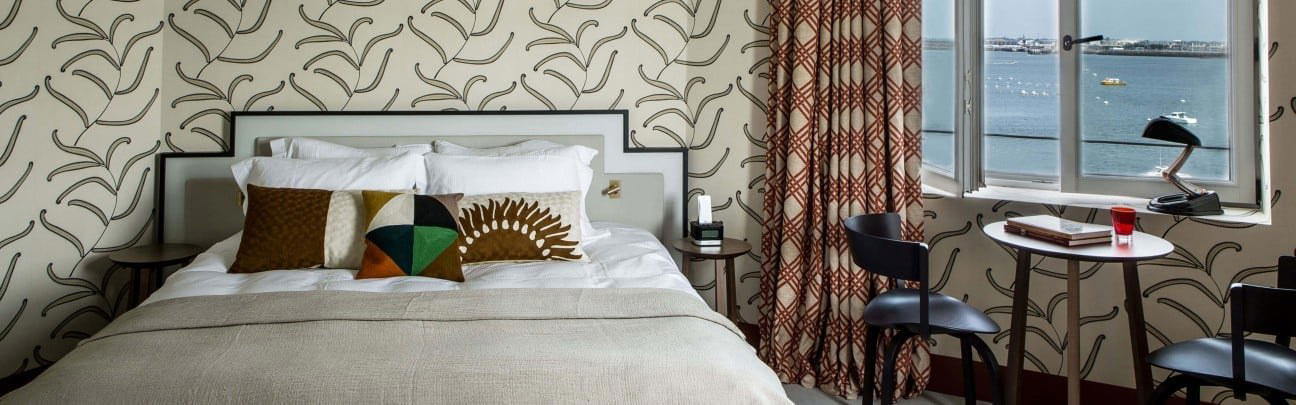
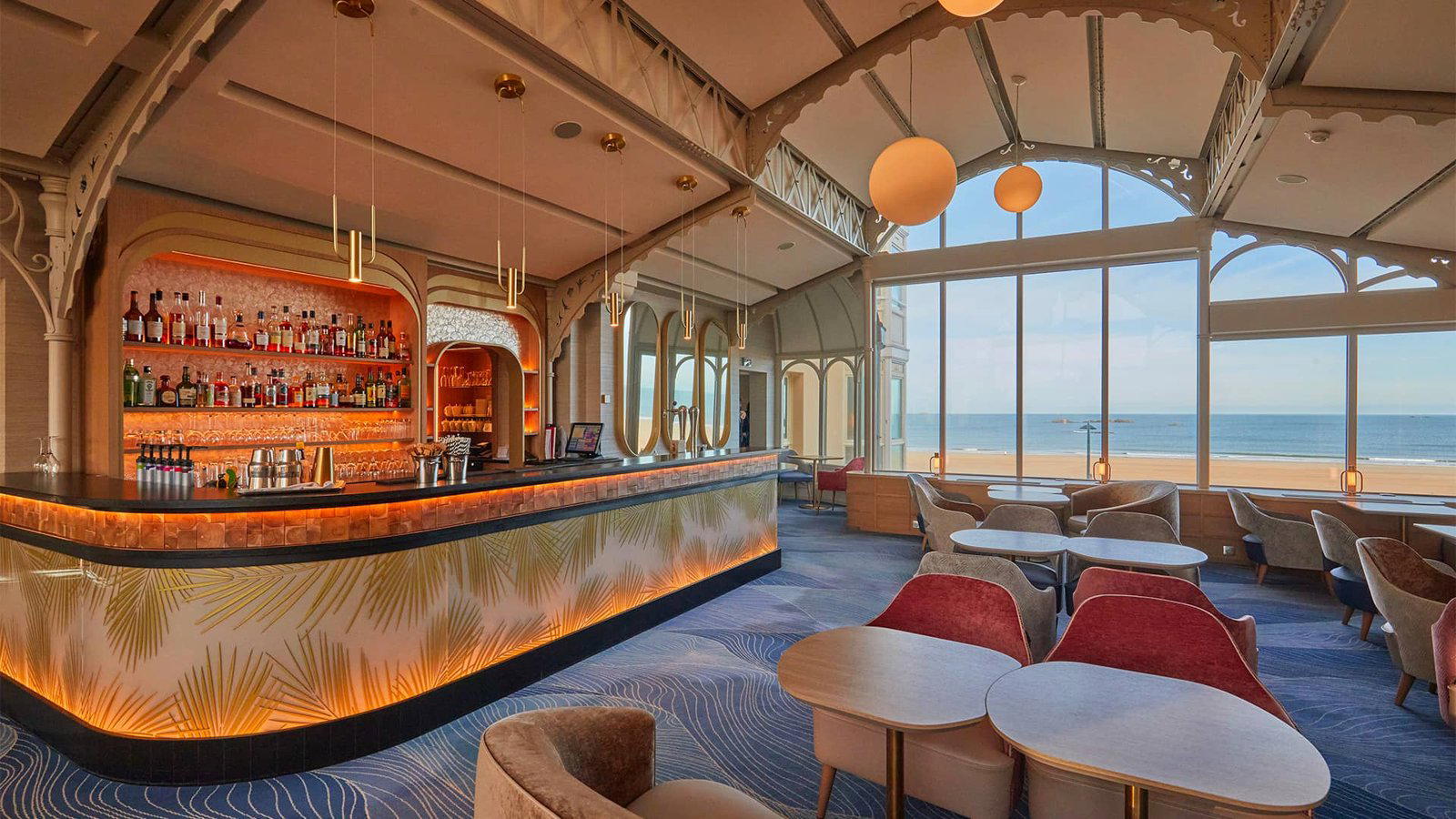
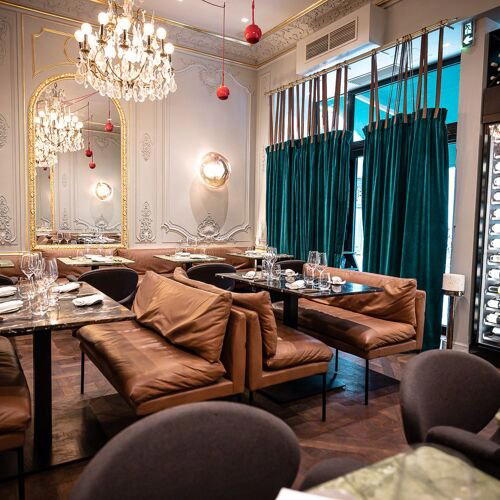
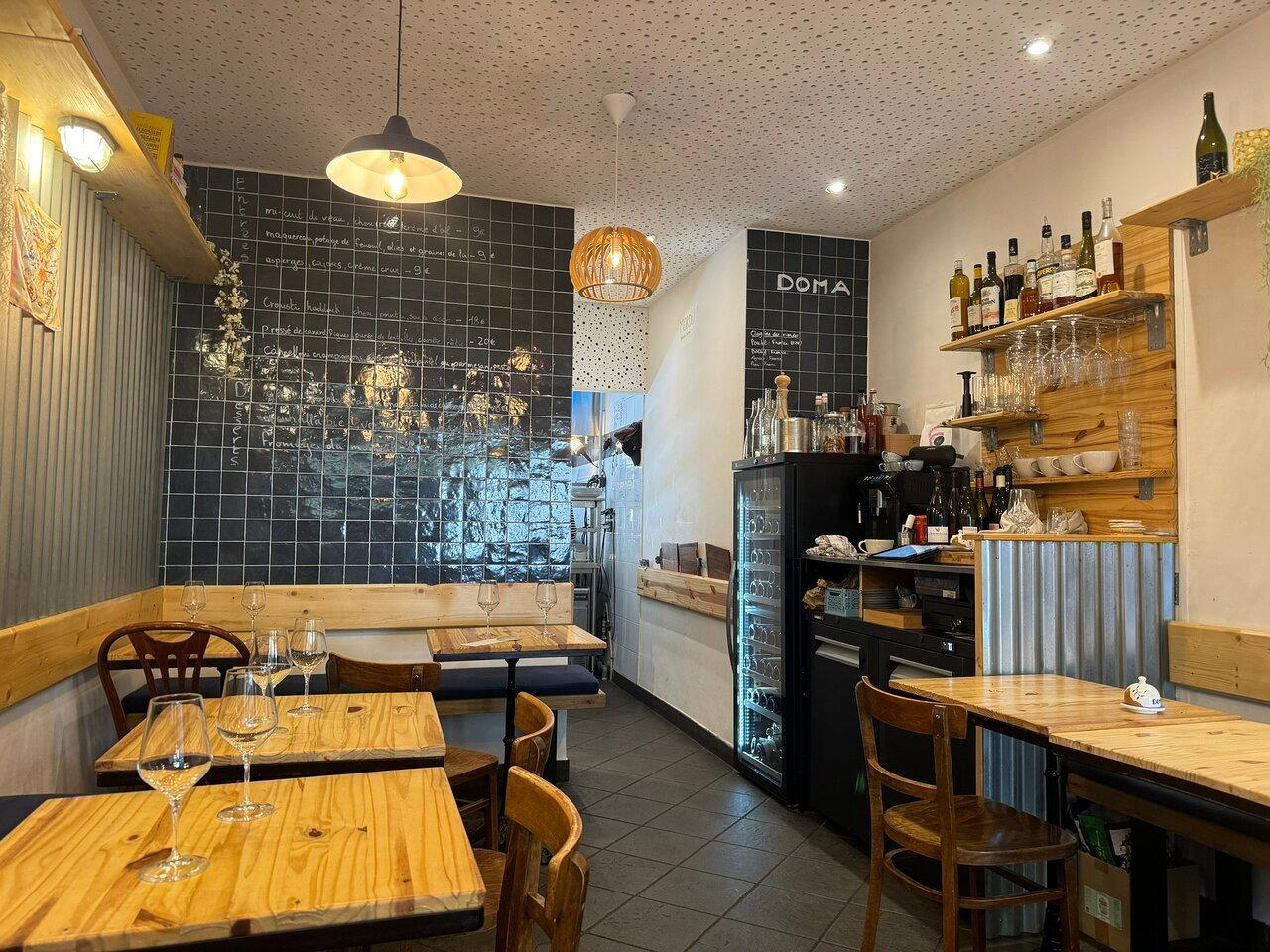
Low-key rustic with contemporary touches, warm and welcoming like a Brittany holiday home, featuring light-filled spaces and serene sea vistas.