← Guides
What a Visit to Château Margaux Actually Involves Yes, you can try for an appointment at Château Margaux, but treat it as private-estate access rather than a bookable cellar door: visits to the cella.
What a Visit to Château Margaux Actually Involves Yes, you can try for an appointment at Château Margaux, but treat it as private-estate access rather than a bookable cellar door: visits to the cella.
Yes, you can try for an appointment at Château Margaux,1 but treat it as private-estate access rather than a bookable cellar door: visits to the cellars by appointment only from Monday to Friday,1 and tasting is only for professionals.1 A useful route is a concise direct request strengthened by a serious merchant or négociant introduction.
The honest version is this: Château Margaux is not the château you fold casually between lunch and another tasting. If the estate says yes, the appointment belongs on the spine of the trip. If it says no, you need a Bordeaux plan that still drinks well without it.
For collectors, the pull is obvious before the first email: Château Margaux sits in the imagination as a bottle first, a destination second. That matters for access. A winery built around a grand vin cannot receive visitors like a high-volume cellar door without changing the nature of the visit itself.
In practice, assume the estate is weighing more than your preferred date. A private appointment asks staff to interrupt the rhythm of the vineyard, cellar, commercial office, or hospitality team. It also asks the château to decide whether the visit serves the wine's long arc: a serious collector relationship, a trade relationship, an educational reason, or a connection through someone whose name the estate already trusts.
The competition is not only other travelers. You are also up against merchants, sommeliers, journalists, importers, long-standing clients, and Bordeaux regulars whose requests arrive with context. That is why the tone of the approach matters. "I would love a tour" lands differently from a request that explains your connection to Margaux, your buying history, your flexible travel window, and the person who can vouch for you.
The strongest channel is a relationship-led request, not a booking platform. No verified public booking surface is available here, so do not plan around an instant-confirmation calendar or a third-party page claiming guaranteed access. Contact the estate directly at +33 (0) 5 57 88 83 831 or through a trusted wine professional.
First route: direct estate contact. This is the cleanest approach if you can write like a collector rather than a tourist. Keep the note short. State who you are, when you hope to be in Bordeaux, why Château Margaux matters to your cellar, and whether your dates can move. Avoid asking for library wines, barrel samples, photography permissions, or special treatment in the first note. Let the estate define the format.
Second route: your merchant or négociant relationship. If you buy serious Bordeaux through a merchant, ask that merchant whether an introduction is appropriate. This works best when the merchant can say more than "good client." A note carrying buying history, allocation continuity, and a specific reason for visiting has more weight than a concierge-style request. If your Bordeaux buying is sporadic, do not pretend otherwise; ask the merchant for the better alternative as well.
Third route: a specialist wine-travel adviser with Bordeaux access. This can help when the adviser has real estate relationships rather than a menu of generic tours. Ask what they can verify before you pay for planning: whether the appointment is requested directly, whether the format is confirmed by the château, and whether the adviser will put alternatives in place if Margaux declines. The word "private" is not enough.
The estate does not publish a release schedule or appointment window. Closed on weekends, public holidays, in August and during the harvest.1 That is the central access fact for planning: you should confirm directly with the estate or through the person making the introduction before arranging travel around the visit.
Because the timing is unpublished, treat any specific promise from an intermediary with care. A claimed opening day, deposit rule, or guaranteed slot should be backed by written confirmation from the château itself. If your Bordeaux dates are fixed, build the trip as though Château Margaux may not happen. If your dates are flexible, say so in the first note; flexibility is one of the few advantages a private collector can offer without overplaying status.
The request should read like a Burgundy allocation note rather than a hotel amenity request: brief, specific, and anchored in the wine. If you have bought the château across multiple vintages, say so. If you cellar Bordeaux for long-term drinking rather than resale, say that plainly. If the visit marks a milestone, keep it human but not theatrical.
They let the relationship speak before the itinerary. A merchant introduction usually works better when the merchant writes first and you follow with a concise personal note. That sequence gives the château context before it receives the travel request.
They avoid overloading the first email. The point is not to present a full résumé of dinners, labels, and auction lots. The point is to make it easy for the estate to say, "This person understands why access here is limited." A polished request might include your travel window, the size of your party, the connection to Margaux or Bordeaux, and the name of the person introducing you.
They also keep the party small. Even without a published capacity, private-estate hospitality rarely improves as the group grows. If the visit matters, do not turn it into a caravan of casual companions. Ask for the people who will actually listen.
The visit may be narrower than the picture in your head: the château may confirm a conversation, a cellar or vineyard element, a tasting, or a more limited format depending on staff availability and the purpose of the appointment.
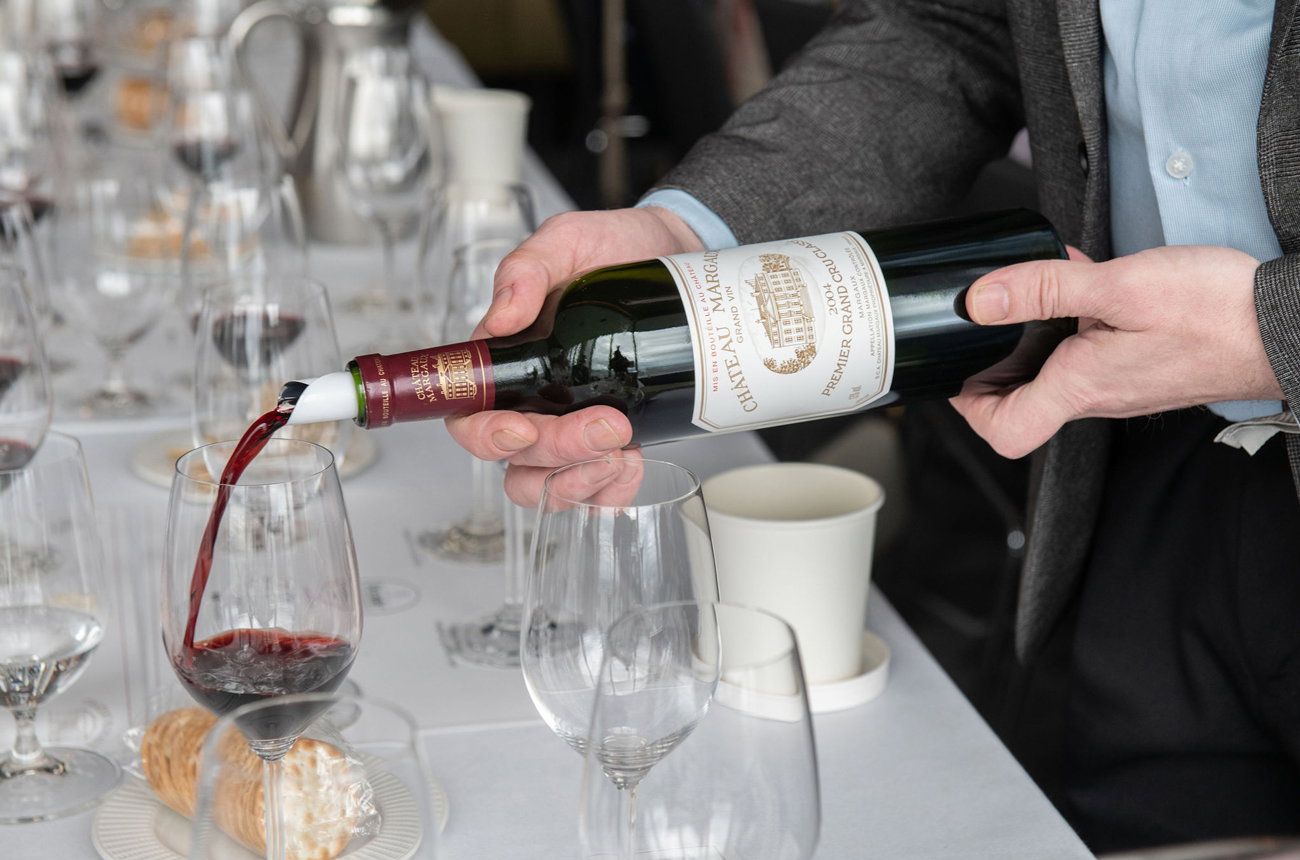
That uncertainty is part of the access. Do not assume a vertical, barrel tasting, library pour, photography access, or time with a senior technical figure unless the confirmation says so. If the tasting is offered, arrive prepared to discuss the wine in the glass rather than perform admiration. The stronger questions are about vintage expression, selection, élevage, and how the estate wants the current release understood beside mature bottles in private cellars.
The pacing should be led by the château. A collector who listens well is more likely to be remembered than one who tries to extract every possible privilege from the hour.
A declined appointment should not flatten the trip. The better move is to replace the fantasy of one locked door with access that still deepens your understanding of Margaux, the Left Bank, and mature Bordeaux.
A château with a published visitor program. Château Angludet offers 'The Origine of Angludet' visit for 25€ per person, duration 1h15, tasting 3 wines.2 Château Siran offers vertical tasting in its subterranean bunker for €45 per person.3 Château Ferrière tours start from €25 per person.3 Choose an estate that confirms formats openly and lets you compare vineyard, cellar, and tasting-room hospitality without ambiguity.
A merchant-led Margaux tasting. A serious Bordeaux merchant can sometimes teach more through bottles than a rushed estate stop can through architecture. Ask for a focused flight around Margaux-appellation wines, ideally with vintages that show both perfume and structure rather than a scatter of trophy labels.
A restaurant dinner built around mature Bordeaux. If the goal is the wine rather than the gates, a sommelier-led dinner can put Château Margaux, its peers, or neighboring Margaux estates in the context where collectors eventually meet them: at table, with food, air, and time.
These alternatives are not consolation prizes if they are built around bottles rather than access theatre. A day that teaches you how Margaux ages is better than a famous doorway and no glass.
| Estate | Access Difficulty | Cost | Lead Time | How to Book |
|---|---|---|---|---|
| Château Margaux | Trade/professional only | N/A | Confirm directly with estate | Direct request via merchant introduction |
| Château Angludet | Public visitor program | €25-50 per person2 | N/A | Château Angludet booking page |
| Château Siran | Public visitor program | €45 per person (vertical tasting)3 | N/A | Direct booking via estate |
| Château Ferrière | Public visitor program | From €25 per person3 | N/A | Direct booking via estate |
| Château Dauzac | Public visitor program | €59 per person (e-scooter tour)3 | N/A | Direct booking via estate |
Château Margaux is for the collector who values the relationship as much as the appointment. If you have a cellar shaped by Bordeaux, if you buy through a merchant who knows your palate, or if Margaux has been a reference point over years rather than weeks, the chase makes sense.
It is also right for a milestone trip when the rest of the itinerary can stand without it. A birthday, anniversary, or harvest-season Bordeaux journey can carry one ambitious request, provided the day has a credible alternative.
Skip the chase if you need guaranteed content, fixed timing, or a tasting-room experience you can compare by price and duration. Château Margaux is the wrong target for a checklist traveler. It is also the wrong target if the only reason for going is the name on the gate. In that case, put the money into a mature bottle and choose an estate that actually publishes its visitor terms.
Chase Château Margaux only if you can approach it through relationship, patience, and a request that sounds like it belongs in the world of the wine. The direct note matters, but the merchant or négociant introduction is the only route that reliably works for most private collectors because it gives the estate context before it gives you a date.
Do not build a Bordeaux trip on an unconfirmed appointment, and do not pay for access that the château has not clearly confirmed. The better strategy is to make the request early, keep the language spare, and design a Margaux-focused fallback that still gives the day a serious glass.
For most collectors, the wiser trip is one with a credible Bordeaux Plan B; the Château Margaux appointment, if it comes, should feel like the coda rather than the chassis.
Private collectors can try, but tasting is only for professionals.1 A useful route is a concise direct request supported, where possible, by a merchant or négociant introduction.
No. The estate does not publish a release window or appointment schedule. Visits to the cellars by appointment only from Monday to Friday,1 and closed on weekends, public holidays, in August and during the harvest.1 Confirm directly with the château before planning travel around a visit.
Yes, if it is relevant and concise. A short note explaining your Bordeaux buying history, your connection to Margaux, your travel window, and who is introducing you is stronger than a broad request for a luxury tour.
The estate does not publish a fee schedule or deposit requirement. Ask the estate or your introducer to confirm whether any charge applies before treating the appointment as final.
Choose a château with a published visitor program, Château Angludet offers visits from €25 per person,2 Château Siran offers vertical tasting for €45 per person,3 or Château Ferrière tours from €25 per person.3 A merchant-led Margaux tasting or a sommelier-led dinner built around mature Bordeaux can also deepen the trip.
Get the App
Take the shortlist into the En Primeur Club app for concierge access, saved places, and the next step after discovery.
Get Exclusive AccessMore from the editors