← Guides
Sassicaia, Tignanello, Solaia, Ornellaia, and Masseto continue to outperform Piedmont on trading platforms — even as the broader fine wine market cools from its 2022 peak.
Sassicaia, Tignanello, Solaia, Ornellaia, and Masseto continue to outperform Piedmont on trading platforms — even as the broader fine wine market cools from its 2022 peak.
Five names keep surfacing on Bordeaux Index's LiveTrade platform whenever the conversation turns to Italian fine wine: Sassicaia, Tignanello, Solaia, Ornellaia, and Masseto.
Together, according to Bordeaux Index, they dominate Italian wine trading on the platform, and while demand sits below its 2022 peak, these Super Tuscan investment wines are showing a resilience that Piedmont's top labels have not quite matched.
Since August 2025, Tuscan components of the Italy 100 index have climbed 1.7%, according to Geraint Carter of Bordeaux Index, while Piedmont components have risen just 0.9%. In a market that has been, by several accounts, cooling and inconsistent, that gap tells you where the capital is flowing.
This is not a story about a sudden spike. It is a story about structural positioning, about how a handful of Tuscan estates, most of them rooted in a movement that began as a rebellion against Italian wine law in the 1970s, have consolidated their place at the summit table of global fine wine trading. And about what that means for collectors deciding where to allocate in a market that no longer rewards complacency.
The fine wine market has been in a corrective phase since the exuberance of 2021 and 2022, when pandemic-era demand pushed prices across Bordeaux, Burgundy, and Italy to levels that were always going to be difficult to sustain. Italian icons such as Sassicaia and Tignanello were leading participants in the bull market of the late 2010s and early 2020s, according to Bordeaux Index, and have proved resilient during the subsequent correction.
That resilience is the key word. Carter noted that prices for upper-end Tuscan wines rose further than Piedmont wines in the upmarket, have been more resilient in the downmarket, and early indications suggest they might recover more quickly. The pattern is consistent: Tuscany's elite labels climbed higher on the way up and have held firmer on the way down.
That said, Carter suggested that further significant price rises for Super Tuscans in the short term were unlikely, given ongoing market uncertainty and the gains these wines have already banked. These wines, he added, "have gone through their transition of being overlooked." The implication is clear: the discovery phase is over. What remains is a mature, liquid market, one where Super Tuscan investment wines trade with a regularity and confidence that few Italian categories can match.
The broader Italian picture is muddier. Trading on Italy has been "quite inconsistent" in 2026 so far, according to Bordeaux Index. While there is generally more price stability, buyers are not rising up to offers with any haste. The enthusiasm is selective. It concentrates on the labels with the deepest liquidity and the strongest brand recognition.
The five labels that dominate Italian wine trading on Bordeaux Index's LiveTrade platform are not interchangeable. Each carries its own identity, its own appellation, its own collector logic. But together, they form the core of what the secondary market treats as investment-grade Italian wine.
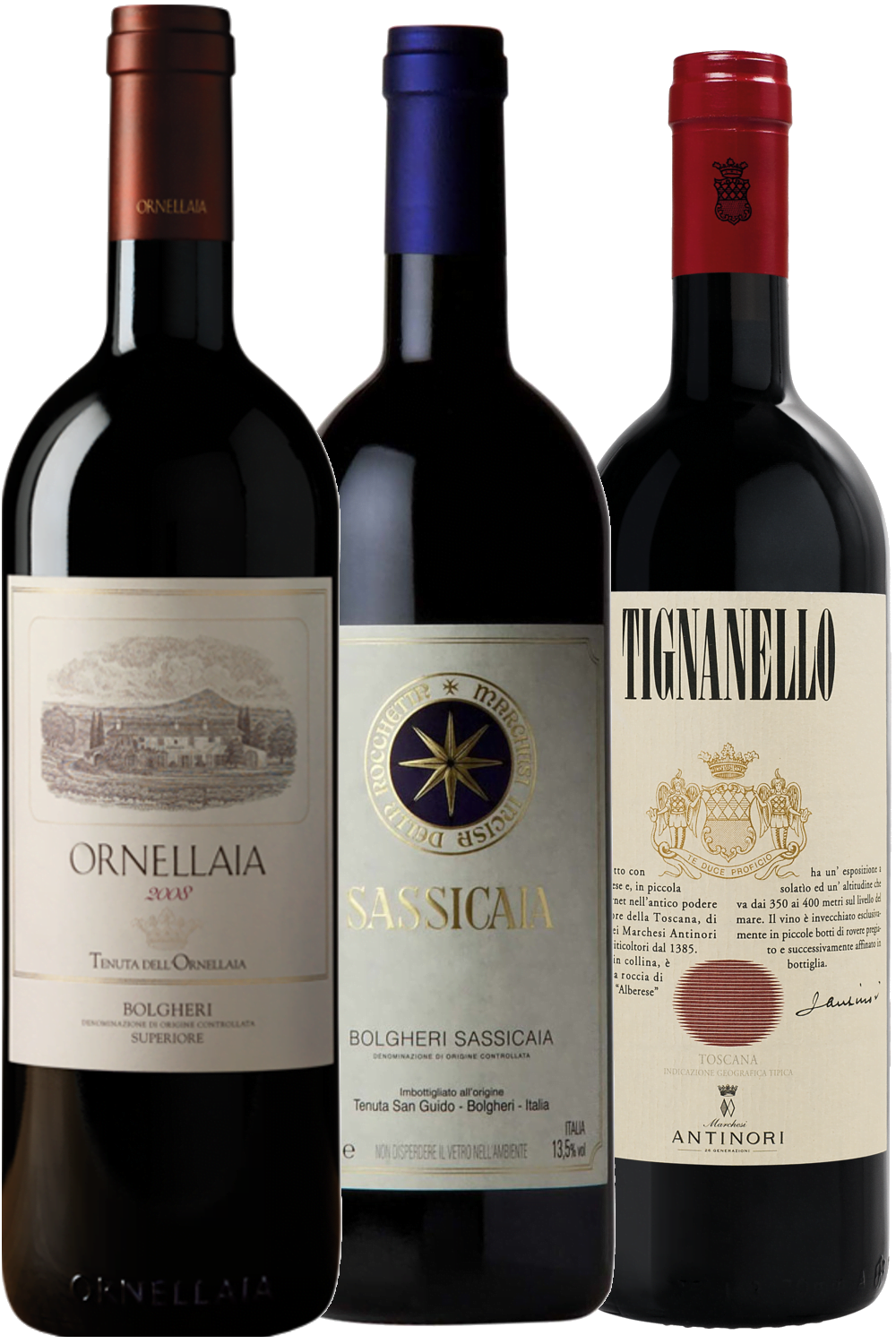
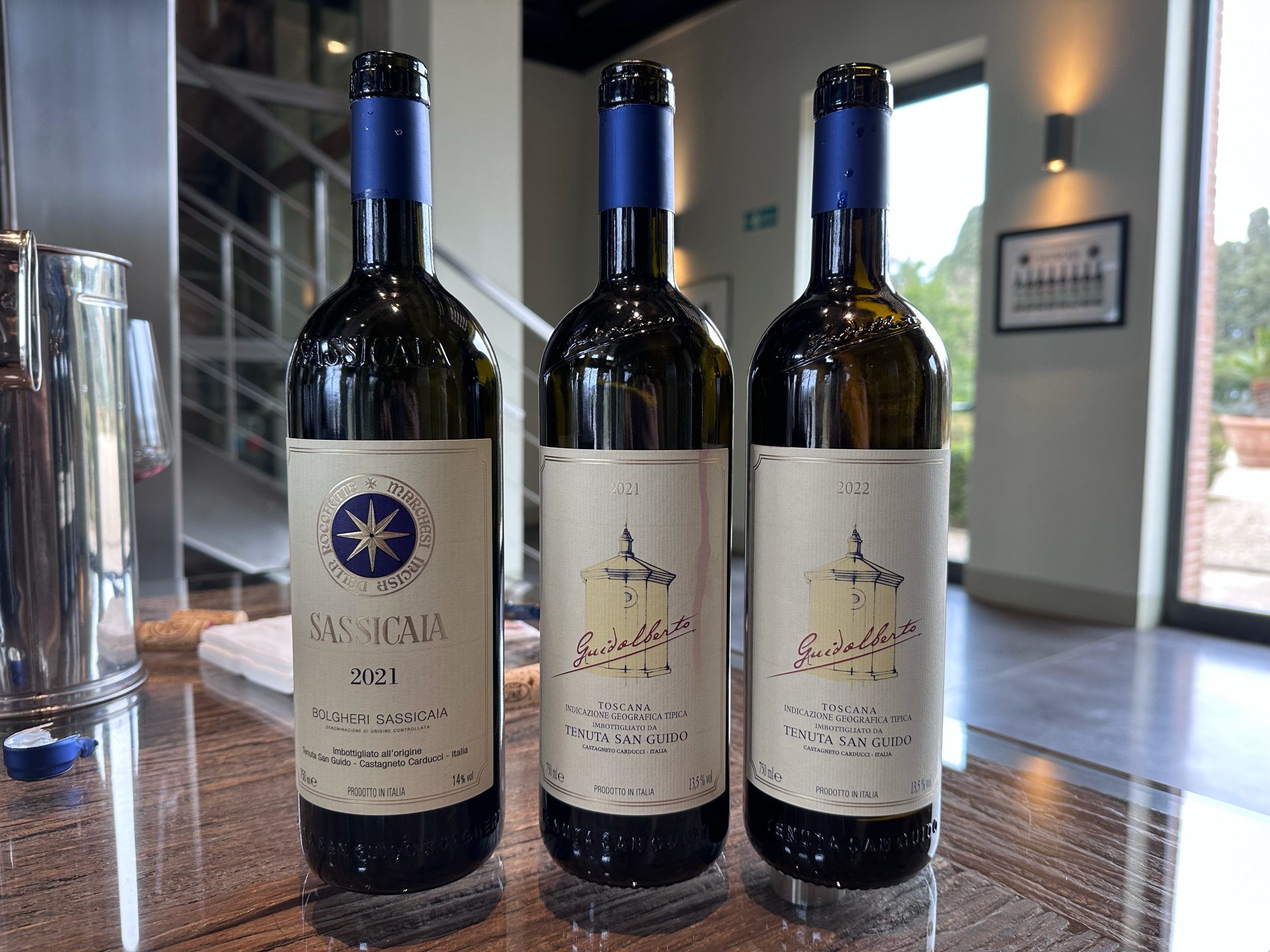
Sassicaia, produced by Tenuta San Guido in Bolgheri, is the original Super Tuscan, the wine that proved, beginning in the late 1960s, that Cabernet Sauvignon and Cabernet Franc could produce something on the Tuscan coast that rivaled the classified growths of the Médoc.
It was the first Italian wine to receive its own DOC, Bolgheri Sassicaia, in 1994, a recognition that effectively reversed the regulatory logic: instead of the wine conforming to the appellation, the appellation was created to fit the wine.
Tenuta San Guido released Sassicaia 2023 in February, according to Decanter, and Anna Hickson, brand manager for Tenuta San Guido at UK agent Armit Wines, reported high trade interest. She said that despite the challenging market conditions, Sassicaia continues to be viewed as offering strong value at the premium end of the fine wine market.
Tignanello and Solaia both come from Marchesi Antinori, the family whose decision to plant Cabernet alongside Sangiovese in the hills of Chianti Classico helped ignite the Super Tuscan movement. Tignanello, a Sangiovese-dominant blend, has long been the more accessible of the two. Solaia, its Cabernet-dominant sibling from the same estate, commands higher prices and tighter allocations. Both were central to the bull market that peaked around 2022, and both have held their value more effectively than many equivalents at similar price points.
Ornellaia, also from Bolgheri, built its reputation on a Bordeaux-style blend that has attracted consistent critical attention since its first vintage in 1985. And then there is Masseto, the 100% Merlot produced from a single vineyard on the Ornellaia estate, among the more allocation-restricted wines in Italy, and a relatively recent entrant to upper-tier investment status compared to Sassicaia or Tignanello.
Carter noted particular interest in highly rated vintages of these Super Tuscans. The collector logic is direct: in a market where broad Italian trading is inconsistent, capital concentrates on the labels with the deepest liquidity.
The 1.7% versus 0.9% split in the Italy 100 index since August 2025, Tuscany over Piedmont, is a snapshot, not a verdict. But it reflects a pattern that has been building for years. Bordeaux Index describes Tuscany's transformation over the past two decades as a move from a relative bit-part player in a trade dominated by Bordeaux, Burgundy, and Champagne to a consistent mainstay. That rise, according to the firm, has been driven largely by the region's aristocrats, estates like Tenuta San Guido and Antinori, whose wines have evolved into luxury brands with broad global demand and strong liquidity.
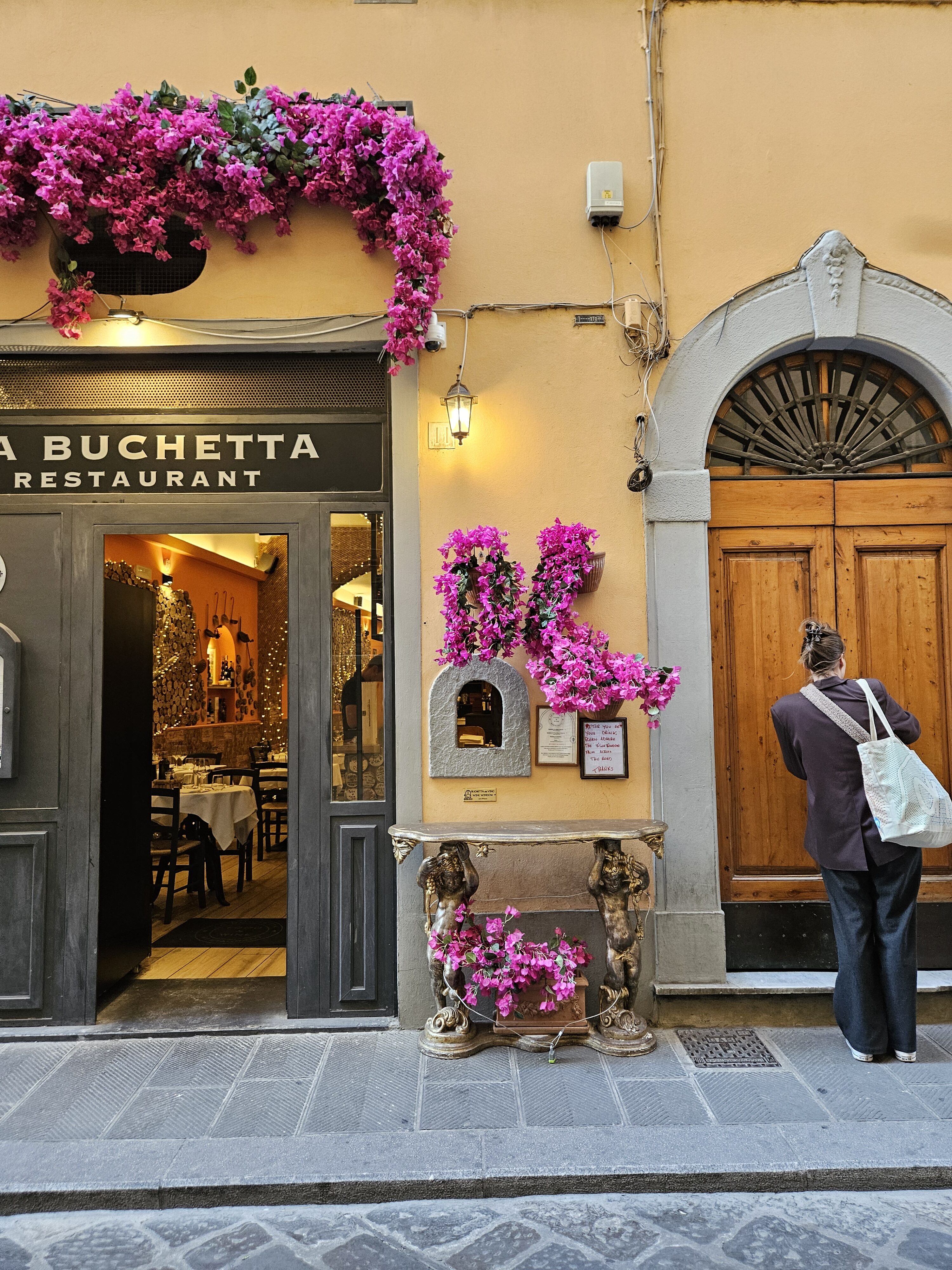
The word "liquidity" matters here. For a wine to function as an investment, it needs to trade, not just appreciate on paper. Sassicaia and Tignanello move on secondary platforms with a frequency that most Barolo producers cannot match. That is partly a function of brand recognition, Sassicaia is a name that registers with collectors in New York, Hong Kong, and London alike, and partly a function of critical mass built over decades of consistent quality.
Piedmont is not struggling, exactly. Lauren McPhate, partner at Tribeca Wine Merchants in New York, described demand for top Italian wines as substantial, helped by top vintages, Super Tuscan brand power, and also Piedmont.
She noted that Barolo and Barbaresco are always drivers, especially older, harder-to-find vintages: 2010, 2016, and bottles reaching back to the 1960s and 1970s are moving with confidence. But the Piedmont market is more fragmented, spread across dozens of producers and vineyard designations, each with its own micro-reputation.
For a collector seeking a single, liquid Italian position, a case of Sassicaia is a simpler trade than navigating the complexities of Barolo's cru hierarchy.
There is also the question of price behavior. Bordeaux Index's data suggests that upper-end Tuscan wines rose further than Piedmont in the upmarket and have been more resilient in the downmarket. That asymmetry, bigger gains, smaller losses, is exactly the profile that attracts investment capital.
Three of the five dominant Super Tuscan investment wines, Sassicaia, Ornellaia, and Masseto, come from Bolgheri, a strip of coastal Tuscany between the Tyrrhenian Sea and the hills south of Livorno. Bolgheri's rise over the past half-century is among the more dramatic stories in modern wine. When Marchese Mario Incisa della Rocchetta first planted Cabernet Sauvignon at Tenuta San Guido, the area had no reputation for fine wine.
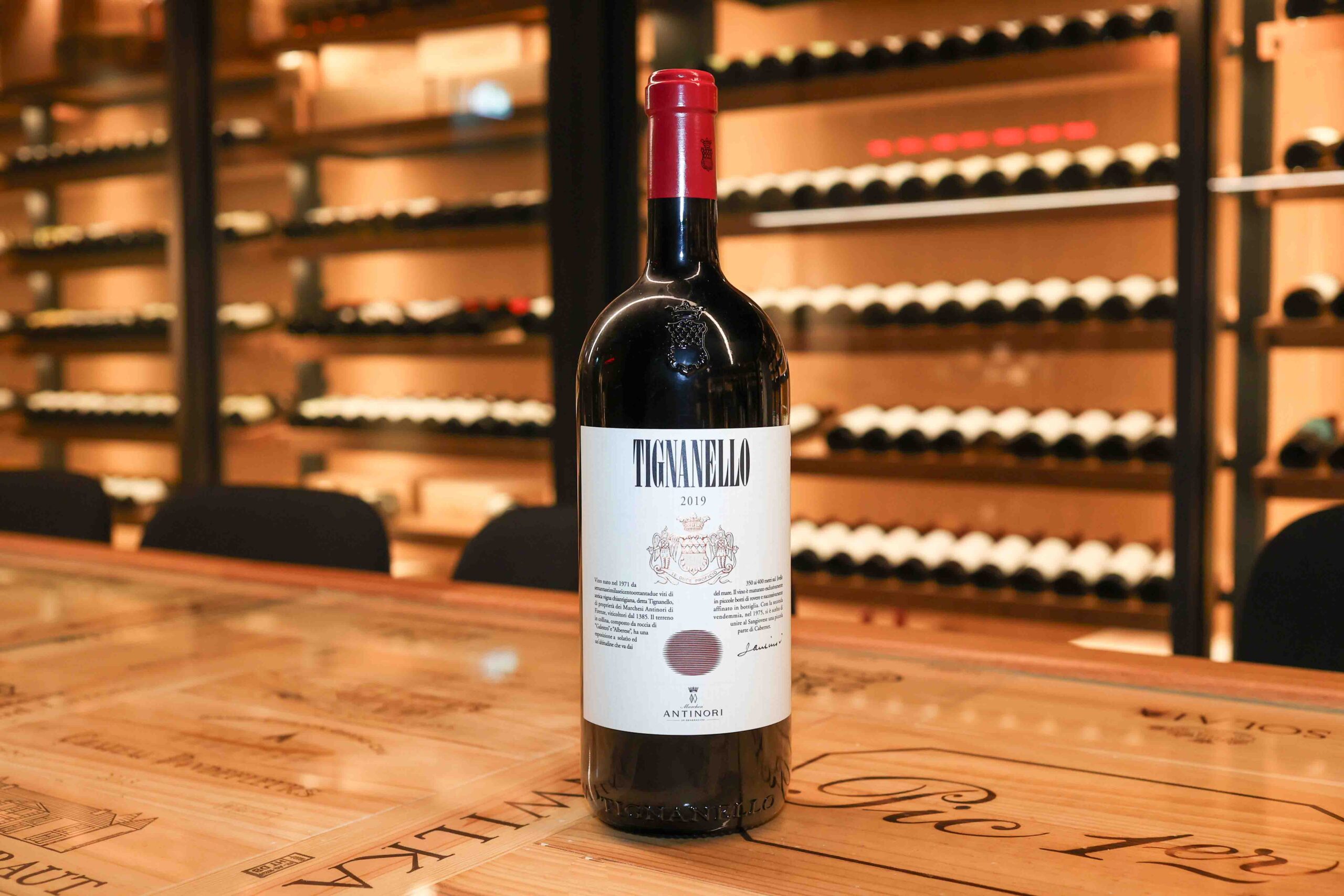
Sassicaia was classified as a simple Vino da Tavola, table wine, because it did not conform to any existing DOC regulations. That classification, shared by Tignanello and other early Super Tuscans, became a badge of honor: wines too ambitious for the rules. The creation of the Bolgheri DOC in 1983, and the specific Bolgheri Sassicaia DOC in 1994, was the regulatory system catching up to what the market had already decided.
Today, Bolgheri's concentration of investment-grade labels gives it an outsized role in Italian fine wine trading. For collectors who travel, the appellation offers a density of top estates within a short drive, a practical advantage for those who want to taste before they buy.
Demand is below the 2022 peak. Trading on Italy is inconsistent. Further significant short-term price rises are unlikely, according to Carter. This is not a market screaming "buy." It is a market saying "hold", or, for those who have been underweight Italy, "consider."
The strategic question for collectors is allocation. If you hold Bordeaux and Burgundy but no Italian wine, the case for adding Super Tuscans is built on diversification and on the specific resilience these labels have shown during the current correction.
For those looking at Piedmont, the opportunity is different. McPhate's observation that older Barolo and Barbaresco vintages, 2010, 2016, and bottles from the 1960s and 1970s, are moving with confidence suggests that the Piedmont market rewards specificity. You need to know the vintage, the producer, the cru. The Super Tuscan market, by contrast, rewards brand loyalty: a case of Sassicaia from a well-regarded vintage is a direct position that trades easily.
There is a cautionary note embedded in Bordeaux Index's own analysis. The firm observes that the dominance of the Super Tuscans is unfortunate given the wealth of authentic quality elsewhere across Tuscany and Italy's other wine regions, much of which remains, in their words, "criminally under-appreciated." And they draw an explicit parallel to Bordeaux: recent releases suggest producers are aiming to capture a greater share of the upside, but the lesson from Bordeaux is clear, push too far, too quickly, and the consumer has a habit of pushing back.
That warning is worth sitting with. The estates that continue to price with discipline, that treat their allocation as a long-term relationship with collectors rather than a short-term revenue opportunity, will be the ones whose wines hold value through the next cycle. For now, the capital flows where the confidence is. And in Italian fine wine, that confidence sits squarely in Tuscany, in five labels that have spent decades earning it.
Get the App
Take the shortlist into the En Primeur Club app for concierge access, saved places, and the next step after discovery.
Get Exclusive AccessMore from the editors