← Guides
More than 50,000 hectares have burned in Ávila, with San Gregorio, Soto Manrique and Indiano Wines facing vineyard losses.
More than 50,000 hectares have burned in Ávila, with San Gregorio, Soto Manrique and Indiano Wines facing vineyard losses.
More than 50,000 hectares have burned in Ávila since a fire began near Burgohondo last Wednesday, and the growers behind Sierra de Gredos’ old-vine Garnacha and Albillo Real still cannot fully enter the affected parcels. The Sierra de Gredos wildfire has damaged San Gregorio, the Bodega El Reventón vineyard owned by Adrianna Catena, Alejandro Vigil and Gearóid Lane, while firefighters continue to work active fronts and producers wait to learn which vines survived.
As of Sunday, 26 July, The Drinks Business reported that the Burgohondo fire’s main perimeter had been contained, but several fronts were still burning. Thousands of residents had been evacuated or confined to their homes. For anyone who has followed Sierra de Gredos from a Madrid wine bar, a London list, or a cellar rack built around mountain Garnacha, the scale lands hard: this is a rural emergency and a direct threat to vineyards that helped bring the region to international attention.
Sierra de Gredos sits around 150km west of Madrid. That proximity has always given the region a particular pull for travelers, close enough for a serious day from the capital, far enough to feel like a different Spain once the road bends into mountain country. The wines that travel out are built on old-vine Garnacha and Albillo Real. Now the immediate question is brutally simple. Which vines survived the fire, and which did not?
The fire began near Burgohondo last Wednesday, according to The Drinks Business, and by Sunday, 26 July, it had affected more than 50,000 hectares in Ávila province. The main perimeter had been contained, but several fronts were still active. That distinction matters: containment does not mean the vineyards are safe, nor does it mean growers can walk into every parcel with pruning shears and a notebook.
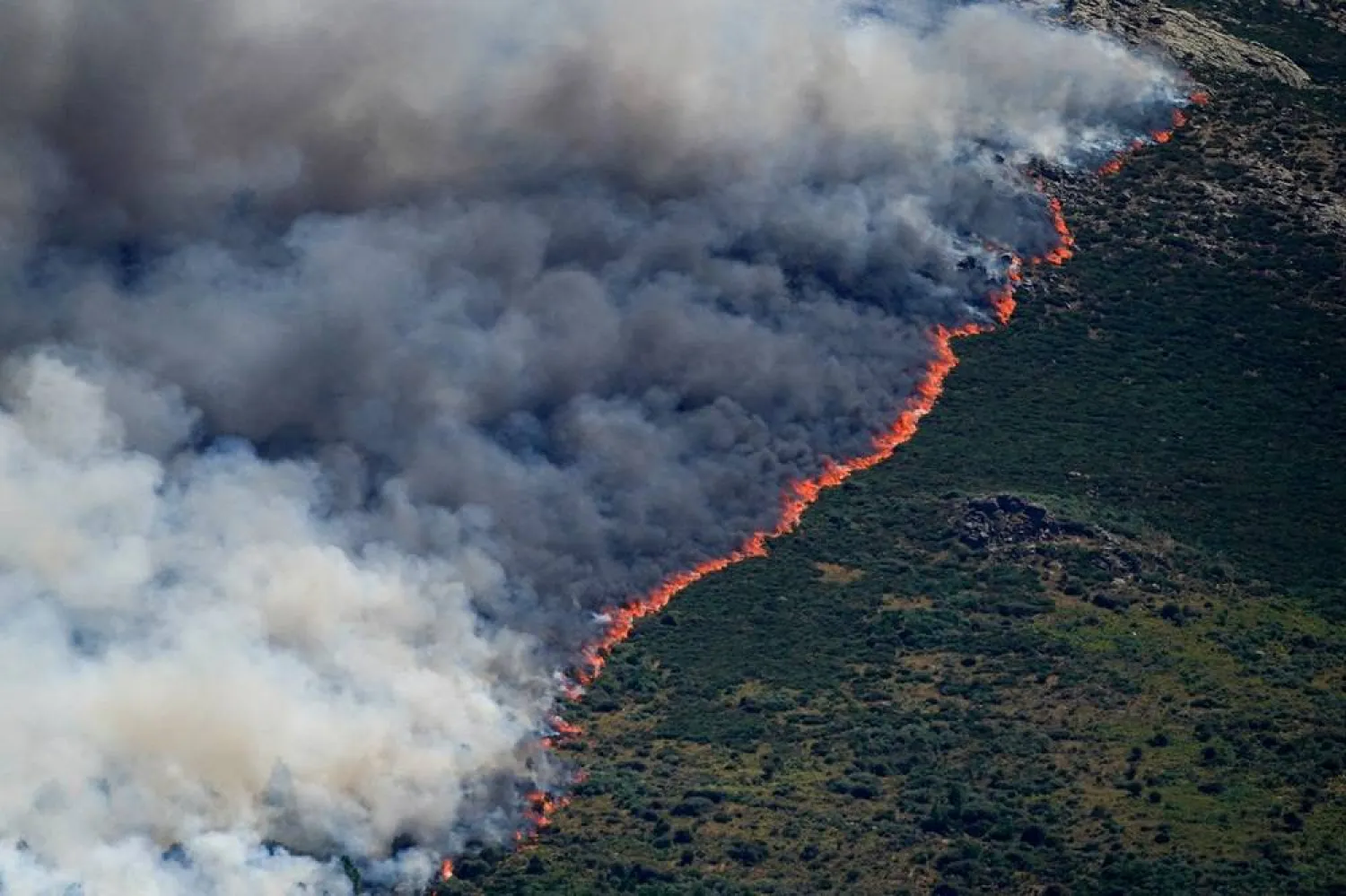
Many producers remained unable to enter affected areas, while others were only beginning to learn what the flames had taken. That lag between the fire map and the vineyard row is the cruel part for collectors and growers alike. A hectare count tells you the scale of the blaze; it does not tell you whether a specific old Garnacha vine with roots deep enough to outlive several generations has been scorched beyond recovery.
The human pressure sits beside the viticultural one. The same report says thousands of residents were forced to evacuate or remain confined to their homes. In wine regions, the line between village life and vineyard work is thin. The same roads that take growers to parcels take residents to family houses, cooperatives, and shops; when those roads close, the region’s normal rhythm collapses into emergency response.
For travelers, the practical reading needs little embellishment. Sierra de Gredos is not in a normal visitation cycle while fronts continue to burn and producers wait for access. The usual pleasures, tasting through Garnacha with the person who farmed it, standing at the edge of a parcel to understand exposure, driving between Cebreros and surrounding wine-growing zones, give way to fire crews, restricted areas, and local families managing displacement.
For buyers, this is the moment to track named parcels and producers rather than make broad assumptions about the whole region. The confirmed facts are already specific enough: San Gregorio has suffered extensive fire damage; Chuchi Soto has lost one vineyard; Indiano Wines lost several old vines after fire encircled one of its vineyards over the weekend. Beyond that, growers are still assessing.
San Gregorio is the name that will stop many Gredos drinkers first. The vineyard belongs to Bodega El Reventón, owned by Adrianna Catena, Alejandro Vigil and Gearóid Lane, and The Drinks Business reports that the old-vine parcel has suffered extensive fire damage. Lane put the loss in the language of someone speaking from inside the event: "We have suffered huge damage to our historic San Gregorio vineyard, whose wonderful grapes make one of our two single-parcel wines," said Gearóid Lane.1
The detail collectors will linger over is the vine age. Lane said the team was working to assess damage to old vines, some of which date back to the 1920s, according to the same report. A vine planted in that decade is not simply an agricultural asset. It is a living archive of a site, trained, pruned, stressed, and adapted over nearly a century of seasons. Replanting can restore a vineyard boundary on a map. It cannot give a young vine ninety or a hundred years of root memory.
Bodega El Reventón’s ownership also gives the story a wider wine-world resonance. Adrianna Catena and Alejandro Vigil are names many collectors associate with Argentine wine; Gearóid Lane is identified in the report as co-founder of the Gredos project. Their work in Sierra de Gredos ties international attention to a local set of parcels. San Gregorio’s damage therefore reads on two levels: a blow to one estate’s single-parcel programme, and a reminder that Gredos’ reputation rests on small sites vulnerable to fast-moving fire.
Cebreros is also among the wine-growing areas exposed to the fire. Chuchi Soto, founder of Soto Manrique and manager of the local cooperative winery, has lost one of his vineyards to the flames and was awaiting news of his other plots, according to The Drinks Business. That dual role, estate founder and cooperative manager, matters in a region where growers, family parcels, and shared infrastructure often overlap.
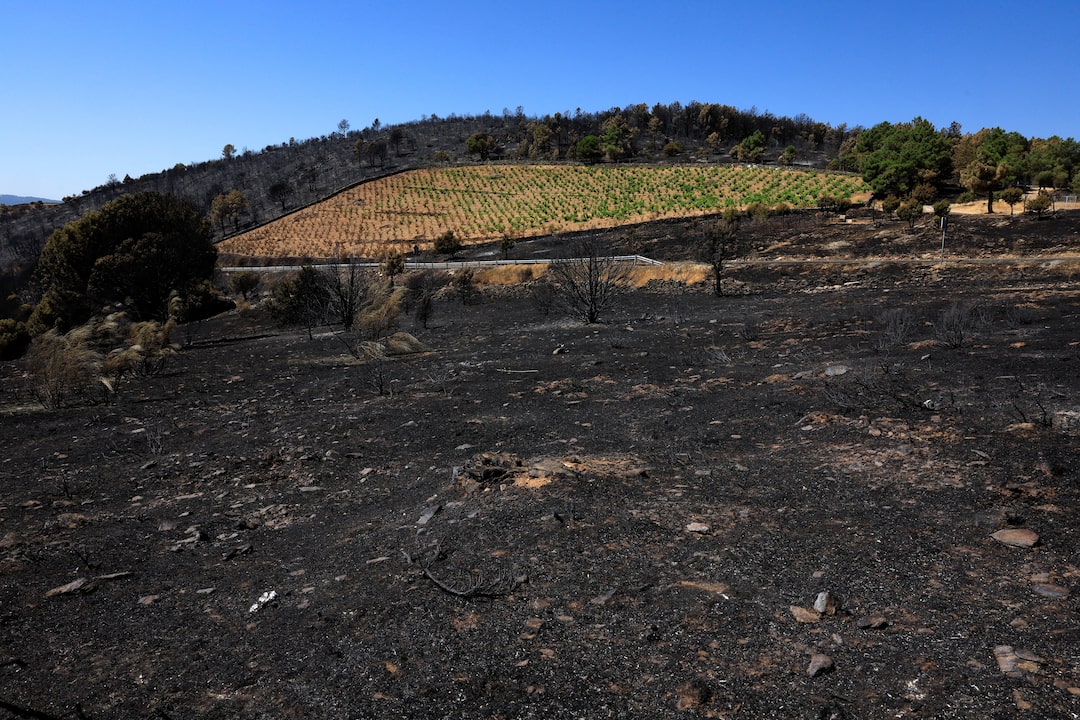
Indiano Wines has confirmed losses as well. The report states that the estate lost several old vines when the fire encircled one of its vineyards over the weekend. A photograph described by The Drinks Business shows Indiano Wines’ regularly cleared and maintained vineyard in the foreground, with smouldering forest in the background, the sort of visual detail that says more than a paragraph of risk language. The vines, the firebreak, the smoke: all in the same frame.
Sierra de Gredos is known internationally for old-vine Garnacha and Albillo Real, and that reputation did not come from scale. It came from small plots, mountain terrain, and wines that made drinkers reconsider what Spanish Garnacha could feel like in the glass. The source report does not give tasting notes for the affected wines, and we should not invent them. What it does give is enough to understand why collectors are watching San Gregorio and Cebreros.
San Gregorio produces one of Bodega El Reventón’s two single-parcel wines. Some of its old vines date back to the 1920s. Cebreros, already named as exposed to the fire, is one of the wine-growing areas tied to the region’s reputation. These are not generic vineyards on a bulk supply spreadsheet.
Scarcity in Sierra de Gredos begins before a bottle reaches a merchant allocation. It begins with the vine itself. An old parcel cannot expand because demand rises in New York, Copenhagen, Paris, or Madrid; a 1920s vine cannot be recreated by planting the same variety on the same slope and waiting for the next release cycle. When fire damages a site such as San Gregorio, the pressure moves from vineyard row to cellar plan to restaurant list.
That is why the Sierra de Gredos wildfire is being read closely by collectors who already buy by vineyard rather than region alone. If you own bottles from Bodega El Reventón, Soto Manrique, or Indiano Wines, the news changes the way you look at those labels. A bottle once filed under “drink over the next few dinners” may become a marker of a pre-fire parcel, depending on what producers confirm in the coming weeks.
The practical cellar move is simple: separate your parcel-specific Gredos bottles from broader regional cuvées in your records. Note producer, vintage, and named vineyard where the label gives one. If San Gregorio appears in your notes, attach the date of this fire to the entry. That is not speculation about future value; it is provenance discipline in a region where one old site can define a wine.
Restaurant lists face a similar recalibration. Sommeliers who pour Gredos often use the wines as a bridge: Spanish, but not predictable; Garnacha, but not broad or sweet-fruited in the way some guests expect; mountain-grown, but close enough to Madrid to explain as a travel route rather than a remote abstraction. If affected producers lose crop from specific parcels, lists that rely on those wines will have to wait for clarity before promising continuity.
Burgohondo is where the fire began, according to the report, and Cebreros is among the wine-growing areas exposed. Those two names matter because they move the story from regional anxiety to a map a wine traveler can read. Sierra de Gredos is not a single vineyard amphitheater with neatly connected estates; it is a region of villages, parcels, woodland, roads, and growers whose holdings may sit in different pockets of the mountains.
That geography complicates damage assessment. A producer may lose one parcel and still be waiting for news from another. A vineyard may be encircled by fire yet partly protected by cleared ground. A road closure can keep a grower away from vines that later prove intact, or delay the discovery of losses that already occurred. The Drinks Business notes that many producers remained unable to enter affected areas; that one detail explains the uncertainty better than any sweeping forecast could.
Chuchi Soto’s position illustrates the stakes around Cebreros. As founder of Soto Manrique and manager of the local cooperative winery, he sits at the intersection of estate production and grower networks. The report states that he lost one vineyard and awaited news of other plots. For a collector, that is a warning against treating estate-level availability as a simple yes-or-no question. For a local cooperative, it points to a broader issue: fire damage can touch individual growers whose names never appear on an export label.
Indiano Wines’ experience adds another layer. The fire encircled one of its vineyards over the weekend, and several old vines were lost. The report’s image caption contrasts a regularly cleared and maintained vineyard in the foreground with smouldering forest behind it. That is not a policy essay; it is a vineyard scene with immediate consequences. Maintenance, access, surrounding vegetation, and fire movement all meet at the edge of the row.
The Sierra de Gredos wildfire also sharpens a travel truth that wine lovers sometimes forget. Wine regions are not stage sets for tastings. They are inhabited places, and in Ávila this week thousands of people have been displaced or confined while firefighters work active fronts. The correct posture for visitors is patience, not curiosity. Let producers, emergency services, and residents set the terms of access.
One honest answer on the current crop is that it is too early to know. The source report says producers are waiting to discover the extent of damage to Sierra de Gredos’ old-vine Garnacha and Albillo Real vineyards, and many still cannot enter affected zones. Until growers can inspect trunks, canopies, fruit, access tracks, and surrounding vegetation, any clean vintage verdict would be premature.
What we can say is narrower, and more useful. Bodega El Reventón’s San Gregorio vineyard has suffered extensive fire damage. Chuchi Soto has lost one vineyard. Indiano Wines lost several old vines. The region has seen more than 50,000 hectares affected in Ávila. Several fire fronts were still burning as of Sunday, 26 July. Those facts tell buyers that some Gredos releases connected to affected parcels may face interruption, delay, reduced quantities, or changed plans, but the producers have not yet had the final word.
For cellars, this is a moment to document what you own. Note producer, vintage, and parcel where the label provides it. If you have bottles tied to Bodega El Reventón’s single-parcel work, keep the San Gregorio news with your tasting notes. If Soto Manrique or Indiano Wines feature in your buying history, follow direct producer communications rather than relying on second-hand allocation chatter. In a parcel-driven region, the name on the front label only begins the story.
For merchants and sommeliers, restraint will serve better than speed. Avoid implying that all Sierra de Gredos wines are affected, and avoid using the fire as a sales device. The damage is serious enough without theatrics. The more precise approach is to identify named producers with confirmed losses, wait for each estate’s assessment, and explain to clients that old-vine parcels cannot be replaced on a normal supply timeline.
For future travel, Sierra de Gredos will remain a region to approach through its producers rather than through a generic itinerary. The distance from Madrid, around 150km, makes it tempting to plan casually, but the fire’s aftermath will require direct confirmation from estates and local contacts before any visit. When access returns, particularly respectful itineraries will be those that put grower availability, road conditions, and community recovery ahead of the tasting calendar.
The next updates to track are not broad claims about the region’s fate. They are the vineyard-level assessments: how much of San Gregorio can recover, which of Chuchi Soto’s other plots were spared, how Indiano Wines evaluates the old vines lost when fire encircled its vineyard, and when growers across Burgohondo and Cebreros can safely return to their land. Sierra de Gredos earned its following through named parcels and old vines; its recovery will be measured the same way.
Get the App
Take the shortlist into the En Primeur Club app for concierge access, saved places, and the next step after discovery.
Get Exclusive AccessMore from the editors