When Walter Massa bottled his first experimental Timorasso in 1987, just over 500 bottles from scattered vines across his Piedmont holdings, he began a decade-long restoration that would rescue one of Italy's most compelling white grapes from extinction.
When Walter Massa bottled his first experimental Timorasso in 1987, just over 500 bottles from about 400 plants scattered throughout his holdings in Piedmont's Colli Tortonesi, he knew immediately he was onto something.
That same decade, 200 kilometers south in Ascoli Piceno, Guido Cocci Grifoni was conducting his own archaeological dig through Le Marche's viticultural past. Frustrated with the region's ubiquitous Trebbiano Toscano, he went looking for something better. What he found was Pecorino, or rather, what remained of it.
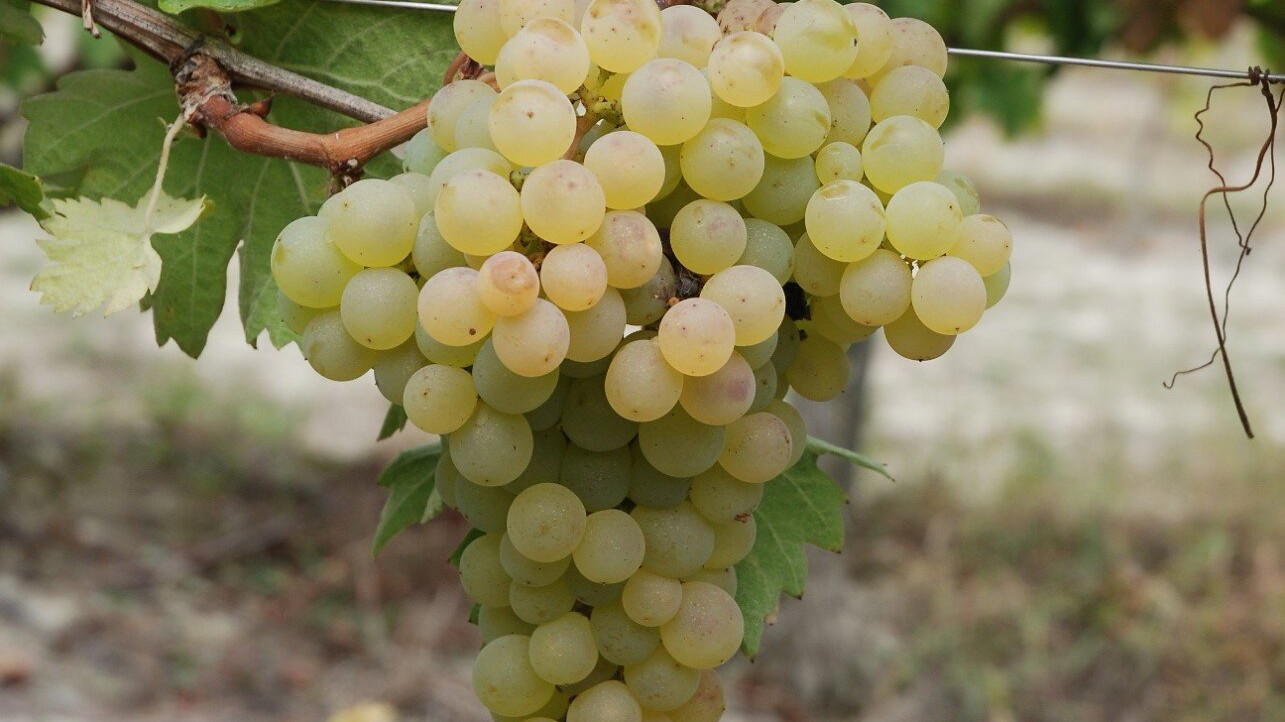
The grape had fallen out of favor for practical reasons: low yields and an unusually early harvest that sometimes began in August. In an era when cooperative wineries prioritized volume and predictability, Pecorino had become commercially unviable.
These two stories, Massa's Timorasso restoration in Piedmont and Cocci Grifoni's Pecorino revival in Le Marche, represent a broader pattern in Italian viticulture. Multiple native white varieties nearly went extinct in the 1980s, victims of market pressures favoring international grapes and high-yielding workhorse varieties.
Their survival depended on individual winemakers willing to take commercial risks on forgotten grapes. The Pecorino and Timorasso revival demonstrates both the fragility and resilience of Italy's viticultural heritage, and offers collectors a window into emerging white categories with profiles distinct from established Burgundy appellations.
Why Italy's Best White Grapes Nearly Disappeared
The near-extinction of Pecorino and Timorasso wasn't accidental, it was the predictable outcome of economic pressures that reshaped Italian viticulture in the postwar era. Cooperative wineries prioritized volume and consistency. International markets demanded recognizable grape names. Growers needed reliable income, which meant planting varieties that yielded heavily and ripened predictably. Pecorino and Timorasso failed on every commercial metric.
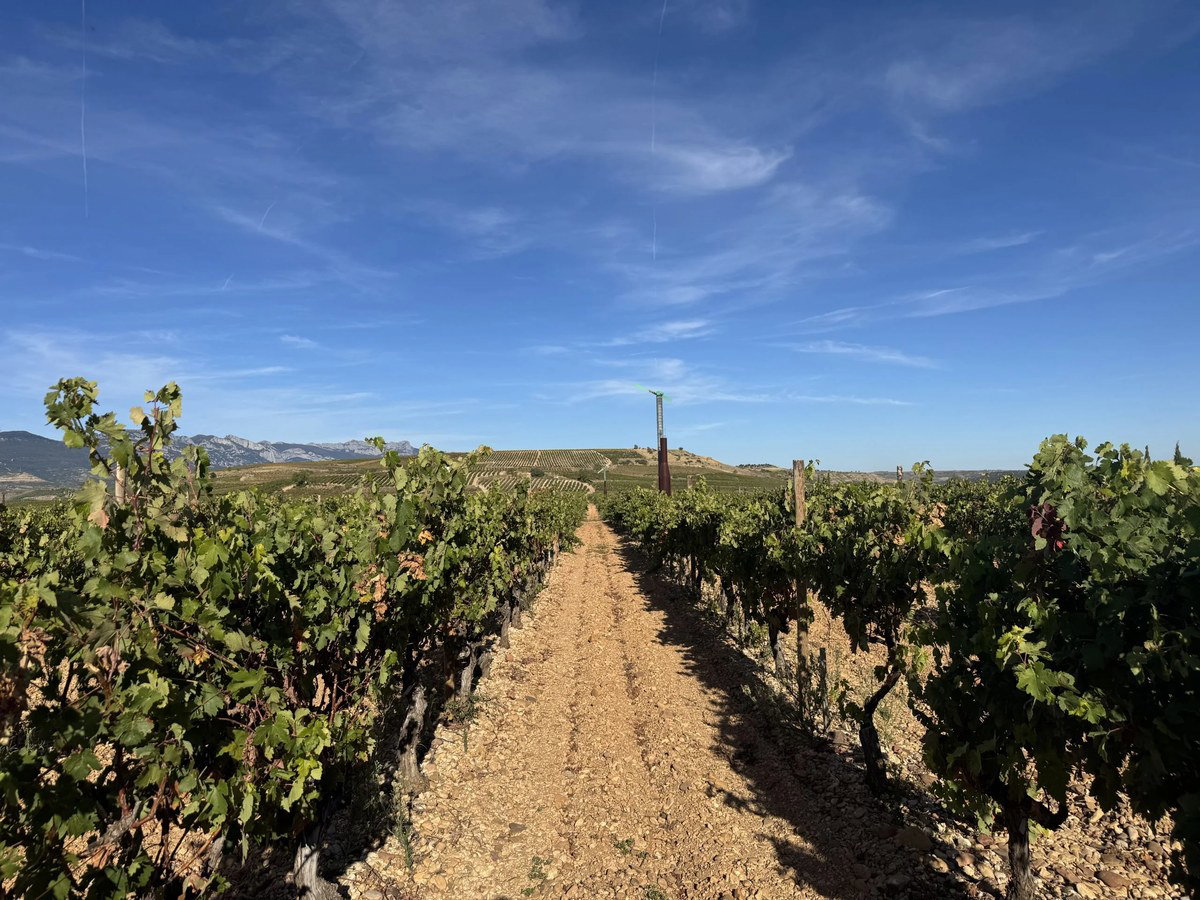
The Pecorino vineyard scene in Le Marche, showing rows of grapevines under a clear blue sky, illustrates traditional viticulture.
Pecorino's harvest timing alone made it a logistical nightmare. The grape ripened unusually early, sometimes in August, forcing growers to organize separate harvest crews and cellar space weeks before other varieties were ready. Its uneven ripening could make harvest timing demanding. And its low yields, a viticultural liability in an era when payment was calculated by the kilo, meant growers earned less per hectare than they would from Trebbiano or Verdicchio.
Timorasso faced similar pressures. The thick-skinned white variety required specific growing conditions and careful handling in the cellar. It didn't fit neatly into existing DOC regulations. And it had no market recognition outside the Colli Tortonesi, where even local growers told Massa he was crazy for pursuing it. When Massa began asking neighboring farmers for their Timorasso vines in the late 1980s, they responded with blunt skepticism, why dedicate vineyard space to a grape no one had heard of when Barbera and Cortese had established markets?
The economic logic was sound. The viticultural logic was not. Both Pecorino and Timorasso had survived in small quantities precisely because they produced something distinctive, wines with more depth, body, and complexity than the commercial alternatives. Cocci Grifoni recognized that Pecorino offered an alternative to Trebbiano's blandness. Massa saw that Timorasso expressed the Colli Tortonesi terroir in ways Cortese never could. Both winemakers bet that quality would eventually find a market, even if that market didn't exist yet.
Guido Cocci Grifoni's Pecorino Gamble in Le Marche
Cocci Grifoni's Pecorino work in Ascoli Piceno began with a simple observation: Le Marche's white wines were boring. Trebbiano Toscano dominated the region's production, yielding high volumes of neutral wine that served as a functional pairing for seafood but offered little else. Cocci Grifoni wanted something better, a white grape that could express the region's limestone soils and coastal influence while delivering the kind of complexity that would make collectors take notice.
Pecorino fit the profile. The grape had historical roots in the region, old-timers remembered it from before the postwar replanting, and the few remaining vines suggested it could produce wines with structure and aging potential. But reviving a nearly extinct variety meant starting from scratch. Cocci Grifoni had to identify strong remaining plants, propagate new vines, establish vineyard sites that could handle Pecorino's early ripening, and develop cellar protocols for a grape that behaved differently from anything else in the region.
The work took years. Pecorino's low yields meant financial returns came slowly. Its early harvest timing required dedicated cellar space and labor at a time when most wineries were still preparing for their main harvest. And the market had no reference point for the wine, Cocci Grifoni was asking buyers to trust that a grape they'd never heard of, from a region known for reds, would be worth the premium he needed to charge to make the economics work.
The gamble paid off. Pecorino's early harvest timing, once a liability, became a selling point, the wines captured bright acidity and fresh aromatics that later-ripening varieties couldn't match. Its low yields translated to concentration and structure. And its historical connection to Le Marche gave the wine a narrative that resonated with collectors looking for authentic regional expressions. After Cocci Grifoni's first 1,800-bottle commercial release in 1990, other producers gradually began planting Pecorino over the following decade.
Walter Massa's Decade-Long Timorasso Restoration
Massa's Timorasso project followed a more methodical timeline. After bottling his first experimental 500-bottle lot in 1987, he spent the next two years conducting massal selection from the roughly 400 Timorasso plants scattered throughout his holdings. In 1989, he identified the stronger vines based on fruit quality, disease resistance, and ripening consistency. In 1990, he planted his first vineyard dedicated entirely to Timorasso, a parcel he named Costa del Vento.
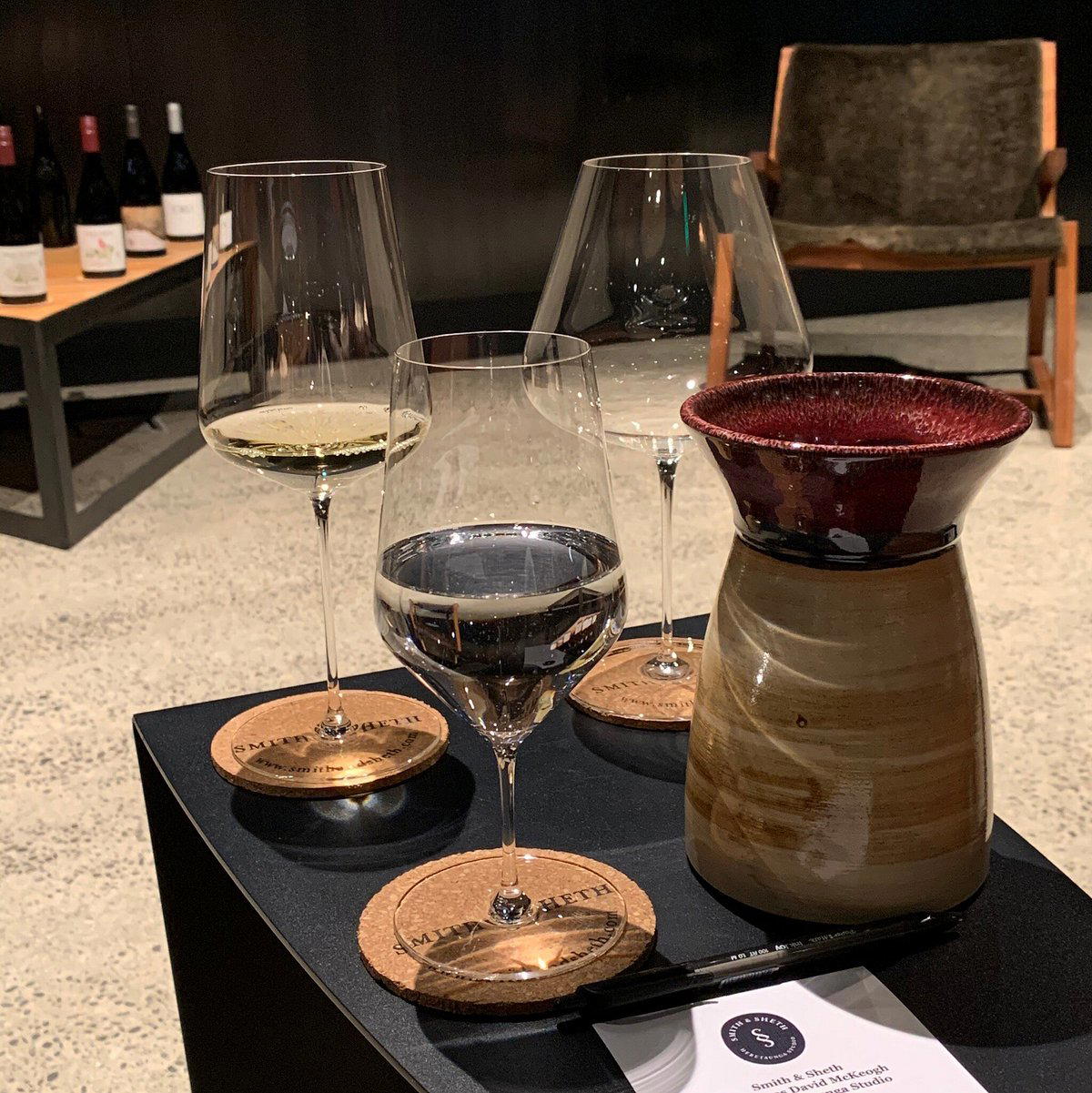
A man with glasses examines wine glasses, likely during a tasting or evaluation of white wine varietals.
The breakthrough came in 1997, when Massa bottled the Costa del Vento vineyard as a single-vineyard cuvée. The wine demonstrated what seven years of focused viticulture could achieve: a white with more depth, body, and complexity than the region's standard offerings. Timorasso wasn't a light-bodied aperitivo wine, it demanded food, age, and attention. The 1997 vintage proved that the Colli Tortonesi could produce whites capable of rivaling Piedmont's celebrated reds in structure and longevity.
Massa continued planting. By the mid-2010s, he had established nine vineyards totaling 10 hectares of Timorasso, a dramatic expansion from the scattered plants he'd started with in 1987. Each vineyard expressed a different facet of the Colli Tortonesi terroir: the rolling hills near Alessandria, the limestone-rich soils, the altitude and microclimate that Massa had always believed favored whites over reds. The wines validated his thesis that the region had been planted to the wrong grapes for commercial reasons, ignoring the viticultural logic that should have guided varietal selection.
Other producers followed Massa's lead. Elisa Semino of La Colombera, a small family estate based in Tortona, became part of the local effort to restore Timorasso to its rightful place within Italian wine heritage. The grape's revival attracted attention from sommeliers and collectors looking for the next great Italian white, a category that had long been overshadowed by the country's red wine production.
What These Forgotten Grapes Taste Like Today
Pecorino and Timorasso occupy different positions on the Italian white wine spectrum, but both deliver more complexity than their commercial alternatives. Pecorino, with its early harvest and bright acidity, produces wines that balance freshness with structure, a combination that makes it versatile at the table while offering enough depth to reward cellaring. The grape's limestone-driven minerality and citrus-forward aromatics make it a natural pairing for seafood, but the stronger examples show layered texture and a saline finish that elevates them beyond simple aperitivo wines.
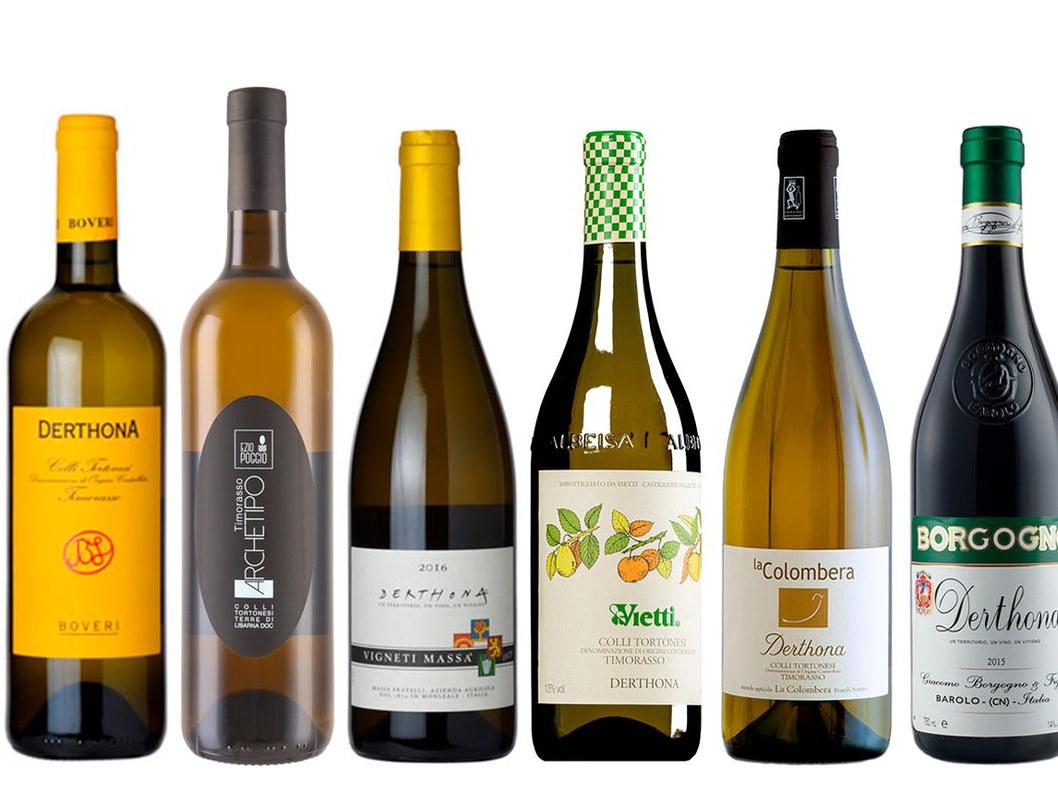
Bottles of Timorasso wines, including Derthona, Vietti, and Vigneti Massa, showcase the forgotten grape's revival.
Timorasso sits at the opposite end of the body spectrum. The grape's thick skins and late-ripening character produce wines with weight, texture, and tannic grip, qualities more commonly associated with reds than whites. Timorasso isn't a wine to sip casually with pizza. It demands food, preferably rich preparations that can match its structure: roasted white meats, aged cheeses, or the kind of elaborate pasta dishes that define Piedmontese cuisine. The wines age gracefully, developing honeyed notes and oxidative complexity over five to ten years in bottle.
Both varieties benefit from the same viticultural factors that nearly drove them to extinction. Pecorino's low yields concentrate flavor and aromatics. Timorasso's thick skins provide phenolic structure and aging potential. Their early or late harvest timing, once a logistical liability, now allows winemakers to capture specific flavor profiles: bright acidity for Pecorino, full phenolic ripeness for Timorasso. The economic pressures that made these grapes commercially unviable in the cooperative era have become selling points in a market that values distinctiveness over volume.
The revival of Pecorino and Timorasso also highlights a broader shift in Italian wine culture. Collectors and enthusiasts increasingly seek out native varieties that express specific terroirs rather than international grapes that could be grown anywhere. Pecorino's connection to Le Marche's limestone soils and Timorasso's expression of the Colli Tortonesi's altitude and microclimate offer the kind of place-specificity that defines fine wine. These aren't generic whites, they're wines that could only come from their respective regions, made from grapes that survived by accident and were restored by design.
The Broader Pattern and What It Means for Collectors
Pecorino and Timorasso aren't isolated cases. Italy's viticultural history is littered with nearly extinct varieties that survived in tiny quantities, often as table grapes or unnamed blending components, before being rediscovered by curious winemakers. Famoso, a white grape from Romagna, was near extinction when two old rows were identified in 2000 at the Montalti farm in Mercato Saraceno. Historical records trace the name to a 1437 municipal duty table from Lugo di Romagna.
The Montalti farm in Mercato Saraceno shows the rediscovered Famoso vines, as noted by Jancis Robinson.
The Famoso story mirrors the Pecorino and Timorasso revivals in key ways. The grape had fallen into decline after phylloxera ravaged Europe's vineyards in the late 19th century, replaced by more profitable Sangiovese plantings. In 2000, two old rows were identified at the Montalti farm in Mercato Saraceno, enough to preserve the genetic material but not enough to sustain commercial production. The grape's recovery required preservation and research: the surviving material was propagated and evaluated through experimental winemaking.
For collectors, these revivals offer several advantages. First, they provide access to wines with genuine scarcity, production volumes remain limited compared to commercial varieties, and the stronger examples come from specific vineyard sites that can't be easily replicated. Second, they offer price-to-quality ratios that favor early adopters.
Pecorino and Timorasso haven't yet reached the pricing levels of established white wine categories, but they deliver comparable complexity and aging potential. Third, they represent authentic regional expressions in an era when many Italian wines have been internationalized to meet global market preferences.
The investment case for revived varieties depends on several factors. Production must remain limited enough to sustain premium pricing, if Pecorino or Timorasso become widely planted, they risk losing the scarcity premium that currently supports their market position. Quality must be consistent across vintages and producers, a few poorly made examples can damage a variety's reputation before it's fully established. And the wines must deliver a compelling tasting experience that justifies their price point relative to established categories.
Pecorino and Timorasso currently meet these criteria. Production remains concentrated in specific regions with limited suitable vineyard land. Quality has improved as winemakers gain experience with the varieties and refine their cellar protocols. And the wines deliver distinctive flavor profiles that differentiate them from both international varieties and other Italian whites. Collectors who bought Massa's Timorasso in the 1990s or early Pecorino bottlings from Le Marche have seen both critical recognition and broader producer interest.
What the Pecorino and Timorasso Revival Means Going Forward
The success of the Pecorino and Timorasso revival has inspired renewed interest in other nearly extinct Italian varieties. Winemakers across the country are conducting their own archaeological digs through regional viticultural history, identifying forgotten grapes that might offer distinctive alternatives to commercial varieties. The pattern established by Cocci Grifoni and Massa, massal selection from surviving vines, dedicated vineyard plantings, patient cellar work, and gradual market development, provides a proven template for bringing these varieties back from the brink.
But revival isn't guaranteed. Many forgotten varieties disappeared for legitimate reasons, they were difficult to grow, produced inconsistent results, or simply didn't make compelling wine. The challenge for contemporary winemakers is distinguishing between varieties that deserve revival and those that were rightly abandoned. Pecorino and Timorasso succeeded because they offered something distinctive: Pecorino's early-harvest brightness and minerality, Timorasso's structure and aging potential. Other varieties may lack those qualities, surviving only as historical curiosities rather than commercially viable wines.
Climate change may accelerate the revival process. As traditional growing regions become warmer, varieties that were once considered marginal, like Pecorino, with its early harvest timing, may become better suited to new conditions. Grapes that thrive in cooler climates or higher altitudes may find new relevance as producers seek alternatives to varieties that are struggling with heat. The viticultural logic that drove Pecorino and Timorasso to near-extinction in the postwar era may reverse as the climate shifts, making forgotten varieties newly viable.
The Pecorino and Timorasso revival ultimately demonstrates that Italy's wine diversity depends on individual champions willing to take commercial risks on forgotten varieties.
Cocci Grifoni and Massa didn't revive these grapes because they were following market trends, they did it because they believed the varieties expressed their respective terroirs better than the commercial alternatives.
That conviction, backed by years of patient viticultural work, created the foundation for two of Italy's most compelling white wine categories.
The next generation of forgotten grapes will require similar champions, winemakers who value distinctiveness over volume and who are willing to invest a decade or more in bringing a nearly extinct variety back to commercial viability.