← Guides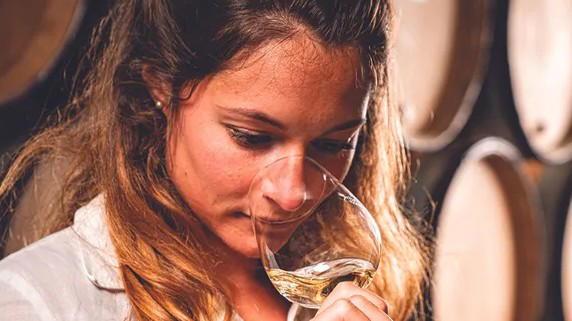
At Domaine Antonin Guyon, Hombeline Guyon guides 48 hectares across 25 Côte d'Or appellations toward a fresher, mineral-driven style.
At Domaine Antonin Guyon, Hombeline Guyon guides 48 hectares across 25 Côte d'Or appellations toward a fresher, mineral-driven style.
Forty-eight hectares across 25 Côte d'Or appellations is not the usual inheritance in Burgundy; it is a map, a responsibility, and, in Hombeline Guyon's hands, a cellar question. Hombeline Guyon Burgundy winemaker at Domaine Antonin Guyon is the third generation to lead the Savigny-lès-Beaune estate, according to Decanter, after her father Dominique Guyon and uncle Michel Guyon. The timing matters because her tenure is not simply a handover of keys. She has adjusted the way the domaine handles extraction and oak, moving toward fewer pump-overs, more rack-and-return, and less new oak for wines that Decanter describes as fresher and more mineral-driven.
That is a specific kind of generational shift. Burgundy has many family domaines where the next generation inherits a few rows, a single cellar, and a village cadence set by grandparents. Domaine Antonin Guyon gives Hombeline a broader canvas: holdings from Gevrey-Chambertin and Chambolle-Musigny down to Corton, Volnay, Meursault, and Puligny-Montrachet, assembled by her grandfather Antonin over 10 years in the 1960s. Her father Dominique then added another chapter in the Hautes-Côtes de Nuits, where he bought 350 plots from 80 owners to create a 22-hectare block. The family story is not neat. It is parcel by parcel.
For collectors, the interest sits in that tension: a large family-owned Côte d'Or estate now being interpreted with a lighter hand. For travelers, Savigny-lès-Beaune becomes more than a stop north of Beaune; it is a place to read three generations of Burgundian thinking through appellations, acquisition, and restraint.
Antonin Guyon built his eponymous domaine in the 1960s, according to Decanter, and did so over a decade rather than through a single inheritance. The route he took still defines the house. Instead of concentrating the domaine around one village, Antonin amassed holdings that run across the Côte d'Or, including Gevrey-Chambertin, Chambolle-Musigny, Corton, Volnay, Meursault, and Puligny-Montrachet. In Burgundy, where a change of wall or road can mark a change of appellation, that spread gives Domaine Antonin Guyon an unusual breadth for a family estate.
The founder's achievement was accumulation with identity. He gave the family a name anchored in Savigny-lès-Beaune, just north of Beaune, but he also gave the next generations a working relationship with multiple villages and their different temperaments. The domaine's scale is easy to flatten into a number, 48 hectares, but the more revealing figure is 25 appellations. Each requires separate judgment. Each asks for a different reading of maturity, extraction, and élevage.
Dominique Guyon and Michel Guyon formed the second generation in the story, and Dominique's own move in the 1970s changed the family's geography. Decanter reports that Dominique bought 350 plots from 80 different owners to create a single 22-hectare block on a south-facing hillside in the Hautes-Côtes de Nuits. That purchase became the start of Domaine Dominique Guyon, described by Decanter as an early pioneer in a sub-region once overlooked.
There is a practical lesson in that number: 350 plots is not a romantic inheritance; it is paperwork, patience, and negotiation. Burgundy's beauty often sits behind legal fragments. Dominique's Hautes-Côtes block turned fragmentation into continuity, and that act still matters as the Hautes-Côtes attracts more attention from drinkers looking beyond particularly tightly allocated Côte de Nuits and Côte de Beaune labels.
Hombeline Guyon arrives as the third generation, after Dominique and Michel, with a different task. Antonin assembled. Dominique consolidated. Hombeline interprets. Her changes in the cellar, fewer pump-overs, more rack-and-return, less new oak, do not erase the earlier work; they change the way that work speaks in the glass. Less force. More line.
Hombeline Guyon's work in Burgundy links two forms of stewardship that often get separated: cellar decisions and public advocacy for place. Before the current stylistic discussion around the wines, Hombeline had already taken part in Burgundy's wider conversation about climats. Decanter reports that she worked alongside Aubert de Villaine of Domaine de la Romanée-Conti on the successful bid to have Burgundy's climats inscribed as a UNESCO World Heritage site in 2015, heading communications and engaging local stakeholders.
That background helps explain why her cellar choices do not read like fashion. A winemaker who has spent time arguing for the specificity of Burgundy's defined parcels is likely to hear extraction differently. Pump-overs, rack-and-return, and oak percentage are not abstract technique; they are tools that either sharpen or blur the distinctions among Savigny-lès-Beaune, Corton, Volnay, Meursault, and Puligny-Montrachet.
"Witnessing the collective effort to protect and recognise our land gave me a profound sense of purpose."
, Hombeline Guyon, winemaker, Decanter
Her language around land matters because Domaine Antonin Guyon is not a micro-domaine with a single lieu-dit to protect. The family holds 48 hectares across 25 appellations. The risk at that scale is smoothing everything into a house signature so firm that the villages become supporting actors. Hombeline's reported move toward a fresher, more mineral-driven profile suggests the opposite ambition: let the appellations keep their edges.
For collectors who follow Burgundy across generations, this is the moment to separate label memory from current practice. A domaine known through one generation's imprint may not taste the same under the next. That does not make the earlier wines obsolete or the newer wines automatically preferable. It simply gives the cellar a before-and-after line: the Dominique and Michel era, then Hombeline's lighter extraction and reduced new oak.
That line is useful at the table. If you are opening bottles from different periods of Domaine Antonin Guyon, the question is not only vintage variation. It is also handling: how much extraction, how much oak, how much emphasis on fruit weight versus mineral contour. The estate's size makes that comparison especially instructive because you can ask the same question across many appellations rather than through a single village bottling.
The Guyon family's 48 hectares across 25 Côte d'Or appellations give Hombeline Guyon a broad set of Burgundian addresses, but the collector's work is to avoid treating breadth as sameness. Gevrey-Chambertin and Chambolle-Musigny sit in the family story alongside Corton, Volnay, Meursault, and Puligny-Montrachet. Those names carry different expectations before a cork moves. The current interest lies in how a lighter cellar approach registers across that range.
Start with the red Burgundy addresses named in the family holdings. Gevrey-Chambertin and Chambolle-Musigny offer a north-to-south comparison within the Côte d'Or holdings that Antonin assembled. Corton and Volnay extend the conversation, bringing the family's reach into another register of Côte de Beaune identity. The point is not to impose tasting notes that the source does not provide; it is to recognize that Hombeline's reduced reliance on pump-overs and new oak gives these appellations more room to show their own architecture.
The white Burgundy side of the story is just as important. Meursault and Puligny-Montrachet appear among the holdings Antonin gathered, and any domaine that works in both villages must make decisions about texture, oak, and mineral expression with care. Decanter's description of a fresher, more mineral-driven profile offers a lens for reading those wines without pretending every bottle will behave the same way.
Collectors should also pay attention to the source of scarcity here. Burgundy scarcity often announces itself through tiny allocations, closed mailing lists, or bottles that vanish before they reach a shelf. The Guyon case is different. Forty-eight hectares is large by family-domaine standards in the Côte d'Or, yet 25 appellations divide that surface into many identities. The scarce object is not merely the bottle; it is the chance to compare a single family's interpretation across so many Burgundian sites under one generational hand.
A practical way to taste the shift is to build a small horizontal around named family addresses rather than chasing hierarchy alone. Put a Savigny-lès-Beaune from the home village beside a bottle from the Hautes-Côtes de Nuits, then add one of the better-known Côte d'Or names in the family holdings if your merchant can source it. You are not looking for a winner. You are looking for Hombeline's touch: less extraction, less new oak, and a fresher line.
For those who cellar Burgundy, the more interesting comparison may be vertical. If you have older Domaine Antonin Guyon bottles from the period before Hombeline's changes, keep them in conversation with more recent releases. The family name remains constant; the handling has moved. That is exactly the kind of detail that can turn a dinner into a study of inheritance.
Dominique Guyon's 1970s work in the Hautes-Côtes de Nuits deserves its own place in the lineage because it shows a different kind of Burgundy instinct. He did not merely add a parcel. According to Decanter, he bought 350 plots from 80 owners to create a single 22-hectare block on a south-facing hillside. That block became Domaine Dominique Guyon and placed the family among early pioneers in a sub-region the source describes as once overlooked.
For travelers who know Burgundy mainly through the villages along the Côte, the Hautes-Côtes de Nuits can recalibrate the eye. The family story there begins with consolidation rather than inheritance. Plot after plot, owner after owner, Dominique built a viable block where fragmentation had previously limited the work. It is a Burgundy story told through cadastral patience.
That 22-hectare block also changes how we read Hombeline's present role. She inherits not only famous appellation names assembled by Antonin, but also a second-generation wager on the Hautes-Côtes. A lighter, more mineral-driven style may be especially revealing in such a context because the wines need clarity more than polish. Heavy extraction and a high percentage of new oak can impose a house frame; fewer pump-overs and more rack-and-return can leave more space for site.
There is a collector's angle here, but it is not about calling the Hautes-Côtes a substitute for the Côte de Nuits. That would flatten both. The better approach is to taste the Hautes-Côtes de Nuits bottlings as part of the Guyon family grammar: Antonin's breadth, Dominique's consolidation, Hombeline's restraint. If the wine feels fresher or more mineral-driven in recent hands, that is tied to choices in the cellar.
For visitors, the Hautes-Côtes chapter gives the family history a route beyond the usual Beaune-centered itinerary. Savigny-lès-Beaune remains the domaine's home, but Dominique's south-facing hillside in the Hautes-Côtes de Nuits adds a second point of reference. The road between them is a reminder that Burgundy's current map was made not only by monks and inheritance, but also by twentieth-century families who saw potential in parcels others left alone.
Hombeline Guyon's role in Burgundy's UNESCO World Heritage inscription gives this lineage profile a public dimension. Decanter reports that she was instrumental in the successful 2015 bid for the climats de Bourgogne, working alongside Aubert de Villaine of Domaine de la Romanée-Conti, with responsibility for communications and local stakeholder engagement. That is not a cellar note, but it belongs in the same conversation as extraction and oak.
The climats are Burgundy's long-established, specifically defined parcels of vines, and the 2015 UNESCO inscription placed that parcel culture in an international heritage frame. Hombeline's participation means she spent formative time translating the meaning of Burgundy's sites beyond the cellar and beyond the trade. She had to help make local specificity legible to a broader audience without reducing it to a slogan.
That experience has a direct bearing on Domaine Antonin Guyon. A family estate with 25 appellations can either treat appellation names as a portfolio or as obligations. Hombeline's reported sense of purpose around the UNESCO effort suggests the latter. Stewardship becomes practical: how to communicate place, how to handle fruit, how to avoid masking difference, how to maintain continuity without preserving every old habit.
It also reframes succession. Many third-generation stories in wine lean on nostalgia: the grandparent's cellar, the father's rows, the daughter's return. The Guyon story has those elements, but the UNESCO work pulls Hombeline into a larger Burgundy project. She is not only inheriting a domaine; she has already helped advocate for the recognition of the wider system that makes Burgundy legible, parcel by parcel.
For wine travelers, that matters because Burgundy can become a list of famous village names if you move too quickly. Hombeline's path asks for slower reading. Savigny-lès-Beaune is not simply where the domaine sits. Gevrey-Chambertin, Chambolle-Musigny, Corton, Volnay, Meursault, and Puligny-Montrachet are not simply labels in a merchant's offer. They are part of a climats culture that Hombeline helped defend in public before she translated that same sensitivity through cellar decisions.
The practical starting point is Savigny-lès-Beaune, the village just north of Beaune where Domaine Antonin Guyon is based. For travelers, Beaune remains the natural anchor for a Côte d'Or itinerary, but the Guyon story rewards a route that moves beyond a single village tasting. The family's holdings ask you to think north and south, from Gevrey-Chambertin and Chambolle-Musigny to Corton, Volnay, Meursault, and Puligny-Montrachet, then up toward Dominique's Hautes-Côtes de Nuits chapter.
If you encounter the wines through a merchant, ask questions that match the current generation's changes. Which recent releases show the reduced new oak most clearly? Which bottlings make the shift toward fewer pump-overs and more rack-and-return easiest to perceive? Which wines come from the family addresses named in the Decanter profile? A good Burgundy merchant should be able to help you compare home-village Savigny-lès-Beaune, Hautes-Côtes de Nuits, and the better-known Côte d'Or appellations without turning the conversation into a simple ranking.
For restaurants, the Guyon wines can work well in a flight built around lineage rather than label status. Place a Domaine Antonin Guyon bottle beside another Burgundy from a more narrowly focused domaine, and the difference in estate structure becomes part of the discussion. Or pour a bottle from the Guyon family holdings with a dish that does not swamp mineral detail; the point is to hear the fresher profile Hombeline has pursued, not to bury it under a sauce built for a heavier wine.
Collectors should keep an eye on release context rather than relying only on older reputation. Hombeline Guyon's name should signal a live transition at a family estate, not a static entry in a Burgundy directory. When a domaine changes extraction and oak, tasting experience can shift before market language catches up. That is when careful buyers have the advantage of attention.
There is also a useful humility in this story. We do not have to claim that every bottle has changed in the same way or that every appellation responds identically. In Burgundy, those details are not background. They are the story.
Hombeline Guyon's inheritance is unusually broad, but her most telling work may be narrow: the choice to pull back. Less extraction. Less new oak. More reliance on rack-and-return. In a domaine that spans 25 appellations, restraint is not a small stylistic preference; it is a way of letting the family's map speak with more local accents.
The next chapter at Domaine Antonin Guyon will be measured in bottles, not declarations. Watch how the Savigny-lès-Beaune wines carry the home address, how the Hautes-Côtes de Nuits block built by Dominique continues to read under Hombeline's hand, and how the family's named Côte d'Or holdings respond to a fresher, more mineral-driven frame. The lineage began with Antonin assembling land over 10 years in the 1960s, continued with Dominique joining in the 1970s and consolidating 350 plots into 22 hectares, and now rests with a third generation shaped by both cellar inheritance and UNESCO stewardship.
That is why Hombeline Guyon belongs on a Burgundy watchlist built around people rather than scores alone. Her work at Domaine Antonin Guyon shows how succession can alter the feel of a family estate without breaking its line: the same appellations, the same name, and a different pressure on the fruit. Burgundy changes most persuasively when the change is this precise.
Get the App
Take the shortlist into the En Primeur Club app for concierge access, saved places, and the next step after discovery.
Get Exclusive AccessMore from the editors