← Guides
Edouard Moueix calls En Primeur 'a wounded animal' and warns the Bordeaux 2025 campaign must succeed — or the futures system is finished.
Edouard Moueix calls En Primeur 'a wounded animal' and warns the Bordeaux 2025 campaign must succeed — or the futures system is finished.
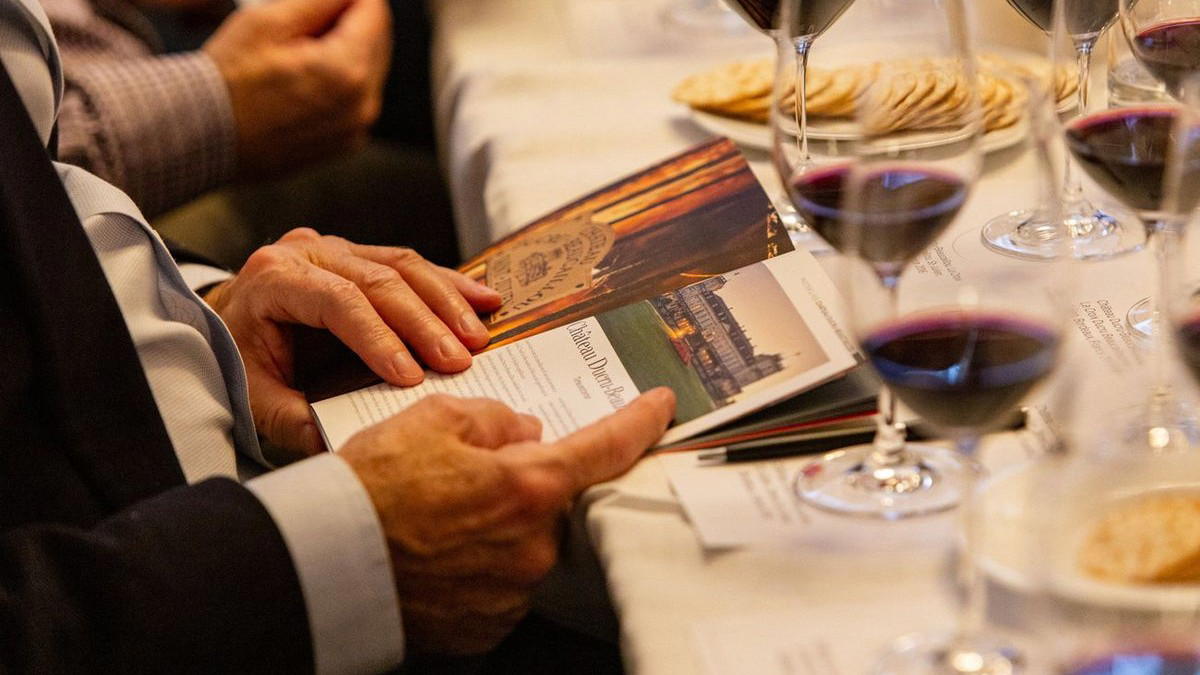
A room of Swiss collectors in London, glasses of Hosanna 2009 and La Fleur-Pétrus 2010 catching the light, and the man pouring them, Edouard Moueix, dropping a verdict that landed harder than any tasting note: 'If the Bordeaux 2025 campaign isn't successful, then En Primeur is dead.' The 49-year-old owner of négociant Ets Jean-Pierre Moueix was speaking to Decanter while showcasing wines to clients of Swiss fine-wine merchant Vintage Cellar. Three consecutive campaigns have failed. The Bordeaux 2025 En Primeur season, he argues, is the last credible chance to prove the futures model still works, and the clock is already running.
That warning carries weight. Ets Jean-Pierre Moueix distributes top Bordeaux to more than 500 importers across 87 countries. The Moueix family owns La Fleur-Pétrus, Hosanna, and Trotanoy in Pomerol, plus the St-Emilion Premier Grand Cru Classé Château Bélair-Monange. When someone with that portfolio and that distribution network says the futures system is on life support, the entire trade listens.

Moueix's language was blunt. 'En Primeur is a wounded animal,' he said, citing the past three campaigns as evidence of systemic failure rather than isolated bad luck. His diagnosis was specific: each of the last three vintages offered a different reason for buyers to stay away, and the cumulative effect has drained confidence from the market.
The 2022 wines, he said, were 'fantastic', but prices were 'extremely high,' and the campaign didn't work. Quality alone wasn't enough. The 2023 vintage was 'good,' but volumes were huge, which killed any sense of urgency. Why commit to futures when you know there will be plenty of stock available later at retail? And 2024 was simply 'not a great vintage,' giving buyers the easiest excuse of all to sit on their hands.
Three years, three different problems, one result: a futures market that has lost the trust of its participants. Moueix's framing, 'If it isn't [successful], there's a real problem', suggests he sees 2025 not as one more campaign in a cycle, but as a referendum on whether En Primeur can still function as a viable commercial mechanism for Bordeaux.
To understand why Moueix's warning resonates, you need to look at what En Primeur is supposed to do, and why it has stopped doing it. The system works when buyers believe they're getting access to a wine at a price they won't find later. That requires a combination of quality, scarcity, and pricing discipline. Miss one of those three, and the incentive to buy futures weakens. Miss all three across consecutive campaigns, and the incentive disappears.
The 2022 campaign is the clearest illustration. The wines were, by most accounts, superb. But châteaux released at prices that reflected their own assessment of quality rather than the market's willingness to pay. Collectors and merchants who had been burned by previous campaigns, where release prices were quickly undercut by secondary market offers, were not inclined to stretch. The result: wines that deserved attention at prices that didn't earn commitment.
The 2023 campaign presented the opposite problem. Quality was solid, but the sheer volume of wine available meant there was no scarcity pressure. En Primeur depends on the fear of missing out. When buyers know they can wait six months and still find stock, the futures premium evaporates. Large volumes turned a good vintage into a slow campaign.
And 2024? Moueix's assessment, 'not a great vintage', is the kind of frank admission that rarely comes from someone with skin in the game. It's also the kind of honesty that might, paradoxically, help rebuild trust. If Moueix is willing to say 2024 wasn't great, his endorsement of 2025 carries more credibility.
The broader context makes the stakes even higher. 'There's a massive crisis in wine all around the world,' Moueix told Decanter. He's not wrong. Global fine wine indices have softened. Consumption trends in key markets have shifted. Bordeaux is not the only region feeling pressure, but it is the region most dependent on a futures system that requires active, confident participation from merchants and collectors alike.
Moueix's assessment of the 2025 vintage is cautiously optimistic, and deliberately specific. He predicts it will be 'a good-to--good vintage' across the board, with small volumes. That combination, quality up, quantity down, is exactly what the futures system needs to function.
The hot, dry summer of 2025 yielded fewer but also smaller grapes. Moueix noted that the major rain events of the season were relatively localised, meaning the impact varied from commune to commune rather than blanketing the entire region. For estates with well-drained soils and mature vines, the kind of properties that populate the Moueix portfolio in Pomerol and St-Emilion, those conditions tend to produce concentrated, structured wines.
What's particularly interesting is Moueix's observation about the stylistic split between the Left Bank and Right Bank. 'The elegance and controlled power on the Left Bank versus full-bodied and rounded juiciness on the Right Bank is more exaggerated this year,' he said. That divergence matters for collectors. In vintages where the two banks converge stylistically, the buying decision is primarily about brand and price. In vintages where they diverge, the decision becomes about style, and that tends to sharpen interest in specific appellations and estates.
For Right Bank enthusiasts, the description of 'full-bodied and rounded juiciness' in 2025 suggests a vintage that plays to Pomerol's strengths: the richness and textural generosity that Merlot-dominant blends deliver on the plateau's clay soils. Estates like Trotanoy, Hosanna, and La Fleur-Pétrus, all in the Moueix stable, are precisely the kind of properties where those conditions translate into wines of real density and depth. And with fewer, smaller grapes concentrating flavour across the board, the 2025 barrel samples from these estates will be among the more closely watched of the entire campaign.
Small volumes add a layer of genuine supply pressure. When a vintage produces less wine, allocations shrink. Merchants who passed on the last three campaigns may find themselves with reduced access to the wines they want most, particularly from Pomerol estates where production is already limited by the appellation's size. That dynamic, the possibility of being shut out, is what makes En Primeur work. It's the mechanism that turns a good vintage into a successful campaign.
Moueix predicts, with what Decanter described as 'some confidence,' that 2025 prices will be 'similar' to 2024, most likely with a modest increase, but for much better quality. That pricing signal is actionable piece of intelligence in his entire assessment.
If châteaux hold prices near 2024 levels while delivering a stronger vintage with smaller volumes, the value proposition for futures buyers shifts. The 2024 campaign, whatever its shortcomings in vintage quality, did establish a lower price floor than the ambitious 2022 releases. Holding that line, or nudging it only slightly upward, would represent the kind of pricing discipline that the market has been demanding for years.
The calculation is direct. Buyers who sat out 2022 because prices were too high, who sat out 2023 because there was no urgency, and who sat out 2024 because the vintage didn't excite them, those buyers need a reason to come back. Better quality at similar prices, with less wine available, is that reason. Whether châteaux actually deliver on that pricing discipline remains to be seen. Moueix is adamant that Bordeaux producers 'know they need to keep prices down in a depressed market,' but knowing and doing are different things.
Moueix also expressed hope that the campaign would be 'relatively early and quick,' telling Decanter that the négociant's 'dream' is that 'the wines are all released by the time of Vinexpo in Hong Kong.' A compressed campaign timeline would reinforce the sense of urgency that the 2023 campaign lacked. When releases trickle out over months, buyers lose focus. When they land in a concentrated window, the market has to respond.
Moueix's candour extended beyond pricing and vintage quality. He addressed what he sees as a persistent perception gap between Bordeaux and Burgundy, one that works against his region.
'Bordeaux-bashing has become a national sport,' he said with a laugh. The frustration beneath the humour is real. Moueix pointed to a perception that 'Burgundy producers are always in the vineyard, while we are holed up in our big châteaux.' It's a caricature, but caricatures stick. And they influence buying decisions.
He also offered a pointed comparison on pricing. 'I can't afford to drink Burgundy anymore,' he said. The irony is sharp: Bordeaux has absorbed years of criticism for high En Primeur prices, while top Burgundy cuvées have climbed to levels that make even first-growth Bordeaux look accessible by comparison. A bottle of Trotanoy or La Fleur-Pétrus from a strong vintage costs a fraction of an equivalent-quality Côte de Nuits wine. That value gap has widened, but the narrative hasn't caught up.
Part of the problem, Moueix believes, is structural. Most Bordeaux producers don't sell their wines directly. They work through the Place de Bordeaux, the network of courtiers and négociants that has distributed the region's wines for centuries. That system is efficient, but it keeps producers 'a step removed from the market,' as Moueix put it. They don't hear directly from the collectors who drink their wines. They don't feel the temperature of demand the way a Burgundy vigneron selling from the cellar door does.
For a négociant like Moueix, who sits between the châteaux and the 500-plus importers his firm supplies, that distance is both a business advantage and a communication liability. He can see the market clearly. The question is whether the châteaux he represents are listening.
For collectors focused on the Right Bank, the 2025 Bordeaux En Primeur campaign presents a specific set of conditions to monitor. Moueix's description of 'full-bodied and rounded juiciness' on the Right Bank, combined with small volumes, suggests that Pomerol and St-Emilion allocations will be tighter than in recent years.
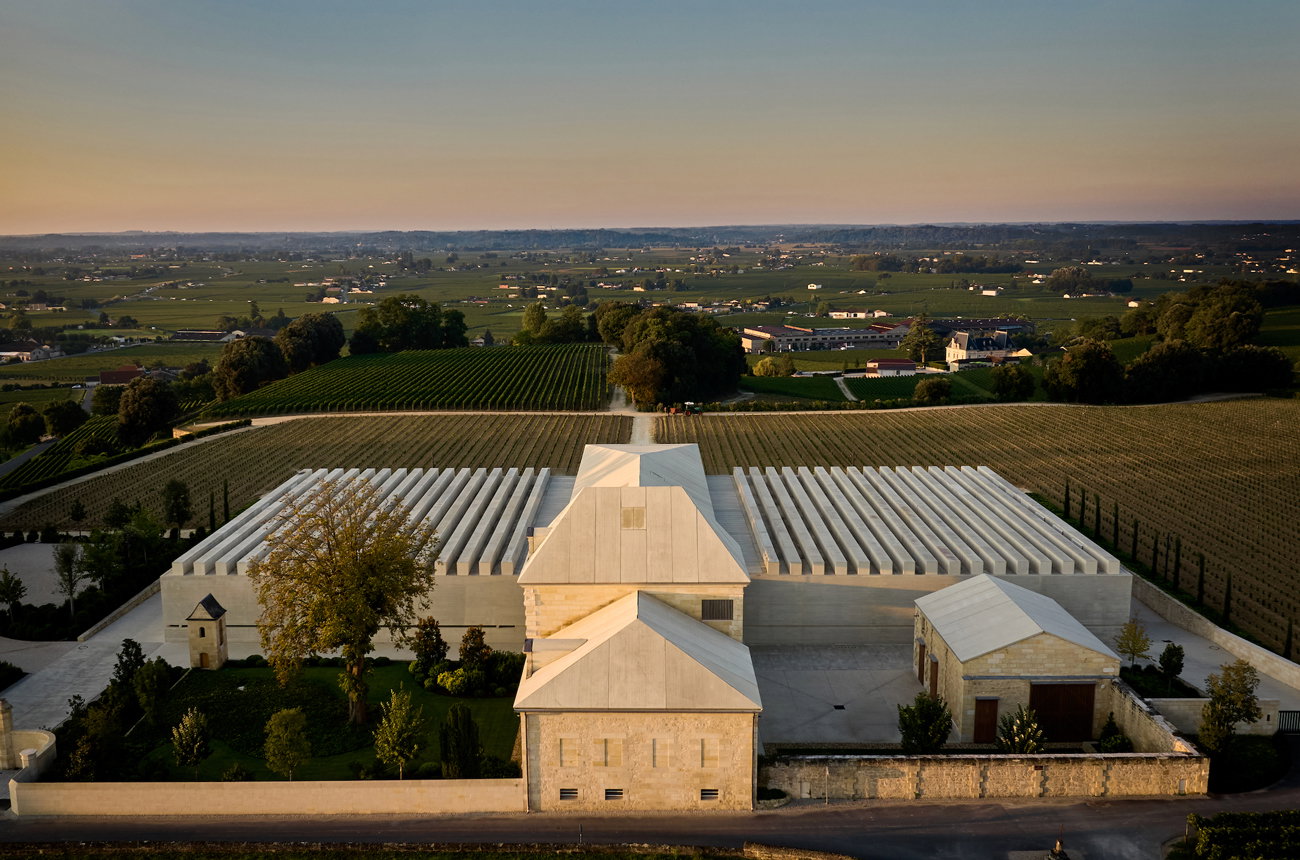
Estates with established allocation lists, Trotanoy, Hosanna, La Fleur-Pétrus, Château Bélair-Monange among them, are the properties where reduced production will be felt most acutely. If you've been on the sidelines for three campaigns, your allocation history may have thinned. Re-engaging now, before release prices land, is how you protect future access.
The timing of releases matters. If Moueix's hope for a quick campaign materialises, with wines released before Vinexpo Hong Kong, collectors will need to make decisions faster than in recent years. The drawn-out campaigns of 2023 and 2024 allowed for deliberation. A compressed 2025 campaign would not.
Watch the first-mover pricing from mid-tier Right Bank estates. Those releases typically set the tone for the campaign. If they come in at or near 2024 levels, as Moueix predicts, the signal to the market will be clear: Bordeaux is prioritising volume sold over margin per bottle. That's the trade-off the system needs right now.
Watch, too, for the critical response to barrel samples. Moueix's 'good-to--good' assessment is deliberately measured. If independent critics confirm that assessment, or exceed it, the combination of quality validation, small volumes, and disciplined pricing could produce the kind of campaign that En Primeur hasn't seen since the early 2020s.
The stakes, as Moueix framed them, are existential. Not for Bordeaux itself, the wines will continue to be made, and the will continue to be collected. But for the futures system that has defined how Bordeaux reaches the world for generations, 2025 is the year that determines whether the mechanism still has a pulse. The next few weeks will tell us. If this is the kind of insider detail you look for in a glass, join the club, we'll keep pouring.
Get the App
Take the shortlist into the En Primeur Club app for concierge access, saved places, and the next step after discovery.
Get Exclusive AccessMore from the editors