Zest



Zest occupies a spare, minimalist space on Dosan-daero 55-gil in Gangnam, where a no-back-bar aesthetic signals the programme's intent before the first drink arrives. Co-founder Dohyung 'Demie' Kim, winner of the 2024 Altos Bartenders' Bartender Award, leads a zero-waste cocktail philosophy built on Korean contract farming, city-harvested honey, and micro-distillery spirits. Ranked #9 globally and #2 in Asia by World's 50 Best Bars in 2024, Zest is Seoul's most decorated bar by any measurable standard.
 Discover on Pearl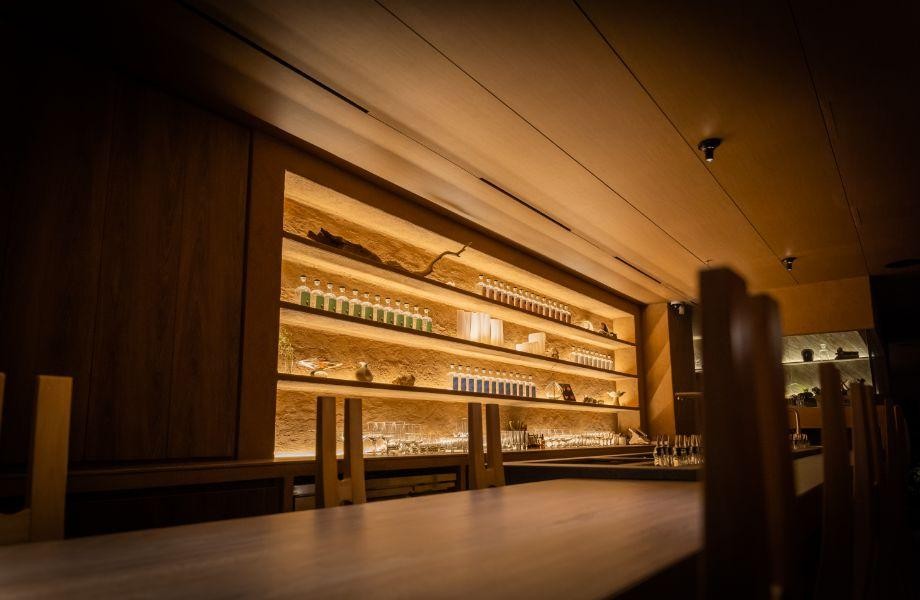
Empty Wall, Full Glass: Reading Zest from the Outside In
Walk into the ground floor of the Haneul Building on Dosan-daero 55-gil and the first thing you register is what isn't there. No bottles lined up behind the counter, no amber-lit back bar performing its usual theatre of abundance. The space is spare in the way that deliberate restraint always is: not sparse, but edited. The Korean concept of bigung, the beauty found in emptiness, is frequently cited in design contexts, but at Zest it functions as a genuine operating principle rather than an aesthetic choice bolted onto a conventional cocktail bar.
That absence directs attention exactly where Zest wants it: toward the drinks, and more specifically, toward the ingredients inside them. Seoul's bar scene has matured rapidly over the past decade, moving from imported-spirits showcases and Western template bars toward a cohort of venues with a clear and localized point of view. Zest sits at the sharper end of that cohort. Where bars like Charles H work a sophisticated international canon and Alice Cheongdam leans into narrative-driven presentation, Zest has staked its identity on provenance and precision, making it a distinct position within the same Gangnam-area peer set.
How the Menu Is Built: A System, Not a List
The editorial angle that makes Zest worth studying isn't the individual drink, it's the architecture underneath all of them. The programme operates as an integrated system of sourcing, technique, and waste management, and that system is legible in every glass.
Start with the sourcing layer. Zest uses contract farming to secure vegetables and herbs, runs its own beehives on the Seoul rooftop circuit to harvest what the bar describes as 'city honey,' and draws on Korean micro-distilleries and craft breweries for its spirits backbone. This is not a garnish-level localism, where a single foraged herb sits atop an otherwise conventional drink. The local sourcing is structural, running through base spirits, modifiers, and house-made elements in parallel.
The waste layer sits on leading of that. In the global bar conversation, zero-waste programming has become a credentialing phrase that can mean anything from composting citrus to a fully closed-loop kitchen. Zest's approach is specific enough to be verifiable. The Hallabong — a mandarin-orange hybrid from Jeju Island — illustrates how the system works in practice: fresh juice goes into the Jeju Garibaldi, peels are used to infuse the house gin, and the remaining pulp becomes either a cordial or a fermented ingredient in the bar's Pulp Sauerkraut. Three outputs from one fruit, with no designated waste stream between them. That level of ingredient utilization requires a degree of forward planning that most bars building one-off seasonal menus don't have to exercise.
The technique layer follows from this. Because the ingredients arrive with defined uses already attached, the drinks themselves are built around those uses rather than around trend cycles or format conventions. Garnish appears only when it carries function; excess is removed not as a stylistic gesture but because it would interrupt the internal logic of the programme. The result is a menu that reads as a set of arguments about Korean ingredients rather than a catalog of drink options.
Awards as a Calibration Tool
Awards record here is worth reading carefully, because it describes a trajectory rather than a static position. Zest entered the Asia's 50 Best Bars list at #48 in 2022, moved to #5 in Asia and #18 globally in 2023, then reached #2 in Asia and #9 globally in 2024, maintaining the Asia #2 ranking again in 2025 while moving to #25 on the Top 500 Bars global list. That kind of consistent upward movement across multiple independent ranking systems is a signal about institutional credibility, not just quality at a single point in time.
Co-founder Dohyung 'Demie' Kim's 2024 Altos Bartenders' Bartender Award is the data point that contextualizes the rest. Unlike placement rankings, which are compiled by varying methodologies, the Bartenders' Bartender Award is peer-voted within the Asia's 50 Best community, meaning the people Zest competes against for rankings chose Kim as the standout practitioner in the region. For a bar that opened without the institutional backing of a hotel group or an established restaurant empire, that recognition reflects the programme's pull on its own merits.
Within Seoul specifically, Zest occupies a different competitive tier than Bar Cham or Bar D.Still, both of which are worth visiting as part of any considered Seoul bar itinerary but operate with different anchoring principles. Globally, the localism-as-architecture model Zest employs has peers in bars like Jewel of the South in New Orleans and Julep in Houston, where regional ingredient identity drives the menu structure rather than decorating it. Bar Leather Apron in Honolulu offers another point of comparison: a Pacific-rooted programme built on technical discipline and a similarly minimal visual language.
Gangnam Context and the Dosan-daero Corridor
Dosan-daero 55-gil sits within the Apgujeong-Cheongdam axis of Gangnam, a corridor that over the past five years has become Seoul's most concentrated zone for premium independent bars and restaurants. The area draws a mix of industry professionals, international visitors, and a domestic audience that treats bar culture as a serious leisure category rather than a prelude to something else. This is relevant to Zest's positioning: the bar's minimalism and restrained service register as confidence rather than coolness in a neighbourhood already accustomed to high-specification venues. It isn't working against the grain of its location.
For visitors building a bar evening in the district, Zest functions well as a considered, single-stop destination rather than as one bar in a crawl, given the deliberate pace at which the programme is designed to be experienced. For context on the broader neighbourhood, the EP Club Seoul bars guide covers the Gangnam and Cheongdam circuit in full, and the Seoul restaurants guide maps the dining options that pair logically with an evening in the area. The Seoul hotels guide, Seoul wineries guide, and Seoul experiences guide round out planning for a full stay.
Planning a Visit
Zest opens at 18:30 on weekdays, running through to 02:00. On weekends, the bar opens earlier at 15:00, which makes Saturday and Sunday afternoons a practical entry point for those who want to visit without committing to a late evening. The Haneul Building address on Dosan-daero 55-gil is walkable from the Apgujeong Rodeo station area. Given the bar's Google rating of 4.8 across 361 reviews and its sustained placement in global rankings, reservations are advisable, particularly for weekend evenings.
Frequently Asked Questions
Where the Accolades Land
A quick look at comparable venues, using the data we have on file.
| Venue | Awards | Cuisine | Notes |
|---|---|---|---|
| Zest | Pride in provenance is what drives Zest's cocktail programme, leaning on in… | This venue | |
| Alice Cheongdam | World's 50 Best | ||
| Bar Cham | World's 50 Best | ||
| Southside Parlor | World's 50 Best | ||
| Bar D.Still | World's 50 Best | ||
| Charles H | World's 50 Best |
Need a Table?
Our members enjoy priority alerts and concierge-led booking support for the world's most difficult bars and lounges.
Get Exclusive Access