The House of Bánh Mì (The HOB)
On the eastern edge of Portland's NE corridor, The House of Bánh Mì (The HOB) brings focused Vietnamese sandwich craft to a city that rewards specialists over generalists. The menu architecture is narrow by design, built around the bánh mì as a serious culinary form rather than a street-food footnote. For Portland's sandwich-minded dining public, it occupies a specific and deliberate niche.
Pearl is the En Primeur Club membership app — saves, bookings, and concierge access live there. Same editors, same standards.
- Address
- 511 NE 76th Ave, Portland, OR 97213
- Phone
- +1 503 254 7074
- Website
- thehobpdx.com
- Directions
- Get directions
 Saves & bookings on Pearl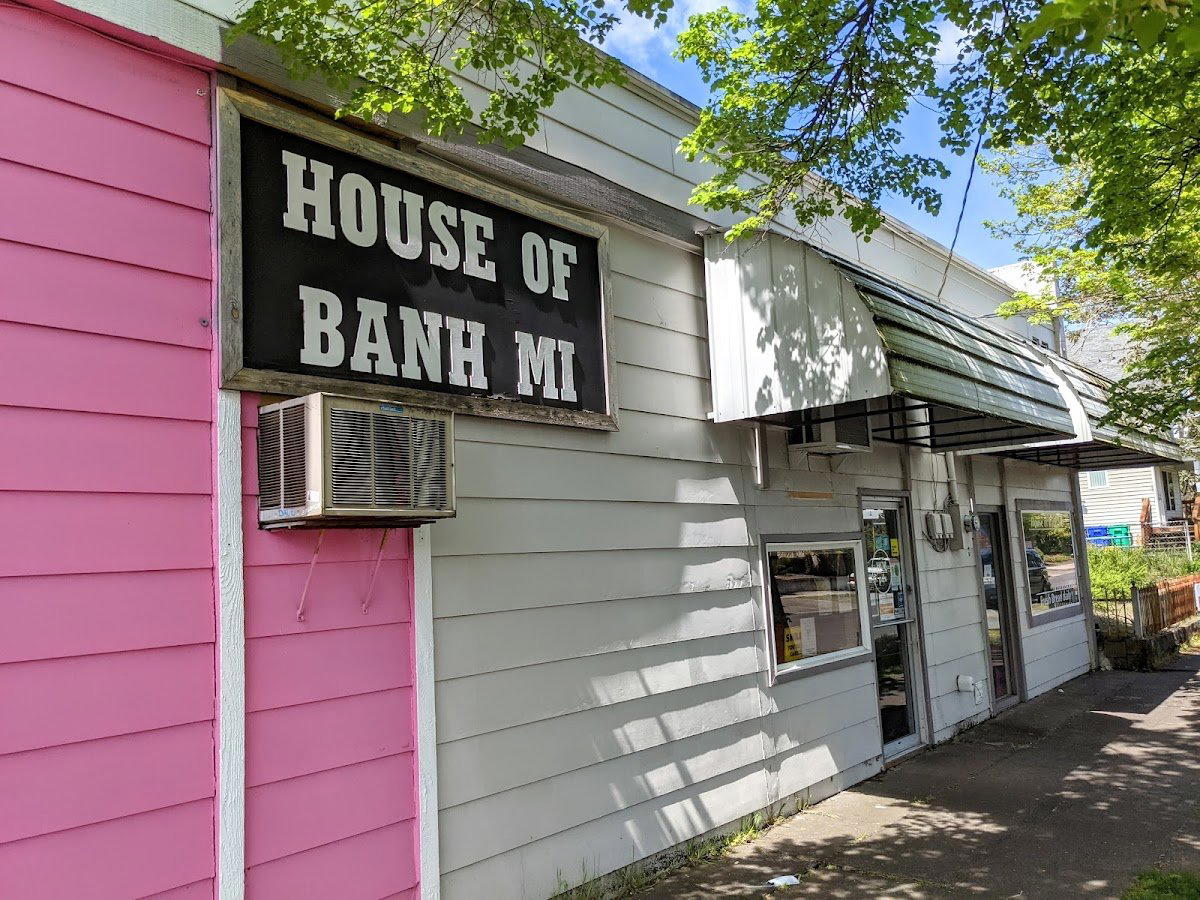
Portland's Bánh Mì Counter and What It Says About the City's Sandwich Culture
Northeast Portland's 70s corridor runs through one of the city's more quietly productive stretches for everyday eating: Vietnamese delis, Filipino bakeries, and low-overhead counters that have operated for decades largely outside the attention of food media. The House of Bánh Mì, known locally as The HOB, sits at 511 NE 76th Ave inside that tradition. The physical approach is direct — a counter-service format in a neighborhood that does not dress up for visitors. There is no reservation queue, no tasting menu preamble, and no ambient theater. What it offers instead is a focused argument about what a bánh mì can be when the format is treated seriously rather than as a default.
The Bánh Mì Format: A Brief Structural History
Bánh mì as a category has undergone significant repositioning in American cities over the past two decades. Through the 1990s and into the 2000s, the sandwich occupied a utilitarian niche — a function of Vietnamese immigrant communities and their neighborhood delis, priced well below the mainstream sandwich market and largely invisible to food media. The shift began in cities with large Vietnamese American populations, particularly Houston, Los Angeles, and the Bay Area, where a second generation of operators began recalibrating quality without abandoning accessibility. Portland arrived at this conversation through a different route: its Vietnamese community is smaller than those in Southern California or Texas, which means the bánh mì tradition here developed with less volume and more variation.
By the early 2010s, bánh mì had attracted enough mainstream food media attention to trigger two divergent responses. One track was fast-casual scaling, chains and outposts designed for throughput. The other track, smaller and less visible, involved operators treating the sandwich as a craft object: sourcing bread with the same attention applied to the protein, managing fermentation on house-made pickles, and rethinking the balance of fat, acid, and herb that makes a great bánh mì more structurally interesting than most American sandwiches at any price point. The HOB belongs to that second track.
Evolution and Current Direction
Portland's food scene has cycled through several identities since the mid-2000s, when the city first attracted serious national food press. The farm-to-table framework dominated early, followed by a wave of chef-driven fast-casual formats, and more recently a consolidation phase driven by rising rents and the operational damage of the pandemic years. Independent counters in outer Northeast have fared differently than those in inner Southeast or the Pearl District, less exposed to tourist traffic, more dependent on neighborhood loyalty, and structurally more resilient against the rent pressures that shuttered many higher-profile operators.
The HOB has tracked this arc in ways that reflect the broader pattern. The bánh mì counter format, once considered a low-margin category with limited growth ceiling, has re-emerged as one of the more defensible formats in Portland's current environment precisely because it does not depend on the weekend dinner reservation economy. The question for any operator in this category is whether the product quality justifies repeat visits against the expanding competition from Vietnamese-American concepts with larger marketing budgets.
Where The HOB Sits in Portland's Current Eating Map
Portland's cocktail bar scene, anchored by venues like Teardrop Lounge and a network of technically serious independents, operates at a different register than the city's everyday food counters. The two worlds occasionally intersect, a counter next to a well-regarded bar creates a natural before-or-after pairing economy, but The HOB's NE 76th Ave location puts it outside that inner-eastside geography. It operates in a neighborhood where the eating audience is defined less by bar crawl adjacency and more by proximity-based loyalty. For comparison, venues like 10 Barrel Brewing Portland or the cluster around 3808 N Williams Ave serve a different geographic and demographic catchment entirely.
This positioning is neither a liability nor an advantage in isolation. Outer Northeast has produced several operators with long tenure and genuine neighborhood authority, the kind of credibility that inner-city concepts sometimes spend years and significant marketing budgets trying to manufacture. A short drive or bus ride from the Williams Avenue corridor also puts The HOB within reasonable distance of the NE 7th to 82nd stretch that functions as Portland's most concentrated Vietnamese commercial district, a context that matters when thinking about who the product is being made for and how it is evaluated locally.
For further reference on how Portland's food scene maps across neighborhoods, our full Portland restaurants guide covers the city's distinct eating corridors in more detail.
Bánh Mì in a National Frame
Across American cities, the leading sandwich counters tend to attract serious bar programs as neighbors rather than as competitors. In Honolulu, Bar Leather Apron represents the kind of precision-driven cocktail culture that often develops alongside refined casual food. In New Orleans, Jewel of the South operates in an ecosystem where serious drinking and serious eating run in parallel. Houston's Julep, Chicago's Kumiko, New York's Superbueno, San Francisco's ABV, and internationally, The Parlour in Frankfurt all illustrate how cities build layered food and drink ecosystems where no single format operates in isolation. The bánh mì counter, at its finest, anchors the everyday tier of that ecosystem, accessible in price and format, demanding in execution.
Planning Your Visit
The HOB is a counter-service format in outer Northeast Portland. No booking infrastructure is required or available. The address is 511 NE 76th Ave, Portland, OR 97213. Transit access is reasonable via the 71 or 72 bus lines along NE 82nd Ave and NE Sandy Blvd respectively, though travel time from central Portland is approximately 20-30 minutes depending on origin.
| Venue | Format | Booking Required | Neighborhood | Price Tier |
|---|---|---|---|---|
| The House of Bánh Mì (The HOB) | Counter service | No | Outer NE Portland | Casual / accessible |
| Teardrop Lounge | Cocktail bar | Recommended | Pearl District | Mid-range |
| Bible Club PDX | Cocktail bar | Recommended | Sellwood | Mid-range |
| Multnomah Whiskey Library | Spirits bar | Required | Pearl District | Premium |
| Rum Club | Cocktail bar | Walk-in | Inner SE | Mid-range |
Also worth considering: 7316 N Lombard St represents another outer-neighborhood format in Portland worth pairing into a longer itinerary that moves beyond the inner eastside's more trafficked corridors.
Continue exploring
More in Portland
Bars in Portland
Browse all →
Restaurants in Portland
Browse all →
Hotels in Portland
Browse all →
At a Glance
- Casual Hangout
- Standalone
- Seated Bar
- Craft Cocktails
Current opening hours
- Monday
- Closed
- Tuesday
- 9 AM–4 PM
- Wednesday
- 9 AM–4 PM
- Thursday
- 9 AM–4 PM
- Friday
- 9 AM–4 PM
- Saturday
- 9 AM–4 PM
- Sunday
- Closed
Hours can change for holidays and private events. Last verified .
Bright airport atmosphere with focus on fresh, lively Vietnamese flavors.
Know Before You Go
- Getting there
- 511 NE 76th Ave, Portland, OR 97213