Tautog's Restaurant
Tautog's Restaurant occupies a longstanding position on Virginia Beach's 23rd Street dining corridor, drawing on the Atlantic coast's seasonal seafood supply while applying technique that reaches well beyond regional convention. The tautog itself — a thick-lipped reef fish native to the Mid-Atlantic — signals the kitchen's orientation: local waters, treated with ambition. A reliable anchor in a resort city that cycles through trends faster than its tides.
 Discover on Pearl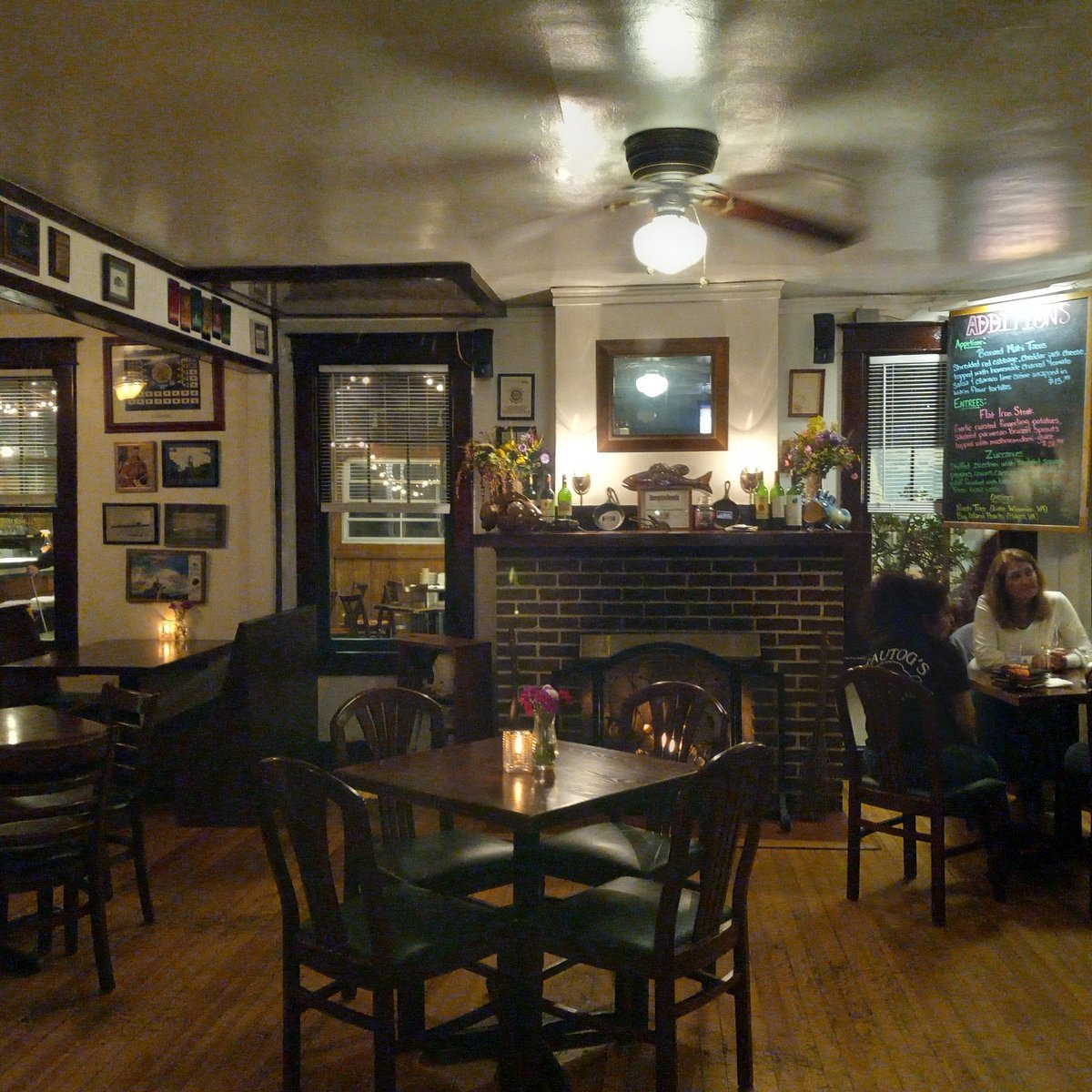
Where the Atlantic Shelf Meets the Kitchen Counter
Virginia Beach's dining identity has long been shaped by geography more than culinary fashion. The city sits at the mouth of the Chesapeake Bay, with the Atlantic shelf running directly offshore, and that proximity produces a seasonal rhythm that serious kitchens in the area tend to organize around. The spring tautog run, the summer soft-shell window, the autumn oyster harvest from the lower Bay — these are not marketing moments but actual inflection points in what arrives at the back door. Tautog's Restaurant, at 205 23rd St, takes its name from one of the Mid-Atlantic's more overlooked reef fish: a species that local fishermen have worked for generations but that rarely surfaces on menus further up the coast, let alone in cities inland. That choice of name is a positioning signal as much as anything else.
The 23rd Street address places the restaurant in the stretch of Virginia Beach that sits between the full resort-strip energy of the oceanfront and the quieter residential blocks further west. It is neither the most conspicuous dining corridor in the city nor the most tucked-away, which tends to suit a restaurant built around repeat local custom rather than drive-by resort traffic. For context on where Tautog's fits within the broader Virginia Beach dining scene, the full Virginia Beach restaurants guide maps the city's key dining zones and price tiers.
The shortlist, unlocked.
Hard-to-book tables, cellar releases, and concierge-planned trips.
Get Exclusive Access →The Local Ingredient, Global Technique Argument
The editorial case for a restaurant like Tautog's rests on a tension that defines a certain tier of American coastal cooking: how far can imported culinary method travel before it stops serving the ingredient and starts serving the chef's ambition? The Mid-Atlantic has a specific larder — tautog, striped bass, blue crab, Virginia oysters, mid-shore clams , and the most coherent kitchens in the region treat that larder as the fixed point around which technique rotates, not the other way around. This is a different model than the one operating in, say, a program like Kumiko in Chicago, where Japanese precision is applied to a curated selection of global ingredients, or Bar Leather Apron in Honolulu, where Pacific Rim technique meets a highly specific island supply chain. The logic is analogous even if the results differ: source first, method second.
Virginia Beach does not have the density of fine-dining infrastructure that would pressure kitchens toward the kind of technique-forward showmanship common in larger metro markets. What it has instead is access: oysters from the Eastern Shore, blue crab from the Bay's tributaries, Atlantic finfish caught within a short distance of the plate. A restaurant that names itself after a specific regional fish is, in a sense, committing publicly to that access-first philosophy. The question any serious diner brings to that commitment is whether the kitchen's technical range is broad enough to make the most of what the season actually offers.
Virginia Beach's Coastal Dining Tier
The city's restaurant scene operates across several fairly distinct tiers. At one end sit the resort-adjacent seafood houses that process high tourist volume through fried platters and raw bars. At the other end, a smaller cohort of restaurants , Tautog's among them , occupies a middle ground where the ambition is higher and the clientele is more locally rooted. This cohort includes places like Blue Seafood and Spirits and Chick's Oyster Bar, which approach the regional ingredient supply from different angles but share a similar orientation away from mass-market seafood convention.
Restaurants in this tier tend to hold their local customer base across the full calendar year, including the off-season months when the resort-dependent operations thin out. That year-round local dependency tends to sharpen menus over time: a kitchen serving the same well-traveled regulars week after week has less margin for formula repetition than one cycling through first-time visitors. Virginia Beach in winter , from November through February , is a fundamentally different city than in July, and the restaurants that operate well across both seasons tend to be the ones worth tracking.
For an interesting counterpoint on what technique-led programs look like in other American cities, Jewel of the South in New Orleans and Julep in Houston both demonstrate how regional identity can be expressed through precision craft rather than broad strokes. The principle applies equally to food programs operating with local-ingredient mandates.
The Neighborhood and What Surrounds It
The 23rd Street corridor has developed a modest but coherent dining and drinking identity over the years, distinct from both the full boardwalk scene to the east and the chain-heavy arterials further inland. Aldo's Ristorante holds the Italian anchor position in the neighborhood, while Chubbs and others round out the local bar and casual dining options within walking distance. This clustering matters for planning purposes: the area supports a full evening without needing to move between distant zones, which is not always a given in a resort city where dining is often spread across several disconnected strips.
Visitors arriving from out of town will find the 23rd Street location accessible from the main oceanfront hotel corridor on foot, though a car or rideshare makes more sense if arriving from the broader Virginia Beach metro area or from Norfolk to the west. Parking in the immediate area is available, though during peak summer season , June through August , the blocks closest to the oceanfront tighten considerably, and arriving before the dinner rush or after 8:30 p.m. tends to ease both parking and pace inside.
For reference points on the kind of craft beverage programs that increasingly pair with coastal food-forward restaurants in American markets, Superbueno in New York City, ABV in San Francisco, and The Parlour in Frankfurt each illustrate how bar programming has evolved to complement rather than compete with serious food menus , a model increasingly relevant to the Virginia Beach mid-tier dining tier as it matures.
Planning Your Visit
Tautog's Restaurant sits at 205 23rd St, Virginia Beach, VA 23451. Given the absence of confirmed hours and booking details in publicly available records at the time of writing, confirming reservation availability directly with the restaurant before visiting is advisable, particularly during the summer season when Virginia Beach's visitor population peaks. The spring and fall shoulder seasons , April through May and September through October , offer the combination of favorable weather, reduced resort-crowd pressure, and the most interesting points in the Bay's seasonal seafood cycle, making them the periods most worth prioritizing for a first visit.
The shortlist, unlocked.
Hard-to-book tables, cellar releases, and concierge-planned trips.
Get Exclusive Access →Frequently Asked Questions
Peers in This Market
A quick peer check to anchor this venue’s price and recognition.
| Venue | Cuisine | Price | Notes |
|---|---|---|---|
| Tautog's Restaurant | This venue | ||
| La Bella Italia Laskin | |||
| Coastal Grill | |||
| Eurasia Cafe | |||
| Doc Taylor's Restaurant | |||
| Aldo's Ristorante |
Need a Table?
Our members enjoy priority alerts and concierge-led booking support for the world's most difficult bars and lounges.
Get Exclusive AccessThe shortlist, unlocked.
Hard-to-book tables, cellar releases, and concierge-planned trips.
Get Exclusive Access →