New York Deli
A Carytown fixture at 2920 W Cary St, New York Deli occupies the informal end of Richmond's deli counter tradition, the kind of spot where the menu does the talking and the room asks nothing of you. The address alone places it inside one of the city's most food-dense corridors, where sandwich-led formats hold their own against a neighbourhood increasingly shaped by restaurant ambition.
Pearl is the En Primeur Club membership app — saves, bookings, and concierge access live there. Same editors, same standards.
- Address
- 2920 W Cary St, Richmond, VA 23221
- Phone
- +1 804 358 3354
- Website
- ny-d.com
- Directions
- Get directions
 Saves & bookings on Pearl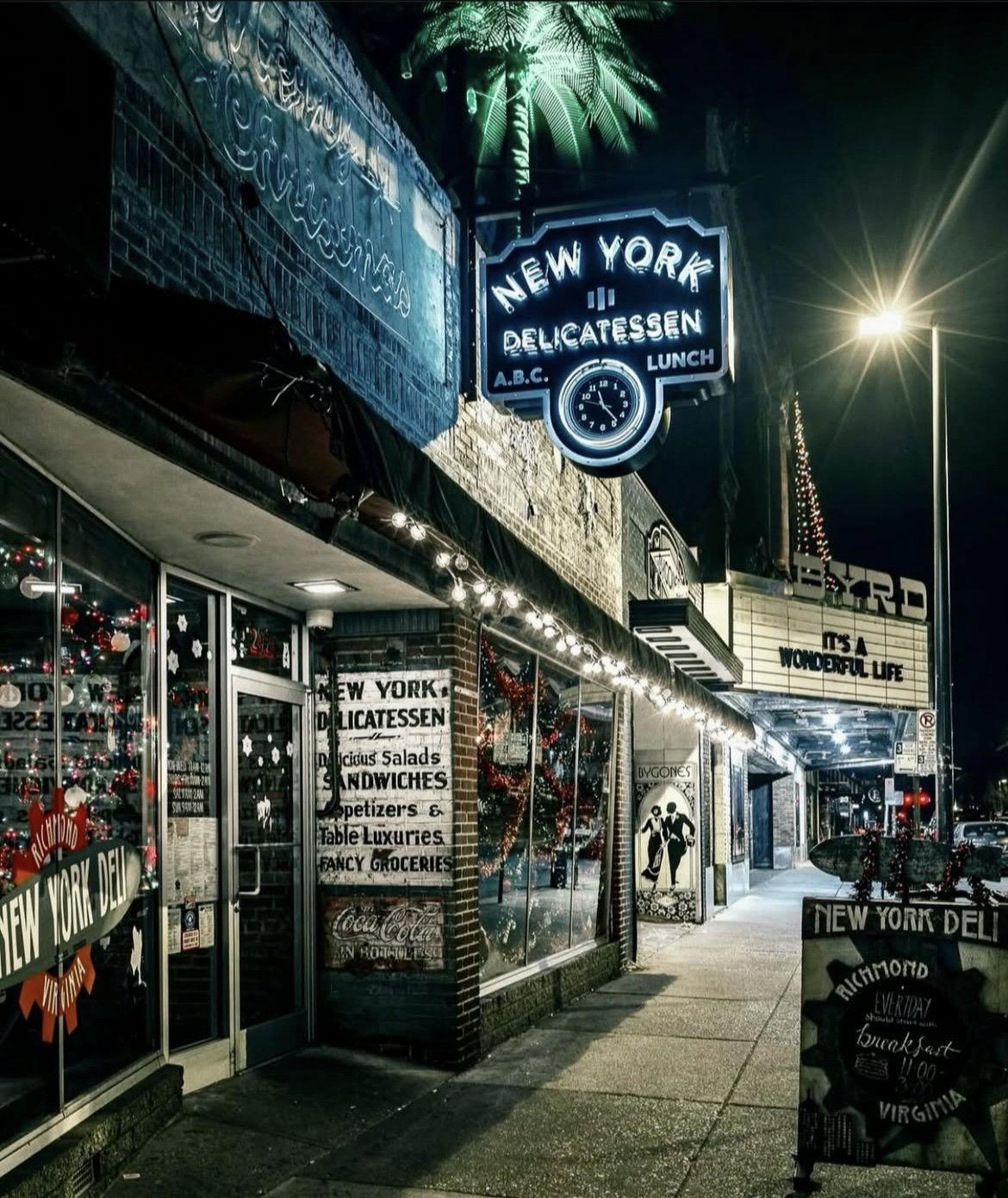
Carytown's Counter Culture
Richmond's Carytown strip has spent the last decade accumulating the kind of food density that turns a shopping corridor into a dining destination. The blocks around West Cary Street now hold everything from craft brewing taprooms to full-service restaurants with serious kitchen programs, which makes the presence of a direct deli counter all the more telling. In a neighbourhood that rewards ambition, the deli format persists because it answers a different question than the tasting menu or the cocktail bar. New York Deli, at 2920 W Cary St, sits inside that tradition, holding a position that the neighbourhood's more elaborate operations cannot easily replicate.
The deli as a category carries specific architectural logic. It is a menu built around assembly and proportion rather than transformation. Where a restaurant kitchen uses heat and time to alter ingredients, the deli counter works through sourcing, curation, and the ratio of components, how much meat against how much bread, how much acid against how much fat. That structure demands confidence in ingredients rather than technique as a disguise, and it is why the format survives in cities and neighbourhoods that have otherwise moved toward more elaborate dining formats. In Carytown, where the food scene skews toward independent operators with distinct points of view, a deli that executes its own logic well fits naturally into the corridor.
What the Menu Architecture Reveals
The deli menu, by design, communicates priorities through its structure. The number of proteins on offer, the range of bread options, the presence or absence of hot food alongside cold, each of these signals where the operation places its emphasis. A menu weighted toward cold sandwiches with a tight selection of accompaniments suggests a kitchen confident in its sourcing and skeptical of unnecessary complexity. A menu with daily specials or rotating additions suggests an operator interested in keeping regulars engaged beyond the core offering.
At the deli counter level, the drink list also tells a story. Delis in the New York tradition, from which this venue takes its name, typically offer direct sodas, egg creams, or deli-case beverages alongside the food, with no ambition to compete with the cocktail bars a few doors down. That restraint is an editorial choice about what the space is for. The room is designed for eating at speed or with ease, not for lingering over a technical beverage program.
Placing It in Richmond's Informal Dining Scene
Richmond has built a reputation as a city that takes food seriously without requiring formality. The craft brewing scene, anchored by operations like Ardent Craft Ales, represents one axis of that informal-but-intentional dining culture. Bar programs at venues like Beaucoup, Black Lodge, and 3200 Rockbridge St show the city's appetite for considered drinking experiences in unfussy settings. The deli counter sits at a different point on that spectrum, lower on ceremony and more transactional in format, but specific in what it offers. It addresses the part of Richmond's food culture that values efficiency and directness: the lunch hour, the quick dinner before an event on Cary Street, the late-morning sandwich after a weekend errand run through the neighbourhood.
Among the city's informal formats, the deli holds a particular demographic: it draws regulars who know what they want before they arrive, and visitors who are tired of decoding menus and want a clear transaction. That clarity is the format's primary value proposition, and it is why New York Deli's location in Carytown makes geographic and commercial sense. The neighbourhood is busy enough to sustain walk-in traffic, and the surrounding blocks generate the kind of foot movement that rewards operators who can turn tables efficiently without requiring reservations or wait lists.
The New York Reference Point
Naming a deli after New York sets an implicit benchmark that the format has to answer. The New York deli tradition, Carnegie, Katz's, the vanished Second Avenue, is built on volume, scale, and a specific overstuffed proportion logic where the sandwich is almost deliberately excessive. Transplanted to a smaller city, that reference either functions as aspiration or as aesthetic shorthand. The name signals what kind of eating this is: generous portions, familiar structures, no apology for simplicity. Whether Richmond's version of the format meets the New York standard is, in some ways, beside the point. What matters is that the reference establishes expectations, and a deli that names itself clearly has already made a commitment to a particular kind of honesty about what it is.
For travellers moving between food cities and tracking how regional interpretations of national formats hold up, the bar in a Southern city is an interesting case. Richmond's food culture has its own strong local identity, and the deli counter sits as a counterpoint to the city's more locally-rooted restaurant traditions. It is neither farm-to-table nor deeply regional in concept, it is a straightforwardly urban format in a city that has grown comfortable holding multiple food identities at once.
Planning Your Visit
The bar is located at 2920 W Cary St in Richmond's Carytown neighbourhood, one of the city's most walkable commercial strips. The deli format does not typically require advance booking, these operations are built around walk-in traffic and quick service, making them low-friction destinations for visitors with flexible schedules. Carytown is accessible by car with street parking along West Cary Street, and the neighbourhood is compact enough to combine a visit with other stops on the strip.
A Credentials Check
Comparable venues nearby, for context on price, style, and recognition.
| Venue | Cuisine | Price | Notes |
|---|---|---|---|
| New York DeliThis venue — the venue you are viewing | pub | $$ | Not listed |
| Stanley's | dive_bar | $$ | Fan |
| Black Lodge | cocktail_bar | $ | Scott's Addition |
| Juan's Rooftop & Cantina | rooftop_bar | $$$ | Arts District |
| Havana 59 | Bar | $$ | Shockoe Bottom |
| Isley Brewing Company | beer_bar | $$ | Scott's Addition |
Continue exploring
More in Richmond
Bars in Richmond
Browse all →
Restaurants in Richmond
Browse all →
Hotels in Richmond
Browse all →
Wineries in Richmond
Browse all →
At a Glance
- Lively
- Well Known
- Energetic
- Classic
- After Work
- Late Night
- Group Outing
- Casual Hangout
- Celebration
- Private Event
- Rooftop
- Live Music
- Historic Building
- Standalone
- Seated Bar
- Lounge Seating
- Booth Seating
- Outdoor Terrace
- Private Rooms
- Craft Cocktails
- Craft Beer
- Classic Cocktails
Current opening hours
- Monday
- 11 AM–12 AM
- Tuesday
- 11 AM–12 AM
- Wednesday
- 11 AM–12 AM
- Thursday
- 11 AM–2 AM
- Friday
- 11 AM–2 AM
- Saturday
- 9 AM–2 AM
- Sunday
- 9 AM–12 AM
Hours can change for holidays and private events. Last verified .
Lively yet chill atmosphere with eclectic DJs spinning diverse grooves nightly; divided into bar area and restaurant proper with tropical rooftop escape featuring tiki lounge feel