


Behind a Chinatown dumpling shop on East Georgia Street, Laowai operates through a password-entry "freezer" door into a 1920s Shanghai speakeasy dressed in teal and gold. Canada's largest baijiu selection — over 50 bottlings — anchors a cocktail program that ranked #67 on World's 50 Best North America's Best Bars 2025 and #340 on Top 500 Bars. The dumplings, made in-house, are worth ordering.
 Discover on Pearl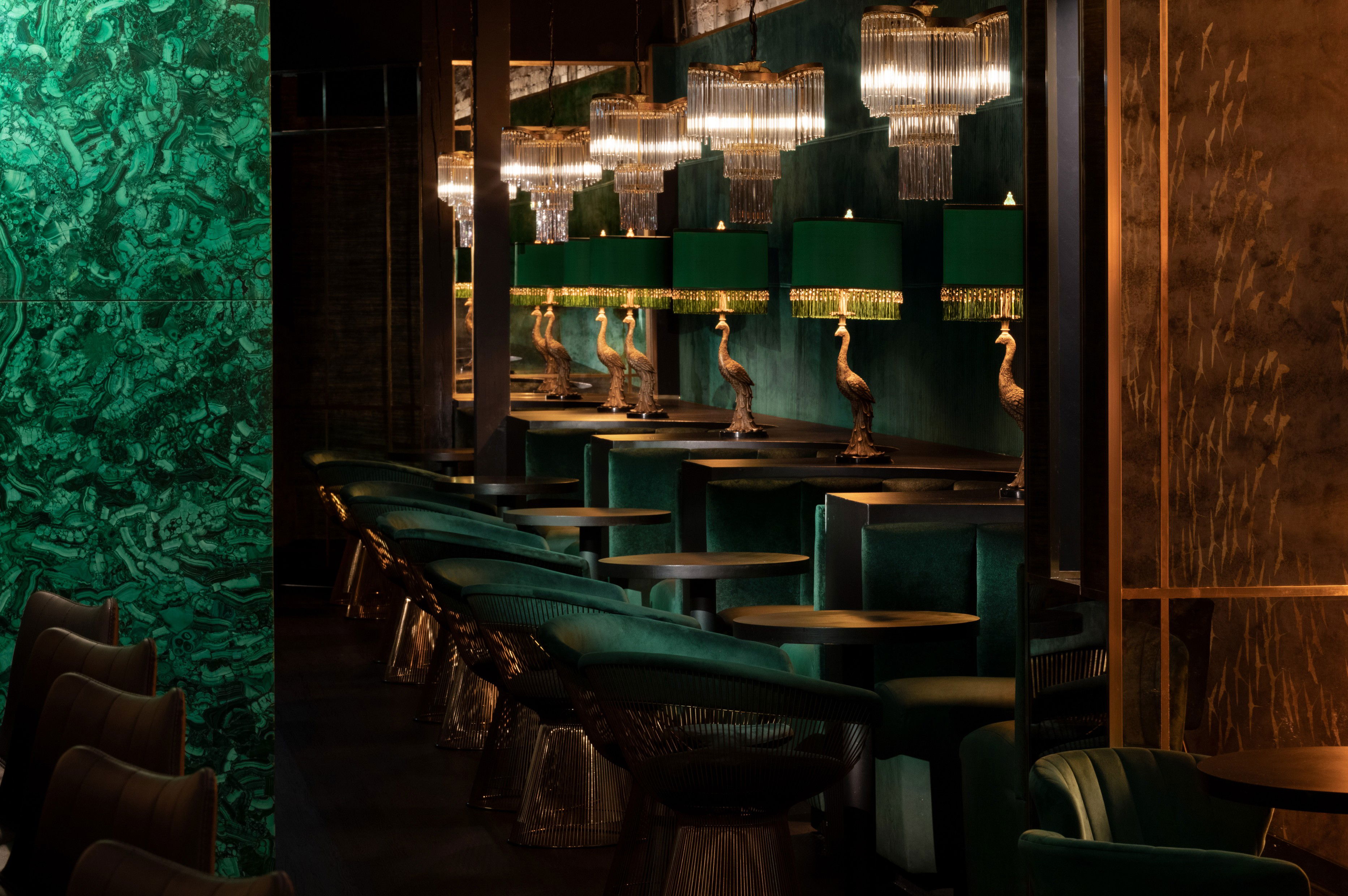
The Room Before the Room
Vancouver's Chinatown has long been a neighbourhood where the surface rarely tells the full story. The block of East Georgia Street that houses Laowai reads, from the outside, as a dumpling shop attached to a garage-fronted space called Blnd Tger. Sidewalk patio, modest signage, the smell of folded dough. There is no obvious indication that a password and a fake freezer door separate you from one of the more deliberately constructed bar interiors in Canada.
The speakeasy format has become so familiar in North American bar culture that it risks collapsing under its own theatricality. The hidden entrance, the prohibition-era styling, the conceptual backstory: in many cities these elements have calcified into a predictable formula. What distinguishes the more serious operations is whether the design coherence, the drink program, and the thematic logic actually hold up once you're inside. At Laowai, the reveal is the beginning of a sustained argument, not the punchline.
Teal, Gold, and the Logic of 1920s Shanghai
The interior's reference point is Shanghai in the 1920s, a period when the city's International Settlement and French Concession produced a specific strain of cosmopolitan excess: art deco geometries, saturated colour, layered hospitality cultures colliding in real time. The palette here runs to peacock teal and gold, both of which carry a particular weight in that visual grammar. These are not arbitrary luxury signals. In the context of a Chinatown bar drawing on Chinese spirits and Chinese design history, they function as cultural specificity rather than decoration.
This kind of design commitment places Laowai in a different peer set than Vancouver's more neutrally styled cocktail rooms. The Botanist Bar operates in a hotel context with botanical maximalism; The Keefer Bar, also in Chinatown, has built its identity around Chinese medicinal botanicals and apothecary-influenced design. Laowai's 1920s Shanghai framing is the most historically specific of these approaches, and the drink program is built to match that specificity rather than simply coexist with the wallpaper.
Baijiu as the Organizing Principle
Baijiu remains among the world's most consumed spirits by volume and among the least represented in Western bar programs. The gap between those two facts has been narrowing in recent years as bartenders in cities like London, New York, and Hong Kong have started building menus around the spirit's distinct aroma categories rather than treating it as a novelty ingredient. Laowai holds over 50 baijiu bottlings, a collection that represents the broadest available selection in Canada. That figure matters less as a boast than as a structural commitment: building a program of that depth requires sustained supplier relationships, storage investment, and a staff trained to guide unfamiliar guests through aroma types that have no Western equivalent.
The bar offers baijiu in tasting portions, which is the correct entry point for most guests who have not yet developed a framework for the spirit. Baijiu's aroma categories — sauce, strong, light, and phoenix, among others — produce drinking experiences as divergent as the difference between Islay Scotch and Cognac, and sampling across those categories is how that contrast becomes legible. The cocktail program extends this logic into original compositions and reworked classics. The Final Warning, the bar's take on the Last Word, substitutes phoenix-aroma baijiu for the gin that anchors the original. Phoenix-aroma baijiu carries a floral, slightly fruity character that makes it a plausible bridge between the spirit's domestic context and the sour-spirit structure of a Last Word variation. The substitution is not a gimmick; it reflects an understanding of how the aroma categories map onto Western cocktail architecture.
For visitors looking at how this kind of focused spirits program compares across the continent, Bar Leather Apron in Honolulu and Atwater Cocktail Club in Montreal represent similar commitments to programmatic depth over breadth, each within their own regional and cultural frames.
Recognition and the Competitive Context
In 2025, Laowai placed at #67 on World's 50 Best North America's Leading Bars and #340 on the Top 500 Bars global list. These are the two rankings that carry the most weight in the international bar industry, and placing on both in the same year positions Laowai in a tier that contains very few Canadian venues. The North America list in particular has historically skewed toward New York, Los Angeles, and Mexico City. A Chinatown speakeasy in Vancouver operating from a baijiu-led program reaching that tier reflects both the quality of the execution and the degree to which the international judging community has shifted toward recognizing program specificity over format familiarity.
Within Vancouver's bar scene, that positioning creates a clear distinction. Meo and Prophecy represent other points on the city's cocktail spectrum, but neither operates from the same combination of spirits depth and design historicism that defines Laowai's competitive identity. Bar Mordecai in Toronto is perhaps the closest Canadian analog in terms of building a serious cocktail program inside a specific cultural framework, though the reference points differ substantially.
The Dumplings Are Not an Afterthought
The Blnd Tger dumpling shop that serves as Laowai's front-of-house is not purely theatrical scaffolding. The dumplings are made in-house and are worth ordering on their own terms. In a bar context where food is often a legal necessity or a perfunctory gesture toward hospitality, the presence of a kitchen producing something substantive changes the rhythm of the evening. A long session built around baijiu education and original cocktails benefits materially from food that was made with care.
Planning a Visit
Laowai sits at 251 East Georgia Street in Vancouver's Chinatown, accessible by transit from several directions. The password-entry format means that arrival requires a small piece of advance research, which has become easier to find as the bar's profile has grown, though the entry ritual remains part of the experience. Hours run Tuesday through Thursday from 17:00 to 00:30, Monday from 17:00 to 11:30 (note the overnight close), Sunday from 12:00 to 23:30, and Friday and Saturday from 12:00 to 00:30, making it one of the few venues in Vancouver's bar scene with weekend afternoon availability for early sessions. The bar's Google rating sits at 3.6 across 326 reviews, which is lower than its industry recognition suggests. The likely explanation is the gap between visitors expecting a conventional bar experience and those arriving specifically for the baijiu program and the designed environment. Coming with context produces a different experience than arriving without it.
For a broader picture of where Laowai sits within Vancouver's hospitality scene, our full Vancouver bars guide covers the range of the city's cocktail and drinks programs. The Vancouver restaurants guide, hotels guide, wineries guide, and experiences guide offer the fuller planning context for anyone building an itinerary around the city.
Frequently Asked Questions
Style and Standing
A quick look at comparable venues, using the data we have on file.
| Venue | Cuisine | Awards | Notes |
|---|---|---|---|
| Laowai | (2025) World's 50 Best North America's Best Bars #67; Behind the garag… | This venue | |
| Botanist Bar | World's 50 Best | ||
| Prophecy | World's 50 Best | ||
| Meo | World's 50 Best | ||
| The Keefer Bar | World's 50 Best | ||
| Bagheera |
Need a Table?
Our members enjoy priority alerts and concierge-led booking support for the world's most difficult bars and lounges.
Get Exclusive Access